

In February 2026, Southwest Airlines announced plans to introduce free Starlink Wi-Fi for Rapid Rewards members, which is of course an incredibly exciting passenger experience development. There’s now a positive update, as the first plane is now flying with the service, and we can expect a pretty quick rollout, with 300+ planes having Starlink by the end of the year.
Southwest rapidly installing Starlink Wi-Fi fleetwide
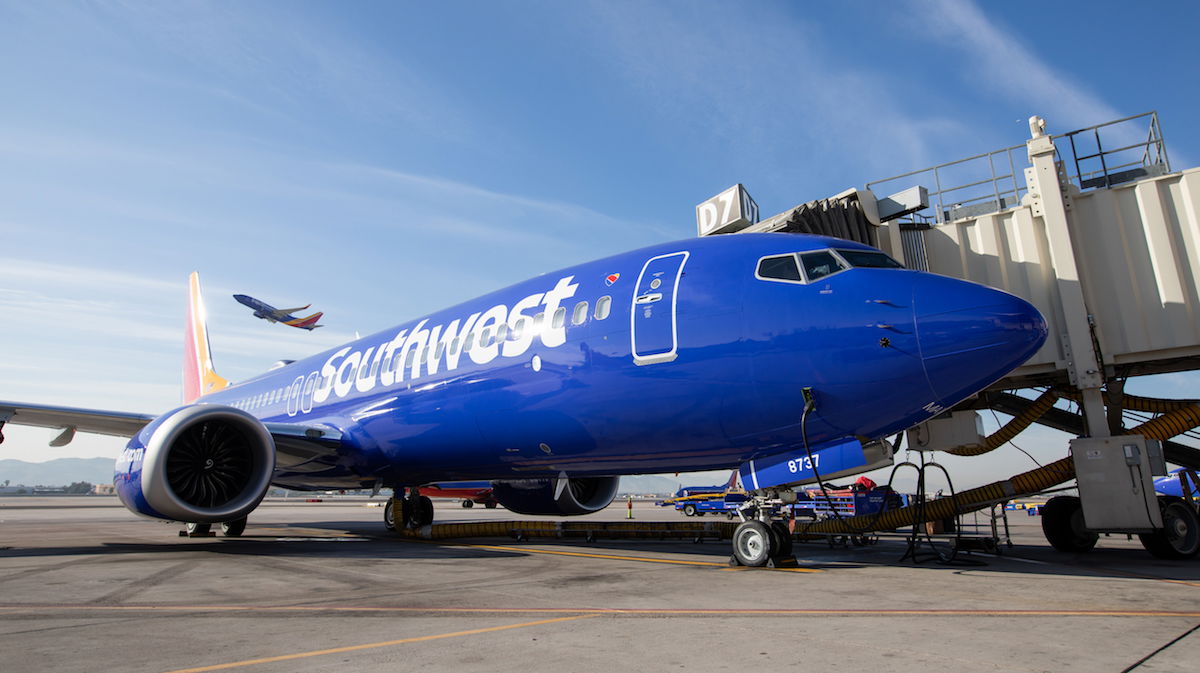
Southwest Airlines is partnering with SpaceX, to introduce Starlink Wi-Fi throughout its fleet of Boeing 737s. The first Starlink equipped plane is now in service (it has the registration code N8543Z), so passengers are experiencing this on the airline for the first time.
The plan is to roll this out on more than 300 Boeing 737s by the end of 2026, and I’d assume that nearly all planes will have the service by the end of 2027. For what it’s worth, Southwest has a fleet of over 800 737s, with another 500+ on order.
Starlink is known for its high-speed, low-latency broadband internet, and the service is offered gate to gate. Starlink Wi-Fi allows for live streaming, productivity similar to on the ground (with high upload and download speeds), gaming, e-commerce, support for multiple devices, and more. I’ve now had several flights on Starlink equipped planes, and it really is a game changer.
Here’s how Southwest Airlines’ Chief Customer & Brand Officer, Tony Roach, describes this development:
“Starlink delivers a new era of inflight connectivity to Southwest. Starting with this first aircraft, we will be rapidly integrating Starlink into our fleet this year. This ultra-fast WiFi brings an at-home experience to the air and redefines how Customers can stay connected, be productive, and make the most of their time while flying at 35,000 feet.”
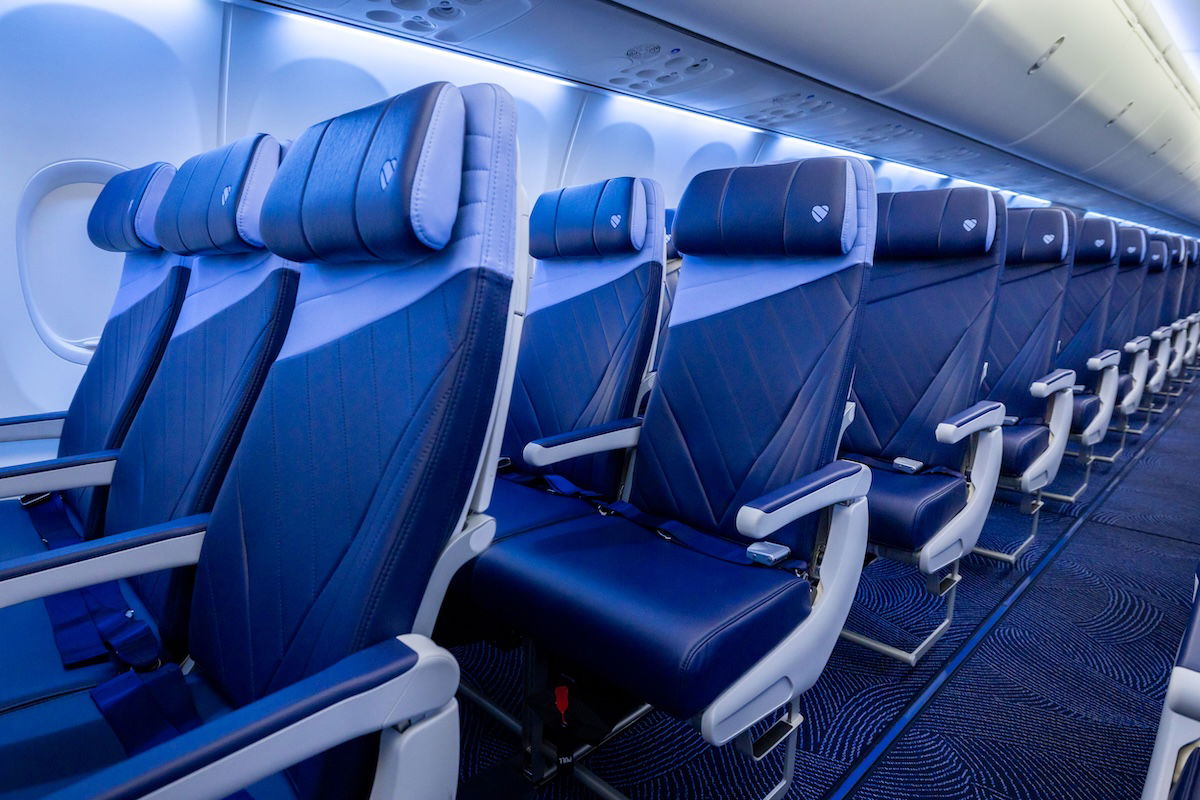
This is a very exciting development for Southwest
Southwest sure has come a long way in a short period of time when it comes to inflight connectivity. In October 2025, Southwest introduced free Wi-Fi for all Rapid Rewards members, basically matching the policies of JetBlue, Delta, and now American.
The catch is that other than Starlink, Southwest’s Wi-Fi setup is pretty underwhelming, with many planes having very outdated systems. While the airline has been installing Viasat in recent times, that’s only available on a minority of the fleet.
So to see Southwest moving to Starlink is a fantastic passenger experience improvement, as this will be way faster than what’s otherwise available on the airline.
Obviously a ton has changed about Southwest in recent times, as the airline has completely transformed its business model. From ditching open seating, to adding basic economy fares, to charging for checked bags, to introducing extra legroom economy, the airline is a lot more like the competition nowadays.
This is no doubt a positive passenger experience move, as travelers appreciate inflight connectivity, and it’s tough to beat fast and free connectivity. As I’ve said, I think ultra high speed Wi-Fi is something that air travelers will soon consistently expect, and the airlines that aren’t prioritizing that will be left behind, at least in terms of things like net promoter scores.
If we’re going to rank the overall initiatives we’re seeing at the “big four” US carriers in terms of rollout of next generation Wi-Fi, here’s how I see it:
- United is in first place, as the airline is rolling out Starlink rapidly, and already has it on 400+ planes, with plans to have it on 1,000 planes by the end of 2026
- Southwest is in second place, as the airline is starting to roll out Starlink, and should have 300+ planes with the service by the end of 2026, and the entire fleet with the service by the end of 2027
- American is in third place, as the airline plans to introduce Starlink Wi-Fi as of early 2027, though only on 500 planes
- Delta is in fourth place, as the airline plans to introduce Amazon Leo (a competitor to Starlink), though only as of 2028 best case scenario, and only on 500 planes
Bottom line
Southwest Airlines has started its rollout of free Starlink Wi-Fi, with the first Boeing 737 with the connectivity now in service, and the plan is to have 300+ planes with Starlink by the end of the year. You can’t beat Starlink for inflight connectivity, so this is great for Southwest passengers, especially given the carrier’s lackluster Wi-Fi situation up until now.
What do you make of Southwest Airlines adding free Starlink Wi-Fi?




NO U.S. airline is worth wasting the sort of energy Walter Mitty Dunn, puts into his boring, repetitive and inaccurate posts.
NO U.S. airline can compete wth the real World Class Airlines, as is clearly demonstrated by the fact that NO U.S. airline has been recognised as being more than a 3* wannabe outfit.
Get real Walter Mitty Dunn, for you are only deluding yourself with your wild claims of success!
I have said for years that alot of people - you included - would be much happier if they did not have a compulsive need to respond to everything I write.
and yet they (and you) do so I keep writing.
I have you and a whole lot of people wrapped around my little finger.
What power that you simply can't break
it's funny because it's you, Tim Dunn, that feels the need to reply to everything -- aka. look above my post at your... wait for it... compulsive need to respond to everything.
"I have you and a whole lot of people wrapped around my little finger."
This kind of statement really does say everything about your mental illness. How anyone could be this obtuse in life about how others view them is beyond me.
unlike me, and unlike even you, aero comes here solely to trash someone
I get that people don't like my facts and even my opinions but yes people are wrapped around my little finger when they can't help but comment on not just my comment but about me.
You are capable of providing decent content but you are incapable of refraining from the personal attacks - which shows that you, like so many people, can't...
unlike me, and unlike even you, aero comes here solely to trash someone
I get that people don't like my facts and even my opinions but yes people are wrapped around my little finger when they can't help but comment on not just my comment but about me.
You are capable of providing decent content but you are incapable of refraining from the personal attacks - which shows that you, like so many people, can't counter the facts I bring to discussions so you attack me.
and specific to THIS article, I have strongly countered the United marketing non-sense that they would have an advantage and WN's announcement and fast installation proves my point. there will be more non-UA aircraft with Starlink than UA aircraft and Starlink will have half or less of the connectivity on US commercial flights.
UA is far behind the industry in getting free WiFi up and running and any advantage that UA might have had will be eliminated by the fact that most of the US commercial fleet will have free WiFI by the time UA completes its Starlink.
If an advantage existed for having free WiFI, B6 and DL had it.
Those are the facts which you and others simply cannot counter.
so after the upteenth article about Starlink WiFi and how much of an advantage that UA will supposedly have when/if it actually completes rollout in 18 months, we have concluded that:
1. the vast majority of real people that travel - not paid airline influencers esp. from UA - do not make purchase decisions with WiFi access as the primary consideration. that is why UA really was not harmed over the past multiple years...
so after the upteenth article about Starlink WiFi and how much of an advantage that UA will supposedly have when/if it actually completes rollout in 18 months, we have concluded that:
1. the vast majority of real people that travel - not paid airline influencers esp. from UA - do not make purchase decisions with WiFi access as the primary consideration. that is why UA really was not harmed over the past multiple years during which B6 and DL had extensive WiFi. It is now an "essential" amenity but there is still no data to suggest it is a make or break purchase driver.
2. Even if WiFI is a purchase driver, B6 and DL had to have had a substantial advantage while UA had to have been at a disadvantage. It is intellectual impossible to argue that UA will have an advantage in the future and not admit that UA was and is at a quantifiable disadvantage now and in the future.
3. B6 and DL were relatively unique in having free WiFi while UA will complete WiFi installation just as there are more than 3000 commercial aircraft - closer to 4000 - with free WiFi in the US. all but the ULCCs will have it. There simply will be no advantage to finally getting an amenity that everyone else has.
4. There is ZERO evidence that real customers will choose a carrier to get the fastest WiFI over a carrier that meets more important criteria that people consider for travel including schedule and price.
The US airline industry is being led by companies that innovate. UA is not innovating about WiFi when B6 and DL had it long before UA even announced it.
UA is not innovating when there will be multiple carriers - including WN - that will have extensive WIFi including Starlink - by the time UA completes WiFi installation.
there will be as many if not more commercial aircraft powered by WiFi systems other than Starlink by the time that UA completes its Starlink installations and UA will make up a minority of total commercial aircraft with WiFI.
UA is late to the party on WiFI and it and its fans are desperately trying to convince everyone that UA will have an advantage when there isn't a shred of evidence - either with data or logically - that will be the case.
Starlink gets 90+ Net Promoter Scores (NPS). No other airline offering comes close and other scores improve on flights with Starlink. It's a game changer and a huge competitive advantage.
When is DL hoping to get started with LEO, 2030? Hoping for 500 aircraft? Product inconsistency.
As others have noted, internet improves the experience but it does so for other airlines as well.
that doesn't mean it is a purchase driver about other factors.
and the non-sense that UA will have an advantage makes even less sense when you consider that there will be at least 6 US airlines that have or will have extensive or fleetwide WiFi by the time UA completes Starlink installations
UA is late to the party...
As others have noted, internet improves the experience but it does so for other airlines as well.
that doesn't mean it is a purchase driver about other factors.
and the non-sense that UA will have an advantage makes even less sense when you consider that there will be at least 6 US airlines that have or will have extensive or fleetwide WiFi by the time UA completes Starlink installations
UA is late to the party and is desperately trying to talk about an advantage that they simply will not have, esp. since so many US airlines will have complete or partial Starlink.
Sorry LTD, the data says otherwise. NPS scores for two-class RJ flights DOUBLED with Starlink. Amazing.
there is no data that says that WiFI is a primary purchase driver and none that people will choose an airline w/ Starlink over another carrier that has free WiFI.
None. but we wouldn't expect you as a paid UA internet monitor to continue to spew marketing hogwash which has no basis in reality
The most used data managements use to evaluate specific offerings. Sorry you don't like it.
you just don't realize that every airline sees the same thing. WifFI is not a purchase driver above other factors but it does improve customer experiences.
and UA is simply too late to the WiFi party to gain an advantage, esp. given that multiple other airlines are equipping more of their aircraft collectively with Starlink than United
Tim, have you not seen the press on SFO that discusses the upcoming increase in the arrival rate?
At EWR, their pax counts keep increasing due to significant upgauging at the crown jewel of east coast hubs. This while DL pax numbers and destinations at their inefficient split hub, one of which is mostly RJs and restricted by a perimeter rule, decrease.
And ORD flight cap is only through the summer. Flight counts will...
Tim, have you not seen the press on SFO that discusses the upcoming increase in the arrival rate?
At EWR, their pax counts keep increasing due to significant upgauging at the crown jewel of east coast hubs. This while DL pax numbers and destinations at their inefficient split hub, one of which is mostly RJs and restricted by a perimeter rule, decrease.
And ORD flight cap is only through the summer. Flight counts will increase in the fall and the flight cap, when construction winds down, will be lifted.
UA will be fine at all of its hubs.
Regarding all of your talk of DL profitability, you know that’s because that have four fortress hubs that don’t even have a crosstown airport to compete against. Additionally, it’s driven by credit card revenue from AMEX. UA is closing the gap even without that amount of Chase revenue, though they’re already negotiating a new contract and Kirby has said profits from credit card revenue will double with the new contract.
Where DL has to compete, they struggle. Look at SEA against AS. Look at NYC against UA, where they cut routes to Europe and don’t even bother applying for a route to HND. Look at all the Asian stations DL closed. Look at Texas against UA/AA/WN. Look at LAX, where they will have to divert so many resources just to gain (maybe) a couple of percentage points of share, but still still not breaking 25%, all because they have no choice, given the state of SEA.
as usual, the amount of defensiveness to the truth is on full display from the paid UA trolls that can't accept that UA is not 1st in much of anything.
DL IS the largest airline at 8 of its 9 hubs and it has dramatically improved its share at LGA and JFK over every other airline; UA has done the same at EWR. Despite the incessant need some think there is to compare DL and...
as usual, the amount of defensiveness to the truth is on full display from the paid UA trolls that can't accept that UA is not 1st in much of anything.
DL IS the largest airline at 8 of its 9 hubs and it has dramatically improved its share at LGA and JFK over every other airline; UA has done the same at EWR. Despite the incessant need some think there is to compare DL and UA, DL and UA actually have a very healthy duopoly in NYC at the expense of everyone else. DL is by far larger than UA in the domestic market and at the two airports that are preferred for short haul domestic and longhaul international and longhaul domestic traffic
As for SEA, feel free to provide P&L data - not years old partial fare data to come to a conclusion about how poorly DL does. and even if SEA is a financial drag for DL, it is precisely because of how well DL does in its other 8 hubs that it can afford to "subsidize" one hub.
For years, we have heard how great UA's hubs are located and yet over and over and over again, when pushed why UA is not more profitable, the answer always turns to "DL makes more money in most of its hubs"
So clearly UA's hub locations aren't so great after all - PRECISELY BECAUSE UA CANNOT DOMINATE THEIR HUB METROS LIKE DL or even AA does.
in fact, UA does not have a single hub in a metro where another airline does not also have a hub in the same metro. SFO is the closest thing as WN draws down OAK and AS continues to pull down SFO and yet SFO like SEA is a great TPAC hub but not very great as a hub for all of the US.
and it is DL's growth at LAX that is the greatest threat to UA's dominance not just on the west coast but also its TPAC position.
It doesn't matter if DL becomes the largest or even equally sized to UA; the mere fact that DL is going after UA's strongest region from the largest TPAC market IS why DL's growth at LAX including TPAC markets will succeed.
DL has watched UA grow domestically and yet that domestic growth is slowing; UA's own fleet plan growth is slowing beyond 2026. UA is simply not growing out of its 4th place position domestically while DL is growing into UA's key regions - including NE TATL from BOS and TPAC from LAX.
WiFi simply does not move the needle compared to other factors; DL has simply compared to other factors including network strategy.
Great job by DL dominating SLC, the #37 in GDP for US metro areas. Too funny.
"Where DL has to compete, they struggle. Look at SEA against AS. Look at NYC against UA, where they cut routes to Europe and don’t even bother applying for a route to HND. Look at all the Asian stations DL closed. Look at Texas against UA/AA/WN. Look at LAX, where they will have to divert so many resources just to gain (maybe) a couple of percentage points of share, but"
Your arguments make next to...
"Where DL has to compete, they struggle. Look at SEA against AS. Look at NYC against UA, where they cut routes to Europe and don’t even bother applying for a route to HND. Look at all the Asian stations DL closed. Look at Texas against UA/AA/WN. Look at LAX, where they will have to divert so many resources just to gain (maybe) a couple of percentage points of share, but"
Your arguments make next to zero sense, and are even more flimsy than the stuff Tim is saying.
1. AS' advantage in SEA is simply gates. Not some great competitive strategy/wherewithal. Fairly straightforward there.
2. DL gets a higher percentage of metro NYC O&D traffic, and garners more revenue than United on it. United has more international destinations, and can flow more transfer to fill it. Not sure how you see either one, as some proof of "struggling."
3. DL is already the largest carrier at LAX by revenue, gates, destinations served, and origin traffic. No idea HTF you're getting "struggling" out of that, compared to anyone else.
4. Since merging with Northwest, Delta has dropped Bangkok, Osaka, Mumbai, and Nagoya, while resuming Hong Kong, and intending to resume (confirmed by Hauenstein) Manila, Singapore, Beijing, and Delhi. Great, what does any of that "prove" regarding "struggling"?
5. Delta doesn't do well in Texas, sure. Tell us how well United does in the entire southeast of the country. What does that prove?
Hey, at least Tim hasn’t brought up United’s baggage performance on an article about WiFi in a hot minute. :)
Fast internet no big deal. I have used free internet on EVA Taipei to Houston more than once. Browse web on plane? It is kinda nice. Stream movies? If you cannot live for 16 hours without streaming Netflix you have big problem. I know only one truth. If you think streaming internet vids on a plane is Nirvana…you can’t dance.
Apparently you could stand to learn the meaning of the word "projection."
Common sense, if employed, should tell you that these airlines (the world over) wouldn't be spending millions on this, were it not a necessary competitive feature.
Live 16 hours without streaming Netflix?
You’re talking as if passengers are on some kind of wilderness hike or island vacation. Passengers in a seat for 16 hours should be judged for wanting to watch a movie?
"industry's direction has been driven by Delta with United following AND NOT A SINGLE PROFESSIONAL AIRLINE INDUSTRY ANALYST WOULD DISAGREE." (emphasis added)
Name five. I'll wait.
Links to their articles agreeing with you would be nice, too.
I don't post links, Paul.
How about you Google
"what airline industry analysts rank Delta as the #1 airline"
and
"why is Delta the financially strongest US airline"
And DL's market cap is now over $50 billion, I believe the first time a US airline has ever had a market cap that high. UA's is 72% of DAL's.
DL's market cap is more than AA and UA combined.
DAL has...
I don't post links, Paul.
How about you Google
"what airline industry analysts rank Delta as the #1 airline"
and
"why is Delta the financially strongest US airline"
And DL's market cap is now over $50 billion, I believe the first time a US airline has ever had a market cap that high. UA's is 72% of DAL's.
DL's market cap is more than AA and UA combined.
DAL has the highest rating by Wall Street analysts of any large US airline
Sorry for the tough news for you but the facts are clearly there.
and Tony G
WN is being transformed more so than UA whose previously business model failed them and they also changed - to be chasing the same strategies as DL.
and it is precisely because of UA's TPAC size esp. on the west coast that gives DL a big opportunity.
Sit tight. this will be fun to watch
DL has outstrategized the rest of the industry for a couple of decades and is set to do the same thing for at least another decade. UA just happens to be in DL's crosshairs
WN and AA's transformations are a huge threat to UA
and
"How about you google..."
Sorry, Tim. That's not how it works. You don't get to post outlandish claims ("...and not a single airline analyst would disagree!") and then get to assign homework to make others substantiate your assertions.
If you can't back it up what you post, your posts are worthless, and your credibility falls even further than before.
"Meanwhile, DL has made it clear that it is going after UA's single most valuable asset - its TPAC network and its presence as the largest legacy carrier on the west coast."
How is it their "single most valuable asset" when TPAC is actually the region that contributes the LEAST revenue to United's network system (at MUCH higher cost than both Europe and Latin America) at the lowest yield?
UA has a higher share of TPAC and west coast than other airlines have in other regions.
You are right that TPAC has been very challenging for US carriers; UA operated its TPAC system at just breakeven rates in order for it grow to the largest in the pre-covid years.
It is precisely as UA's TPAC growth has slowed that DL sees an opportunity.
and UA is not profitable flying to Latin America.
...UA has a higher share of TPAC and west coast than other airlines have in other regions.
You are right that TPAC has been very challenging for US carriers; UA operated its TPAC system at just breakeven rates in order for it grow to the largest in the pre-covid years.
It is precisely as UA's TPAC growth has slowed that DL sees an opportunity.
and UA is not profitable flying to Latin America.
pilot paul,
you have been rather combative and argumentative of late - and you are losing more arguments than when you were less aggressive.
DL is the leader of the US airline industry esp. financially and not a single analyst would argue otherwise. But you feel free to tell us what industry analyst has said that some other airline other than DL is the leader given DL's industry leading profitability and world's highest airline market cap and revenue. Not a soul would argue against those realities.
“UA is not profitable flying to Latin America.”
Source on this claim?
US DOT
google
"bureau of transportation statistics net income all US carriers"
and for those that will invariably jump in and tell us these numbers are fake, this is compiled from data that the airline provide to the DOT.
If airlines want to show greater profit someplace else, they need to reduce it elsewhere. Not a soul has ever provided a revised set of data that doesn't reduce an airline's profits someplace...
US DOT
google
"bureau of transportation statistics net income all US carriers"
and for those that will invariably jump in and tell us these numbers are fake, this is compiled from data that the airline provide to the DOT.
If airlines want to show greater profit someplace else, they need to reduce it elsewhere. Not a soul has ever provided a revised set of data that doesn't reduce an airline's profits someplace else.
UA hasn't made money to/from Latin America since 2019. 2020 and 2021 are excusable because of the pandemic but to lose money in Latin America when you make money elsewhere speaks volumes.
Yeah, UA has Asia and Africa on-lock, but S. America ain’t their strong suit. American and Delta (especially after DL scooped up LATAM from oneworld, ouch) are far better situated, financially and operationally. Recently flew AA and LA down there, and it was fascinating to see LA literally have Delta Medallion (not just SkyTeam Elite, etc.) on signage, announcements, etc. Tim, DL is rockin’ down there! (What, is someone gonna try to convince me of...
Yeah, UA has Asia and Africa on-lock, but S. America ain’t their strong suit. American and Delta (especially after DL scooped up LATAM from oneworld, ouch) are far better situated, financially and operationally. Recently flew AA and LA down there, and it was fascinating to see LA literally have Delta Medallion (not just SkyTeam Elite, etc.) on signage, announcements, etc. Tim, DL is rockin’ down there! (What, is someone gonna try to convince me of the ‘greatness’ of COPA now? Psh. Yeah, breakup an 11 hour lie-flat redeye into two 5+ hours in recliners with a stopover in Panama, no thanks.)
"and Africa on-lock,"
That makes even less sense than Tim's statement, seeing as United is smaller than Delta to Africa, both by ASMs and by number of routes/destinations served; which is the exact opposite of "having it on lock."
UA serves 32 destinations across the Pacific, many from SFO, the crown jewel of west coast hubs.
DL serves 9 from a split hub dynamic on the west coast, unable to decide whether to focus on LAX or SEA, though leaning towards LAX as they realize they can’t keep up with AS.
And airlines know how much a rise in NPS scores adds to their profits, and they know how much Starlink adds...
UA serves 32 destinations across the Pacific, many from SFO, the crown jewel of west coast hubs.
DL serves 9 from a split hub dynamic on the west coast, unable to decide whether to focus on LAX or SEA, though leaning towards LAX as they realize they can’t keep up with AS.
And airlines know how much a rise in NPS scores adds to their profits, and they know how much Starlink adds to NPS.
And DL is now following other airlines, adding routes from SEA based on what AS adds, trying to catch up to UA by adding to their meager TPAC offerings, add trying to catch up to UA by adding larger premium cabins, while still trailing significantly.
"unable to decide whether to focus on LAX or SEA, though leaning towards LAX as they realize they can’t keep up with AS."
Why do people keep making things up, in this post?
Delta has said since 2014 it will be splitting its TPAC buildup between LAX and Seattle.
"Meanwhile, DL has made it clear that it is going after UA's single most valuable asset - its TPAC network and its presence as the largest legacy carrier on the west coast."
UA serves 4x as many destinations in the Asia/Pacific region as any other U.S. carrier. Not sure where DL is going to get 4x more WB gates to catch up, even if growth isn't limited to the "West Coast" and the growth includes...
"Meanwhile, DL has made it clear that it is going after UA's single most valuable asset - its TPAC network and its presence as the largest legacy carrier on the west coast."
UA serves 4x as many destinations in the Asia/Pacific region as any other U.S. carrier. Not sure where DL is going to get 4x more WB gates to catch up, even if growth isn't limited to the "West Coast" and the growth includes LAX, SEA, SLC, MSP, and DTW. Plus, UA isn't just staying stagnant. Lots of WB planes and more growth coming to UA, including the TPAC network, so DL would have to get more than 4x bigger in the TPAC market to pass UA.
"WN will take the title as most transformed airline of the 2020s and Starlink is just one step in them becoming just like the legacy carriers."
Most transformed, yes, because they completely abandoned their original business model to copy the legacy carriers' instead. But just like any legacy carrier? Not without any WB aircraft they won't be. And WB planes need WB gates, which WN has exactly zero. Maybe they will be more like one a decade from now, but not for anytime soon.
Tim, we disagree on plenty, but on the WiFi topic, I'm still with you. DL has had it (along with B6) for a while; these other guys are finally catching up, and everyone's taking a cheap shot at you. It'd be like having no phones and skipping landlines for cellular, then mocking those who had land lanes. Ignore the haters. Celebrate the good things. Cheers, bud.
"Tim, we disagree on plenty, but on the WiFi topic, I'm still with you. DL has had it (along with B6) for a while; these other guys are finally catching up,"
1990 & Tim
If we ignore that Delta has zero wifi across the Pacific and has PURPOSEFULLY made sure an entire fleet type in their mainline fleet still operates on Gogo... sure. Delta has "had it" if you ignore huge caveats and horrible...
"Tim, we disagree on plenty, but on the WiFi topic, I'm still with you. DL has had it (along with B6) for a while; these other guys are finally catching up,"
1990 & Tim
If we ignore that Delta has zero wifi across the Pacific and has PURPOSEFULLY made sure an entire fleet type in their mainline fleet still operates on Gogo... sure. Delta has "had it" if you ignore huge caveats and horrible planning by Delta.
No. Delta has never had high speed wifi across even their mainline fleet, much less free. And Delta has no plans to be able to do it either aside from recent leaks that the 717 may be retired sooner than later. that's about the only strategic plan Delta has to offer simply high speed wifi on their mainline fleet, leaving "free" aside.
If we ignore that Delta has zero wifi across the Pacific a
yes ignore it. Because it isn't true.
DL has all but 10 A350s with WiFI equipment and the satellite capability does not exist for free high WiFi capabilities.
DL has one level of WiFI. Free.
If it cannot offer that, it doesn't advertise that it has anything even though those A350s do offer paid WiFi over the Pacific and free in other parts...
If we ignore that Delta has zero wifi across the Pacific a
yes ignore it. Because it isn't true.
DL has all but 10 A350s with WiFI equipment and the satellite capability does not exist for free high WiFi capabilities.
DL has one level of WiFI. Free.
If it cannot offer that, it doesn't advertise that it has anything even though those A350s do offer paid WiFi over the Pacific and free in other parts of the world.
and yes, Viasat is as high speed as AA and B6's WiFI.
the 717s will get Hughes and finish off DL's mainline fleet long before any other US airline offers free high speed WiFi across their entire fleets.
how you confuse such basic concepts just so that you can argue is really hard to understand.
"yes ignore it. Because it isn't true. DL has all but 10 A350s with WiFI equipment and the satellite capability does not exist for free high WiFi capabilities."
Still waiting for you to show us where even delta says they have ANY wifi WHATSOEVER across the Pacific. I'll help you out. https://www.delta.com/us/en/onboard/inflight-entertainment/onboard-wifi
Show us where Delta claims any wifi whatsoever across the Pacific?
So first sTD says this:
"DL has one level of WiFI....
"yes ignore it. Because it isn't true. DL has all but 10 A350s with WiFI equipment and the satellite capability does not exist for free high WiFi capabilities."
Still waiting for you to show us where even delta says they have ANY wifi WHATSOEVER across the Pacific. I'll help you out. https://www.delta.com/us/en/onboard/inflight-entertainment/onboard-wifi
Show us where Delta claims any wifi whatsoever across the Pacific?
So first sTD says this:
"DL has one level of WiFI. Free."
Then we have this:
"If it cannot offer that, it doesn't advertise that it has anything even though those A350s do offer paid WiFi over the Pacific and free in other parts of the world."
So delta has "one level of wifi. free" until they don't have any wifi (per delta.com) where they charge on Viasat equipped A350s with no wifi coverage but somehow Tim is claiming they offer "paid" wifi across the pacific -- this must be news to them.
"If it cannot offer that, it doesn't advertise that it has anything"
Delta has about 402 departures per day on the 717 in 2026. It must be news to those ~40,000 passengers per day that Delta doesn't advertise free wifi ;)
"the 717s will get Hughes and finish off DL's mainline fleet long before any other US airline offers free high speed WiFi across their entire fleets."
Show us any link whatsoever proving this, Tim. Literally anything backup up what you say here.
How you confuse such basic math and consistency just so that you can argue with me is really hard to understand -- just kidding. It's not hard to understand. arguing without any data or substance is all you do lol
Max, if we’re gonna go after the weakest links, by all means, do attack the Delta 717, which has no WiFi or AVOD. Likewise, jetBlue’s older Embraers got nothing, too. But, most of B6 and DL mainline have it all. I’d say that’s pretty good while UA is at 50/50, and AA, AS, WN, F9, etc. is lagging.
"Likewise, jetBlue’s older Embraers got nothing, too."
true ,but they're also retired now ;)
JetBlue retired their old birds with subpar product. DL has no plan to put wifi on their 717s or no announced 717 retirement either. Delta flies about 40k passengers per day on these planes. That's a pretty rough thing to market free wifi then experience the 717 for their passengers.
"But, most of B6 and DL mainline have it all....
"Likewise, jetBlue’s older Embraers got nothing, too."
true ,but they're also retired now ;)
JetBlue retired their old birds with subpar product. DL has no plan to put wifi on their 717s or no announced 717 retirement either. Delta flies about 40k passengers per day on these planes. That's a pretty rough thing to market free wifi then experience the 717 for their passengers.
"But, most of B6 and DL mainline have it all. I’d say that’s pretty good while UA is at 50/50, and AA, AS, WN, F9, etc. is lagging."
AA is the only airline with their entire mainline fleet already equipped with high speed wifi and most of the domestic fleet with free high speed wifi. It's hardly lagging lol. neither is AS. They've had high speed wifi at great prices for years and will now be the first US airline with full starlink installation with free wifi.
I get it -- I don't value seatback screens. they were fun and cool in like 2009 on JetBlue and CO but now? They're too cumbersome when literally every possible part of the customer experience is better on my iPad with free wifi vs the always slow seatback interfaces.
About time. WN has lagged behind B6 and DL, in not offering either Free WiFi or IFE screens. Glad UA, AA, and now WN are finally catching up. C'mon AS, get with it! It's the mid-2020s, all commercial airlines can provide reliable amenities like these; they're just being cheap by delaying or denying consumers that better experience.
What am I missing about AS? They announced the move to Starlink in 2025 and expect full fleetwide installation by some point in 2027. 2026 will have already started the installations.
Is your comment about IFE Screens?
Yeah, in-part (IFE), but also, WiFi, still delayed. My consistent point is that the technology has been there for a while (ok, not 250mpbs). And, sure, T-Mobile users get it for free on many airlines, but competitive 'premium' airlines should have rolled out complimentary WiFi for everyone (or 'frequent flyer members' at least) by now.
ok... weird jab at Alaska when they've announced a completed fleetwide LEO internet installation before Delta even has a single bird with LEO-based internet but ok...
I'm not going to derail the topic with seatback screens convo. Some people really love them. I never use them and I fly Delta more often than Tim cares to believe ;) I honestly find them pretty useless when I can do whatever I want on my phone...
ok... weird jab at Alaska when they've announced a completed fleetwide LEO internet installation before Delta even has a single bird with LEO-based internet but ok...
I'm not going to derail the topic with seatback screens convo. Some people really love them. I never use them and I fly Delta more often than Tim cares to believe ;) I honestly find them pretty useless when I can do whatever I want on my phone or tablet -- to include flightradar24 which in a prior life, was about all I used the seatback screen for.
when I fly on Panasonic widebodies with screens, I havent' even turned on the screens the last 10 trips, just streamed netflix on my tablet.
I'm not doubting how much you fly DL as long as you don't understimate how much I fly WN and UA.
and the vast majority of people on AVOD equipped aircraft - including narrowbodies - use them, even if only for the moving map.
You are certainly entitled to your opinion but you are not the norm regarding the use of AVOD and that data is why UA joined B6 and DL in widespread...
I'm not doubting how much you fly DL as long as you don't understimate how much I fly WN and UA.
and the vast majority of people on AVOD equipped aircraft - including narrowbodies - use them, even if only for the moving map.
You are certainly entitled to your opinion but you are not the norm regarding the use of AVOD and that data is why UA joined B6 and DL in widespread fleet AVOD
and the real gist is that AS and WN are moving very aggressively in Starlink installation - which makes what UA doing less and less ground breaking.
UA will have less than half of the Starlink equipped commercial aircraft by the time UA finishes installations.
And Starlink will have less than half of the commercial aircraft with free WiFI. Viasat is more than holding its own and its customers on AA, B6 and DL don't buy this endless marketing non-sense that is spewed here - which you have acknowledged is hugely overblown
Announcement aren’t results. See Boom Supersonic, which American and United have “announced” NON-BINDING orders for… just saying, talk is cheap. And, yes, I do think AS will eventually get it done.
Your faux socialist slip is showing.
Airlines had to decide whether to invest more in flawed, unreliable and relatively slow wifi or make the leap to Starlink's superior, fast, easy, and reliable wifi. The vast majority chose Starlink instead of investing more money in Viasat to increase the bandwidth to be able to make it free. Viasat still has the Pacific hole in coverage and constant interruptions when it's working. If Viasat depended solely...
Your faux socialist slip is showing.
Airlines had to decide whether to invest more in flawed, unreliable and relatively slow wifi or make the leap to Starlink's superior, fast, easy, and reliable wifi. The vast majority chose Starlink instead of investing more money in Viasat to increase the bandwidth to be able to make it free. Viasat still has the Pacific hole in coverage and constant interruptions when it's working. If Viasat depended solely on its consumer business it would be going under, but they just got some government contracts that required secure channels that saved them.
and yet by the time that UA installs Starlink, more US aircraft will be powered by non-Starlink systems - based on currently announced plans - than Starlink.
Doesn't matter what holes Viasat has over the Pacific since not a single carrier has free WiFi on every flight over the Pacific; the capacity is simply not there or airlins don't have the aircraft equipped.
Boeing lives on government contracts. Should we assume that they are...
and yet by the time that UA installs Starlink, more US aircraft will be powered by non-Starlink systems - based on currently announced plans - than Starlink.
Doesn't matter what holes Viasat has over the Pacific since not a single carrier has free WiFi on every flight over the Pacific; the capacity is simply not there or airlins don't have the aircraft equipped.
Boeing lives on government contracts. Should we assume that they are not a viable aircraft builder as a result?
The stuff you spread on here thinking it makes sense is beyond belief.
none of which changes that AA and WN are joining AS in adding more aircraft with Starlink than UA's entire mainline and RJ fleet.
UA will gain no advantage relative to anyone, including B6 and DL which have had extensive non-Starlink WiFi for years.
Real people are not swayed by your paid UA hype.
Starlink and other “high speed” internets are not the same. Unless you think that since Cessnas and F16s are both airplanes they’re the basically the same.
This might by lil Timmy’s worst take of them all.
I never said they were.
I said that other internet providers do provide a service that customers find acceptable.
There are plenty of people that buy cars that have less than 200 hp and are perfectly happy and yet there are passenger cars that offer 250+ hp.
far too many people including you think that people get on planes to get the fastest internet.
People get on planes to go places and want...
I never said they were.
I said that other internet providers do provide a service that customers find acceptable.
There are plenty of people that buy cars that have less than 200 hp and are perfectly happy and yet there are passenger cars that offer 250+ hp.
far too many people including you think that people get on planes to get the fastest internet.
People get on planes to go places and want internet.
There is simply no evidence that the fastest internet service is a purchase driver.
and you also, like many others, pretend that other providers aren't improving their own products. and new technologies like dual antenna LEO and HEO service on the same plane is going to be more and more prevalent. Of course the endless Starlink rah rah messages never talk about those things.
rebel, assuming you were speaking to me, advocating for a better on-board experience (and better consumer protections) isn’t “socialism”… no one is getting anything for ‘free’ technically; we very much pay for this, and I think we simply deserve better for what we’re paying for, including WiFi, AVOD, etc.
"I think we simply deserve better for what we’re paying for, including WiFi, AVOD, etc."
And you'll always feel this way. For some it's a way of life.
What are you talking about that the "industry's direction has been driven by Delta?" If so, we'd be waiting until 2028 or 2029 for usable internet across the industry. Everyone has beat Delta in internet. Even struggling American.
see above from Grey.
Unlike UA's paid internet rah-rah squad, the real world knows what airlines have and will have WiFi and what it is used for.
The notion that Starlink will transform booking patterns and revenue compared to other systems on other airlines is pure UA and Starlink advertising non-sense.
UA will complete its Starlink installation when more than 4000 commercial aircraft including RJs will have free high speed WIFI. Half of that...
see above from Grey.
Unlike UA's paid internet rah-rah squad, the real world knows what airlines have and will have WiFi and what it is used for.
The notion that Starlink will transform booking patterns and revenue compared to other systems on other airlines is pure UA and Starlink advertising non-sense.
UA will complete its Starlink installation when more than 4000 commercial aircraft including RJs will have free high speed WIFI. Half of that number will be on Starlink so UA won't even have the majority of Starlink equipped aircraft.
and, no, American beat UA when AA decided to turn on free high speed WiFI on its domestic Viasat equipped fleet.
AA still cannot offer full TATL or Latin America free WiFi coverage which DL can do.
Typical Tim: "not a soul can provide data as to how much of a purchase driver or revenue benefit that amenity has been to those two carriers, let alone how much UA will benefit - if at all..."
So as Tim would have it, the airline CEOs, who have to answer to their relative BODs and shareholders, and who have a significant majority of their personal compensation tied into the stock price of their airline...
Typical Tim: "not a soul can provide data as to how much of a purchase driver or revenue benefit that amenity has been to those two carriers, let alone how much UA will benefit - if at all..."
So as Tim would have it, the airline CEOs, who have to answer to their relative BODs and shareholders, and who have a significant majority of their personal compensation tied into the stock price of their airline (so they want to do anything and everything that will make it rise), and who have access to all of the (confidential) booking, pricing, and survey info within their company - decided that it's 100% worth the investment to spend hundreds of millions of dollars to upgrade in-flight Wifi.
Meanwhile, Tim furiously types away in his basement, because somehow HE is the only one who knows better than every other airline management team out thereA, and having better Wifi isn't a driver in customer retention and airline choice. And when challenged about any of his claims, Tim fires back with "provide the booking data!" - um, sure, as if any of us have access to the confidential data each airline has.
But, sure thing, Tim. You're the smartest guy in the room.
By the way, remind me - you pointed out we're coming up on 2 years since United announced going with Starlink, and are only now getting it on nearly 100 mainline aircraft. Stay with me here, and I'll keep it easy:
(United): "Announcement" >> (two years) >> "+/- 100 Mainline aircraft installations".
Delta announced in 2026 they are going with LEO. And installs won't start until 2028. So that looks like this:
(Delta): "Announcement" >> (two years) >> "Starts installations"
So what was your criticism again? And remember, Delta's timeframe only works IF the 1st-time "LEO on 350s" STC timeframe doesn't get pushed back, AND if the New Glenn rocket failure (and current grounding) doesn't hold up the LEO beta constellation completion.
So an airline that already offers free wifi has changed providers and will now offer faster wifi?
I mean, if you constantly need super high speed internet, sure I guess this is nice, but usually on a flight, simply being able to use whatsapp is sufficient. Not sure that I would consider this a game changer.
I understand that many people consider it important, but I suspect the vast majority of people have...
So an airline that already offers free wifi has changed providers and will now offer faster wifi?
I mean, if you constantly need super high speed internet, sure I guess this is nice, but usually on a flight, simply being able to use whatsapp is sufficient. Not sure that I would consider this a game changer.
I understand that many people consider it important, but I suspect the vast majority of people have never taken, 'speed of free onboard wifi' into account when booking flight tickets.
Umm, unless something changed, AS does not offer free WiFi to all passengers; currently, if you happen to be a T-Mobile customer, then, yes, you have access to their existing WiFi included with your ticket and contract with cellular provider, but that’s a small subset of passengers. Like, folks with AT&T or Verizon or Mint or Boost or whatever ain’t gettin’ any WiFi on AS, yet.
AS has already said that their move to full starlink by next year includes free internet for their loyalty members.
They could do it now but... they aren't. But I also don't think free wifi is a basic human right ;)
Southwest is more premium than Delta. You'll have to wait until 2028/29 for reliable internet on Delta. What will come first for Delta - internet or new ATL lounge?
Viasat for 5 years, and sure, a little longer for whatever Bezos is doing, but still, DL (and B6) have had something, which is better than nothing.
For me, WiFi is not a "game changer" - just nice to have.
The most premium, way more premium than United
LOL. Call me when WN gets lie-flat.