

The airline industry is highly competitive. As much as possible, the “big three” carriers try to build up fortress hubs, where they dominate market share, and have a lot of pricing power. However, there are some airports that act as hubs for more than one airline, where airlines still find it worthwhile to compete.
Perhaps there’s none more interesting than Chicago O’Hare (ORD), which is a hub for both American and United. The competitive dynamics here are fascinating, and I think this might be the most interesting market in the country to watch in 2026. In particular, comments from United CEO Scott Kirby are about as extreme as I’ve ever heard, and spell bad news for at least one airline (if not two).
In this post:
Background on American & United competing in Chicago
As mentioned above, American and United both have hubs in Chicago. Going back a decade, the airlines were pretty even, but there’s no denying that United has massively taken the lead in recent times.
That largely comes down to United being really well run and focused, as Kirby is desperate to improve the company’s profitability. Meanwhile American has had a really rough several years, losing both business travelers and other premium travelers, due to a lack of a strategy.
What’s interesting about Chicago isn’t just the general shift toward United, but also the system in place that allows an airline to take the lead. Essentially, gates at O’Hare are allocated based on historical usage, with a bizarre system that also has a delay with awarding gates. So the idea is that a carrier’s service to the airport in the past determines the amount of flights it can operate there in the future.
In recent times, United has been allocated a lot of gates in Chicago, and has been growing market share. United executives claim that American is losing massive amounts of money at the airport (we’re talking many hundreds of millions of dollars per year). For what it’s worth, American executives have suggested that Kirby is exaggerating those numbers, and while they’re not claiming to make money in Chicago, they say they’re not losing that much.
Either way, Kirby has basically written off American in Chicago, suggesting the airline is toast. American now seems to be ready to fight again, and several weeks back, announced plans to add over 100 new daily flights from Chicago, so that it can once again get more gates.
So, how will this all end? You’d think the winners would be consumers, since there’s no doubt that this is going to lead to some fare wars. However, that’s not the narrative of United’s CEO, and I can’t help but find his commentary to be fascinating. Either United is about to pull off the most shocking airline defeat in history, or Kirby is going to have to eat his words.
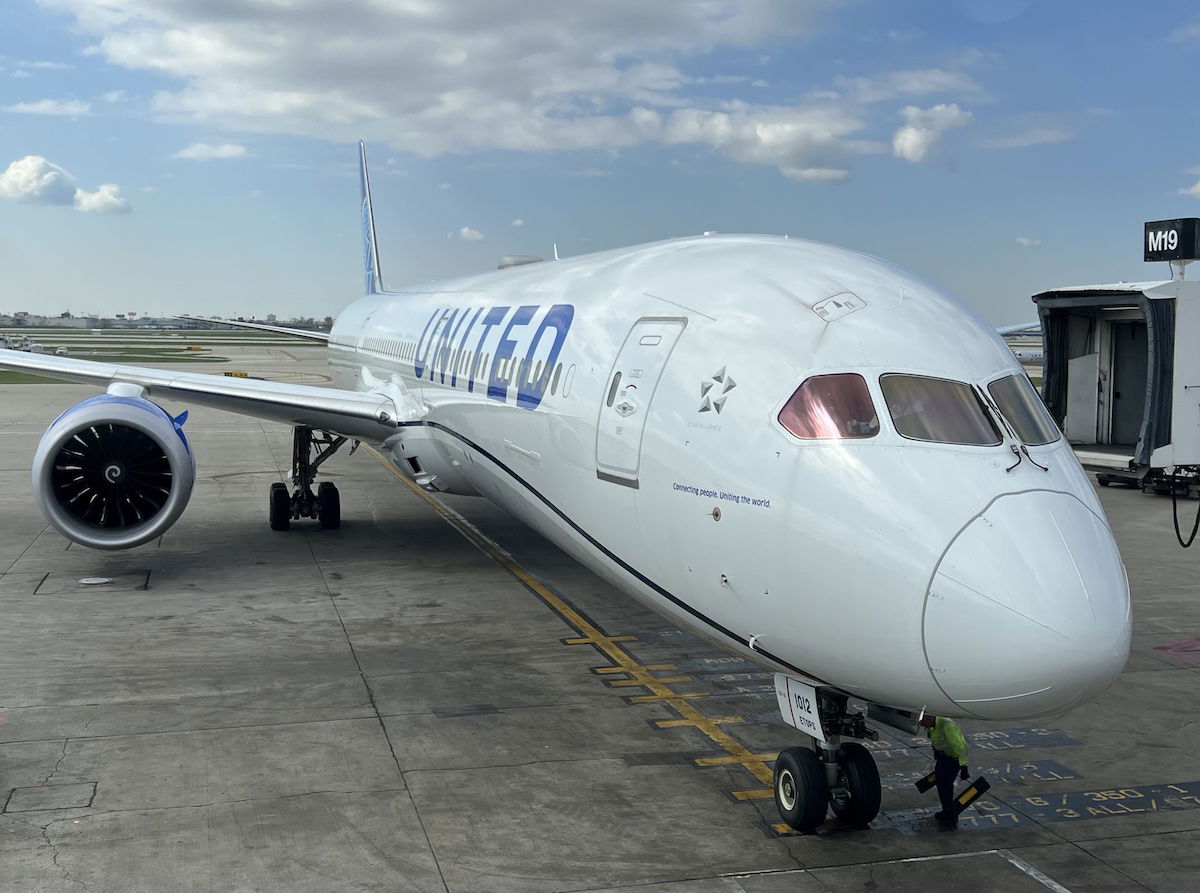
United “drawing a line in the sand” with American in Chicago
During yesterday’s 2025 earnings call, United CEO Scott Kirby was asked by Deutsche Bank’s Michael Linenberg about the competitive dynamics in Chicago. He pointed out how American is adding a lot of flights in Chicago, and quoted Kirby’s claims that American is losing $700-800 million per year at the airport.
So he asked if the increased competition is going to be a drag on United’s domestic yields, or how he sees that playing out. I just have to share Kirby’s response in full, because yowzers:
I was afraid we were going to get through the call without addressing Chicago. So I’m happy to do it. And it’s probably a good follow-up to the last question that I talked about. And I wanted to start with, at United Airlines, we’ve been a decade-long strategy to build a brand-loyal customer airline. That was all designed to get us out of the commoditized part of the industry where all that mattered was the schedule. And that meant in both — focusing on the product, the technology and service to get customers to choose us.
That’s been a really successful strategy. It didn’t happen overnight. It really has been a decade in the making, but you can see the results, and we’ve had market share increases everywhere that we fly. In Chicago, to be specific, in 2016, American actually had higher local market share with Chicago-based customers and higher share with business customers. In 2025, even after all the growth from our competitor, United now has a 22-point lead with Chicago-based customers in Chicago and a 38-point lead with the brand-loyal business customers.
Being a brand-loyal airline just really inoculates us mostly from that competitive activity. And in fact, in 2025, even with all that growth, the Chicago RASM outperformed the rest of the system by 1%, and we made a $500 million profit. By the way, I think we probably would have made $600 million. So it probably cost us about $100 million. But our competitor lost $500 million even though they didn’t start that really until May, so bigger on a full year basis.
As we enter 2026, there’s another wave of growth coming from that competitor. Mostly that’s going to wind up exactly the same as it did last year, with one difference. In 2025, American added gates. That means we watched it. We could have responded. We chose not to. They’re going to win 3 gates back at our expense when the analysis comes out later this year. We knew that was going to happen. We figured we’d just let it settle into a new normal and that would all be fine.
But in 2026, we’re drawing a line in the sand. We are not going to allow them to win a single gate at our expense in 2026. We’re not trying to win gates, but we’re going to add as many flights as are required to make sure that we keep our gate count the same in Chicago. Look, we’re just going to stay focused. We’ve had the right strategy at the whole network for a decade. We’re going to keep doing it. It’s a winning strategy. It’s working. We’re going to keep doing that in Chicago.
For what it’s worth, I think that we will likely grow our earnings. Certainly, we’ll make at least the same $500 million, I believe. And likely, we’ll still be able to grow our earnings in Chicago for the same reasons it worked last year. American, and we’re pretty good at estimating this is likely to push to about $1 billion in losses in Chicago. But we’re going to just stay focused on the strategy that’s worked for the last decade. Our team is doing a great job taking care of customers and it’s working for us.
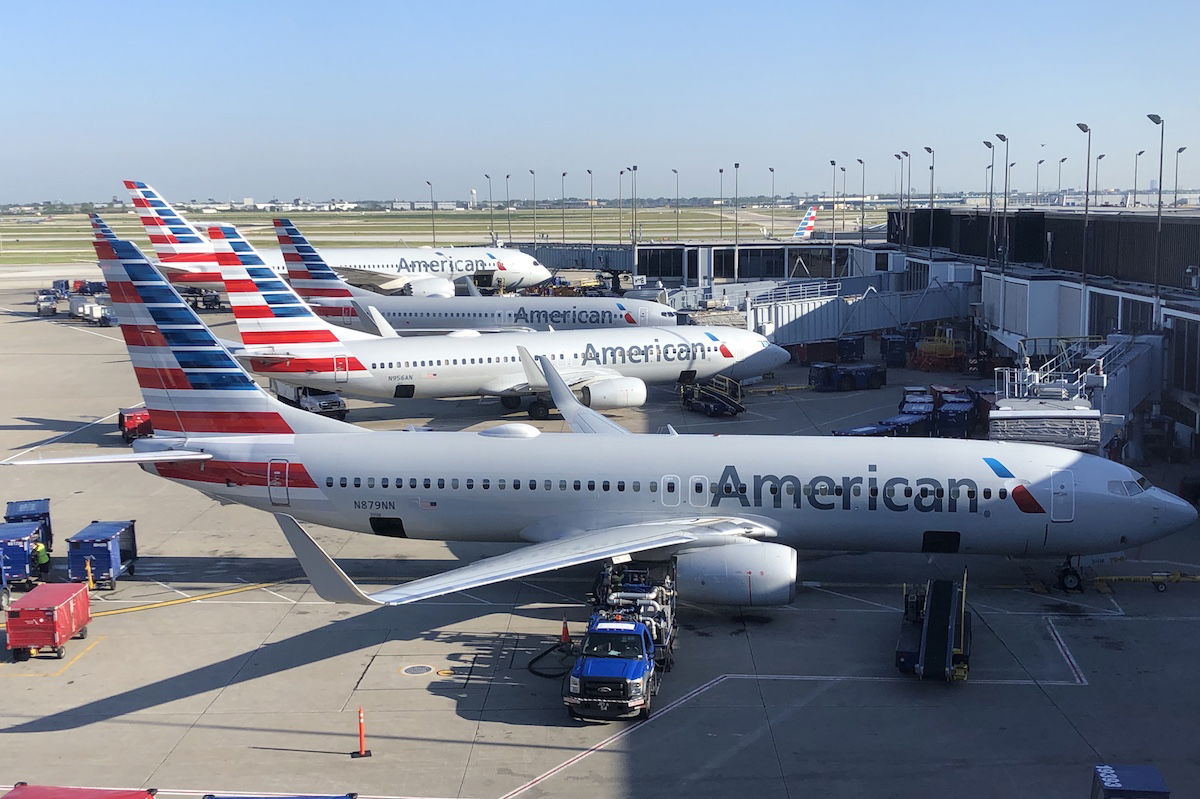
Will this really go so well for United and so poorly for American?
Kirby has no doubt done an amazing job moving United in the right direction, and he has also done a good job being a relatively reliable narrator on United’s performance. Part of the reason United’s stock does so well is because United actually delivers on the expectations it sets.
This situation in Chicago is perhaps the biggest uphill battle that United could face, as I see it. American will start capacity dumping in Chicago, with the goal of being allocated more gates there, as part of a bigger long term strategy. Meanwhile United is saying it refuses to give up any market share, so the airline will add as much capacity as it needs to, in order to stop American.
Strategically, airlines do this all the time. They don’t mind losing money in the short term, in the hope of making money in the long run. What’s unique here is that United is claiming it will do this while having the hub be at least as profitable, if not more profitable, than it currently is?
So United claims it will make at least $500 million in Chicago as it grows, while Kirby claims that American will likely lose $1 billion as it grows, basically doubling losses? We all know that United does better than American financially, but is that really how things are going to play out?
Kirby always talks about United getting out of the “commoditized” part of the industry, and increasingly having “brand loyal” customers. This hasn’t actually directly been put to the test in that many markets, given the carrier’s focus on building up fortress hubs. So this Chicago situation should prove as the greatest test of this to date.
Will customers choose United over American due to brand loyalty, even if American has lower fares? There’s simply no other way you end up in a situation where two carriers would have such inverse financial performances.
We’ll see. If Kirby is right, then this will be yet another massive strategic misstep for American, and will harm the carrier’s profitability even more. We know that Kirby thinks that American is cooked. But if Kirby is wrong — and it doesn’t take a lot for Kirby to be wrong here, given his outrageously rosy perspective on capacity dumping — then this might prove that American isn’t quite as screwed as Kirby has tried to suggest. Only time will tell how this plays out…
Bottom line
American and United have been competing in Chicago for many years, but competition is about to heat up more than ever before. Over the past decade, United has continued to gain market share at the airport, at American’s expense. American now wants to reverse that, and is adding over 100 daily flights.
Given the system for awarding gates at the airport, United claims it’s “drawing a line in the sand,” and won’t give up any more market share to American. This obviously means we’re going to see a huge amount of capacity dumping.
What’s surprising here is that United CEO Scott Kirby claims that as this happens, the carrier’s profitability in Chicago won’t decrease, and might even increase. Meanwhile he claims that American’s losses at the airport will double.
I don’t know how this is going to play out. If Kirby is right, then United is simply unstoppable. If Kirby is wrong, well… he might have to eat some humble pie.
How do you think this Chicago O’Hare situation will play out?




No one gives a crap.
I'm ORD based and flew AA early in my career but switched to United (pre-CO merger) and am glad I made the switch given where UA is going nowadays (planes / IFE, route options, IT / mobile app, operational reliability improvements, etc.).
Currently I never even look at AA options for flights. So I couldn't even tell you how much I'm willing to pay to avoid AA because it's not even an option I...
I'm ORD based and flew AA early in my career but switched to United (pre-CO merger) and am glad I made the switch given where UA is going nowadays (planes / IFE, route options, IT / mobile app, operational reliability improvements, etc.).
Currently I never even look at AA options for flights. So I couldn't even tell you how much I'm willing to pay to avoid AA because it's not even an option I consider. I do fly other airlines occasionally (Delta or Star Alliance or middle east carriers like Qatar) and enjoy those experiences but I would pay hundreds more to fly UA over AA or choose different dates so the story Kirby tells has some validity.
That being said...you can't add the amount of capacity they need to add while increasing profits like that... Certainly they should see increased top line revenue but increased profitability would be quite exceptional and unlikely...
Is it really that hard for US-based airlines to share gates? It's called "Common-Use" and exists all over the world.
US airports are usually controlled by municipalities and rely heavily on aeronautical revenue (airline fees) and passenger facility charges (PFCs) to finance the tax-free bonds so the airlines control the gates. European airports often privatized and have a higher reliance on non-aeronautical revenue (retail, parking). Follow the money.
This sounds crazy, so if you're TAP or Condor and you want to fly to a US destination three times a week, do they make you reserve gates that then stay unused 98% of the time?
Virtually all US airports do have gate usage requirements which means that US airlines do use gates at or above the airport average or there is some sort of mechanism for taking those gates back and either reassigning them or holding them as common use gates. No large US airport has 100% exclusive US airports.
and US airports are also required to accommodate new entrants and treaties require US airports to provide gate access for...
Virtually all US airports do have gate usage requirements which means that US airlines do use gates at or above the airport average or there is some sort of mechanism for taking those gates back and either reassigning them or holding them as common use gates. No large US airport has 100% exclusive US airports.
and US airports are also required to accommodate new entrants and treaties require US airports to provide gate access for foreign carriers.
the reality is that gate usage is much less about airline control than depicted and much more that US airlines do control the gates they heavily use and that really isn't that much difference that AF's gates at CDG or BA's at LHR or LH's at FRA or MUC
Seppos never learn such basic things.
A battle between any two US based carriers is always some version of "Tweedledum vs Tweedledee" and will likely be so for some time.
All big three suck, the only way to enjoy yourself flying within the US is to fly smaller regional carriers like Cape Air or hybrid models like Aero or JSX where you don't need to have massive status to avoid being treated like canine excrement.
Or, you know, private - but how many of us can do that?
Disgraceful!! We'll I guess I'll be (making very effort to) exclusively flying "DELTA AIRLINES" going forward! I have no "Time" for this kind of "NONSENSE!". I'm the customer Nad just paying to fly from Point A to Point B AND NOT BE INVOCLED IN DRAMA!!! I have Enough "DRAMA" in my life already!!! Prefer to Disconnect and relax when Travelling and no be subjected to FRICILOUS IRRELEVANR AND IRREVERENT nonsense that many people are calling...
Disgraceful!! We'll I guess I'll be (making very effort to) exclusively flying "DELTA AIRLINES" going forward! I have no "Time" for this kind of "NONSENSE!". I'm the customer Nad just paying to fly from Point A to Point B AND NOT BE INVOCLED IN DRAMA!!! I have Enough "DRAMA" in my life already!!! Prefer to Disconnect and relax when Travelling and no be subjected to FRICILOUS IRRELEVANR AND IRREVERENT nonsense that many people are calling "Crap" and very offended by! I can't imagine the shareholders Approving & Accepting this Junk! Was the BOARD consulted between Moe Kirby is going on and talking like this? This is anticompetitive behavior!
Are you having a stroke? This post isn't about Delta
I never said it was you numpty! I said I will (make every effort) to fly Delta Airlines exclusive going forard as I have "TOTALLY NO TIME" for this kind of "INTRAORGANIZATIONAL" drama between United Airlines and American Airways! Please "THINK" before your comment at me in the future! You obviously didn' read my comment I guess? Or perhaps articling? Liddle Georgy Peorgy?
this is objectively the funniest comment I've read on this site
If this doesn't interest you, why are you reading the post, why are you following OMAAT, and why are you wasting your precious time commenting on it? My gosh, Jessica, chill the hell out.
Marty -
You do not have my permission to respond to my Posts going forward ! I do not appreciate or except you insolance!!! I have the tight to COMMENT READ NA DBSARE MY OPNIINON! NO!?! Bugger!!! Lay off!!!!!!
Ben, did you see the latest from JonNYC with some of UA's slides with extra data?
this kind of stuff is precisely why UA made $1.7 billion less than DL in 2025 despite flying 10% more ASMs.
the reason why analysts hone in on these competitive battles is because they hurt profits for everyone involved. Kirby is beyond foolish if he thinks no one believes this doesn't hurt UA.
AA and UA both use smaller gauge (average aircraft size) at ORD than any other legacy carrier hubs except for DCA and...
this kind of stuff is precisely why UA made $1.7 billion less than DL in 2025 despite flying 10% more ASMs.
the reason why analysts hone in on these competitive battles is because they hurt profits for everyone involved. Kirby is beyond foolish if he thinks no one believes this doesn't hurt UA.
AA and UA both use smaller gauge (average aircraft size) at ORD than any other legacy carrier hubs except for DCA and LGA, both of which are perimeter restricted - while ORD is not.
AA uses a higher percentage of RJs at ORD than UA does but AA uses more efficient E175s while nearly 20% of UA's ORD flights are on CRJ550s, the least efficient and most costly aircraft in the US carrier fleet on a per seat basis.
the real end game is the new global terminal which will replace terminal 2 but will send cost per passenger soaring at ORD; every carrier that serves the local market will pay the same for local passengers but airlines that connect at ORD will have disproportionately high costs.
DL is the winner here by still being the largest airline in the Midwest with twin hubs on each side of Chicago that are much less costly to operate. and DL dominates its hubs at DTW and MSP as UA can only hope to do at ORD.
AA cannot walk away strategically from ORD.
AA and WN are turning around their businesses and can increasingly afford to stick it out in Chicago while UA maniacally thinks it is going to drive everyone else away.
and this same thing is playing out in different degrees in different UA hubs.
It isn't hard to see why UA can't and won't reach DL's levels of profitability given these types of pi8ong contests that Kirby continually engages in.
"AA cannot walk away strategically from ORD."
How long can they lose $1B/year at ORD? Why are most hubs eventually dominated by one network airline?
first, it is very doubtful that AA loses $1 billion at ORD, no matter what UA models while pretending they are profitable.
And the bigger question is how long UA can keep fighting battles that cost IT revenue and profits in multiple hubs.
and while most hubs are dominated by one airline, WN and UA, and WN's transformation makes it far more of a competitor than it has ever been.
and AA...
first, it is very doubtful that AA loses $1 billion at ORD, no matter what UA models while pretending they are profitable.
And the bigger question is how long UA can keep fighting battles that cost IT revenue and profits in multiple hubs.
and while most hubs are dominated by one airline, WN and UA, and WN's transformation makes it far more of a competitor than it has ever been.
and AA is on the upswing which will allow it to fund more of what is strategically necessary.
The Midwest is the most strategically necessary region for AA to have to defend.
TD, "it is very doubtful that AA loses $1 billion at ORD"
How much is AA losing at ORD? Kirby says UA made $500M in ORD profit last year and that it would have probably been $600M without the overscheduling.
we know what Kirby said.
but he also has said that UA is the only airline that makes money at all of its hubs - and yet DL made 50% more than UA on a systemwide basis for 2025.
Clearly, there are things that UA does that don't make near as much money as DL does.
as hard as it is for you and others to accept, UA's throwing of capacity into markets to...
we know what Kirby said.
but he also has said that UA is the only airline that makes money at all of its hubs - and yet DL made 50% more than UA on a systemwide basis for 2025.
Clearly, there are things that UA does that don't make near as much money as DL does.
as hard as it is for you and others to accept, UA's throwing of capacity into markets to try to gain market share - which sometimes works from a share standpoint - hurt financial results.
If Kirby thinks he can win a war of finances with AA, then other airlines will be the ones that win by going after UA's vulnerabilities.
That principle is exactly why DL has no hesitation in starting LAX-HKG and ORD.
So you don't have a clue as usual. Got it.
@Tim
"AA and UA both use smaller gauge (average aircraft size) at ORD than any other legacy carrier hubs except for DCA and LGA, "
Not your only talking point on this being rehashed as though it's relevant?
"DL is the winner here"
What a shocking takeaway by you, Tim. Everyone is so surprised that you took "DL wins" on an article about AA and UA.
Except that while it's fun to...
@Tim
"AA and UA both use smaller gauge (average aircraft size) at ORD than any other legacy carrier hubs except for DCA and LGA, "
Not your only talking point on this being rehashed as though it's relevant?
"DL is the winner here"
What a shocking takeaway by you, Tim. Everyone is so surprised that you took "DL wins" on an article about AA and UA.
Except that while it's fun to pretend two hubs = 1, they don't. Both DTW and MSP are smaller in seats and number of flights vs even AA in ORD, much less UA in ORD meaning each DL hub has less connectivity than AA or UA at ORD. While it may make sense in your mind that a person in CID prefers the two hub layout (an ironic and purposeful choice of CID because, like a surprising number of airports in the midwest, DL doesn't fly to DTW and MSP, only one), the reality is that ignores that the same customer may prefer Denver over MSP or DFW over DTW. Not to mention, the AA and UA hubs at ORD have ENORMOUSLY higher O&D demand to midwest cities than either DTW or MSP.
Sure... ten years ago, MSP was probably more relevant to some in the midwest, but with the massive growth and connectivity of DEN and DFW, there isn't much reason to go out of the way like some in the Midwest may have been forced to in years past. If you look at a map, MSP, in particular, is often out of the way geographically vs DEN if you're going West (and DEN is much bigger than MSP or DTW with much better connectivity to portions of the US)or certainly vs DFW if you're going South or parts of the SE.
That Dual hub idea with DL is amusing, but frankly, the better dual hubs are ORD/DEN or ORD/DFW. Both with higher O&D and connectivity than DL in DTW or MSP.
But... if you wondered, if you exclude hub states in a traditional view of the midwest (IL, MI, and MN), Delta is the smallest carrier of the US3 in the Midwest, not the largest and has been the smallest for some time. So your entire basis of idea of Delta being the largest in the midwest is completely false. Their dual hub structure has actually led to them being the smallest carrier in the midwest excluding IL, MI, and MN. This idea of a NW dual-hub midwest dominance by Delta is a relic of 10 years ago so let's use fresh data, not historic dreams of years gone by.
In those non-hub states, AA has about 35% more flights than DL. UA has about 15% more flights.
@Rebel
"Why are most hubs eventually dominated by one network airline?"
NYC isn't. LAX isn't. The large metro cities that are now dominated by one network carrier are hubs/metros that were arguably built with strong one-carrier hubs (ATL, DFW, IAH, CLT, etc) and that connectivity helped drive the population growth while NYC, LA, and Chicagoland are historically large US metro areas pre-deregulation.
Aka. The one carrier hub cities grew into their current large city status, while NYC/LA/Chicago were already large cities and thus carriers competed in them immediately post deregulation.
Why should we expect one network carrier dominance in the third largest metro area in the US? It never has been one-carrier dominant in Chicago and this certainly isn't the first time UA and AA have fought over Chicago dominance.
to no surprise, Max, you have to cherrypick and exclude markets - specifically hubs - in order to come up w/ the conclusion that DL isn't the largest airline in the Midwest. How very Max of you.
The Midwest DOES include the metro areas that host hubs AS WELL AS the states for those hubs.
In fact, DL IS the largest airline in the Midwest, Max. No amount of manipulation of reality changes that.
and...
to no surprise, Max, you have to cherrypick and exclude markets - specifically hubs - in order to come up w/ the conclusion that DL isn't the largest airline in the Midwest. How very Max of you.
The Midwest DOES include the metro areas that host hubs AS WELL AS the states for those hubs.
In fact, DL IS the largest airline in the Midwest, Max. No amount of manipulation of reality changes that.
and the DL DTW and MSP hubs COMBINED are larger than either airline at ORD - that is why DL is the largest airline in the Midwest.
Picking a market in any part of the Midwest doesn't change the overall regional dynamic.
and, you of all people have argued incessantly about the monopoly that DL has in its hubs and yet you can't grasp that a part of the reason why DL is so much more profitable is because they don't have to and don't engage in these types of financially damaging strategies.
DL IS the biggest beneficiary of these types of shootouts - and the much higher profits they posted or any other airline will report shows it
"DL is the winner here by still being the largest airline in the Midwest with twin hubs on each side of Chicago "
Oh dear timmy... If you want to know whether a dual hub structure is better than one hub for the Midwest, the obvious way is to exclude hub states where it's truly a battle of DTW/MSP vs ORD and Delta loses across the board. They're the smallest US3 carrier across the Midwest...
"DL is the winner here by still being the largest airline in the Midwest with twin hubs on each side of Chicago "
Oh dear timmy... If you want to know whether a dual hub structure is better than one hub for the Midwest, the obvious way is to exclude hub states where it's truly a battle of DTW/MSP vs ORD and Delta loses across the board. They're the smallest US3 carrier across the Midwest where your theory would be evident, if true. But your theory isn't true. Delta is the smallest carrier across the midwest if you exclude where the hubs are located. Do you want me to yell that Delta is the smallest in Illinois? Ok. They are. Isn't it obvious that AA and UA are smaller in MI/MN vs DL? Ok. They are. Duh?
Get your head out of your ass. Yes, each carrier is bigger in their hub state, obviously. However, Delta is the smallest across the rest of the midwest with their hub strategy and that's really rather impressive considering how much mainline DL flies into the midwest from ATL. Sorry pal, Delta is the smallest carrier in competitive states across the Midwest. Facts hurt sometimes. Try using them sometime and you won't get shown up.
Max,
it makes ZERO sense to argue that the local market in the state or metro of a hub should be excluded in calculating size in a region - but it is perfectly obvious that you want to do it because DL does have so much more share in their hubs in the Midwest than AA or UA have in Chicago.
If your data is used by more than yourself or one company, it...
Max,
it makes ZERO sense to argue that the local market in the state or metro of a hub should be excluded in calculating size in a region - but it is perfectly obvious that you want to do it because DL does have so much more share in their hubs in the Midwest than AA or UA have in Chicago.
If your data is used by more than yourself or one company, it might make sense but no one else buys the idea that share in a hub metro or state should be excluded.
Does that mean that DL has as much if not more share in Texas than UA by your metrics?
Tim
ok. We don't disagree? I just think testing the "which hub strategy" is better is pretty evident when you look at market share in states where AA/DL/UA wouldn't have a natural advantage and Delta is in last place in the midwest by that metric. but whatever. Seems obvious Delta's midwest strategy isn't working across the midwest but rather just in MI and MN as you'd expect but... no need to argue about which comparison is the better way.
agree that is best to disagree.
the implications of your methodology are obvious.
DL becomes the largest airline in Florida and N. Carolina, UA is #4 in Texas and on and on....
its' a methodology that just doesn't make any sense.
MaxPower, "Why should we expect one network carrier dominance in the third largest metro area in the US?"
It's economics and math. If Kirby's numbers are even close how long can AA withstand those losses? And SWA isn't going anywhere at MDW.
Kirby works at United. He doesn't have AA numbers. And, if you haven't noticed, Scott Kirby normally talks about UA hub profitability while included credit card spend while talking about AA/DL hub profitability absent that (because while he could estimate credit card spend for AA/DL at their hubs, he can't do it well, he can really only estimate air fare vs cost at AA/DL hubs which he knows better than anyone, isn't the way he...
Kirby works at United. He doesn't have AA numbers. And, if you haven't noticed, Scott Kirby normally talks about UA hub profitability while included credit card spend while talking about AA/DL hub profitability absent that (because while he could estimate credit card spend for AA/DL at their hubs, he can't do it well, he can really only estimate air fare vs cost at AA/DL hubs which he knows better than anyone, isn't the way he values his own hubs).
And AA has already said Kirby's numbers are wrong. I imagine they'll talk about it in more depth on the AA earnings call since Kirby is trying to get Wall street to focus on AA at ORD to give himself a monopoly hub in ORD.
I think airlines know very well how their competition is doing in markets and based on their financials. I hope Isom offers some numbers, but so far the silence is deafening. Kirby talks too much smack, but he and his team have an impressive track record. I am sure Vasu Raja will give them some relatively recent data points too.
Rebel
Why should AA give out numbers on ORD? They've already said Kirby is way off but why validate Kirby's comments with internal data and give him more info? They have talked about ORD profitability in the past. But perhaps Isom will in the coming days...
Scott Kirby can guess at AA's credit card depth in Chicago and the midwest that adds value to the ORD hub for AA, but he certainly doesn't know...
Rebel
Why should AA give out numbers on ORD? They've already said Kirby is way off but why validate Kirby's comments with internal data and give him more info? They have talked about ORD profitability in the past. But perhaps Isom will in the coming days...
Scott Kirby can guess at AA's credit card depth in Chicago and the midwest that adds value to the ORD hub for AA, but he certainly doesn't know it. AA's credit card strength, depth, and network power isn't going to come from Chicago necessarily anyway, it'll come from being the largest US3 carrier, by far, in every other non-hub state (and most non-DTW/MSP/ORD major midwest cities) and Chicago helps them do that augmented by CLT and DFW (and the occasional DCA/PHX/LGA/MIA thrown in).
The data Kirby has would show him avg fares vs estimated costs. He doesn't have credit card data nor does he have detail on AA's new credit card detail and one would hope Vasu is smart enough to not violate highly-likely NDAs to AA and Citi on the topic.
@Rebel
My comment above: "isn't going to come from Chicago necessarily anyway, it'll come from being the largest US3 carrier, by far, in every other non-hub state"
I didn't check this by state... I'll back off that dogmatic comment and go with the overall non-hub state stat across the Midwest as previously mentioned.
United and American should really team up and push for the city to close Midway and turn it into a park. O'Hare should be able to support 120M+ passengers at full build out and Midway is just unnecessary (+loud for dense surrounding neighborhoods). Send Southwest up to Milwaukee and split the (admittedly low value) O&D that MDW captures today.
Oh please.... Go focus on trying to close HOU and LUV while you are at it.
I mever bother reading your comments, at least not after the first sentence. The post is not about Delta, so why are you writing multi-paragraph comments anout Delta? Get some help, dude.
Max is SO RIGHT in his comments about these so-called comparisons of UA vs. other hubs.
It is absolutely no surprise that Kirby cherrypicks data to make UA look good but doesn't use the same data - whether he has access to it or not - to calculate profitability at other airline hubs.
and the discussion is about ORD WHICH IS A HUB. It makes all the sense in the world to talk about...
Max is SO RIGHT in his comments about these so-called comparisons of UA vs. other hubs.
It is absolutely no surprise that Kirby cherrypicks data to make UA look good but doesn't use the same data - whether he has access to it or not - to calculate profitability at other airline hubs.
and the discussion is about ORD WHICH IS A HUB. It makes all the sense in the world to talk about ORD vs. other hubs as well as the impact on other airlines.
Of course the UA fan club doesn't want to hear that DL benefits by not being a part of this shooting match and has hubs that already cost less per passenger to operate than ORD.
Once again, the topic is about UA and AA at ORD. There’s nothing about DL mentioned. We all know that you have DL-obsessed-illusions and keep seeing “red meat” everywhere (just like any psychopath out there), but once again - STAY ON TOPIC. If you can’t do it, don’t comment anymore.
@Ben, I think that it would be greatly appreciated if you’d introduced some kind of moderation to the comments sections to prevent this kind of...
Once again, the topic is about UA and AA at ORD. There’s nothing about DL mentioned. We all know that you have DL-obsessed-illusions and keep seeing “red meat” everywhere (just like any psychopath out there), but once again - STAY ON TOPIC. If you can’t do it, don’t comment anymore.
@Ben, I think that it would be greatly appreciated if you’d introduced some kind of moderation to the comments sections to prevent this kind of thing from happening over and over again. Everytime you write something about UA or AA, this guy just shifts everything to DL and then we have 30+ comments back and forth that add nothing to the discussion. Even worse - it’s annoying, and I’m pretty sure that it turns a lot of readers down.
BTW, I’m speaking about your first comment.
Eduardo,
you would do well to read UA's own earnings transcript for the 4th quarter which just came out.
UA referenced DL only 3 times - far less than in other months - and one of the references was regarding the retirement of Glen Hauenstein from DL and the other 2 were about the battle for Chicago and UA's belief that it will win because it is like DL and has invested in the...
Eduardo,
you would do well to read UA's own earnings transcript for the 4th quarter which just came out.
UA referenced DL only 3 times - far less than in other months - and one of the references was regarding the retirement of Glen Hauenstein from DL and the other 2 were about the battle for Chicago and UA's belief that it will win because it is like DL and has invested in the product.
There is no reference to DL and UA's earnings even though UA execs said for years that UA would catch up or pass DL in earnings.
They aren't saying that any more and the fact that DL made 50% more in 2025 makes it clear that is no longer a relevant goal.
I have said for years that UA could not catch up to DL's earnings and UA execs are now realizing that.
The sooner the UA fans here and elsewhere as well as UA execs realize that UA is going to be 2nd tier to DL in finances will be the day I stop comparing them to UA.
It is clear that you don't like comparisons if they don't show what you want to be true.
Market share strategies and competitive battles are why UA is not going to match DL in finances. They are free to do that but just recognize that UA and its fanbase need to quit thinking both market share and financial leadership can be true at the same time because DL and UA and their separate strategies have proven it is not possible
You are so stupid and obsessed with DL’s finances that you can’t even tell where you are anymore. You are beyond medical help. You’re just like Leo diCaprio in Shutter Island: you are so obsessed with something that it started to bleed into your reality and you can’t distinguish reality from obsession anymore. That’s why you have psychotic illusions and keep seeing “red meat” everywhere (these were your own words).
Newsflash: I’m talking about...
You are so stupid and obsessed with DL’s finances that you can’t even tell where you are anymore. You are beyond medical help. You’re just like Leo diCaprio in Shutter Island: you are so obsessed with something that it started to bleed into your reality and you can’t distinguish reality from obsession anymore. That’s why you have psychotic illusions and keep seeing “red meat” everywhere (these were your own words).
Newsflash: I’m talking about the article that Ben wrote. In it, DL is mentioned ZERO TIMES. And guess what: DL’s finances have been mentioned ZERO TIMES. I don’t care if DL’s financial results mention other airlines. IT’S NOT THE TOPIC IN DISCUSSION. In fact, no one does. Just you.
Either stop bringing your psychoses into every article that has nothing to do with DL or stop commenting at all. It’s annoying and NO ONE CARES.
this isn't your blog, son.
There are plenty of people that have made comparisons between DL and UA's financial results and they were made here.
You, of course, don't want to see them because you can't stand to admit that UA really is abandoning its 10 year quest to catch up w/ DL in profits.
UA leadership has given up in making those comparisons and other people will be smart enough to do...
this isn't your blog, son.
There are plenty of people that have made comparisons between DL and UA's financial results and they were made here.
You, of course, don't want to see them because you can't stand to admit that UA really is abandoning its 10 year quest to catch up w/ DL in profits.
UA leadership has given up in making those comparisons and other people will be smart enough to do the same because UA knows they are nowhere near close to being financially comparable to DL.
The NYC subway is mass transportation; that is apparently the category that UA wants to be in despite believing that they are premium.
“You, of course, don't want to see them because you can't stand to admit that UA really is abandoning its 10 year quest to catch up w/ DL in profits.”
Once again, you are so obsessed about this that you think that everyone else has the same sick weird scary fetish that you have. I don’t give a rat’s ass about who’s number 1, 2 or 3 … you are the only one obsessed by this.
Once again: stop being so annoying and STAY ON TOPIC from now on.
The battle is over. United wins with their app. Loyal UA flyers know how it takes care of almost everything. Example. Seeing seat map live when you are in your seat wondering if the seat next to will be empty.
As a brand loyal ORD flyer, AA's tech is so clunky and un-intuitive that it actively keeps me away. If the AA app matched the UA app I'd be inclined to give them more business
::Delta IT has entered the chat::
Both airlines, DUH! You could have hubs at meaningless cities like DTW & MSP instead! Just build the 17th largest SkyClub. #lowercosts
AA will never recover meaningful market share at ORD or JFK.
It's fascinating to see Kirby's strategy in action on specific routes. Take Erie (ERI), which lost all but one of its Big 3 routes (AA to CLT being the remaining one) over the past few years. Then AA announced it was bringing back ORD with a single daily CRJ flight. The next day, UA counters with three daily flights on the A220. Suddenly, ERI has real connectivity to the entire western US and Europe again....
It's fascinating to see Kirby's strategy in action on specific routes. Take Erie (ERI), which lost all but one of its Big 3 routes (AA to CLT being the remaining one) over the past few years. Then AA announced it was bringing back ORD with a single daily CRJ flight. The next day, UA counters with three daily flights on the A220. Suddenly, ERI has real connectivity to the entire western US and Europe again. It's great to see, but can't imagine that number of departures will last.
UA doesn't fly A220
UA doesn't have the A220 in their fleet.
Meant CRJ500.
I think Kirby is delusional that customers are brand loyal. Smart customers choose what is best for them, not a silly brand. United is on the precipice of destroying its only remaining 1K benefit of significant value by "varying" (aka massively increasing) the PlusPoints prices for confirmable international upgrades. We will get great value out of one last allocation of PlusPoints this year and then drop any "loyalty" to United. Buh bye.
I'm an ORD flyer AA 3MM UA 1MM who was 100% brand loyal to American from 2000 to around 2015 and then... flipped to highly loyal to United. Post-covid especially so. Is price a factor sure, but AA has had so many operational issues and customer service lapses that I just don't need that drama anymore. When I do fly AA these days, I seem to experience delays or cancellations. Eight weeks ago I flew...
I'm an ORD flyer AA 3MM UA 1MM who was 100% brand loyal to American from 2000 to around 2015 and then... flipped to highly loyal to United. Post-covid especially so. Is price a factor sure, but AA has had so many operational issues and customer service lapses that I just don't need that drama anymore. When I do fly AA these days, I seem to experience delays or cancellations. Eight weeks ago I flew TPA-ORD, and AA posted a delay from 6:23 AM to 1 PM...that 6+ hour delay wasn't even announced until 4:30 AM, just before I stepped in a Lyft to TPA. There were no alternatives on AA that would get me to ORD faster, and no offer to put us on UA or anyone else. The flight delayed further and instead of getting home 8:25 AM we landed around 3:15 PM. In an earlier era, I would have had an apology email in my inbox before landing, possibly some kind of concession offered. In 2025, there was zero follow-up except their usual post-flight survey, which I pointed out that there had been no follow-up...and there still was no follow-up.
It's happened enough that I just don't feel like deviating from UA. Does every airline have issues of course, but consistently UA is doing the things to build loyalty. One good one is that my wife also has Gold status based on my 1 MM, while AA in contrast sent me four whoop-de-do VIP coupons (I don't do as much international as I used to) and a luggage tag for crossing 3 MM and won't raise my status to Platinum Pro until 4 MM.
I'm surprised by the number of folks stating that United is superior. I don't claim American is amazing, but the on-board experience with United is just miserable. I've been avoiding United for a some time now, but had to fly United FRA to IAD last Saturday. Yes we left on-time, but the service was so bad that it aggravated me for the duration of the flight. The flight attendants had such a terrible attitude and...
I'm surprised by the number of folks stating that United is superior. I don't claim American is amazing, but the on-board experience with United is just miserable. I've been avoiding United for a some time now, but had to fly United FRA to IAD last Saturday. Yes we left on-time, but the service was so bad that it aggravated me for the duration of the flight. The flight attendants had such a terrible attitude and treated passengers with great disdain. This level of disrespect is why I've been avoiding United. They are both bad to me, with American being marginally better. Although admittedly, delays with American are more common. Overall, I prefer delays over disrespect (i.e. American over United).
Since you say you have been avoiding UA, you might not understand that they have changed.
UA has changed... Have they changed since the poster's trip from FRA last Saturday?
Not to be a party pooper, but I will bet even DL has bad trips. So, your rationale might need some updating.
Same situation for me. Loyal to AA for 15+ years as Exec Plat but finally have UA a try last year and I’ve never looked back. I’m based at DCA but fly to Chicago a lot and United has about 12 flights a day vs AA at 8, even though it’s between two AA hubs. And as soon as a drop of rain falls, AA’s operation falls apart while UA manages to mostly stay on...
Same situation for me. Loyal to AA for 15+ years as Exec Plat but finally have UA a try last year and I’ve never looked back. I’m based at DCA but fly to Chicago a lot and United has about 12 flights a day vs AA at 8, even though it’s between two AA hubs. And as soon as a drop of rain falls, AA’s operation falls apart while UA manages to mostly stay on time. Add in that 1K members get to pre-board and the employees just seem so much happier and more friendly, I’m sold. AA is easier to reach top tier status but UA experience is so much better.
Where does WN fit into all of this? I know their recent changes turned a good number of loyal customers away, so I'm wondering if AA is looking to grab some of the general Chicago market share (rather than just ORD)
A picture is worth ...
https://www.reddit.com/media?url=https%3A%2F%2Fpreview.redd.it%2Fdid-we-win-ord-gate-v0-wklr199ruwsf1.jpeg%3Fwidth%3D1120%26format%3Dpjpg%26auto%3Dwebp%26s%3Df87a8bb1adff11a505ef5447e9308868beecda4c
What I wonder is how ORD will cope with these 100's of additional flights, anybody who has flown recently through ORD knows that taxi times are already reaching 30min or more - Gates are often not available adding additional "taxi" time and all of this when construction of the new terminal(s) just began.
Right now I think ORD (unfortunately my home airport) is already the worst regarding taxi time in all US, even on...
What I wonder is how ORD will cope with these 100's of additional flights, anybody who has flown recently through ORD knows that taxi times are already reaching 30min or more - Gates are often not available adding additional "taxi" time and all of this when construction of the new terminal(s) just began.
Right now I think ORD (unfortunately my home airport) is already the worst regarding taxi time in all US, even on "good" days - Happy to be proven wrong
If they really are going to add these flights it wont be long before it backfires as a ORD meltdown is waiting to happen.
ORD is actually just a social experiment in how long they can expand an airport without planning any of it in the long term
What are you talking about. The entire airport grounds have been rebuilt.
The terminals are the last piece, which is frustrating but it's how it was planned. They've completed the T5 expansion (T5 headhouse is still bizarrely cramped but they're reconfiguring the roads) and have broken ground on C expansion
Comparison: https://primeraeng.com/wp-content/uploads/2021/09/091721-OMP_thumbnail-1.jpg
My comment is to betterbub, agree with Dries that taxiing this summer is going to be miserable
To be honest I didn't really think that deep into my comment. Just the glue-the-new-building-to-the-last-new-building nature of what ORD feels like when walking between terminals 1-3 is what led me to feel that way
There was a long term plan, but AA's bankruptcy really dragged it out. Then, AA managed to get new gates!! Still, AA and UA kept fighting over how much they would pay for the new global terminal because they don't want any new gates to come available for competitors. Delta and Southwest are in the "International Terminal for these reasons. They have to go somewhere since AA and UA want to max out their flights.
...There was a long term plan, but AA's bankruptcy really dragged it out. Then, AA managed to get new gates!! Still, AA and UA kept fighting over how much they would pay for the new global terminal because they don't want any new gates to come available for competitors. Delta and Southwest are in the "International Terminal for these reasons. They have to go somewhere since AA and UA want to max out their flights.
The issue with AA that I can't figure out is why they brought BA departures to join Iberia and JAL at their domestic gates. If AA really needed gates, those airlines could still use the International Terminal for departures.
AA destroyed their sales and distribution capabilities in 2022/2023. That is what destroyed business travel on AA in/out of Chicago
"Will customers choose United over American due to brand loyalty, even if American has lower fares?", Ben wrote.
When frequent flyer programs used to award a lot of miles, often yes, but not anymore. A $500 round trip yields 2500-3000 miles instead of 4500 miles and the awards are double the levels or more.
The soft product is not much better with United.
AA years back decided everything was CLT and DFW. Now they want back into an already competitive market. Everyone flys to Chicago, ORD and MDW albeit ORD is the premier airport. I've always liked ORD other than the sometimes insanely long taxis. Easy to connect, nice AC and FL, great food places, not obnoxiously crowded like CLT.
C’mon, we all know in a decade or so Delta (the most profitable airline in the history of time) will force out both UA and AA and make it another DL hub.
Scott always talks a big game but the true reality is:
AVOID CONNECTING IN ORD AT ALL COSTS IN 2026.
With both airlines adding absurd numbers of departures to one up the other on gate allocation, ORD is going to be an operational mess this year.
This.
ORD is already notorious for long taxi time and tarmac delays over past years. The competition is only making it worse.
Also, Kirby’s claim is a textbook example of seeking monopoly, which would ultimately hurt customers. Just see their new remote routes’ occupancy percentage and how much they sell them. United may even sell these 737 Max front seats as international business if not blocked by *A TATL JV.
No matter...
This.
ORD is already notorious for long taxi time and tarmac delays over past years. The competition is only making it worse.
Also, Kirby’s claim is a textbook example of seeking monopoly, which would ultimately hurt customers. Just see their new remote routes’ occupancy percentage and how much they sell them. United may even sell these 737 Max front seats as international business if not blocked by *A TATL JV.
No matter what fanboys say, corporations are corporations and their entire existence is to suck as much money from consumers as they can without delivering anything, no matter its United, American, or any other industries. Competition is always good.
Exactly. This is the inevitable consequence but I haven't seen it mentioned.
The deice pads will be fully utilized this summer
United is terminal 1, American terminal 2. Stupid question, but how could united lose gates to American at terminal 1?
United is 1 & 2, while American is 3. There's a wing that borders 2 and 3 (I believe the G concourse) where the gates have been traded off.
Correction - American is in terminal 3. United took over some gates in Concourse G, terminal 3 this past year. That's right - United has gates in all 3 terminals. United doesnt want to lose gates that it recently got back to American.
United is terminal 1 (all of it) and terminal 2 (a lot of it)
American is terminal 3 and United is now in concourse G of terminal 3 per the new gate allotment.
The battle for AA vs UA is AA retaking concourse G and potentially (but unlikely) moving some into terminal 2
It’s relatively easy for either carrier to move passengers to terminal 2 but lord help the poor UA passenger landing in terminal 1 gate C5 connecting to T3 gate G20
Exactly why my mom will need a wheel chair if she's ever connecting with me at ORD.
United is Terminal 1 and the bulk of Terminal 2. American is Terminal 3. With the recent reallocation, United gained gates in G Concourse in Terminal 3. American could get those gares back as well as gates in Terminal 2. Look things up before you open your mouth.
“Gares”? Run spellcheck before you open your mouth.
Shut up, butch.