
It’s an interesting time for global aviation, primarily due to geopolitical factor that are outside of the industry’s control. A lot of this has to do with President Trump’s policies on tariffs, plus the general economic uncertainty we’ve seen.
For example, a few weeks back, Delta slashed its Q1 2025 guidance, citing a reduction in consumer confidence. We’ve also seen a dip in demand between the United States and Canada. However, up until now, airline executives have insisted that transatlantic demand is continuing to be strong. That brings up an interesting update that was provided today…
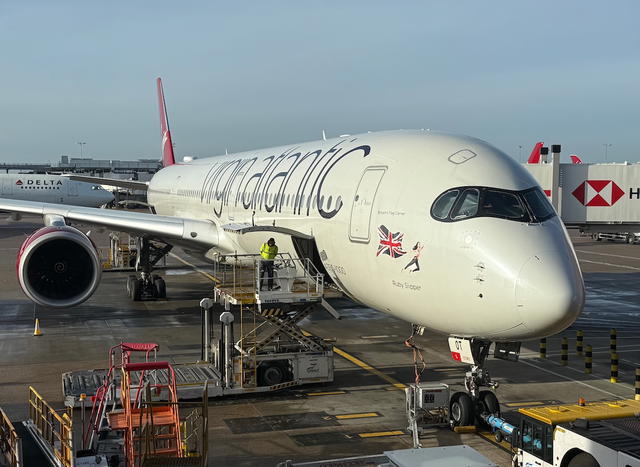
Virgin Atlantic is seeing transatlantic demand dip
Virgin Atlantic has today published its 2024 financial results, where we’re seeing the airline report a modest profit of £20 million, which is the first time since the start of the pandemic that the airline hasn’t lost money. The SkyTeam carrier has been undergoing a transformation, in hopes of becoming sustainably profitable.
It’s good to see the airline finally turning a small profit, and it’s really a reminder of how tough the airline business is. Virgin Atlantic’s biggest market is across the Atlantic, and Virgin Atlantic essentially acts as an extension of Delta’s business, but with lower operating costs. Despite Delta being the world’s most profitable airline, that doesn’t translate to much profitability for the London-based carrier.
Speaking of transatlantic demand, Virgin Atlantic also shared some bad news. During a call discussing financial results, Oliver Byrns, Virgin Atlantic’ Chief Financial Officer, shared an update on current demand trends. According to him, Virgin Atlantic is starting to see transatlantic demand take a hit. Specifically, in the last few weeks, he claims the airline has “started to see some signals that US demand is slowing.”
There are two points that are particularly interesting:
- Demand is specifically weakening for tickets originating in the US, and not for tickets originating in the UK
- Right now, spring travel is the period where weakness is being seen, so that would be for travel in the coming weeks and months
We don’t yet know just how big the dip in demand is, but to my knowledge, Virgin Atlantic is the first major transatlantic carrier to publicly acknowledge that transatlantic demand is weakening.
Given that Delta and Virgin Atlantic have a transatlantic joint venture, it seems likely that Delta is also seeing weakening demand between the US and London, since the airlines coordinate their schedules. It’ll be interesting to see if Delta releases updated guidance for Q2 2025.
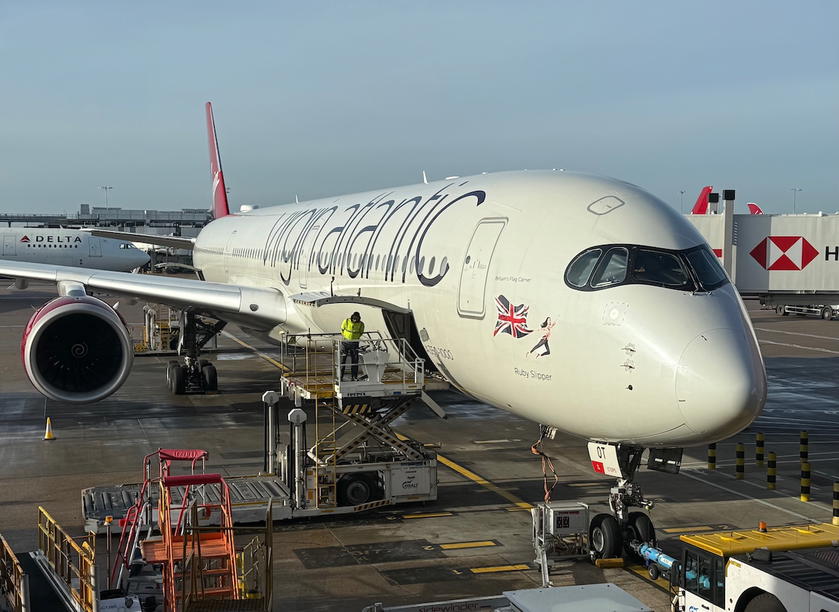
What can we make of Virgin Atlantic’s warning?
With Virgin Atlantic warning of a reduction in travel demand this spring, what can we conclude from this? Should we assume this is some Virgin Atlantic specific problem, or that Virgin Atlantic is simply the first airline to admit demand is decreasing?
In recent days, CNN’s Richard Quest has had both Air France-KLM CEO Ben Smith and Lufthansa Group CEO Carsten Spohr on his program, and both made it clear that they’re not currently seeing a dip in demand across the Atlantic.
What’s interesting, and perhaps surprising, is that Virgin Atlantic is seeing the decrease in demand with the US point of sale, and not the UK point of sale. European airline stocks slumped today following this news (among other things), so what’s actually going on here?
For now we can just mark this as “developing.” Personally, I think there are some Virgin Atlantic specific issues here, but also some bigger trends.
For one, I think peak season summer demand across the Atlantic will likely be as strong as ever, even with more uncertainty, tariffs, etc. That traffic heavily has a US point of sale, and for many Americans, a summer vacation in Europe has become a non-negotiable, which is very much a post pandemic trend.
Virgin Atlantic faces a unique challenge among European carriers, since the airline exclusively operates long haul flights, and has limited regional connectivity. So Virgin Atlantic’s demand is more reflective specifically of demand between the US and UK, than you’d find with other airlines (which essentially shuttle Americans to France, Greece, Italy, and Spain, in summer).
Of course the global situation is rapidly evolving, though my guess (and again, it’s just a guess) is that sooner rather than later, Virgin Atlantic won’t be the only long haul airline sounding the alarm. Yes, summer demand will be strong, but I think non-peak season transatlantic demand will decrease materially.
This includes both business and leisure travel with a US and European point of sale. I think we’ll see a decrease in business travel in both directions (given the lack of cooperation), and I also think some Americans will have less disposable income (due to the impact of tariffs, and the stock market not doing well), while some Europeans won’t travel to the US both due to the cost of doing so, plus to protest US policies.
I’m not saying that demand is going to collapse, but I think it will be material, and I suspect it’ll become most evident after the summer peak. I could be wrong, and a lot could change, but I’m just putting my guess on record, based on the current actions we’re seeing.
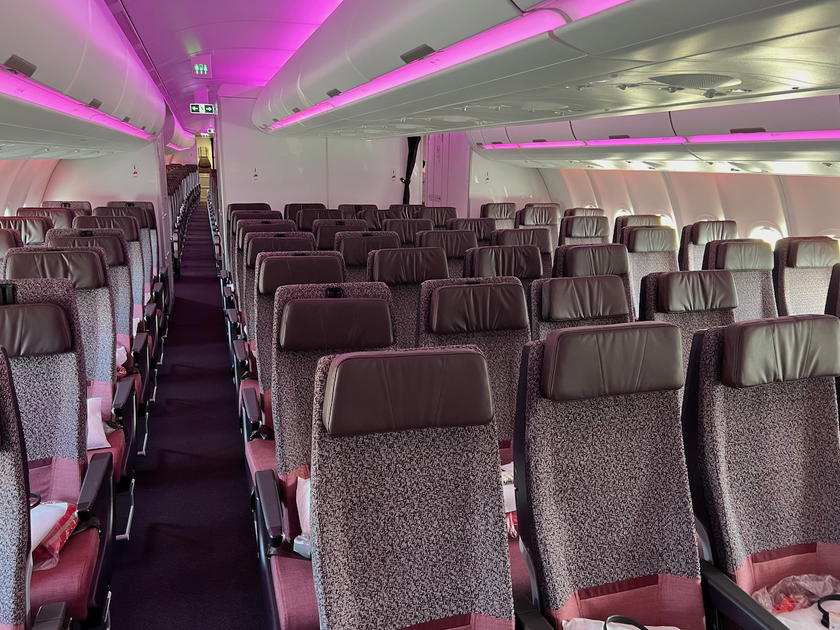
Bottom line
Virgin Atlantic has warned of weakening transatlantic demand. Specifically, the airline is seeing a reduction in demand for spring travel, with a US point of sale. While some problems are a bit UK specific (since Virgin Atlantic only operates long haul flights), I can’t imagine that this is a totally isolated problem. It’ll be worth watching to to see how this situation develops.
What do you make of Virgin Atlantic’s warning about weakening demand?


Membership is free and takes no more information than commenting as a guest. Earn status points for good contributions, and see fewer ads as your status grows.