
If you’re flying Finnair through its Helsinki hub in the coming months, you may be asked to step on a scale at your departure gate…
Finnair collecting passenger weight data
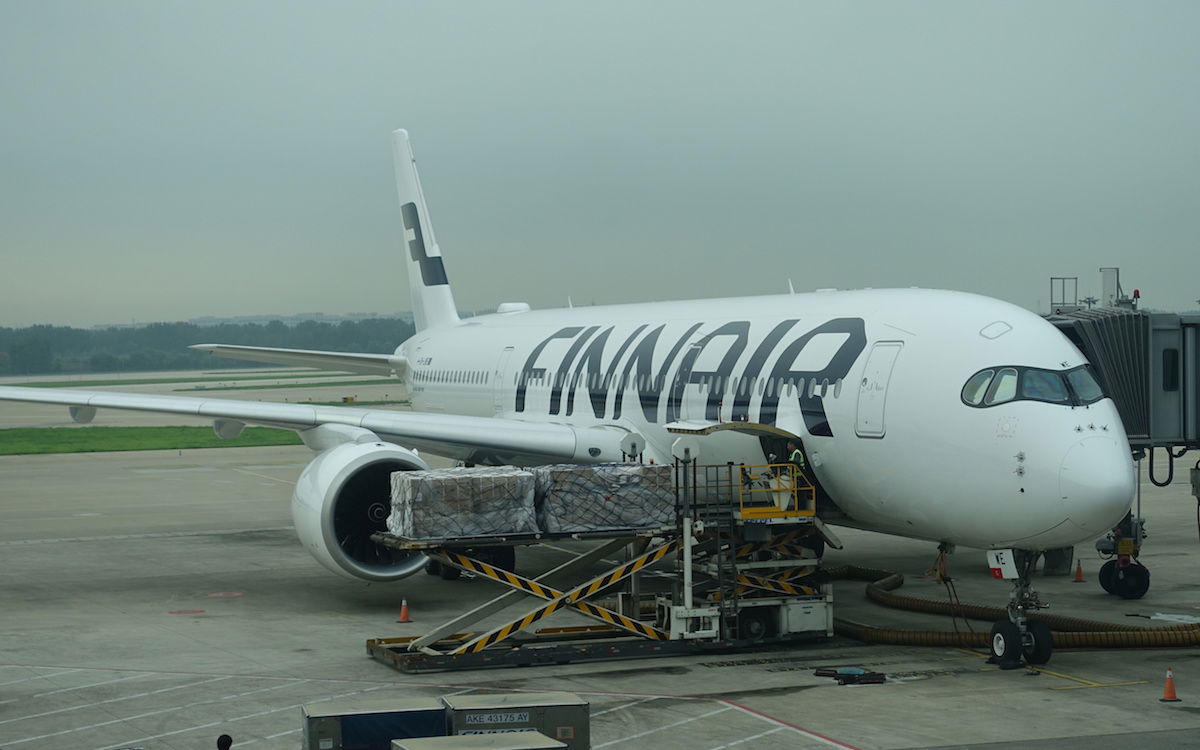
In the coming months, Finnair will be asking some travelers to step on a scale, in order to provide passenger weight data. Specifically, this will be taking place at Finnair departure gates in February, April, and May of 2024. The airline will be using a random sampling of gates, including both European flights within the Schengen area, as well as long haul flights in the non-Schengen area.

Understandably, many people may be embarrassed by being asked to step on a scale in public, since it’s not often you’re asked to do that at airports. What’s the logic? Well, airlines have to calculate an average weight per passenger for operational purposes (maximum takeoff weight, how much fuel is needed, etc.).
So while the airline can easily determine the weight of the aircraft, fuel, checked bags, cargo, onboard catering, and water tanks, averages need to be used for passengers. So the results of this survey will determine what weight Finnair uses in the future for passenger weight.
Airlines have to recalculate this data every several years. The data was last collected in 2017 and 2018, so it’s time for an update. The average weight calculations will be delivered to Traficom, the Finnish Transport and Communications Agency, between July and September 2024, and then these numbers will be used for average calculations between 2025 and 2030.
How exactly does this weight survey work?
Passengers being weighed isn’t compulsory, but the airline appreciates those who help out. Even among those who volunteer, the data is anonymized. Here’s how Finnair’s Head of Ground Processes, Satu Munnukka, describes this initiative:
“We use the weighing data for the average calculations required for the safe operation of flights, and the collected data is not linked in any way to the customer’s personal data.”
“We record the total weight and background information of the customer and their carry-on baggage, but we do not ask for the name or booking number, for example. Only the customer service agent working at the measuring point can see the total weight, so you can participate in the study with peace of mind.”
“We weigh volunteer customers together with their carry-on baggage. In the measurement, we do not ask for personal data, but the total weight of the customer and carry-on baggage, the customer’s age, gender and travel class are recorded in the database. No information is collected that would allow participants to be identified.”
“In the previous measurements five years ago, a good number of volunteers wanted to participate in the weighing, and we hope to have a good sample of volunteers, both business and leisure travellers, also this time, so that we can get the most accurate information possible for important balance calculations.”
I can’t help but wonder if these numbers are actually fully accurate. In other words, even if it’s just subconscious, is there a bias whereby those who weigh less or those who have lighter carry-ons are more likely to voluntarily participate in this than others. If someone knew their carry-on bag was overweight, would they be just as likely to get on one of these?
Hawaiian’s American Samoa experiment
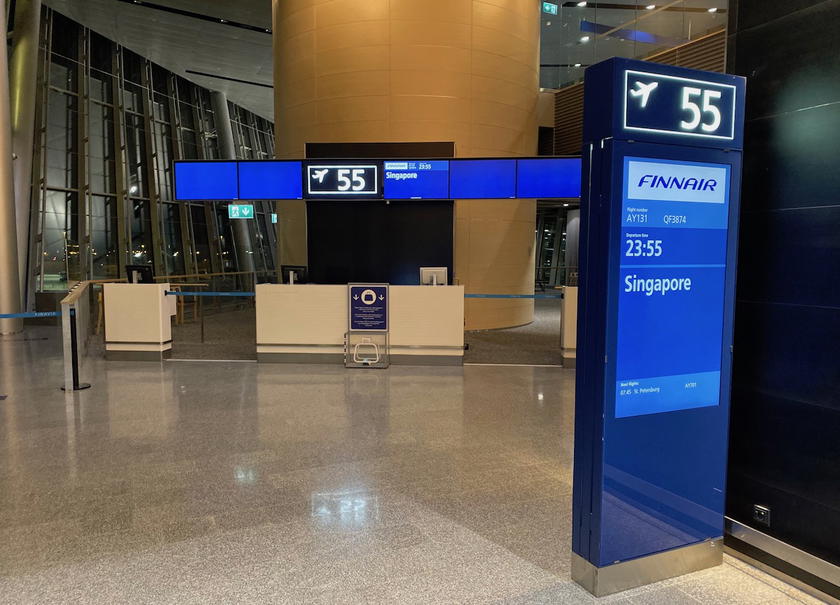
Finnair passengers being weighed brings to mind a 2016 story. Hawaiian Airlines noted that fuel burn was consistently higher on flights between Honolulu and Pago Pago than it was on other routes.
This caused the airline to believe that weight assumptions for this route were inaccurate. Nearly 94% of the population in American Samoa is overweight or obese, so it’s understandable that you might not want to assume average passengers weights are the same on flights to Japan as they are on flights to American Samoa, for example.
So the airline conducted a survey over the course of six months, whereby passengers and their carry-ons were weighed, to determine the average weights. The airline also only assigned seats at check-in so that weight could be distributed throughout the plane as efficiently as possible.
Bottom line
Every so often, airlines need to weigh passengers so that they can make accurate projections. That’s happening over the coming months at Finnair, as the airline is asking passengers at select departure gates to step on scales. As embarrassing as it may seem, this is ultimately voluntary, and the data is also anonymous. So this isn’t a situation where a gate agent asks you to stand on the baggage scale and then reads your weight out loud.
Has anyone been asked to get on a scale when flying on a commercial flight?


Membership is free and takes no more information than commenting as a guest. Earn status points for good contributions, and see fewer ads as your status grows.