
Over the years, airline seats have gotten smaller, while airline passengers have gotten larger. As you’d expect, this creates some challenging situations for passengers of size, and airlines have varying policies.
Along those lines, Southwest Airlines has one of the most straightforward policies for dealing with passengers of size. This has been in place for several years, but is now getting more attention, with some people (disappointingly) suggesting that this is “glamorizing obesity.”
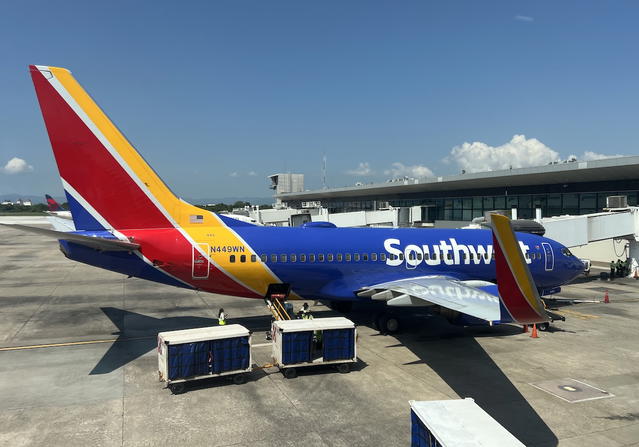
Southwest customer shows how customer of size policy works
Southwest Airlines has a pragmatic and easy to understand customer of size policy. Let me just copy and paste the policy:
Customers who encroach upon any part of the neighboring seat(s) may proactively purchase the needed number of seats prior to travel to ensure the additional seat(s) is available.
The armrest is considered to be the definitive boundary between seats; the width of the narrowest and widest passenger seats (in inches) is available on our Flying Southwest page. The purchase of additional seats serves as a notification of a special seating need and allows us to adequately plan for the number of occupied seats onboard. It also helps us ensure we can accommodate all Customers on the flight for which they purchased a ticket and avoid asking Customers to relinquish their seats for an unplanned accommodation. Most importantly, it ensures that all Customers onboard have access to safe and comfortable seating.
You may contact us for a refund of the cost of additional seating after travel. If you prefer not to purchase an additional seat in advance, you have the option of purchasing just one seat and then discussing your seating needs with the Customer Service Agent at the departure gate. If it’s determined that a second (or third) seat is needed, you’ll be accommodated with a complimentary additional seat.
The reason this is now getting attention is because a TikTok user posted a video showcasing Southwest Airlines’ customer of size policy in action. She’s a self proclaimed “fat solo traveler,” so she posts a lot of videos explaining the things that plus sized travelers may deal with. For someone similar to this traveler, I’m sure this kind of content is really helpful.
While some people might not like the idea of “subsidizing” plus sized travelers on Southwest, I commend the airline for having a clear policy. A lot of other airlines have wishy-washy policies, like suggesting that if a passenger takes up too much space, “they may be asked to move or take a later flight.” That just makes everyone’s life harder and more uncomfortable, including those of the gate agent, the plus sized traveler, and other people on the plane.
In reality, I can’t imagine that many people take advantage of Southwest’s policy, so the cost to other passengers is negligible.
The concept of policies around some consumers subsidizing others is always a controversial one. To give another example, many airlines now having family seating policies, where families will automatically be assigned seats together, even if it requires them being upgraded to preferred seating options.
I’d like to think that in the end, everything balances out, and I don’t live my life worried about if others are getting something that I didn’t.
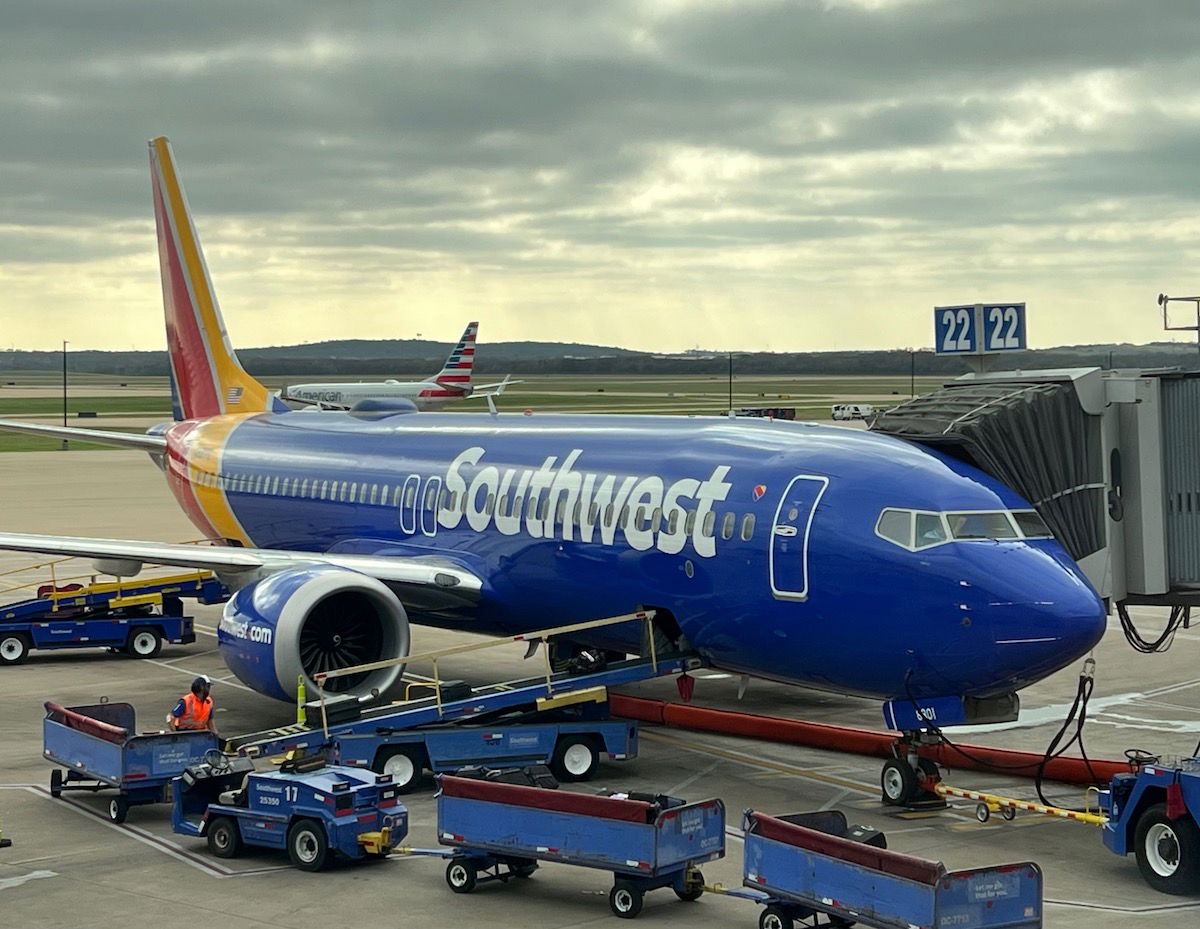
No, Southwest’s policy isn’t glamorizing obesity
Live and Let’s Fly has quite the take on this situation, suggesting that Southwest Airlines is “glamorizing obesity” with its policy. Among other things, Matthew says:
- “Shame on Southwest for rewarding obesity”
- “Maybe if being obese was seen as a problem rather than something to boast about, there would not be a need to even consider such a policy”
- “Maybe Southwest should craft policies that disincentivize destructive behavior instead of rewarding it”
- “In the meantime, I encourage every passenger to request accommodation under this policy, accusing the gate agent of being a flabophobe if they dare question that you identify as a passenger of size…”
- Then in the comments section, he tells people to “lose weight before it’s too late,” and that “the very opposite of empathy is telling the morbidly obese they are just fine,” and “that’s hateful dereliction”
Let me acknowledge that everyone should try to make healthy lifestyle choices to the best of their ability. We all only have one life to live, and good health is our greatest asset. Obesity is absolutely an issue, with over 40% of American adults being obese (per the clinical definition).
That being said, I think it’s also important to be compassionate and not judge others. Matthew states that being overweight “can be blamed on the excess consumption of calories due to lack of self-control,” but also acknowledges that “there are exceptions.” I’m not going to argue the breakdown here, but let’s go with what Matthew acknowledges, which is that there are exceptions. Do those people deserve compassion?
We have a lot of health problems in the United States, and they go beyond obesity. We also have a mental health crisis, and that’s largely because people don’t feel like they fit in, and because they’re bullied. That happens both online and offline.
Fortunately, one of the positive aspects of the internet is that people can connect with others who are like them, and feel like they have a community and aren’t outsiders. As someone who is gay, I can certainly say that I felt like I didn’t fit in “in real life” growing up, but the internet allowed me to see that there were a lot more people like me out there, and that brought me comfort, and allowed me to be who I am.
There’s a difference between “glamorizing obesity” and trying to make people feel like they’re not alone in the world, and that other people deal with the same issues that they do. I don’t know about you, but when I watch the linked video, I see someone providing helpful advice to fellow plus sized travelers. My takeaway isn’t “maybe I should put on a lot of weight so that I can get a second seat on Southwest at no cost!”
Instead, I see someone who is encouraging others to be comfortable in their own skin, and live life to the best of their ability. Should they try to live a healthier lifestyle if they can? Absolutely. But the two aren’t mutually exclusive.
You know what our society has historically glamorized? Being so skinny that it’s unhealthy, and that creates an incredible number of issues for young people as they grow up, and creates eating disorders, depression, and a lot more.
I also think it’s pretty cruel to those who are obese to encourage others to “identify” as a passenger of size, and give gate agents a hard time in order to get extra seats for free. That just seems like a vindictive way to live, and I don’t really get it?
Bottom line
Southwest Airlines is one of the only major US airlines with a clear policy of how to deal with passengers of size. While other airlines’ policies have all kinds of “we’ll try” clauses, Southwest lets passengers of size book the number of seats they need, and then be refunded for extra seats.
We can disagree about what system airlines should use for dealing these situations. I’m not saying Southwest’s policy is the absolute correct one, and all other airlines are wrong. What I am saying is that I think it’s important to show compassion for others, and I think that’s largely lacking in the stories I’m seeing about this…
What’s your take on Southwest’s customer of size policy?


Membership is free and takes no more information than commenting as a guest. Earn status points for good contributions, and see fewer ads as your status grows.