
Go arounds (whereby pilots abort a landing, typically on final approach) are routine maneuvers, and are typically very safe. After all, the whole reason to perform a go around is to avoid any risk. However, a recent Southwest Boeing 737’s go around at LaGuardia Airport raised some eyebrows, as the jet was apparently completely off course at a low altitude…
Southwest 737 LaGuardia go around mess
On Saturday, March 23, 2024, the New York area saw absolutely awful weather, with strong winds and limited visibility. New York LaGuardia Airport is one of the more challenging airports in the United States to land on a nice day, let alone when the weather gets bad.
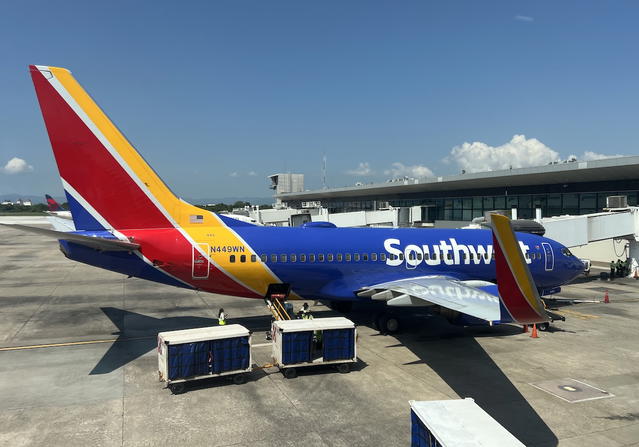
This incident involves Southwest flight WN147, flying from Nashville (BNA) to New York LaGuardia (LGA). The flight was operated by a roughly six-year-old Boeing 737-800 with the registration code N8554X.
VASAviation has an excellent visualization of what happened, with both the air traffic control audio and flight paths.
I’d recommend watching the video for yourself, though to summarize:
- Southwest flight 147 is cleared to land on runway 4, but then performs a go around, with the reason being that they were “too fast, too high with the tailwind”
- Southwest flight 147 swings back around for another approach; the JetBlue aircraft right in front of the Southwest 737 performs a go around, with the reason being wind shear
- As Southwest flight 147 makes its final approach, the aircraft goes off course, flying east of the runway, and reportedly gets dangerously close to the air traffic control tower
- As the plane approaches the airport off course, an air traffic controller yells “GO AROUND, GO AROUND,” and the plane climbs to 2,000 feet; what’s kind of wild is that according to flight tracking data, the plane was at an altitude of just 200 feet, while being completely off course for the runway
- At this point the air traffic controller says “say the reason that you were, like, not on the approach” (that’s a polite way to put it!)
- When asked about the reason for the go around, the air traffic controller says “it was not aligned with the runway at all, it was like east of the final, he was not gonna land on the runway”
- After this incident, the Southwest pilots sound rather shaken up, as you can hear the voices of both pilots trembling; it’s also interesting how the pilot communicating changes after that second go around, so I’m guessing the captain was initially the pilot monitoring, but became the pilot flying after that go around
- At this point the pilots state that their intentions to divert to Pittsburgh (PIT), though the plane ended up diverting to Baltimore (BWI)
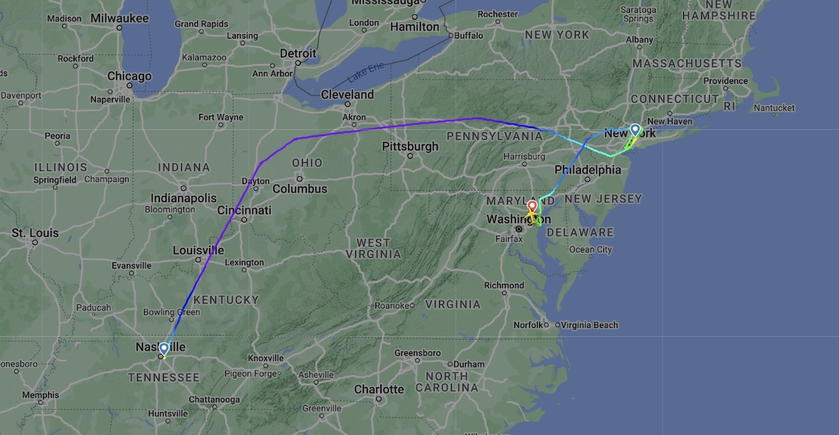
What happened with this Southwest 737?
I think we can all agree this is one of the more unusual go around situations. It was a crappy day at LaGuardia, and there were many go arounds. However, the fact that a Southwest 737 was at an altitude of 200 feet while being completely off course is alarming, to put simply.
Perhaps what’s even more concerning is that the air traffic controller had to call the go around, as the pilots seemingly didn’t think anything was wrong. The aircraft was on an ILS (instrument landing system) approach for runway 4. The airport’s procedures require for that to be hand flown, with autopilot turned off.
Admittedly conditions were very challenging that day, with strong winds and limited visibility. But still, in those circumstances, one would think that you’d initiate a go around prior to being 200 feet up, nowhere close to the runway.
Hopefully this incident is investigated. It seems much more serious than many of the recent incidents that have gotten a lot of media attention, focusing on the 737 MAX or on United Airlines.
Bottom line
LaGuardia saw some awful weather on Saturday, causing many aircraft to perform go arounds. One Southwest 737 had a particularly noteworthy go around, whereby the plane descended to an altitude of around 200 feet, while being nowhere close to the runway centerline.
While mistakes happen and planes sometimes get a bit off course, one has to wonder what went wrong here that allowed pilots to be so far off course at such a low altitude, without even realizing it.
What do you make of this Southwest 737 go around incident?


Membership is free and takes no more information than commenting as a guest. Earn status points for good contributions, and see fewer ads as your status grows.