
I just took a very long EVA Air flight (more on that shortly), which reminds me of how the Taiwanese Star Alliance carrier takes an odd approach to using the seatbelt sign. I figured this would be a fun topic to discuss more broadly, as I’m curious to hear what OMAAT readers think…
The seatbelt sign serves an important purpose
To state the obvious, the seatbelt sign is supposed to be there for everyone’s safety. In addition to passengers needing to be seated during critical phases of flight (like takeoff and landing), turbulence can be dangerous if you’re not buckled in, since you can easily get injured.
As passengers, we don’t really know what the ride conditions will be like. While pilots can’t predict with 100% accuracy what turbulence will be like, they know a lot more than we do. After all, they can see in the direction the plane is flying, they can monitor radars, they can get turbulence reports from other pilots, etc.
Admittedly pilots are in an unenviable position, and almost have an incentive to keep the seatbelt sign on. If there’s serious turbulence and passengers get injured, the pilots and airline could be blamed for it (we’ve seen passengers sue airlines due to injuries from turbulence when the seatbelt sign wasn’t on). At the same time, if you just constantly keep the seatbelt sign on, people will start ignoring it, and won’t take it seriously.
The different ways airlines approach the seatbelt sign
Airlines train their pilots to use the seatbelt sign in a certain way. Sure, individual pilots will have their own interpretation on those rules, but you’ll usually find pilots at a given airline are pretty consistent. On some level I’d say this is even cultural, by region.
I’m very much generalizing here, but here are my observations:
- In the United States, I find that pilots usually err on the side of caution, probably reflecting how litigious our society is; they keep the sign on for a long time after takeoff and turn it on a long time before landing, and also turn it on if there are even mild bumps
- In Asia, I often find that pilots turn the seatbelt sign off very quickly after takeoff (within a matter of minutes), but then they’ll turn it on really early before landing, which almost seems to be more about helping the crew prepare the cabin for landing than anything else; when there’s turbulence, they’re usually not quite as quick to turn on the sign as crews in the United States
- In Europe, I find that pilots generally take a middle-ground approach, and the sign goes off pretty quickly after takeoff and only goes back on shortly before landing; then they’ll turn on the sign during the flight if there’s a significant amount of turbulence
Again, I’m totally generalizing here, as some airlines are outliers, but I think it’s more true than not.
That brings me to EVA Air, which I find to be one of the strangest airlines when it comes to using the seatbelt sign. On my previous long haul EVA Air flight several years, I specifically remember how the pilots never turned off the seatbelt sign, even though the flight was smooth.
Now I just flew EVA Air on a long haul flight again, and it was smooth almost the entire way. I’d say that collectively the seatbelt sign was off for an hour. Basically it was just randomly turned off at certain intervals, and then would be turned on again if there was a single bump, and stay on for many hours.
Does anyone know what EVA Air’s policy is? Does the airline just train pilots not to turn off the seatbelt sign? And if so, what’s the logic? That almost seems counterproductive in terms of ensuring passenger safety, since passengers won’t ever take the sign serious when it’s turned on.
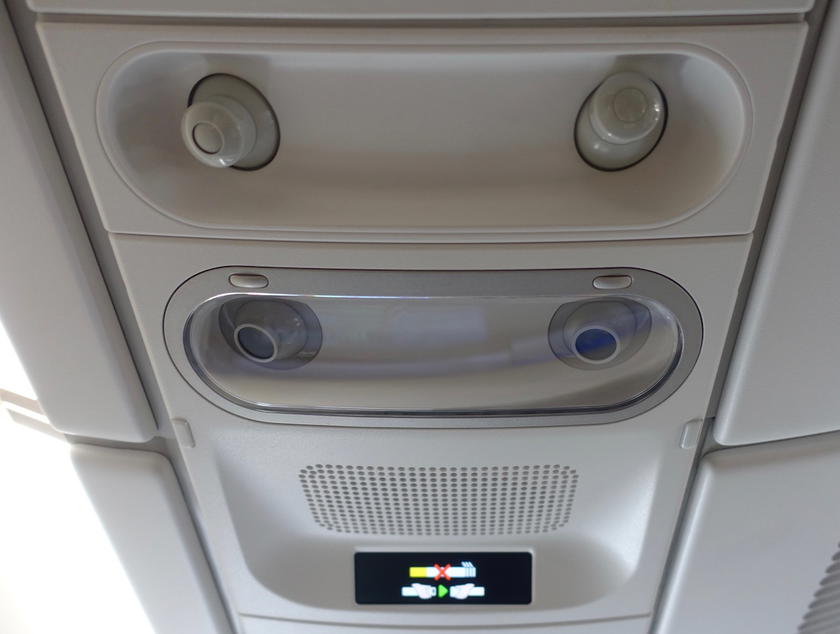
Using the bathroom when the seatbelt sign is on
Having the seatbelt sign on is one thing, but what about crews actually enforcing the seatbelt sign when illuminated? Obviously EVA Air doesn’t enforce the seatbelt sign, since it’s on a vast majority of time.
While I do everything I can to reasonably obey the seatbelt sign when it’s illuminated, at the end of the day, using the bathroom is sometimes a necessity. In the United States, if you disobey the seatbelt signs, crews will generally remind you that the seatbelt sign is on.
That doesn’t mean “you’re going to be arrested if you don’t listen to me,” but rather it essentially seems to be a way to tell people that they’re leaving their seat at their own risk (the below Key & Peele skit comes to mind).
Now, you’re not going to want to use the lavatory while taxiing, taking off, or landing, since that could cause operational issues, and you could get in trouble. But unless the turbulence is very bad, disobeying the sign within reason shouldn’t be an issue.
Bottom line
Airlines around the globe taking very different approaches to how they use the seatbelt sign. I can appreciate the desire to err on the side of caution, though I also think it’s important to limit its use, so that passengers take the sign seriously when it is on.
While the approach pilots take to seatbelt signs vary by region and airline, there are some oddballs. EVA Air is in my experience one of the strangest airlines with the seatbelt sign, as pilots usually just keep the sign on for the entire flight. I’d sure be curious to understand what the logic is for that.
What patterns have you noticed with how airlines use the seatbelt sign?


Membership is free and takes no more information than commenting as a guest. Earn status points for good contributions, and see fewer ads as your status grows.