
Singapore Changi Airport is generally ranked as the world’s best airport, which is well deserved. The airport is more like a high end shopping mall than an airport, and every aspect of the design is centered around the passenger experience.
The airport is always working on the next big thing. They recently opened the beautiful new Terminal 4, and next year they’re opening The Jewel, which will be a new mall of sorts at the airport, featuring a 40 meter indoor waterfall, a five story garden, 2,500 trees and 100,000 shrubs, and of course tons of shopping, dining, and entertainment.
The airport is even thinking beyond that, with the construction of a third runway as well as a new Terminal 5 in the works. The catch is that Singapore Changi Airport wants their passengers to pay for much of this construction… in advance.
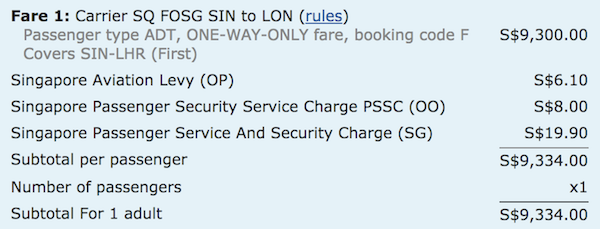
If you are traveling through Singapore Changi Airport, you can expect the fees to soon increase significantly. For example, let’s take a look at a one-way Singapore Airlines ticket from Singapore to London, which has a total of 27.90SGD in passenger service and security fees, plus a 6.10SGD aviation levy.
The Civil Aviation Authority of Singapore will be increasing fees for tickets booked as of July 1, 2018. Specifically:
- There will be a new airport development levy of 10.80SGD for passengers beginning their trip at Changi Airport
- There will be a new airport development levy of 3SGD for passengers connecting at Changi Airport
- The existing 27.90SGD passenger service and security fees will be increased by 2.50SGD per year, starting in July 2018, through April 2024
By 2024, passenger fees for those originating in Singapore will be 62.30SGD (~47.40USD), which is quite significant. All passengers originating in Singapore will be paying the same fees, which is something that Singapore’s parliament had debated. Other airports differentiate fees depending on the distance someone is flying, as well as the class of service they’re traveling in, so that the fee they pay more closely reflects their ticket cost.
Such an increase in fees will have the biggest impact on ultra low cost carriers, given that fees make up a larger percentage of their fares. On top of that, the airport is increasing fees for airlines, including landing fees, parking fees, etc. Jetstar’s CEO has indicated that this would lead to an average increase of 15-20% in the fares originating in Singapore, and would cost them to shift flights around. Even a small increase in average fares can lead to a significant decrease in demand for travel, so I’m curious to see how this all plays out.
These additional fees will help fund the building of the third runway at Changi Airport, as well as Terminal 5. Here’s what we can expect, per the Straits Times:
Slated to be completed around 2030, T5 will eventually be able to handle up to 70 million passengers a year, which is more than T1, T2 and T3 combined.
A third runway being built as part of the Changi East project will allow the airport to handle a growing number of flights when all three runways are operational in the early 2020s – almost 10 years before T5 opens.
He added that the Government will bear a significant portion of the Changi East development costs which is expected to run into tens of billions, while Changi Airport Group will also commit significant resources.
For those traveling on longhaul flights, this will represent a minimal increase in fare. However, for those flying ultra low cost carriers regionally, these fee increases will lead to a significant percentage increase in airfare out of Changi Airport. But I guess this is the only way that this construction can be funded.
I’ll certainly be watching to see what ultra low cost carriers do here…


Membership is free and takes no more information than commenting as a guest. Earn status points for good contributions, and see fewer ads as your status grows.