Shocking Details Emerge About Last Week’s “Near Miss” At SFO

As I wrote about several days ago, on Friday, July 7, 2017, an Air Canada flight had an incident at SFO. The A320 was flying from Toronto to San Francisco, and accidentally lined up with the taxiway instead of the runway. To make matters worse, there were four planes on the taxiway that were waiting to take off, so you can imagine how much fuel they had.

The Air Canada pilots were clearly very confused, because on final approach they asked air traffic control to confirm that the runway was clear, because they saw lights on it. Air traffic control confirmed the runway was clear. The Air Canada plane only realized it was about to land on the taxiway when the pilots of one of the planes waiting for takeoff told ATC what was going on.
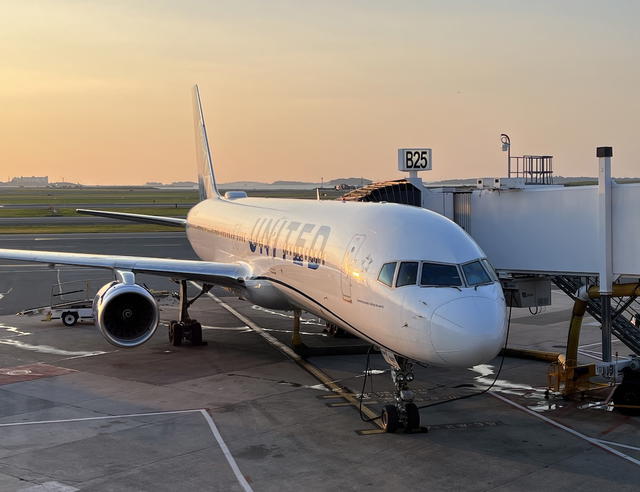
One thing we didn’t exactly know shortly after the incident is how close the planes actually got to one another. We had heard that the plane initiated its go around at roughly 400 feet, so it was my assumption that this was as close as the planes got to one another. That’s close, but as it turns out, this was a much closer call than that.

The Transportation Safety Board of Canada has released the initial findings regarding the incident, and it’s shocking/terrifying. Per the report, it is estimated that the plane overflew the first two planes on the taxiway by just 100 feet:

It is estimated that ACA759 overflew the first two aircraft by 100 feet, the third one by 200 feet and the last one by 300 feet. The closest lateral proximity between ACA759 and one of the four aircraft on Taxiway C was 29 feet.

That’s CRAZY. For reference, the A320 is ~123 feet long, so the A320 was less than a plane length from the plane on the taxiway.

Thank goodness the United pilot spoke up when he did. If it had been a second or two later, one can only wonder what might have happened.

Here’s a BBC News video recreating the incident:

https://www.facebook.com/bbcnews/videos/10154895016172217/


Conversations (33)
The comments on this page have not been provided, reviewed, approved or otherwise endorsed by any advertiser, and it is not an advertiser's responsibility to ensure posts and/or questions are answered.
Comment as a member

Membership is free and takes no more information than commenting as a guest. Earn status points for good contributions, and see fewer ads as your status grows.

Type your response here.

If you'd like to participate in the discussion, please adhere to our commenting guidelines. Anyone can comment, and your email address will not be published. Register to save your unique username and earn special OMAAT reputation perks!

  1. Loading comments…
Recent Comments
The latest from the OMAAT community.

The comments on this page have not been provided, reviewed, approved or otherwise endorsed by any advertiser, and it is not an advertiser's responsibility to ensure posts and/or questions are answered.

Flaps@5 Guest

Martin, I think your comment was a response to mine? My point is not about responsibility or whether it is possible to tell visually from the tower if the aircraft is lined up properly or not. My point is that when the pilot reported 'lights in the runway' the should have alerted ATC to a potential problem. Rather than just assuming that the pilot was wrong, they could have run some checks (other than looking out of the window to check the runway was clear) to make sure that everything was in order... 'Air Canada, can we just confirm that you are actually lined up on 28R? Be advised that 28L is currently closed and lights off.' Now, I'm no ATC expert, so my words may not be the actual ones they would use, but I do know a lot about accidents (part of my job) and avoiding them. If a pilot says he sees lights on the runway, but the runway is clear, that should set alarm bells ringing.

0
‼ 0
Kay K Guest

Ben, turns out the Air Canada plane Got as close as 81 FEET'by the time it started ascending. http://www.eastbaytimes.com/2017/07/17/ntsb-air-canada-pilot-actually-flew-over-plane-before-aborting-landing/

0
‼ 0
Martin Guest

FLL, If you look at where the control tower is at SFO, then it would be really hard to visually determine that the AC plane was lined up wrong. There should instead be instrumentation that shows that. On the plane there is ILS but that isn't always used in clear visibility and, moreover. it sometimes isn't working at SFO either. (Was that not a factor in the Asiana crash a few years ago?) And I'm not sure that any technology in the control tower could have detected the mis-alignment. This has to be a pilot responsibility.

0
‼ 0
wpcoe Diamond

The first two planes in line on that taxi way apparently were UA 787-9's headed for SYD and SIN. Talk about a bunch of fuel. Can you imagine the follow on impact of UAs international flight schedule if two 787-9's were suddenly gone?

0
‼ 0
Flaps@5 Guest

Anyone who knows anything about accidents, in the air transportation industry or otherwise, knows that simply to explain things away through 'pilot error' will likely end up missing the true cause of the incident. Where errors occur, they are usually a result of a problem somewhere in the 'system' as a whole. If you simply blame the human beings without fixing the problem, it is likely that the mistake will be repeated in the future. Read the work of Sidney Dekker and James Reason if you want to know more. A coulee of specific things... Martin, fatigue isn't usually the result of one long flight operation. It is usually a cumulative phenomenon that builds up over days or even weeks. A person's personal circumstances can also contribute to fatigue (new baby at home, material stress, etc), so it's not just about work factors. It also strikes me as odd that when the AC pilot reported seeing lights on the runway, ACT just said the they were clear to land rather than investigating further, confirming line-up etc. Seems to me that through their assumption that AC was lined-up on the runway, they missed an earlier opportunity to correct the situation.

0
‼ 0

Save posts to read later

Saving posts is a member feature. Become an OMAAT member to build a reading list you can come back to from any device.

Become a member
Meet Ben Schlappig, OMAAT Founder
5,883,136 Miles Traveled

43,914,800 Words Written

47,187 Posts Published