United Airlines has just announced plans to resume flights to Venezuela, after a nine year hiatus.
In this post:
United will fly from Houston to Caracas as of August 2026
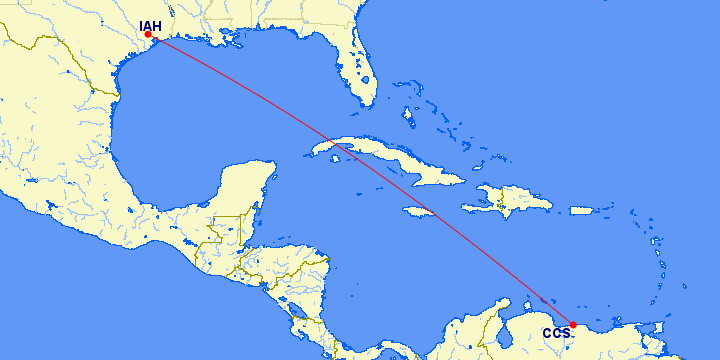
United will begin operating daily nonstop flights between Houston (IAH) and Caracas (CCS). The service will commence as of August 11, 2026, and will operate with the following schedule:
UA1046 Houston to Caracas departing 11:45PM arriving 5:30AM
UA1045 Caracas to Houston departing 8:00AM arriving 12:30PM
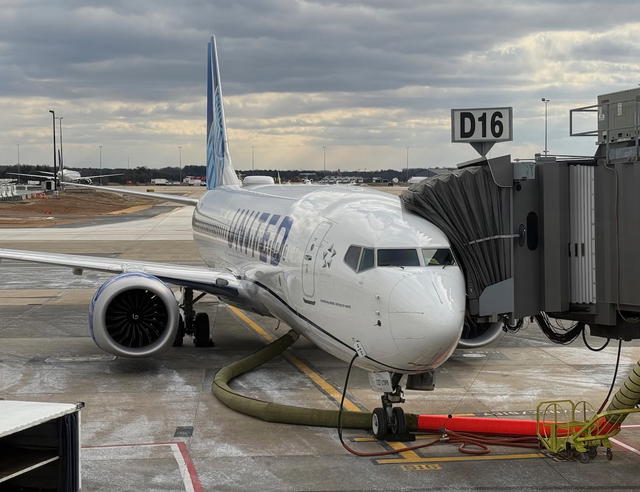
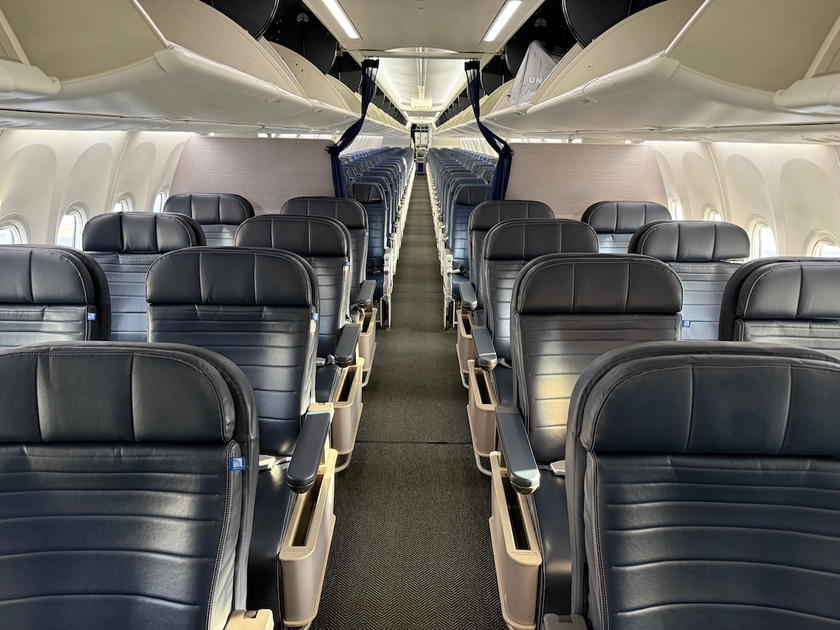
United will use a Boeing 737 MAX 8 for the 2,260-mile flight, which is blocked at 4hr45min to Venezuela, and 5hr30min to the United States. United’s 737 MAX 8s are configured with 166 seats, including 16 first class seats (marketed as business class on international flights) and 150 economy seats.
Here’s how Patrick Quayle, United’s SVP of Global Network Planning and Alliances, describes this:
“After nearly a decade, United welcomes the opportunity to resume service between Houston and Venezuela thanks to the leadership and support of the Department of Transportation and the U.S. government. This flight will help strengthen cultural and economic ties across the Americas and further reinforces United’s Houston hub as a leading gateway to the region.”
Meanwhile here’s what Sean Duffy, the United States Transportation Secretary, had to say:
“United’s first flight to Venezuela in eight years marks another exciting development in the relationship between our two countries. Under President Donald Trump’s leadership, my Department is proud to partner with United to make this historic day a reality. This specific flight will be critical to ferrying oil sector workers into the country as the U.S. and Venezuela work together to expand production and generate new economic opportunities.”
This will be the first time since June 2017 that United flies to Venezuela, because up until that point, the airline served the country for more than 20 years.
It’s not surprising to see United launching this route
United is the second US carrier to return to Venezuela, as American has already resumed service to Caracas, out of Miami. American even plans to offer twice daily flights soon, and will also fly to Maracaibo (MAR).
It’s logical that American was first, given that it’s the strongest US carrier in Latin America, and Miami is also the city with the most demand to and from Venezuela.
That being said, it’s no secret why United is launching this route, and that’s oil, given the industry Houston is known for. As Duffy even outright says, this flight is “critical to ferrying oil sector workers into the country.” So I have to imagine fares will be very high, but the flights might not be consistently full, at least initially.
I am curious, it sounds like United crews will be overnighting in Caracas? Currently American crews do same day turns, while I can’t imagine any way a crew could work this in both directions, especially with the outbound being a redeye. Is the union fully onboard with this, or…?
Bottom line
United Airlines plans to resume service to Venezuela after nine years, with a Houston to Caracas route launching as of August 2026. The flight will operate daily with a Boeing 737 MAX, and is primarily about connecting two oil markets.
I still don’t fully understand what the current reality is in Venezuela and where things stand, so it’ll be interesting to see how this market evolves.
What do you make of United launching Caracas flights?
A redeye from Houston to Caracas on a 737 sounds like the worst flight in the universe
Yes, I agree any flight in a 737 is a nightmare specially if is over 3 hours
They should use the A321 a little better than any 737 in any of its variants
The vacay to Angel Falls is so back! /s
(Nope. Not gonna trust any of this yet.)
Would a three pilot crew allow for the crew to operate both outbound/inbound sectors as a standard turn without needing to put the crew up in a hotel?
This isn't possible on a United 737. If the standard flight and duty time limits are going to be extended by adding a third pilot, the FAA requires certain minimum standards for the inflight rest facility, whether that's a seat or a bunk. The standard domestic recliners in first class on these 737s don't meet the minimum requirements, so the flight and duty time limits cannot be extended.
What they could do, however, is...
This isn't possible on a United 737. If the standard flight and duty time limits are going to be extended by adding a third pilot, the FAA requires certain minimum standards for the inflight rest facility, whether that's a seat or a bunk. The standard domestic recliners in first class on these 737s don't meet the minimum requirements, so the flight and duty time limits cannot be extended.
What they could do, however, is deadhead two pilots in each direction, so two pilots would fly down and immediately deadhead back, while the other two would deadhead down and immediately fly back. The risk in this option, though, is the possibility that the pilots who deadhead down may not be adequately rested to be fit for duty to fly the return.
It should make it much easier to deport Venezuelan illegals. Texas has large holding facilities for illegals, and it will be a short drive to a plane in Houston.
You might want to wipe off the orange makeup caked around your lips.
I thought the airlines stopped service because of how dangerous the crime situation was? With stories of gangs stealing baggage from the airport tarmac. How exactly did Trump fix that?
Things have been improving over the past 3 years or so, nothing to do with any US president.
They stop service because the Maduro did not allow airlines to repatriate the sales done in Venezuela. In other words the Venezuelan government stole all the US Dollars collected by the all the airlines operating to Venezuela,
Caracas was before, Hugo Chavez, the main hub for all the airlines (European and American) operating to South America.
I defined the way I fly not the airlines.
There is no need for UAL to turn the crew around so quickly. I am a Venezuelan American and travel often to VEN even before January 2026. When I leave VEN I have to show my US passport. The situation on the ground is safer than most Latin American cities and I travel all over LatAm.
@LABM, just because nothing bad has happened to you does not mean that "the situation on the ground is safer than most Latin American cities." From the US Department of State Travel Advisories, Venezuela is one of six Latin American countries at Level 3 - Reconsider Travel. Another dozen Latin American countries are better at Level 1 or 2. And then there's Mexico with different levels by state.
I suspect that this is done as a turn and that the crew doesn't lay over. I was on United IAH-POS last year and the FAs mentioned they did that pairing as a late-night turn (6pm - 7am). CCS pretty similar distance. I think a lot of crews would like the productive paid hours with little time spent on the ground.
How is jet fuel availability there? Is there any way for airlines to access the cheap subsidized fuel available to locals?
What would the logistics be for United to have a secondary crew onboard in some sort of crew rest area (Sectioned off economy seats). 2-3 rows of 4 FA's and two pilots should suffice.
I believe the FA's and Pilots would get paid even if they aren't working those flights, but maybe it doesn't count against their hours worked since they're just "resting"? And then vice versa on the way back for the crew...
What would the logistics be for United to have a secondary crew onboard in some sort of crew rest area (Sectioned off economy seats). 2-3 rows of 4 FA's and two pilots should suffice.
I believe the FA's and Pilots would get paid even if they aren't working those flights, but maybe it doesn't count against their hours worked since they're just "resting"? And then vice versa on the way back for the crew that operated to Venezuela?
Can't imagine that's more economical than just getting some hotel rooms for the night (or even contractually legal, genuinely don't know) but just for safety and logistics maybe for a couple of months while things continue to stabilize in the country.
It's more complex than just blocking off a few rows of seats. The FAA has defined rest areas (Class 1, Class 2, etc.) that need to be complied with. Additionally, in 737 aircraft where there ARE cabin-based, "compliant" rest areas (usually a curtained off set of seats) there is often disruptions to getting any rest. The seats are usually near a bulkhead, which also means near a lav. Passengers are often not aware a crew...
It's more complex than just blocking off a few rows of seats. The FAA has defined rest areas (Class 1, Class 2, etc.) that need to be complied with. Additionally, in 737 aircraft where there ARE cabin-based, "compliant" rest areas (usually a curtained off set of seats) there is often disruptions to getting any rest. The seats are usually near a bulkhead, which also means near a lav. Passengers are often not aware a crew is resting and can be quite talkative, or they have even opened the curtains to "see what's back there". Ask me how I know.
A crew depending on getting adequate rest to be "fit for duty" (an FAA-defined legal standard) and able to immediately operate the return flight might have to decline, resulting in cancellations. Additionally, this type of pairing wouldn't pass the scheduling tests (DH in 737 rest area on redeye, followed by working the flight). It would get tagged as fatiguing. It's actually better to have the crew layover for 27 hours in a hotel. It's cheaper for the airline to pay for the rooms (at a negotiated, discounted "crew rate") than to lose the seat ticket revenue by blocking a rest area.
"Passengers are often not aware a crew is resting and can be quite talkative,"
This is funny because it is usually the other way around. The flight attendants are very chatty while the passengers are trying to relax/nap/sleep.
As things settle down in Venezuela there should be demand with exPats wanting to return Home to see Family. Fares will probably high initially.
