
United Airlines is facing an interesting class action lawsuit in California, regarding how it markets window seats. Is this an entirely frivolous lawsuit, or is there some merit to it?
United’s California class action lawsuit over window seats
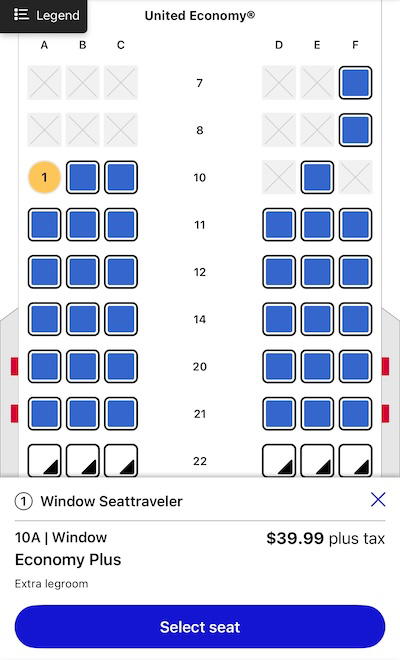
There’s a new class action lawsuit against United in California, accusing the airline of charging passengers extra for window seats, only for passengers to find themselves in seats without windows.

Indeed, aircraft fuselages don’t consistently have windows, so there are some seats that may be marketed as window seats, but the passenger doesn’t actually have the ability to easily look out a window. As it’s described:
For many travelers, a window seat is worth the extra cost. But some passengers on United Airlines say they paid additional fees for a window seat and got something very different: a seat next to a solid wall.
Now, a class action lawsuit alleges that United Airlines misled customers by selling “window seats” that did not actually have windows. Plaintiffs claim this practice may violate airline passenger rights and may constitute false advertising, and they are seeking compensation.
The class action lawsuit is open to those in California who paid extra for a window seat on a United flight within the past four years, but ended up in a seat that didn’t have a window.
This lawsuit sort of makes a good point
People can debate whether this lawsuit is frivolous or not, but it raises an interesting question — does the nomenclature that’s used globally to differentiate seats make sense, or is it time for an update?
We all agree that the defining characteristic of an aisle seat is that it offers direct access to the aisle. We all agree that a middle seat is between at least two other seats. Logically, you’d think that a window seat is one that offers, you know, a view of a window.
However, that’s not actually how the term is used in practice. Instead, we use the term “window seat” to mean a seat that isn’t between two seats that also isn’t an aisle seat… right? While this lawsuit is targeted at United, the term “window seat” is one you’ll find at airlines across the world, so this is hardly a United specific problem.
There’s literally a running joke on Ryanair’s social media about this very topic, where passengers post pictures of themselves in the window seat without a window, and then, of course, Ryanair’s social media team gets sassy.
Funny enough, Ryanair is perhaps the world’s most transparent airline when it comes to this, because the carrier’s seat map specifically indicates which seats don’t have windows.
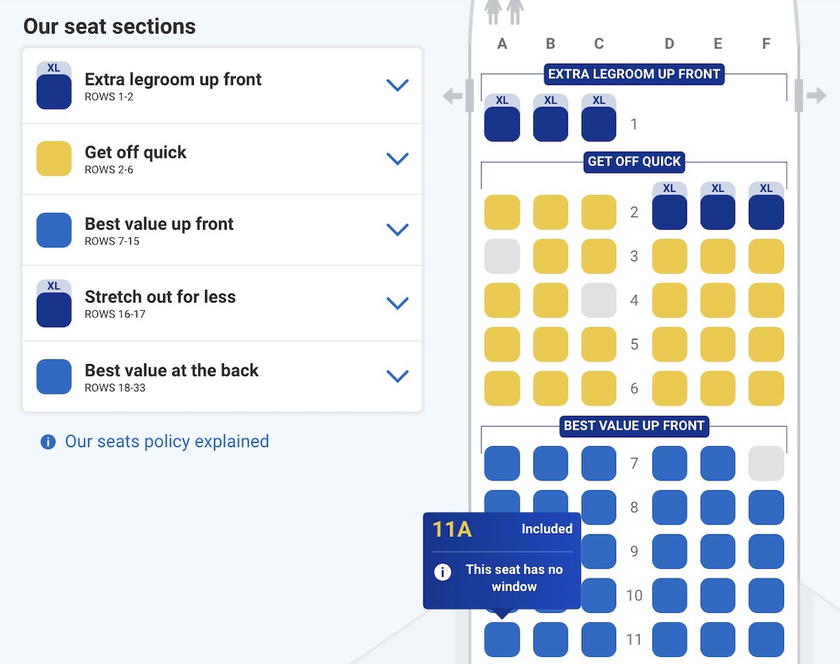
So while I don’t think it’s necessary to completely change the concept of what we call seats closest to the fuselage, I do think we should see airlines consistently offer a disclosure, similar to what Ryanair has.
Of course savvy travelers can research the location of windows in comparison to seats using sites like aeroLOPA.
Bottom line
United Airlines is facing a class action lawsuit in California, over the concept of charging extra for window seats that don’t actually offer windows, but instead, are next to a solid wall. This is a problem across the industry, so it’s hardly specific to any one airline.
It’s true that while aisle and middle seats have a clearly agreed upon definition, window seats are a bit trickier, since they sometimes don’t provide a view of a window. I do think other airlines should follow Ryanair with the way in which the airline discloses the lack of windows at window seats.
What do you make of this window seat lawsuit?


Membership is free and takes no more information than commenting as a guest. Earn status points for good contributions, and see fewer ads as your status grows.