
It’s obviously a tough time for aviation in general, given the impact of high jet fuel prices. For that matter, Dutch national carrier KLM has faced its own unique challenges, given increasing limits placed on the carrier’s Amsterdam Schiphol (AMS) hub, plus all the competitive challenges (increased competition from regional low cost carriers, Gulf carriers, etc.).
In recent years, we’ve seen KLM introduce initiatives intended to improve economics. The airline is now taking that to the next level, and has just announced an absolutely massive project intended to improve economics by €1 billion per year.

KLM sets out to improve economics by €1 billion per year
KLM has unveiled the details of a project that it expects will contribute to annual earnings improvements of €1 billion per year, which it hopes will allow the company to invest in fleet, customer experience, and people.
KLM’s plan is to focus on its core strengths, which it describes as a global network of 160 destinations served nonstop from Schiphol, and reliable operations supported by a modern fleet. The company wants to become a smaller, simpler, and more agile organization, through restructuring, outsourcing, and closer collaboration with Air France-KLM.
Here’s how KLM CEO Marjan Rintel describes this initiative:
“Every day, we all work with incredible dedication, commitment, and pride. But KLM’s future is not guaranteed. The environment we operate in is becoming increasingly complex, with global instability, high fuel prices, and growing pressure on the aviation industry. That’s why, at this pivotal moment for KLM, we’re taking far-reaching, sometimes painful measures. Every department and every division will be asked to contribute.”
“We’re doing this with a clear vision for the future: one where KLM remains a great airline that connects customers to the world, a company people want to work for, and one the Netherlands can be proud of.”
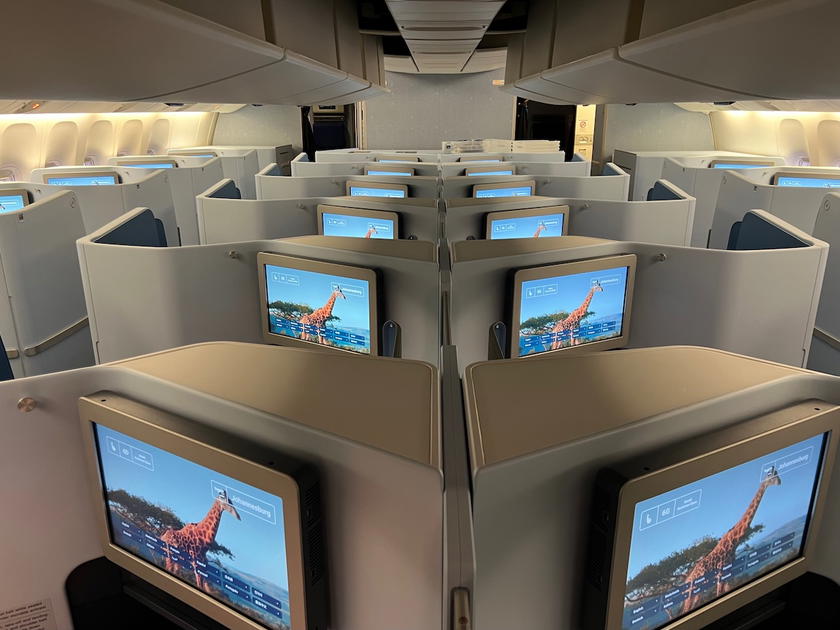
KLM will cut jobs, simplify fleet, and more
How does KLM plan on improving economics by so much over the coming years? For one, the airline will simplify its fleet.
The long term plan is to have a fleet of 185 Airbus, Boeing, and Embraer aircraft. The latest changes particularly center around the European network, where just about all network carriers in Europe struggle to make money, given the costs and competitive landscape.
KLM plans to change the balance between larger and smaller aircraft on European routes. In the long run, the airline will fly a mix of 227-seat Airbus A321neos and 132-seat Embraer E195-E2s. The company no longer plans to acquire Airbus A320neos, which were part of a larger Air France-KLM order, as those planes are instead going to Transavia. Furthermore, in the coming years, we’ll see Boeing 737s and Embraer E190s retired.
Next, the airline hopes to achieve greater flexibility, higher productive, and lower costs, with its labor agreements. As you’d expect, this will be the most painful change. For one, KLM plans to reduce its workforce by around 15%, meaning that around 5,000 positions will be “reorganized.”
This follows the company’s number of staff already declining in recent years. The good news is that there aren’t expected to be mass layoffs — KLM expects to limit the impact on employees through natural attrition, voluntary arrangements, and transfers to other positions.
The airline also emphasizes that employment terms and conditions need to become simpler and more competitive, noting that “continuing on the current path is not sustainable.” KLM wants to work with unions to establish new collective labor agreements, and the company aims to achieve a structural productivity increase of at least 8% by 2028.
This decrease in headcount will come through a combination of Air France and KLM cooperating more closely, outsourcing catering and maintenance, and reducing planned growth of the fleet.
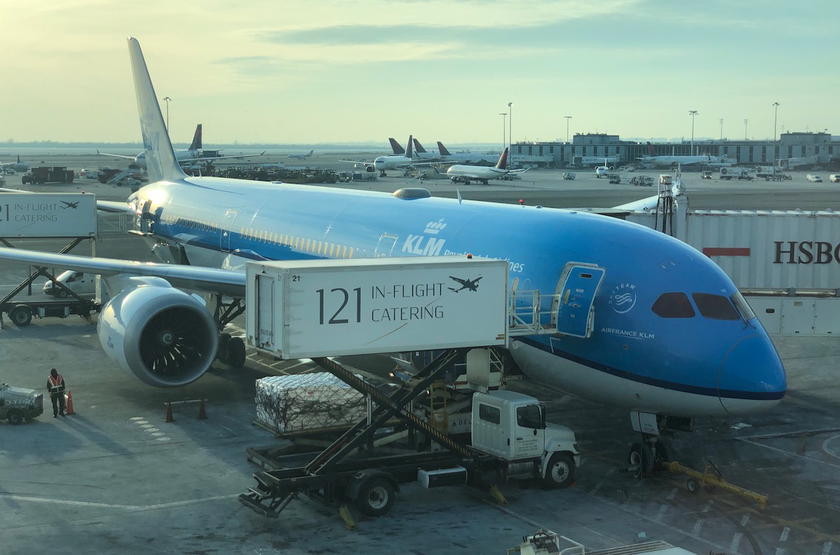
KLM is in a tough spot in European aviation
The airline industry is tough in the first place, and among the major network carriers, KLM is perhaps in the toughest spot, when you consider the overall industry dynamics:
- The Netherlands has a single major airport, so KLM is entirely reliant on those airport
Bottom line
KLM is planning to majorly cut costs and simplify things, which is probably necessary in light of how the situation has evolved.
As part of this, the carrier’s short haul fleet will eventually consist of just Airbus A321neos and Embraer E195-E2s. On top of that, we’ll see the airline reduce its workforce by around 15%, through a combination of increasing efficiency, outsourcing jobs, and more. The company will also be looking for some concessions from existing employees.
In total, the company hopes that these changes will contribute €1 billion per year. While aviation is tough across the board, it’s especially tough to be KLM, where you’re reliant on one hub (which regulators keep trying to shrink) with very high costs, and that hub isn’t a market that’s as lucrative as somewhere like London, Paris, etc. I’m a fan of KLM, and I hope these changes don’t do too much to change the quirky spirit of the airline.
What do you make of these major KLM changes?


Membership is free and takes no more information than commenting as a guest. Earn status points for good contributions, and see fewer ads as your status grows.