
EL AL is usually known for having very competent pilots, though this doesn’t strike me as very good airmanship, or like erring on the side of caution.
EL AL 777 dangerously close to running out of fuel
YouTube channel You can see ATC has the audio and a visualization of an incident that happened around 9:20PM on May 20, 2026, involving a New York Kennedy (JFK) air traffic controller, and the pilots of an EL AL Boeing 777-200ER with the registration code 4X-ECF, which was approaching from Tel Aviv (TLV), operating flight LY19.
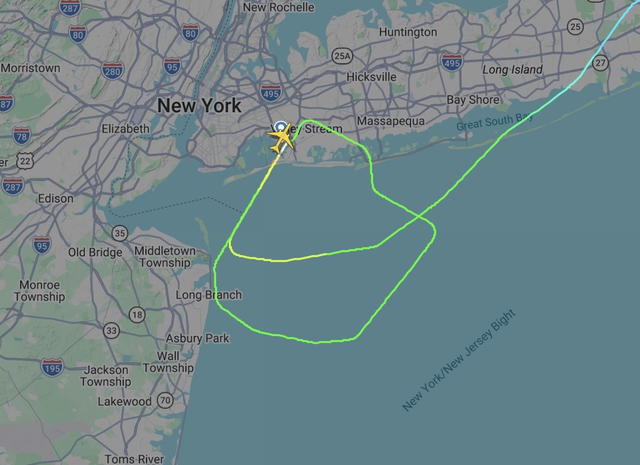
You would think this was a totally routine flight, until the approach. The approach controller cleared the aircraft for the ILS approach for runway 31R, with a speed of 170 knots. The approach controller then gave the pilots a reduced speed of 160 knots, and handed them over to the tower controller.
This is probably a good time to mention that the tower controller is “that guy,” but he’s actually professional in this interaction. No one argues he isn’t incredibly competent, he’s just kind of a jerk sometimes. 😉
The tower controller gave the EL AL pilots permission to land, though they were still number three for the approach. The tower controller then noticed the EL AL plane slowing down:
“EL AL 19 heavy, increase your airspeed. I do not know why you’re slowing down. I’ll take you off for the re-sequence. Increase your airspeed now.”
To that, the EL AL pilot had quite a response:
“Increasing… uh, speed. We don’t have fuel and cannot go around.”
Oh. Say what now?! That’s kind of a major detail. The controller responded as follows:
“Okay, then increase your airspeed. You’re doing 120 knots across the ground, eight miles out. Increase your airspeed now. Are you declaring minimum fuel? What do you mean you can’t go around?”
The EL AL pilot simply responded with the following:
“That’s affirm, minimum fuel, we are increasing our airspeed.”
The plane then landed at JFK without further incident, and taxied to its arrival gate. No number was given, or anything.
What went wrong with this EL AL approach to JFK?
I think there are a couple of main questions here — why didn’t the EL AL pilots explain earlier that they had a fuel emergency, and how did they even end up in that situation?
The aviation industry is supposed to operate with a focus on safety, and that also includes erring on the side of caution. In situations where pilots have less fuel than they expected to have, there are clearly defined ways to communicate that. Specifically, I’m talking about minimum fuel and emergency fuel.
When it comes to the Federal Aviation Administration (FAA), here’s how minimum fuel is defined:
Indicates that an aircraft’s fuel supply has reached a state where, upon reaching the destination, it can accept little or no delay. This is not an emergency situation but merely indicates an emergency situation is possible should any undue delay occur.
Meanwhile here’s how emergency fuel is defined:
The point at which, in the judgment of the pilot-in-command, it is necessary to proceed directly to the airport of intended landing due to low fuel. Declaration of a fuel emergency is an explicit statement that priority handling by ATC is both required and expected.
What’s wild here is that the EL AL pilots at no point reported they had minimum fuel or emergency fuel. And they didn’t even communicate to the air traffic controller that they were at all short on fuel. I mean, they were tightly being sequenced on a JFK approach (where go arounds happen all the time), and their solution was to not even communicate their slowdown, and to only mention at the very last minute that they apparently “don’t have fuel and cannot go around?” Rough.
One doesn’t even know what to make of that. Were they exaggerating, and not being honest? Or was this actually serious, in which case their level of recklessness is really concerning?
Now, the other question is how exactly they ended up in a situation where they were so low on fuel in the first place? Generally, the flight from Tel Aviv to New York takes somewhere around 11-11.5 hours, give or take. On this particular day, the flight took just under 12.5 hours. That seemed to primarily come down to a little over 30 minutes of holding over Rhode Island (there was flow control into JFK), along with a roundabout approach.
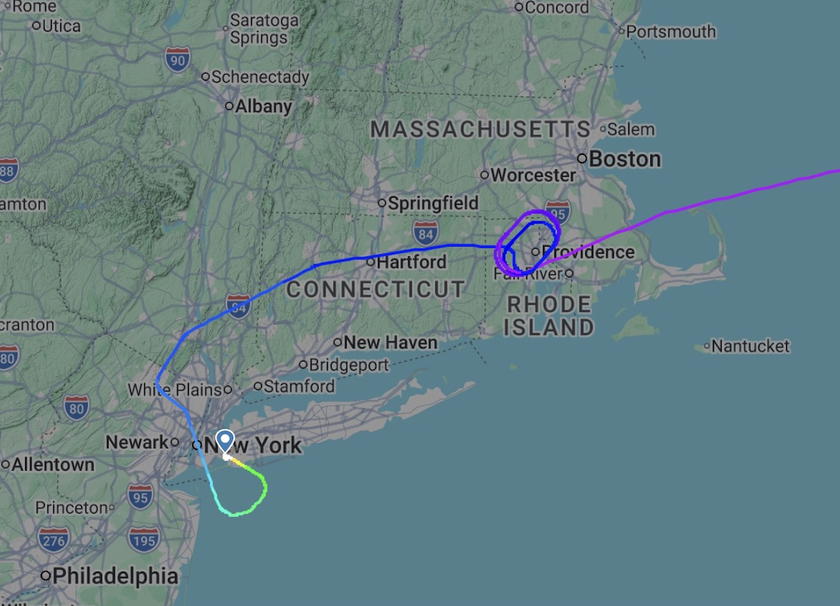
So it’s not totally unreasonable that this would eat into fuel reserves, but that’s also why it’s so important for the crew to communicate that to air traffic control.
Bottom line
An EL AL Boeing 777 had a concerningly close call on approach to JFK. During the approach, the pilots slowed down the speed without informing ATC. When ATC called them out on that and said they’d have to be resequenced, they claimed they didn’t have fuel, and couldn’t go around.
If that was actually true, then they should’ve declared emergency fuel much earlier. One would hope that this will be investigated, since this just doesn’t seem like great airmanship. Honestly, I’m shocked that JFK ATC dude didn’t get angrier… he has gotten much more frustrated over significantly more minor things.
What do you make of this EL AL 777 incident at JFK?




El Al pilots do this to get priority sequence landing in TLV.
As evidenced by what?
By the Israeli sense of impunity and superiority over other human beings.
In other words, you have no answer, it was based on your personal bias.
Benny also have no answers, it was based on his right wing extremist bias.
Israeli government tricked America into fighting their war.
How easy you think it is to trick an American ATC you have low fuel.
Bad communication but not necessarily bad piloting.
Minimum fuel is probably the right phrase to have been used as an advisory to tower. It was prompted by tower and they did so, nothing more to follow up on.
Pilots were probably conserving to have enough fuel to be able to do a go around if necessary and were concerned about increased fuel burn in going faster.
Seems to me the initial communication was offered...
Bad communication but not necessarily bad piloting.
Minimum fuel is probably the right phrase to have been used as an advisory to tower. It was prompted by tower and they did so, nothing more to follow up on.
Pilots were probably conserving to have enough fuel to be able to do a go around if necessary and were concerned about increased fuel burn in going faster.
Seems to me the initial communication was offered as an explanation of slowing down. Rather than declaration of minimum fuel situation. And possibly to pre-empt being taken out of sequence.
But poorly communicated.
I'd say great piloting and perfectly communicated.
You bluff to land early.
You save fuel for your countrypany.
140 MPH 8 miles away its pretty slow you have planes behind flying much faster closing the gap fast.
Including, when Aeroflot could still fly to the US and sometimes did using Soviet material, the IL-86 which could not fly at such low speeds without stalling, hence having to "crab itself" slower by turning right and left from the direct path, making some passengers believe that the pilots were drunk. Maybe they were but that was not the reason for the turns.
How do you know this?
Look around you!
Chances are you never met an Israeli. Chances are you could not go a day without relying on something developed by an Israeli.
Indeed, look around without wearing biased shades.
If they were coming in on minimum fuel but everything was looking good for landing and the frequency was very busy, I can see how they did not see much point in declaring minimum fuel as it would not help the situation unless they were getting an unnecessary vectors.
Random blogger does ad nauseam faux analytical post that has little value.
Random asshole leaves a hate-comment on blog piece because he has nothing of substance to add to the conversation (and views Norman Bates as a role model).
Reading between the lines, here's what I think happened.
1. Flight ate into fuel reserves but it wasn't an emergency
2. Pilots lost situational awareness and allowed the plane to slow down
3. Pilots also knew the ATC controller was 'that guy' so when he threatened to take them out of approach, the pilots declared minimum fuel to stop him
A minimum fuel declaration isn't declaring an emergency; it's just telling ATC they...
Reading between the lines, here's what I think happened.
1. Flight ate into fuel reserves but it wasn't an emergency
2. Pilots lost situational awareness and allowed the plane to slow down
3. Pilots also knew the ATC controller was 'that guy' so when he threatened to take them out of approach, the pilots declared minimum fuel to stop him
A minimum fuel declaration isn't declaring an emergency; it's just telling ATC they can't absorb any more delays without it becoming an emergency.
Be quiet; adults are speaking now.
Oh no, anyway dot gif
This may well be evidence that the Bibi-Trump War on Iran is having real effects on fuel availability in Israel. The govt. may be limiting jet fuel after the Haifa oil terminal was pulverized by the IRGC. As they say, FAFO!
There is no shortage of fuel in Israel.
The attack on the Haifa oil terminal occurred 2 months ago and produced minor damage, resulting in a few days of interruption.
There is no shortage of fuel in Israel.
The attack on the Haifa oil terminal occurred 2 months ago and produced minor damage, resulting in a few days of interruption.
Sidebar comment: As ex-ATC, I get it that NY Tracon and the affiliate Towers have a variety of challenges, not the least of which is staffing. “That Guy” may be technically competent, but I wouldn’t go too far out of my way to put him on a pedestal. His phraseology adds to issues and stress. Nobody should be blabbering on in run-on sentences, even him. Regardless of how busy I was, I always slowed it...
Sidebar comment: As ex-ATC, I get it that NY Tracon and the affiliate Towers have a variety of challenges, not the least of which is staffing. “That Guy” may be technically competent, but I wouldn’t go too far out of my way to put him on a pedestal. His phraseology adds to issues and stress. Nobody should be blabbering on in run-on sentences, even him. Regardless of how busy I was, I always slowed it down a notch when controlling the confused, the foreign, the morons.
That said, Captain El Al should have declared Minimum Fuel much earlier and advised the second-to-final controller at Tracon as to his status and what his required final approach speed would need to be.
Silly Ben, people fly El Al for the security, not the safety.
Considering El Al is de facto the Israeli state airline, and that nation is largely responsible for the current fuel crisis by instigating the aggression against Iran... they of all people should be fully versed and prepared for the fuel crisis and be tankering sufficiently for flight exigencies.
This is weird. El Al pilots most of the ate Israeli Air Force alumni. They are professional and very experienced. Not sure if this was ground control or pilot mistake. This should be investigated by israel civil aviation authority. There could be a training opportunity here
So it's weird that El Al pilots are cannibals?
I guess we won't ever know the entire story to this episode.
Obviously - the writer isn't a pilot and unfamiliar w ATC communications. This is not an exception and happens regularly at JFK.
Too bad he didn't properly research, here's another example from JFK:
https://youtu.be/XyZx7gOBp5w?si=gVhXu4h1FvOlPrly