

In recent times, we’ve seen the cost of airfare increase massively — according to data, in the United States, the average increase has been around 30% over five months. Admittedly a major reason for the fare increases is how much jet fuel has gone up in cost, due to the war with Iran, which doesn’t seem to be ending any time soon.
However, one thing has become clear — airlines are using this as an opportunity to try to improve their long term prospects, by permanently introducing fare hikes… well as, permanent as anything in the industry is. Delta executives have today directly acknowledged that.
In this post:
Delta CEO admits fares will stay high regardless of fuel costs
Delta is the most profitable airline in the United States, and the carrier is also always the first to release its earnings results. The airline has today announced its Q2 2026 performance, and the results are strong, despite the headwinds that the company has faced.
Comparing results to the same quarter last year, revenue grew by a staggering 14%, while capacity only increased by 1%. Seeing year-over-year double digit revenue increases is pretty impressive in an industry like this, especially when it’s not due to growth.
To break that down a bit more, we saw a 17% increase in premium revenue, and even an 8% increase in economy revenue. Economy revenue growth has otherwise been a struggle in recent times, so that’s a reflection of how airlines have been able to sustain fare increases, even among more price sensitive customers.
But I think what’s even more interesting is what Delta CEO Ed Bastian said during the earnings call. He said that increased fuel costs have “proven to be the most powerful catalyst for change in our industry,” and he means that in a positive way.
He pointed out how most airlines in the United States “were already struggling to earn their cost of capital against a backdrop where industry airfares have meaningfully trailed inflation, costs have reset higher, and consumer preferences have evolved.”
But he added how “structural change has accelerated, enabling the industry to recapture this year’s fuel cost inflation at the fastest pace of any recent cycle,” indicating that “we believe current revenue momentum should remain sustainable even if fuel prices moderate.” He referred to this as “an important step towards improving the industry’s financial health and earning sustainable returns over time.”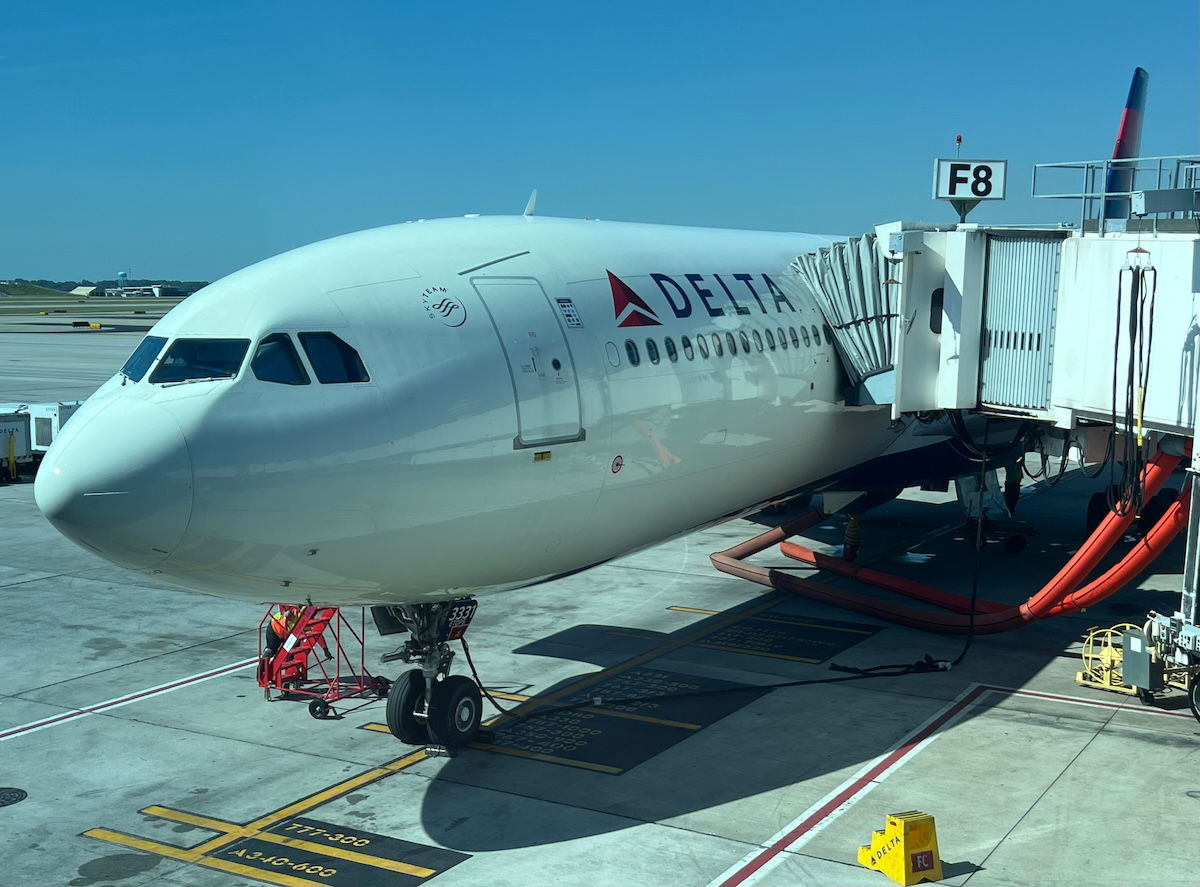
Are airlines being overly optimistic with higher fares?
In fairness, what Bastian said here wasn’t surprising. In early April I already covered how he said that fares may not decrease even if oil prices go down, but now we have more data to actually back up how performance has evolved. For that matter, this matches exactly the narrative we’ve heard from United executives as well.
They’re absolutely telling the truth here, in terms of how airlines are approaching this — the only lie was when Bastian recently suggested that fares will only go down when our air traffic control system is fixed.
Here’s the truth of the matter, as I see it:
- The cost of airfare isn’t based on the cost of providing the seat, but instead, it’s based on supply and demand, and trying to maximize incremental revenue; demand is based on macroeconomic factors, while supply can be controlled by cutting some flights
- Several major US airlines haven’t turned a profit in years, since airline profitability is increasingly tied to credit card revenue, which puts little airlines at a major disadvantage
- Of course Bastian almost makes it sound like he’s approaching increased fares in an altruistic way, looking out for the airlines that aren’t covering the cost of capital, when in reality, his hope is to make “his” airline, which has good margins, even more profitable
What I find interesting is that we haven’t actually seen capacity in the US market decrease that much. It’s almost like all the airlines have a “wink wink, nudge nudge” agreement to keep fares higher right now. I don’t want to suggest anything illegal is happening, or that this is official collusion, but I think the concept isn’t too far off.
However, eventually I feel like something has to give. Ultimately the way fares end up going down is because you have desperate airlines with seats to fill, and if they can undercut the other guys, those airlines often feel the need to match fares as well.
For airlines like Frontier, it’s not necessarily just about being profitable, but instead, it’s about reducing losses. If we see some airlines consistently undercutting fares of competitors, then the increases just won’t be able to stick around, as I see it.
I’m actually a little more forgiving than others of airlines raising fares, because I recognize what a tough industry it is. Many people just don’t realize how expensive it is to run an airline, and act as if they’re being taken advantage of if their flight across the country costs more than their Uber to the airport.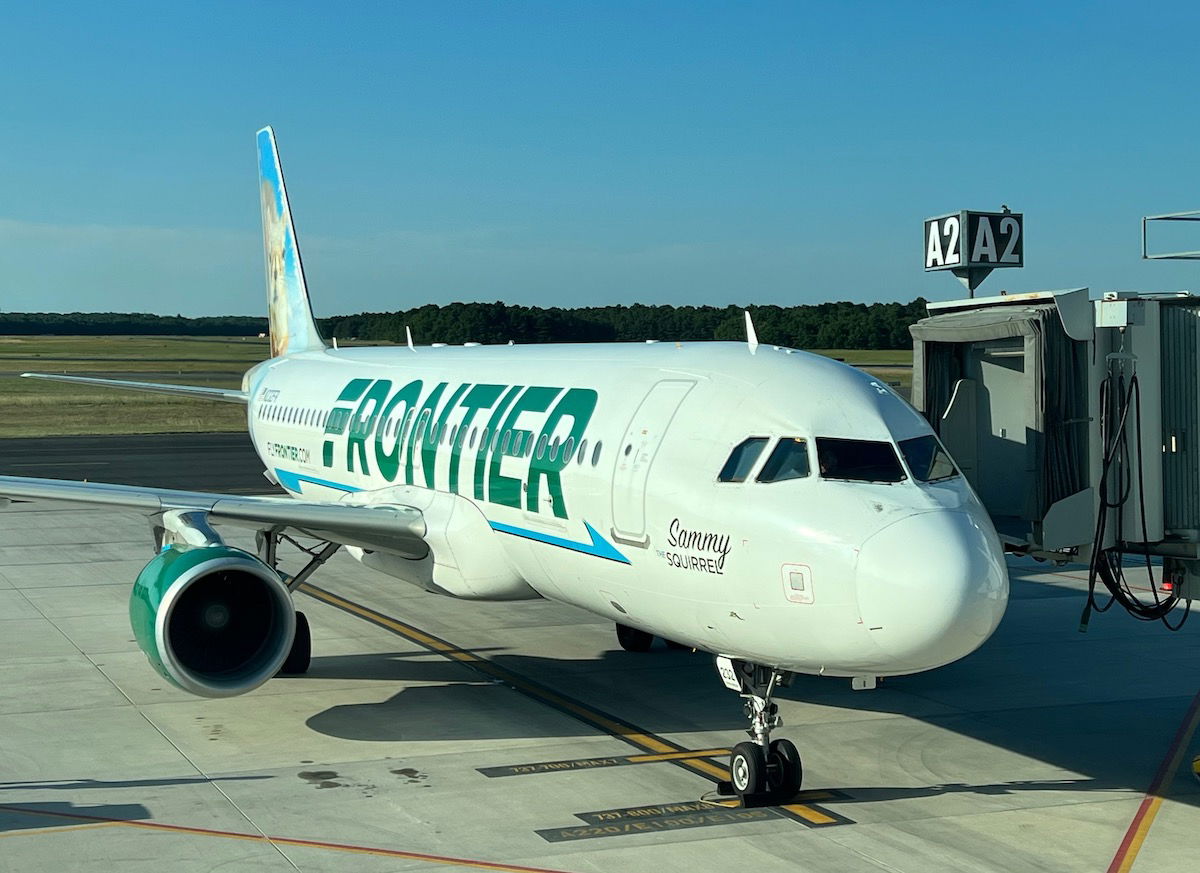
Bottom line
Delta has today reported its Q2 2026, and the airline saw a very healthy 14% revenue increase, largely attributed to being able to charge higher fares. While those higher fares make sense in the context of the spike in jet fuel costs, it’s the long term narrative to investors that has the biggest implications for consumers.
Delta CEO Ed Bastian indicated that the current conflict has been a “powerful catalyst for change” in the airline industry, and that the “current revenue momentum should remain sustainable” even as jet fuel prices go down.
This is a narrative we’ve heard echoed over and over by airline executives. While I know that this is how they’d like things to be, I’m curious to see how it really plays out.
What do you make of Bastian’s comments about long term airline ticket prices?




You gotta feel for airline execs. In the US, they are forced by market conditions to offer airfares that don't in aggregate cover the costs of the flights. Airfares before recent price increases were are historically incredibly low prices (adjusted for inflation). Even after recent increases, they are still great bargains. People gladly buy low-price fares with restrictions (e.g., no advance seat assignment) and limited pitch. Offer them a better coach product (e.g., AA a...
You gotta feel for airline execs. In the US, they are forced by market conditions to offer airfares that don't in aggregate cover the costs of the flights. Airfares before recent price increases were are historically incredibly low prices (adjusted for inflation). Even after recent increases, they are still great bargains. People gladly buy low-price fares with restrictions (e.g., no advance seat assignment) and limited pitch. Offer them a better coach product (e.g., AA a few years back with extra pitch throughout Y) and they'll buy your competitors' inferior product to save a few bucks. And, increase price less than that reflected in increased labor costs, operating fees, and fuel costs, you get accused of gouging. At least your compensation doesn't suck and you'll get F transport free the rest of your life.
One World carriers have consistently much higher TATL fares than Star carriers, it’s up to passengers to say no and dump the points collection hamster wheel when they are taken for a costly ride by these oligopolies.
That's not true in my experience- BA often sell F to the US for barely more than €2k return, and Iberia are usually pretty competitive in all three classes.
We probably look at different versions of google flights, but fair enough. From North America that’s my experience. Iberia also consistently more expensive than BA.
The "wink, wink, nudge, nudge" approach is known as implicit collusion and occurs in oligopolistic industries like the US aviation market.
Why are their margins so low then?
It doesn't matter what you think, Delta is gold and the best airline ever. We can charge whatever we want and the plebs will pay.
The new MNL route will become the best yield in the network, and will help DL make brazillons of profits.
The US DOJ Anti-trust department and the DOT have completely failed. The airline industry has been allowed to consolidate to where there is basically no competition. That results in smug airline CEO’s to gloat that they can rip off the consumer.
This sentence in the article sounds very passive. I wish you were more bold in calling out industry corruption.
“I’m actually a little more forgiving than others of airlines raising fares, because...
The US DOJ Anti-trust department and the DOT have completely failed. The airline industry has been allowed to consolidate to where there is basically no competition. That results in smug airline CEO’s to gloat that they can rip off the consumer.
This sentence in the article sounds very passive. I wish you were more bold in calling out industry corruption.
“I’m actually a little more forgiving than others of airlines raising fares, because I recognize what a tough industry it is. Many people just don’t realize how expensive it is to run an airline, and act as if they’re being taken advantage of if their flight across the country costs more than their Uber to the airport.”
Have prices ever gone down when they have increased for 'reasons'?
These companies always instantly put prices up crying about how they have to and then they never drop until ppl stop using them
"Have prices ever gone down when they have increased for 'reasons'?" Have you not driven a gasoline-powered automobile? Prices go up and down all the time. But, yes, it tends to be a "one-way street" across many items. But, many producers struggle to keep prices down. Once the price "unsticks," there is little economic justification to reduce future prices.
I mean they did say fuel costs were nearly $2B more in 2Q26 vs 2Q25 and they only recaptured 60% of that, so do we really expect them to lower prices before they recoup the additional costs? I'm not sure any successful business would make a different decision.
“ I'm not sure any successful business would make a different decision.”
Except delta isn’t a successful business
They’d be chpt 7 dead like all the others in 2020 if not for the taxpayers: replaced by carriers with Lower labor costs.
Delta has been the most successful US airline financially this century, surpassing WN which has long been considered the most successful in the US global airline industry.
you clearly do not understand the US airline industry - to absolutely no one's surprise - since you don't realize that DL led the US airline industry in raising labor costs post covid which has disproportionatly squeezed low cost and ultra low cost carriers which cannot increase...
Delta has been the most successful US airline financially this century, surpassing WN which has long been considered the most successful in the US global airline industry.
you clearly do not understand the US airline industry - to absolutely no one's surprise - since you don't realize that DL led the US airline industry in raising labor costs post covid which has disproportionatly squeezed low cost and ultra low cost carriers which cannot increase reveneus fast enough to cover their higher labor costs.
The entire US airline industry was subsidized by taxpayers during covid - as occurred in many parts of the world - but it was based on covid era labor costs of which DL was nowhere near the highest.
just admit it... DL has succeeded at being its competitors not just in the marketplace but also when government intervention is involved in the industry.
DL has succeeded at BEATING its competitors
Blaming high fuel prices is just another excuse to raise prices because unless they're morons (OK, there is that), they're using the futures markets to hedge against price volatility.
Per Grok - "Fuel price hedging via commodities markets (futures, swaps, and options, often cross-hedged with crude or heating oil) is a documented, widespread practice among airlines worldwide. It is discussed extensively in academic literature, company disclosures, news reports, and industry analyses. Practices vary by...
Blaming high fuel prices is just another excuse to raise prices because unless they're morons (OK, there is that), they're using the futures markets to hedge against price volatility.
Per Grok - "Fuel price hedging via commodities markets (futures, swaps, and options, often cross-hedged with crude or heating oil) is a documented, widespread practice among airlines worldwide. It is discussed extensively in academic literature, company disclosures, news reports, and industry analyses. Practices vary by airline, region, and market conditions, and it is not risk-free (it can lead to opportunity costs or losses if prices move favorably), but the evidence of its use is clear and abundant."
I live in a Delta hub (MSP) and they are extorting passengers here. Thy literally have a monopoly if you want to fly non-stop but have figured out how you explore people that try to get to other airports to fly other airlines. So unless you find a way to fly out of MSP on a non Delta airline to get to another major airport to fly internationally, you are screwed. Interesting that I have...
I live in a Delta hub (MSP) and they are extorting passengers here. Thy literally have a monopoly if you want to fly non-stop but have figured out how you explore people that try to get to other airports to fly other airlines. So unless you find a way to fly out of MSP on a non Delta airline to get to another major airport to fly internationally, you are screwed. Interesting that I have had conversations with many friends that are exploring moving out of Minneapolis for several reasons but funny that “not being held hostage by Delta when trying to fly” has become more common in conversations. In any airport where there is international competition, Delta has no way to keep prices so high but in places where they control, they are extorting passengers.
I’ll feel your pain. I’m able to fly MSP-BRI cheaper than MSP-AUS. Make it make sense…
Come move near me. You'll get some lower airfares. But, many of the routes you can fly n/s out of MSP now will have one stop. And, you'll have no n/s service outside North America. Life is full of tradeoffs. MSP is a great town, but you've got left-wing politicians, terrible winters, and a subpar Big10 football team. Would I be OK paying more, but getting better n/s service. Likely, yes. But, like you and your friends, I'd gripe about it.
@Santastico, well, Sun Country does fly out of MSP non-stop to many domestic destinations so I guess you mean Delta has more of an international monopoly but those are not that many out of MSP anyway. Most people in the USA have to make a connection if wanting to fly out to half the continents. If people wanted to live in a city with the most non-stop destinations, they would have to move to NYC or Chicago.
I cannot fault any business for getting as much revenue as they can from non-essential products or services. Good for them. It's up to us consumers to draw a line in the sand and say - nope.
LLM, amongst a lot of others - you're better than this
Fares will stay higher as long as consumers pay them, and if they do, they have no one to blame but themselves.
Ben, Would you be willing to get rid of some of these annoying ads so this site would be more enjoyable for your readers?
Nah, Econ 101… *burp*
I believe those count as ancillary revenue...then again, wouldn't that make Ben even more dependent on ancillary revenue than the LCCs?
UA was far more vocal earlier this year that fares would not come down even if fuel prices did; DL's narrative is in line w/ analyst expectations for stronger pricing and better capacity management going into the 2nd half.
Bastian is correct to note that there are a number of US carriers that are fighting just to breakeven - and quit losing money. There is little reason for them to try to undercut fares when...
UA was far more vocal earlier this year that fares would not come down even if fuel prices did; DL's narrative is in line w/ analyst expectations for stronger pricing and better capacity management going into the 2nd half.
Bastian is correct to note that there are a number of US carriers that are fighting just to breakeven - and quit losing money. There is little reason for them to try to undercut fares when it is clear that the big boys don't want to discount aggressively because they can fill seats at higher fares.
DL is simply highlighting the state of the industry - which will be strong fares and tight capacity growth.
And DL's growth will heavily be in the international arena.
Wait didn't Kirby say that about a number of US carriers that are fighting just to breakeven months (and even years) ago? So Bastian is just copying Kirby, nice!
UA copies DL's strategies but UA by far is the leader in rhetoric.
IOW, DL tells UA what to do and then Kirby claims to be the smartest person in the room because he explains the strategies to the world while DL just acts first.
Ed's burying the lede - Spirit's losses were subsidizing lower fares at other carriers for years (particularly the last 2-3 years, but really back to about 2022 - I won't fault them for losses in 2020 and 2021), and with Spirit dead (and JetBlue on life support) there's added pricing pressure in the background.
I'd like to be clear - I look at Spirit as a market-distorting force (versus "just" providing pricing pressure that helps...
Ed's burying the lede - Spirit's losses were subsidizing lower fares at other carriers for years (particularly the last 2-3 years, but really back to about 2022 - I won't fault them for losses in 2020 and 2021), and with Spirit dead (and JetBlue on life support) there's added pricing pressure in the background.
I'd like to be clear - I look at Spirit as a market-distorting force (versus "just" providing pricing pressure that helps consumers) insofar as its business model wasn't sustainable after the pandemic (and indeed, in the long run might have been doomed as the airline reached maturity and gained a more senior workforce) and, in this respect, I think it might well be the case that fares were kept "too cheap" for a while. And that party is always fun, but there's usually a hangover afterwards.
NK is a powerful example to the LCCs and ULCCs that they cannot win in a contest against larger legacies that do not want low fares; NK Held on valiantly trying to aggressively discount but lost the battle because they couldn't sustain their own operations.
This summer and fall is a great opportunity for the weaker LCCs and ULCCs to see that they can fit into the US airline system if they do not trash...
NK is a powerful example to the LCCs and ULCCs that they cannot win in a contest against larger legacies that do not want low fares; NK Held on valiantly trying to aggressively discount but lost the battle because they couldn't sustain their own operations.
This summer and fall is a great opportunity for the weaker LCCs and ULCCs to see that they can fit into the US airline system if they do not trash yields and accept that they can succeed as long as they don't expect to steal share from much stronger competitors.
Again, we can go back to the days of the CAB where the government controlled routes and pricing. Airlines struggle to make a profit flying people from Point A to Point B. But with 1970s style fares airlines would no longer need ancillary revenue.
But the socialist say lower fares, pay people more, have more customer service and that somehow will generate a profitable business.
and yet all of the ancillary revenue IS part of the revenue formula that is working.
in fact, ancillary revenue just means that consumers pay less for the overall cost of providing passenger air service while credit card and MRO revenue - which continues to grow - helps cover costs esp. for non-loyal economy passengers.
The current model does work to keep airfares down for some people while others pay for their loyalty and the...
and yet all of the ancillary revenue IS part of the revenue formula that is working.
in fact, ancillary revenue just means that consumers pay less for the overall cost of providing passenger air service while credit card and MRO revenue - which continues to grow - helps cover costs esp. for non-loyal economy passengers.
The current model does work to keep airfares down for some people while others pay for their loyalty and the benefits they get because of it.
this will be a strong earnings season and remainder of 2026 outlook for the industry.
By going first for 2Q2026, DL just gets to tell the narrative that other airlines will repeat
When it comes to USofA-Asia, its going to be JL/CX or KE by a mile. When it comes to Europe, I'll just stick with OneWorld. We don't really travel to Central/South America.
Looks like "no bueno" when it comes to DL for me. I do have a DL AMEX card though..LOL!
Once a dog tastes blood, it can no longer go back to kibble.
Airlines have gotten a taste that consumers will pay higher prices. Especially in premium cabins. No reason for prices to go down when the idiotic market will keep paying. They used the war and gas prices as the justification.
Hopefully , passengers will stop paying extortionist fares and fees . Stop paying .
Yeah it's called driving and taking the bus. And that's exactly what people did 50 years ago.
Airlines in the US don't make money flying. Pretty much by definition they can't, therefore, have "extortionist fares and fees."
TD furiously touching himself to the thought of profits skyrocketing
This greed is unsustainable.
Tell that to food and beverage companies.
@1990 - in the immortal words of Gordon Gekko - "greed is good". Businesses are not charities. Their job is to maximize profits and grow the business. It is all about supply and demand (as Ben stated). As long as demand supports higher fares they shouldn't be lowered outside of legitimate business interests (new market, low yield factor on certain routes, competitive pressures, etc). It isn't the airlines' problem if people don't think the fares...
@1990 - in the immortal words of Gordon Gekko - "greed is good". Businesses are not charities. Their job is to maximize profits and grow the business. It is all about supply and demand (as Ben stated). As long as demand supports higher fares they shouldn't be lowered outside of legitimate business interests (new market, low yield factor on certain routes, competitive pressures, etc). It isn't the airlines' problem if people don't think the fares are "reasonable" or a family can't afford their annual trip to see granny.