
Delta’s CEO recently gave an interview where he proactively volunteered what it’ll take for airfare to go down. He claimed airfare is high due to capacity constraints, and he stated the solution to that is air traffic control reform. That strikes me… as a bit of a stretch.
Delta CEO blames high fares on ATC capacity constraints
Delta CEO Ed Bastian had a roughly 15-minute interview several days ago with Maria Bartiromo on Fox Business. Bastian isn’t exactly the most controversial CEO in terms of the claims he makes, so not much in there will surprise you.
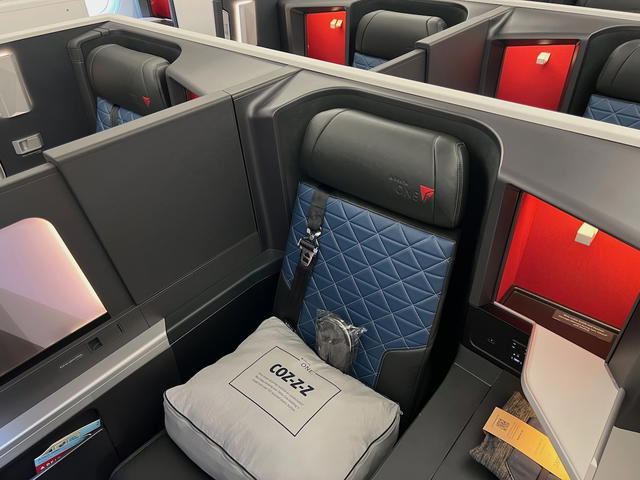
He talked about how everything at Delta is great, since the airline caters to the very top end of the economy. He praised the administration for their awesomeness. He talked about how airfare has increased by around 10-15% due to the Iran conflict, and he doesn’t expect for it to go up much beyond that.
But here’s what I find interesting. Around 10min35sec into the interview, while talking about general air traffic control reform, he made the following statement, which wasn’t even in direct response to a question:
“People ask me all the time, what’s happening with prices? Prices will come down when we can fly more, when there’s more supply, it’s a supply and demand. Right now we’re kind of logjammed. There’s not a lot of supply we can bring in because the air traffic control system is congested. As you open up the skies, and you bring more flow, that’s going to help bring pricing down and enable us to bring more people to more places.”
Broadly, capacity reductions aren’t due to air traffic control
We absolutely have issues with our air traffic control system in the United States, and it desperately needs reform, because it contributes to a lot of the delays that we see. However, to suggest that airfare is expensive because of that is simply not accurate:
- At the end of the day, airfare is priced based on supply and demand, and not entirely based on the cost of providing air transport (or else many US carriers wouldn’t be stuck selling tickets at a loss)
- We’ve seen airfare increase in price by around 30% since the beginning of the year (a lot higher than the 10-15% that Bastian suggests), and nothing has changed about air traffic control during that period
- Instead, the reason airfare has increased is because airlines have strategically decreased capacity, which is the number one cause of fares increasing; let me emphasize that airlines are voluntarily decreasing capacity at the moment so that they can increase fares
- If airlines are so concerned about congested airspace, may I suggest that they not fly so many regional jets with so few seats? For that matter, Delta has the smallest mainline jets on order of any US airline, as the carrier flies a bunch of A220s with 109-130 seats, with a lot more on the way
- If we’re going to look at the baseline airfare before the recent hike in prices, passenger revenue per air seat mile at even profitable US airlines was largely lower than cost per air seat mile, with loyalty programs and other initiatives making up much of the revenue gap; costs in the industry aren’t going down, so are you going to tell me that this divide is going to increase even more?
Like I said, I agree we need air traffic control reform, in terms of making our air travel system more efficient. But to suggest this is some silver bullet that’s going to lead to lower airfare (beyond the low fares we saw before this current conflict) is just baseless.
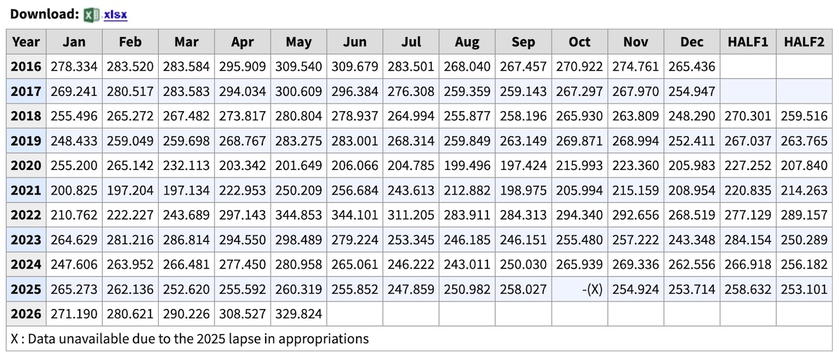
And let me support this with one more point. When is Bastian suggesting that air traffic control was actually functional, and not the cause of higher airfare? Because if you look at the consumer price index for airfare over the years, it doesn’t seem to have any correlation to air traffic control staffing shortages.
Lastly, let me just contrast what Bastian is saying to the words of United CEO Scott Kirby (who doesn’t really hide his true intentions, or say what consumers want to hear). During the company’s Q1 2026 earnings call, Kirby made it clear that higher airfare is here to stay, and that the longer this conflict lasts, the more permanently they can keep higher pricing:
“Certainly, the longer this lasts, the higher the probability goes that the pricing increases hold. And we probably won’t hold 100% if we normalize as I told the team earlier today, and it’s just my guess that if things went back to mid-February normal, I think we get to keep 20% of the price increase next year. I think that’s going to move towards 80%. And every day, it’s ticking up longer as this goes on.”
I’m not suggesting Kirby is the most trustworthy guy in the industry, but I think that narrative is a lot more honest than Bastian suggesting that air traffic control is to blame for high airfare.
Bottom line
In recent months, we’ve seen airfare increase by an average of around 30%, among the biggest changes we’ve seen in such a short period of time in history. That’s largely fair, in the sense that airlines are facing higher costs than in the past.
However, if you’re an airline CEO and you proactively mention how people often ask you when tickets will get cheaper, it seems a bit disingenuous to say that airfare will go down when we see air traffic control reform. I agree airfare pricing is a function of capacity, but most of the capacity adjustments we see at airline are voluntary (to be able to raise airfare), rather than due to any concern for air traffic control staffing levels.
It seems a more honest answer would be that airfare might go down a bit once this conflict with Iran ends, but perhaps that’s too anti-administration for Bastian’s liking?
What do you make of Bastian’s comments about airfare pricing?


Membership is free and takes no more information than commenting as a guest. Earn status points for good contributions, and see fewer ads as your status grows.