

Delta Air Lines recently placed an order for up to 60 Boeing 787-10s, which will be delivered as of 2031. This is a major development for the airline, given the carrier’s wide body fleet renewal has otherwise been centered around Airbus jets, making this a big win for Boeing.
However, since that order, JonNYC has been hinting that there could be another wide body aircraft order, specifically for Airbus aircraft. Well, as usual, he nailed it, and the order came even faster than most of us were expecting. Delta has just announced an order for over 30 Airbus jets, which I’d consider to be pretty significant.
In this post:
Delta adds 31 Airbus wide body jets, deliveries start 2029
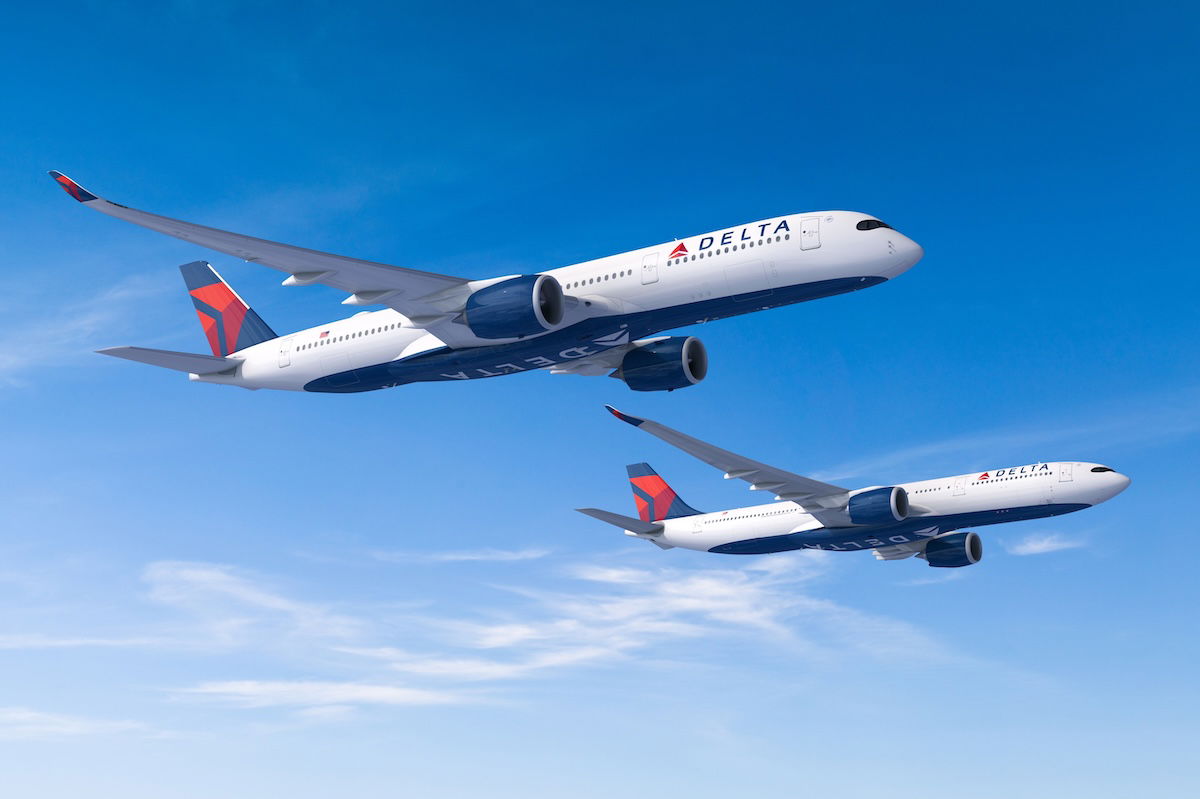
Delta has just placed a firm order for 31 Airbus wide body jets, including 16 A330-900neos and 15 A350-900s, which will be delivered as of 2029. With this, Delta’s A330-900neo fleet will increase to 55 aircraft, while the A350 fleet will increase to 79 aircraft, including 20 A350-1000s, which will be delivered as of 2027.
This order combines a new, incremental order, with the exercising of 10 existing options. As the airline describes it, Delta’s fleet is undergoing a significant renewal and expansion, to match its international and premium growth strategy in the next decade and beyond. With this latest announcement, Delta now has 85 wide body aircraft on order.
The new wide body aircraft will add more capacity to medium and long haul international markets, while improving fuel efficiency and margins. Here’s how Delta CEO Ed Bastian describes this:
“As we grow our international footprint and prepare our fleet to serve expanded long-haul markets, these aircraft will enhance our capabilities and elevate our premium offerings. We value our long-standing partnership with Airbus, and with these widebody aircraft we will see long-term growth and cost benefits for years to come.”
The timeline of deliveries with these planes starting in 2029 makes perfect sense. That’s because Delta plans to take delivery of all of its A350-1000s in 2027 and 2028 (at this point deliveries may realistically stretch into 2029, given delays), while the Boeing 787-10s will only be delivered as of 2031. So the airline obviously had a gap to plug there, and these planes will help with that.
How these Airbus jets fit into Delta’s fleet renewal
With this latest aircraft order, here’s the current state of Delta’s “next generation” wide body fleet renewal:
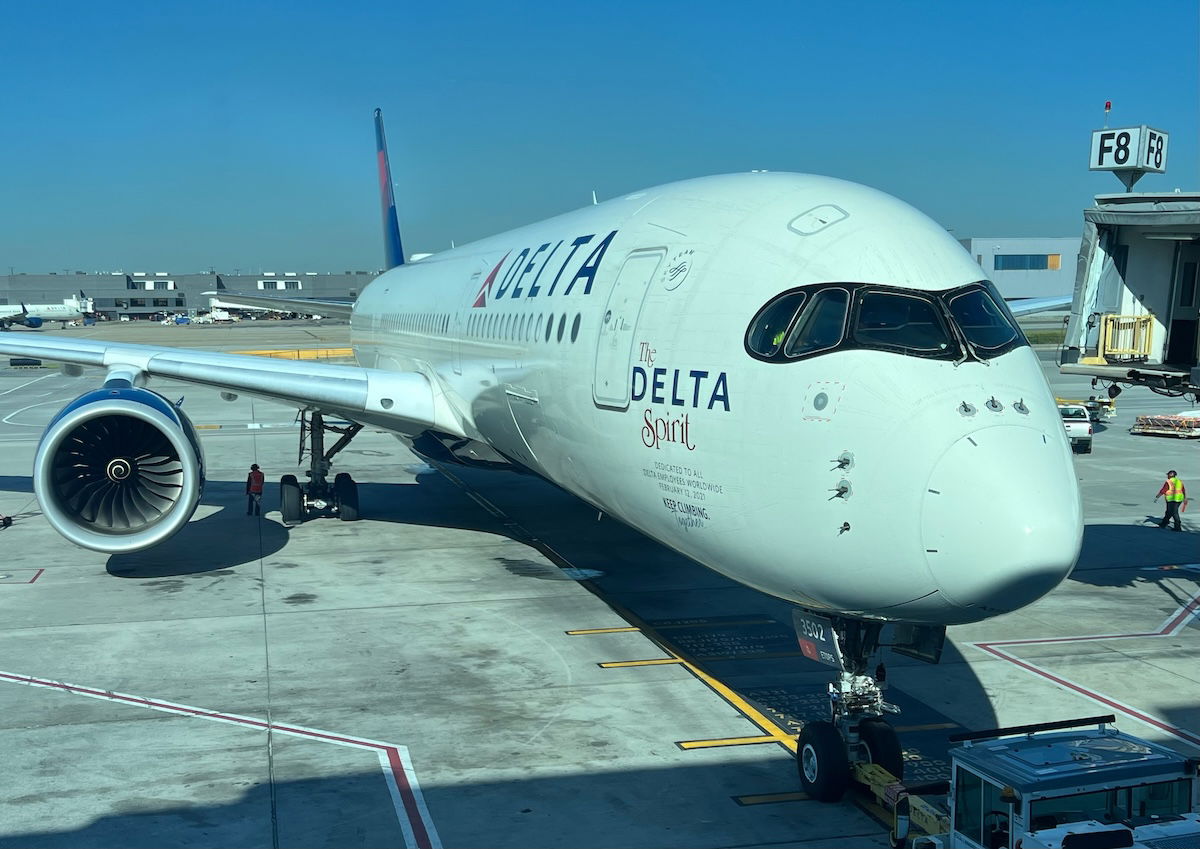
- Delta has 39 Airbus A330-900neos, with 16 more on order (thanks to what was just announced), to be delivered as of 2029
- Delta has 40 Airbus A350-900s, with 19 more on order (four were previously on order, and 15 were just announced), and deliveries of those are ongoing
- Delta has 20 Airbus A350-1000s on order, to be delivered in 2027 and 2028, plus options for 20 more
- Delta has 30 Boeing 787-10s on order, to be delivered as of 2031, plus options for 30 more
Then in terms of Delta’s previous generation wide body aircraft:
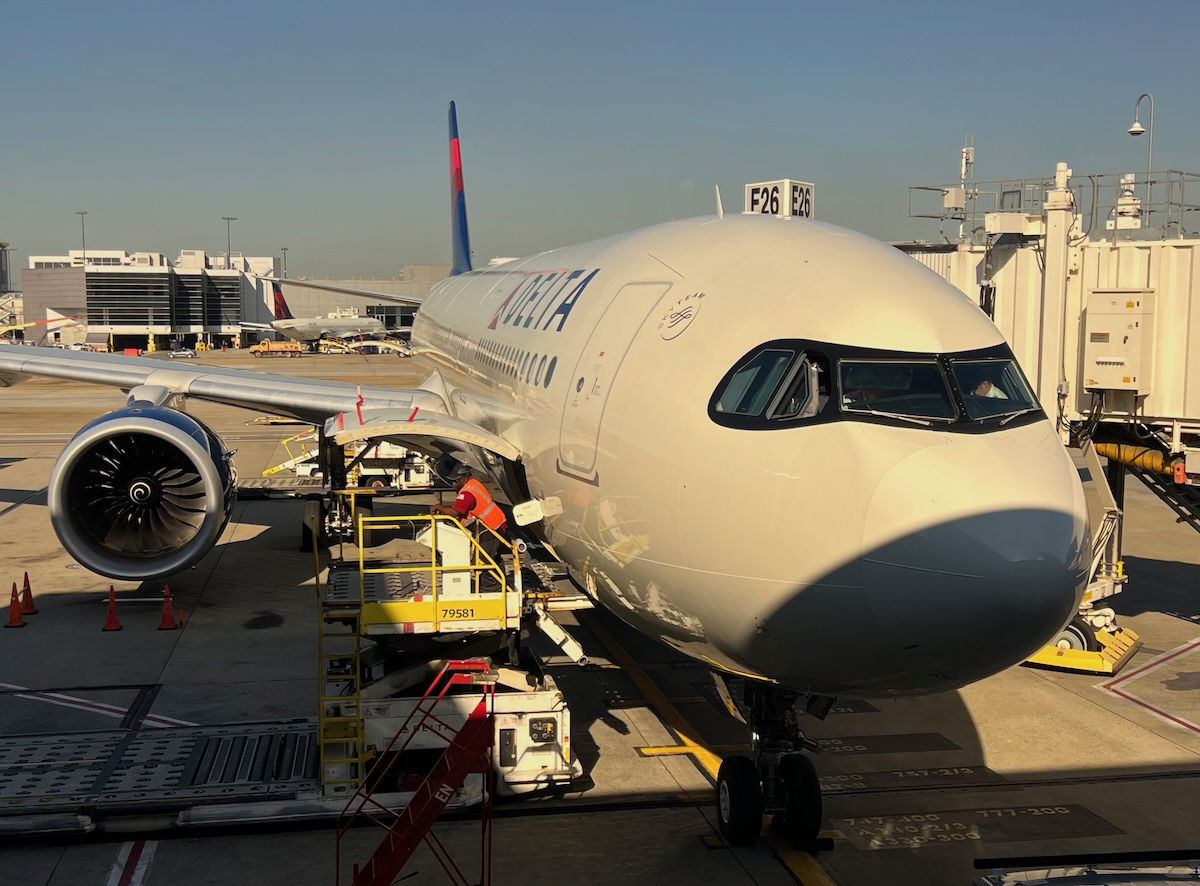
- Delta has 11 Airbus A330-200s, which are an average of 21 years old
- Delta has 31 Airbus A330-300s, which are an average of 17 years old
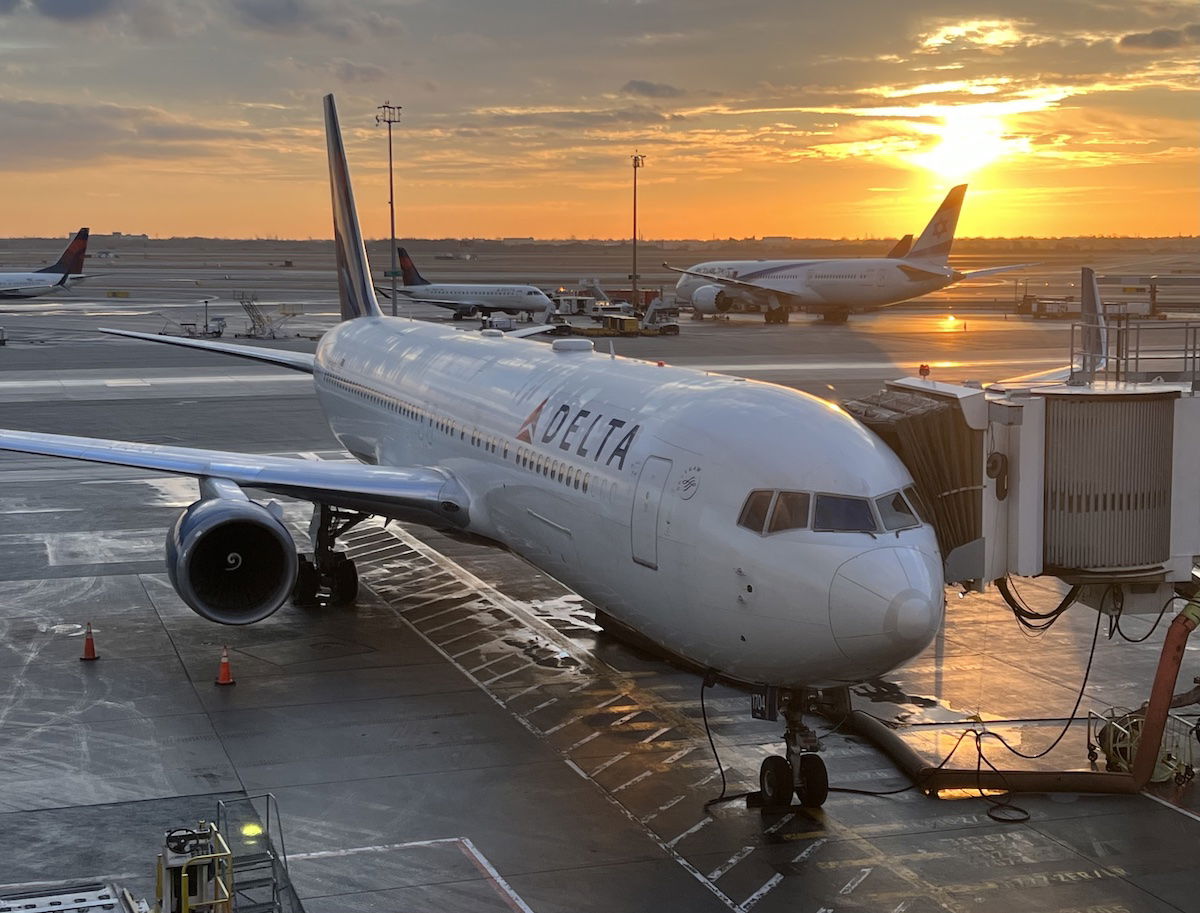
- Delta has 38 Boeing 767-300ERs, which are an average of 29 years old
- Delta has 21 Boeing 767-400ERs, which are an average of 25 years old
I think Delta’s order for a mix of A330-900neos and A350-900s is logical. When you look at the current state of things, Delta needs some more “workhorse” wide body jets in the long run. Keep in mind the A350-1000s are largely supposed to be used for ultra long haul expansion, including to destinations in Asia, the Middle East, and India, which aren’t currently served. So if you view those planes as being for growth rather than fleet renewal, then you realize why Delta needed to order more planes.
The airline has 91 older generation aircraft that eventually need to be retired, while the airline now has a total of 85 wide body aircraft on order (that number includes the 31 that were just announced). Now, admittedly the A330-300s in particular could easily fly for another decade (or even longer… we’re talking about Delta here), so clearly the goal here is to grow the fleet, rather than just refresh it.
The A330-900neos can basically serve any Delta destination in Europe or South America, and in some cases, even destinations in North Asia (though at this point Delta has an all-A350 strategy across the Pacific). Meanwhile the A350s can be used for virtually any route, so provide lots of flexibility.
I think what’s so interesting is the number of wide body planes that each of the “big three” carriers now has on order:
- United has 141 wide body aircraft on order
- Delta has 85 wide body aircraft on order
- American has 19 wide body aircraft on order
Talk about three very different visions, so it’s going to be interesting to see how this all plays out.
Bottom line
Delta recently placed a firm order for 30 Boeing 787-10s, with 30 options. Now the airline has placed an additional order with Airbus, for 31 more wide body planes. This includes 16 A330-900neos and 15 A350-900s.
This order makes perfect sense — at least in the long run, Delta needs more next generation wide body aircraft. A330-900neos are great for any missions to Europe and South America, while A350-900s are great for expansion to Asia, the South Pacific, etc.
Perhaps the most interesting thing is just how far apart the “big three” US carriers are with their wide body aircraft orders. United is being most aggressive, American is being least aggressive, and Delta is somewhere in the middle.
What do you make of Delta’s Airbus aircraft order?




Why does Tim Dunn and Nickw sound like the same person?
When is Ben going to ban Tim and his obvious troll accounts? It keeps getting worse.
They're taking over OMAAT, and Ben doesn't seem to notice or care.
Or he knows that opinions against the majority aren't necessarily wrong. Look at at the people on this site trying to stop dissenting opinions.
Calls to ban or silence others are lame. The answer to speech you don't agree with is more speech. C'mon.
Thank you Julie and Rebel for calling it as is. I have said for a long time that Tim Dunn and NickW are the one and the same. Yet, the newbies on this site did not know any better and believed Tim Dunn aka NickW when NickW aka Tim Dunn claimed that they were not the same people. What a bunch of malarkey. The people who have been on this site for a long time knows nonsense when they see it.
Nick has not participated on this forum until fairly recently.
He has posted more on this topic than practically any other.
I have said - which is a fact - that you and others can't stand for anyone to speak the truth that the herd doesn't want to hear.
That is THE ONLY REASON I participate in social media.
And I have also said that I have achieved what virtually no one else can...
Nick has not participated on this forum until fairly recently.
He has posted more on this topic than practically any other.
I have said - which is a fact - that you and others can't stand for anyone to speak the truth that the herd doesn't want to hear.
That is THE ONLY REASON I participate in social media.
And I have also said that I have achieved what virtually no one else can do which is to be on the lips (and minds) of so many people before I ever participate in a discussion.
Give it a rest. Seriously.
DL just proved in 2 weeks that it can get a steady stream of new, modern widebodies from both manufacturers and build on advantages that it is uniquely able to do among US airlines - all of which some people like me have said would be the case while there have been a chorus of people that have argued for how great their favorite company's strategy is - when it is clear that it is not.
Nick exposed yet another dimension of why DL has done the best job of using assets to create superior financial performance in harmony with what I have said.
And the best part is that he used the very data that these shrill fan nuts thought would prove their point.
Yeah, Tim, what's the deal with this NickW guy? Reminds me of you copying-and-pasting Mike Hunt's comments from VFTW as-if to discredit me in a separate post. Doesn't have that affect buddy.
of course, it is all about you.
None of which changes that DL proved what it is all about - profitable and sustainable growth into competitor strongholds while AA and UA do all they can to destroy each other and B6 is still burning the furniture to survive.
DL is in a pretty privileged position in the industry.
Stanley, how sure are you of your accusations? Just think for a minute if you're wrong.
You're so sure of yourself, and yet no possible way to prove it either way.
The problem with social media is that it gives people like you a platform to squawk rather than engage in meaningful discussion.
DL's first A350-1000 has been assigned a fleet number which falls just after its last A350-900 which is scheduled to be delivered later this year.
A delivery in the winter of 2027 and entry into service by spring 2027 seems likely
Look at your post and think again Tim.
why don't you get a second cup of coffee and get back with us?
The winter of 2027 is any time after January 1, 2027 - roughly one year from now.
The winter of 2026-2027 is the entirety of winter of the one that will start after this one finally ends.
DL will have schedules and seat maps for the A350-1000 published later this year - likely in the summer of 2026
That is nonsense T and you know it. If you can’t admit that you have been unable to post something which is not clearly understood by others, you deserve the criticism others so frequently direct towards you.
YOU highlight how incessantly you and "the herd" look for any flaw you can find and fall flat on your face while failing to address the key issue - which here is about the arrival of DL's A350-1000s.
None of which changes that DL's A350-1000s will very likely roll off the production line later this year but not be flight tested or fitted with engines until early 2027 with entry into service by the summer of 2027.
I am betting the first DL 35K route will be ATL-ICN
Boring and irrelevant rhetoric.
Fake Aero, no, it's interesting, especially to the travel/aviation community; maybe not for trolling.
I have no horse in the race, but it's good to know DL has chosen a quieter aircraft from the passenger's comfort standpoint, at least where A350 is concerned.
Quite entertaining to watch tim Dunn and his new fake name, Nickw, go back and forth with each other while using the same tired insults toward others that betrays… it’s just Timmy in yet another fake name
It is sad, not entertaining, to think that there are a whole chorus of people including you that think that any two people that don't tow the party line on social media are really just the same person.
You can do better, Julie.
Or maybe you can't
Try to use different insults when attempting two different fake usernames. Try to not use the same dogmatic way of speaking with "people refuse to admit...". And try not to manipulate your data in the same unique ways if you want to appear as two separate people. You fool no one.
It's a dead giveaway little Tim/Nick
Buy USA! Support the USA industry and workforce! I won't fly DL anymore!
then the only airline that you will fly is WN.
about half of AA's fleet is Airbus; UA has substantial Airbus fleets and also has A350s on order..... even "proudly all Boeing" AS no longer is - again.
and let us know how well Boeing will do if all of the European countries decide to quit buying Boeing aircraft.
I think it's a solid move.
As an ex Delta employee, I am proud of being a part of a Great company !
Tim?
Tim is effectively lecturing a kindergarten class on quantum physics here. The comment section is obsessing over "fleet commonality" because it looks nice on a spreadsheet, but you are completely missing the Concentration Risk.
United has bet their entire widebody future on a single airframe (787) from a single manufacturer plagued by quality control systemic failures. If the FAA issues a broad Airworthiness Directive (AD) on the 787 composite fuselage joins—which is a non-zero probability...
Tim is effectively lecturing a kindergarten class on quantum physics here. The comment section is obsessing over "fleet commonality" because it looks nice on a spreadsheet, but you are completely missing the Concentration Risk.
United has bet their entire widebody future on a single airframe (787) from a single manufacturer plagued by quality control systemic failures. If the FAA issues a broad Airworthiness Directive (AD) on the 787 composite fuselage joins—which is a non-zero probability given the shim gaps found in Charleston—United’s long-haul network evaporates overnight. They have zero redundancy.
Delta’s "mixed bag" order book is actually a masterclass in Operational Hedging. By splitting the lift between the A330neo (proven, low capital cost, high cycle capable), the A350 (flagship range), and the future 787-10 (high density), Delta has insulated itself from any single OEM failure.
Furthermore, nobody is discussing the Impairment Risk. United is paying top dollar for 787s in an inflationary environment. Delta is picking up A330neos at a massive discount because they are the only buyer keeping the line open. When the next recession hits, Delta’s break-even load factor on an A330neo will be 65%, while United will be underwater on their 787 lease payments unless they fill the plane.
Ed Bastian is running a hedge fund that flies planes. Scott Kirby is playing Flight Simulator 2020. The difference shows in the margins.
I guess Herb Kelleher and Michael O'Leary are kindergarteners in your book.
UA flies 752s, 763s, 764s, 772s, 773s, 788s, 789s & 78Xs internationally and has orders for A321XLRs & A359s.
UA ordered 150 787s and over 500 narrow body aircraft starting in 2021 when everyone else was panicking. Low prices combined with compensation for late deliveries make these aircraft historically inexpensive acquisitions, but nice try.
Advantage United.
UA IS cashing in a whole lot of customer compensation in order to get its inflated order books - but it still hasn't given them a single advantage over the way AA and DL - and AS for that matter - are managing their fleets.
WN has paid ENORMOUS risk for not diversifying away from the 737. and Airbus delivered for DL while AA and UA and AS and WN dealt with fleet groundings and...
UA IS cashing in a whole lot of customer compensation in order to get its inflated order books - but it still hasn't given them a single advantage over the way AA and DL - and AS for that matter - are managing their fleets.
WN has paid ENORMOUS risk for not diversifying away from the 737. and Airbus delivered for DL while AA and UA and AS and WN dealt with fleet groundings and delivery delays.
And UA is going to be faced w/ either settling for all that the 787 can do - which is substantially less than the 350.
feel free to show us the math to show that UA really does have an advantage but it is doubtful that is the case.
the 330NEO is a derivative and Boeing simply cannot sell the 787 at comparable prices even w/ customer compensation.
and UA will never be able to offset fleet complexity with a large MRO operation because UA was too focused on getting into fights with every other airline other than DL while DL has secured an even larger source of non-transportation revenue which ensures that no other US airline can match DL's earnings -and thus its ability to grow where it wants.
you don't have to get it and you simply highlight your inability to see reality.
sit down, kindergarten boy
If only Delta could manage to refurbish aircraft interiors in a timely and efficient manner towards some semblance of product consistency (see DL 763s). Yikes!
Invoking Kelleher and O'Leary in a discussion about long-haul widebody fleet strategy proves my point about the kindergarten level of analysis here. Southwest and Ryanair fly 2-hour domestic hops. If a 737 goes AOG, they can sub a spare or re-route passengers in 60 minutes. When a 787 goes AOG in Johannesburg or Sydney, you don't just "sub it out." You cannot apply LCC single-fleet logic to a complex, multi-gauge global network.
Furthermore, your list...
Invoking Kelleher and O'Leary in a discussion about long-haul widebody fleet strategy proves my point about the kindergarten level of analysis here. Southwest and Ryanair fly 2-hour domestic hops. If a 737 goes AOG, they can sub a spare or re-route passengers in 60 minutes. When a 787 goes AOG in Johannesburg or Sydney, you don't just "sub it out." You cannot apply LCC single-fleet logic to a complex, multi-gauge global network.
Furthermore, your list of "diversity" (757, 767, 777) is a list of retiring assets. You are looking in the rearview mirror. Look at the order book. United's future is almost entirely dependent on the 787 platform. If the FAA grounds the 787 for a composite delamination issue, a risk you conveniently ignore, United's international network effectively ceases to exist. Delta, with its mix of A350s, A330neos, and future 787s, keeps flying across the Atlantic and Pacific.
United bought a volume discount; Delta bought business continuity insurance. There is a reason Delta’s credit rating is investment grade and United’s is junk.
You don't seem to understand these are 30 year assets. Perhaps using a timeline would help with your multiplication, division & perhaps some %'s.
Your "timeline" argument actually proves my point, you just don't realize it. You are admitting that United is locking itself into a 30-year unhedged position on a single fuselage technology.
If the 787 composite barrel develops a mid-life structural fatigue issue (a completely unknown variable for the first generation of plastic widebodies), United is looking at a 30-year liability they cannot escape. That isn't an "asset"; that is a ticking time bomb on the balance...
Your "timeline" argument actually proves my point, you just don't realize it. You are admitting that United is locking itself into a 30-year unhedged position on a single fuselage technology.
If the 787 composite barrel develops a mid-life structural fatigue issue (a completely unknown variable for the first generation of plastic widebodies), United is looking at a 30-year liability they cannot escape. That isn't an "asset"; that is a ticking time bomb on the balance sheet.
Delta, by maintaining a mixed fleet of Al-Li (A220/A330/A350) and composite (A350/787), retains technological optionality. If one airframe type has a systemic aging issue, the other keeps the airline solvent.
And since you want to talk math: Look up WACC (Weighted Average Cost of Capital). Delta's investment-grade credit allows them to be opportunistic buyers of diverse assets. United's junk status forces them to take whatever bulk-volume "take it or leave it" deal Boeing offers just to show growth to Wall Street. You are cheering for a distressed buyer making a desperate bet.
Check out the ratings upgrades UA has been racking up. If you look at the progress UA has made on every front in the last ten year it's amazing. The trend is UA's friend. DL is still in the lead, but it is obviously resting on its laurels.
yes, we all know how much UA has improved but they still have junk status
and no, UA's announcement on top of AA's earnings call of dumping even more capacity into Chicago is the opposite of what Wall Street analysts and rating agents want to see to upgrade UA's credit rating to DL and WN levels .
Nick is completely right.
UA is focused on picking fights with its competitors while AA announces horrid...
yes, we all know how much UA has improved but they still have junk status
and no, UA's announcement on top of AA's earnings call of dumping even more capacity into Chicago is the opposite of what Wall Street analysts and rating agents want to see to upgrade UA's credit rating to DL and WN levels .
Nick is completely right.
UA is focused on picking fights with its competitors while AA announces horrid earnings and outlook and DL announces that it is growing its international fleet and franchise.
Clearly, children like you can't grasp the concepts being presented but DL is playing 4D chess while UA is playing footsie and poking its neighbors with pencils.
The financial results prove which strategy is winning and the winning will only get bigger as DL puts the 35Ks into service and adds even more of its most capable aircraft as it ramps up fixing every other airline's engines
Apples and oranges. UA is in a growth mode to capture market share and Delta is maximizing profits and pretty static.
Amazingly from a cash flow basis the two airlines are very similar though UA's fleet has grown significantly larger.
OCF/FCF/Capex
DAL UAL
2021: 3.3/0.1(3.2) 2.0/-.1(2.1)
2022: 6.4/0.0(6.4) 6.0/1.2(4.8)
2023: 6.5/1.2(5.3) 6.9/-.3(7.2)
2024: 8.0/2.9(5.1) 9.3/3.7(5.6)
2025: 8.3/4.6(3.7) 8.4/2.7(5.7)
5 YR:32.5/8.8(23.7) 32.6/7.2(25.4)
@rebel Thank you for posting the data that explicitly validates Tim's thesis. You just proved that United is structurally less efficient at deploying capital.
Look at your own 5-year totals: United: Spent $25.4B in CapEx to generate $7.2B in FCF. Delta: Spent $23.7B in CapEx to generate $8.8B in FCF.
United spent $1.7 Billion MORE on shiny new metal to generate $1.6 Billion LESS in distributable cash to shareholders. That is not "growth mode"; that...
@rebel Thank you for posting the data that explicitly validates Tim's thesis. You just proved that United is structurally less efficient at deploying capital.
Look at your own 5-year totals: United: Spent $25.4B in CapEx to generate $7.2B in FCF. Delta: Spent $23.7B in CapEx to generate $8.8B in FCF.
United spent $1.7 Billion MORE on shiny new metal to generate $1.6 Billion LESS in distributable cash to shareholders. That is not "growth mode"; that is Capital Destruction. Scott Kirby is lighting cash on fire to buy market share he has to discount to fill.
And look at the trend line for 2025: Delta's FCF ($4.6B) is nearly double United's ($2.7B). The gap is widening, not closing. Delta is maximizing ROIC (Return on Invested Capital). United is maximizing Ego. One strategy gets you Investment Grade. The other gets you a participation trophy in "Market Share."
Most of the recent issue was the EWR issues that have been resolved and now UA is back in the lead in NYC which TD predicted would never happen. UA is continually improving in almost every facet of the business. Just look at how they recovered from the storm better than DL. That was unthinkable just a few years ago.
Of course yields suffer during a growth spurt, and turf battles like ORD or SEA...
Most of the recent issue was the EWR issues that have been resolved and now UA is back in the lead in NYC which TD predicted would never happen. UA is continually improving in almost every facet of the business. Just look at how they recovered from the storm better than DL. That was unthinkable just a few years ago.
Of course yields suffer during a growth spurt, and turf battles like ORD or SEA harm profits, but UA is playing the long game and it has been an unmitigated success for ten years. The trend is UA's friend and it is just a matter of time.
Unmitigated success"? You keep using that phrase; I do not think it means what you think it means. Trailing your primary competitor by $1.6 Billion in Free Cash Flow over a 5-year boom cycle is not success; it is Wealth Transfer from United shareholders to Boeing.
You claim the "trend is UA's friend," yet the 2025 data shows the financial gap widening. Delta's FCF was nearly 2x United's ($4.6B vs $2.7B). That isn't a temporary...
Unmitigated success"? You keep using that phrase; I do not think it means what you think it means. Trailing your primary competitor by $1.6 Billion in Free Cash Flow over a 5-year boom cycle is not success; it is Wealth Transfer from United shareholders to Boeing.
You claim the "trend is UA's friend," yet the 2025 data shows the financial gap widening. Delta's FCF was nearly 2x United's ($4.6B vs $2.7B). That isn't a temporary "growth spurt" penalty; that is structural inefficiency. And please, stop citing "recovering from a storm" as a definitive business metric. Delta isn't optimizing for "Best Recoverer"; they are optimizing for Highest Margins.
United is winning the Battle of Newark (by dumping low-yield capacity). Delta is winning the War for the Balance Sheet. Ten years isn't a "long game"; it's a permanent state of second place.
You must not understand from where each airline was starting.
If you are not TD then you are twins. Yikes!
"@rebel Thank you for posting the data that explicitly validates Tim's thesis. You just proved that United is structurally less efficient at deploying capital."
And another Tim Dunn calling card from NickW: an inability to understand data when provided that hd doesn't like
This is just weird logic.
IF the 787 develops a structural flaw that involves grounding the fleet, there will be problems.
But that’s the not the guiding principle here. That’s a risk that is calculated but not what’s primary in the decision matrix.
Building a whole fleet strategy around major flaw redundancy isn’t smart either.
-G
Where'd this NickW guy come from? And what's up with profile pics? We just using AI slop now?
@1990 says a guest..
I am sure you have picked up by now that telling the truth, especially to United fans, is very dangerous business
For the two mental midgets that think you and I are the same, I am grateful that you focused on the capital management aspect to complement the profitability discussion which I have been having.
There is absolutely no doubt that rebel will not ever admit that either you or I or Delta are...
I am sure you have picked up by now that telling the truth, especially to United fans, is very dangerous business
For the two mental midgets that think you and I are the same, I am grateful that you focused on the capital management aspect to complement the profitability discussion which I have been having.
There is absolutely no doubt that rebel will not ever admit that either you or I or Delta are right, but that has never been my mission.
Ben has plenty of readers who are genuinely interested in learning and engaging with airlines and you and I provide insight which others simply cannot handle. Your analogy of quantum physics and kindergarten could not be more apt.
Thank you Tim, it appears people do not like the truth.
this isn't my first rodeo on airline social media and I have find that the UA fans are the most detached from reality and convinced they and their company are the closest thing to sliced bread and can't stand to hear that anyone else can and is doing something better than UA.
I am glad you are here and provide different perspectives than mine while reinforcing the same point which is that DL is the best run US airline and airline business.
"Thank you Tim, it appears people do not like the truth."
Another Tim Dunn calling card from NickW: inability to have a normal discussion with other posters so an inevitable and predictable end to the conversation of: Some just don't like the truth
And above. A comment section Tim isn't even a part of yet he replies to Rebel with 6 paragraphs in under 6 minutes while NickW replies with 4 paragraphs in under 2...
"Thank you Tim, it appears people do not like the truth."
Another Tim Dunn calling card from NickW: inability to have a normal discussion with other posters so an inevitable and predictable end to the conversation of: Some just don't like the truth
And above. A comment section Tim isn't even a part of yet he replies to Rebel with 6 paragraphs in under 6 minutes while NickW replies with 4 paragraphs in under 2 minutes to Rebel's reply
And NickW replies to Rebel's FCF/OCF post in under 6 minutes with four paragraphs doing basic math with it.
You're right, Tim. NickW is probably just one of your many ChatGPT bots you use in your voice
Julie, do you think Tim is behind the notorious troll who keeps impersonating many of us on here? Or is that still a separate guy (probably). He's done Aero, Eskimo, myself, and more, lately.
Not @nickW using the Tim Dunn calling card of calling out "Guest" profiles?!
NickW, are you the guy behind Mike Hunt from VFTW? C'mon... be honest...
Why weren’t any of the orders for A350-1000? According to a constant poster here, the A350-1000 is the best plane ever and the key to DL’s world domination.
Does this mean, as the rest of us have always said, the A350-1000 is good for some routes, but, as shown with DL’s current plan for only 20 of them, most routes are better served by other planes?
because DL has some Airbus options remaining and will likely exercise the options on 35Ks when they actually receive the first.
the 339 and 359 are very good planes and DL wants to have the incentive for Airbus to get everything right on on the 35K.
also, DL is getting a bunch of 35Ks in the next 3 years so adding more 359s and 339s will help balance DL's fleet needs.
There will be more than 20 35Ks in DL's fleet by the early 2030s.
Paul, "Why weren’t any of the orders for A350-1000?"
Because it serves a very small niche especially for North American-based airlines.
let us know what other N. American airlines have A350-1000s on confirmed order or in service.
So, yes, it is a niche airplane just because it will be new to the US carrier fleet with DL.
Yes I know. The sarcasm didn't come through.
Tim has always talked about how great the A350-1000 is, how it's a game changer, and how it puts DL at a huge competitive advantage, even though the rest of us know it's a niche aircraft for US carriers with multiple hubs.
So it was no surprise that DL didn't order any additional -1000s, in spite of what Tim wanted us to believe. They'll have a relatively...
Yes I know. The sarcasm didn't come through.
Tim has always talked about how great the A350-1000 is, how it's a game changer, and how it puts DL at a huge competitive advantage, even though the rest of us know it's a niche aircraft for US carriers with multiple hubs.
So it was no surprise that DL didn't order any additional -1000s, in spite of what Tim wanted us to believe. They'll have a relatively small number of an aircraft that is too much plane for most of the network.
I got it. Just reiterating the obvious for the village idiot.
the only idiots are those that act like petulant children that are incapable of thinking long term.
You, rebel, harped incessantly that DL couldn't get enough widebodies and yet DL proved you wrong in just 2 weeks - as I knew would be the case.
Petulant is also not recognizing that DL can and will exercise options for 35Ks. Petulant is thinking that what happens today defines the future.
the 35K is only 40...
the only idiots are those that act like petulant children that are incapable of thinking long term.
You, rebel, harped incessantly that DL couldn't get enough widebodies and yet DL proved you wrong in just 2 weeks - as I knew would be the case.
Petulant is also not recognizing that DL can and will exercise options for 35Ks. Petulant is thinking that what happens today defines the future.
the 35K is only 40 seats larger than DL's 359s based on the rumored DL 35K configuration.
The 339 is a larger airplane relative to the 763 -which people incessantly say are the direct replacements - than the 35K is to the 359.
The 35K is not a very high capacity aircraft compared to the 359.
The 35K has a whole lot more cargo capacity and more premium seats but it is not a much larger plane as DL is planning.
The 359 is still larger than the 787 in the premium configuration and will have, wait, wait, 50 more seats than UA's 787s and the 359 can still fly further than the 225 seat 787.
so, if you think the 35K is a massively large aircraft compared to the 359, then the 359 is a super jumbo compared to UA's 78s
I realize that thinking and throwing dirt aren't compatible but those are the real facts
And yet no other orders. The market has spoken.
I realize yesterday was a devastating today for you as DL announced yet another international widebody order while UA talks about picking an even bigger fight with AA but the implications are clear;
DL thinks long term and outstrategizes its competitors which are more focused on trying to screw with others than winning long term.
Nick is absolutely correct.
Sit down, kindergarten boy
NickW = TD. Poor TD.
of course, anyone that thinks differently and contrarily to you is all the same person.
Sit down, kindergarten boy.
This is quantum physics class and not poking your neighbor with a pencil
You've been caught and banned for doing what you are obviously doing with NickW.
no, you desperately want me to be banned for telling the truth and winning the debate which I have been doing for years.
Ben can read IP addresses.
You can't stand that two people can relally think differently than you.
See VPN.
I'd like to think that if we were the same person, Ben would likely ban at least one of us.
Ben, can you please let us know if we are in fact the same person?
The chances that we could use a VPN that would have different IP addresses is pretty unlikely. I can assure you that Nick and I don’t have the same IP number.
You just simply highlight about rebel and many others which is that they really cannot accurately discuss the topic so they discussed the messenger and trash them hoping they will stop the topic, as if anybody on here has the power to influence companies as large US airlines
Tim hasn't even mentioned the MRO business for Delta! Win for DL, even though they are, and will remain, the only A330NEO operator in the America's.
Might be because DL management announced they have no plans to actually to MRO work on the GEnx engines even for the DL 78Xs if and when they come. The reason stated was limited ability to expand DL Tech Ops.
DL will be setting up GEnx overhauls but not initially. It was always tied to winding down overhauls on the 767 engines.
and DL still is the only airline in the Americas that has exclusive airline MRO rights for every new generation engine currently in service
Rights so exclusive they don't plan on exercising them. Funny. I have to admit that there should be plenty of rework available for DL Trent 7000 engines for the foreseeable future. I wouldn't buy that engine to get that work though.
and AA and UA have overhaul rights for which new generation engines they can sell to other airlines.
let me help you.
yes, that is the list. ZERO.
And DL will exercise its GEnx overhaul rights, which AA and UA will never be able to do
UA overhauls and maintains several engines in its MRO in SFO including V2500, GEnx & GE90 engines for UA and over 40 other clients. They just don't brag about it as it is not a significant part of the business just as it isn't at DL, 1.3% of revenue.
UA does not have overhaul rights for other airlines for the GEnx.
and the V2500 and GE90 are not new technology engines.
UA can't make MRO work like DL does because UA's unionized mechanics don't allow the ad hoc staffing that MRO work requires
UA could have had all of the engine contracts except for the Rolls Royce Trents because DL and UA fly the same planes -but UA thinks that fighting with American and every other airline is a better strategy
And DL says they won't be overhauling GEnx engines even for themselves so UA will continue doing more GEnx work than DL. Great job getting those "exclusive' rights. Hilarious!
DL right now is too busy fixing LEAP and GTF engines and they will make even more coin.
none of which changes that DL's MRO rights on the GEnx will more than offset the discounts UA got for its delayed 787s.
DL doesn't need to set up an overhaul line for the GEnx until years after the plane enters service.
As usual, you are so focused on poking people with pencils under the table that you are incapable of rationally thinking.
Sit down, kindergarten boy
TD, "DL doesn't need to set up an overhaul line for the GEnx until years after the plane enters service."
And yet you pretended it and the MRO are big deals and DL says they won't be overhauling their own GEnx engines if and when they get them and need maintenance. Much ado about nothing.
like a petulant child, you can't accept that DL is building a long term plan.
The 787s will be in service for 25+ years.
You do realize that DL is already overhauling LEAP engines from the MAX even though DL has yet to receive its first MAX aircraft?
and DL will have its hands full fixing GTF engines as Pratt gets parts for that engine to overhaul centers.
You still can't grasp that DL is...
like a petulant child, you can't accept that DL is building a long term plan.
The 787s will be in service for 25+ years.
You do realize that DL is already overhauling LEAP engines from the MAX even though DL has yet to receive its first MAX aircraft?
and DL will have its hands full fixing GTF engines as Pratt gets parts for that engine to overhaul centers.
You still can't grasp that DL is playing for the long haul while you and UA incessantly are more focused on the next big splash which never delivers what can top the long term upward trajectory.
IF UA's strategies were working better than DL's, the financial gap between the two wouldn't be widening even with the labor cost advantage that UA has because 80% of UA employees are more interested in drinking Kirby Koolaid than getting industry leading compensation for themselves.
DTWNYC, Azul also operated the 330neo
Hard to understand and airline that serves primarily Americans buys A330/A350s and engineers built 100% buy Europeans.
Well, you can thank the Boeing bean counters imported from McD-D for ruining that company over the past 30 years. That's a start...
You can also thank the generous government subsidies and strong protectionist laws that the EU countries have propped up Airbus with for the same duration. You think they'd allow Boeing to build a factory over there like Airbus has in Mobile?
You can finally also thank the Boeing sales force...
Well, you can thank the Boeing bean counters imported from McD-D for ruining that company over the past 30 years. That's a start...
You can also thank the generous government subsidies and strong protectionist laws that the EU countries have propped up Airbus with for the same duration. You think they'd allow Boeing to build a factory over there like Airbus has in Mobile?
You can finally also thank the Boeing sales force for assuming that long-time Boeing customers are a shoe-in for sales on fleet renewal, thus not giving them the usual discounts on mass purchasing...thus driving them over to the competition.
Steve hates me for whatever reason, but, on this topic, Steve gets it. Airbus was a good choice here.
because aerospace is a global business and Airbus delivered for DL while Boeing stumbled badly for AA, UA and WN - and a whole lot of other airlines during the pandemic.
And the A350 is simply a more capable and efficient aircraft that the 787 while the 339 is much less expensive to acquire but matches the 787's operating costs on TATL flights where DL uses their 339s.
And let's not forget that AA, B6...
because aerospace is a global business and Airbus delivered for DL while Boeing stumbled badly for AA, UA and WN - and a whole lot of other airlines during the pandemic.
And the A350 is simply a more capable and efficient aircraft that the 787 while the 339 is much less expensive to acquire but matches the 787's operating costs on TATL flights where DL uses their 339s.
And let's not forget that AA, B6 and UA all have 321XLRs on order because it can do what no 737 can do. DL just is going with widebodies.
and DL does have an order for 787s and is expected to be the launch customer for the MAX 10 which Boeing hopes to get certified this year.
DL's widebody fleet will be about 2/3 Airbus while its narrowbody fleet is likely to be about half and half. Remember that Airbus builds narrowbodies in the US and the A220 is a Canadian or US built aircraft built mostly with N. American content.
The 787-8/9/10 is obviously superior than the 350-800/900/1000 in that it covers more of what airlines need in a more efficient manner. The market has spoken.
Orders/TTL/last 5 year net
787: 2,325 / 820
350: 1,529 / 614
the 787 began selling years before the A350 and is smaller including with the -8 model which the A350 does not match.
size isn't the whole story. The 350 is larger and more capable.
and Airbus has 2 new generation widebodies that overlap the 787 - the 330NEO and the 350 while Boeing has the 777X above the 350 family.
Boeing has long led the widebody lineup while Airbus has handedly taken the lead with narrowbodies.
The 787 has outsold the 350 by 33% over the last five years and taking the 330 & 777s into account only proves my point. Boeing nailed the market, but screwed up the manufacturing. Even with all the delays their WB product line outsells AB's by an enormous margin. The market has spoken loud & clear.
you have posted this multiple times and still can't grasp that the 787 has been in service and for sale longer than the A350
and Airbus has 2 widebody models that overlap with the 787 - the 330NEO and the A350.
and you also realize that United has 350s on order and has to decide if it wants to take on the A350 in order to match DL's capability with a dual Airbus and...
you have posted this multiple times and still can't grasp that the 787 has been in service and for sale longer than the A350
and Airbus has 2 widebody models that overlap with the 787 - the 330NEO and the A350.
and you also realize that United has 350s on order and has to decide if it wants to take on the A350 in order to match DL's capability with a dual Airbus and Boeing widebody fleet?
How about you give us insight on whether UA is going to deal w/ the clear disadvantage that UA will have to DL if UA remains with the 787 as its only all new generation aircraft or if they go with the 350 or 777X?
I know this involves thinking and getting intel but that is what really matters.
That's why I posted the orders for the last five years in which the 787 outsells 350s by 33%. 787 outsold 350s by 100% in 2025.
If the 350 makes sense UA will take delivery, but I suspect the niche value of the 35X isn't worth the added cost and complexity of adding another fleet. The 359 makes no sense to me when UA could just exercise some of their 787 options instead.
and on this you and I agree... UA will simply decide that it is not worth changing that last 750 miles and 50 passengers - which is exactly what DL believed would be the case.
DL, OTOH, is chasing the best that UA has in its fleet with the 787-10.
It is 4D chess compared to poking your neighbor under the table w/ a dull pencil.
Updated fleets/orders
UA: 1,061 aircraft, (230 WB), 185 WB/483 NB on order (15.5 average fleet age)
AA: 1,013 aircraft, (137 WB), 19 WB/268 NB on order (14.1 average fleet age)
DL: 988 aircraft, (180 WB), 85 WB/232 NB on order (14.9 average fleet age)
all you prove by posting fleet counts is:
1. you were dead wrong that DL would not be able to get airplane orders in a timely manner and that having a massively large orderbook has given UA any advantage
2. that each of the big 3 have very different priorities; DL gets more revenue and profit from a smaller fleet
3. and that the higher profits do matter; one cannot argue that...
all you prove by posting fleet counts is:
1. you were dead wrong that DL would not be able to get airplane orders in a timely manner and that having a massively large orderbook has given UA any advantage
2. that each of the big 3 have very different priorities; DL gets more revenue and profit from a smaller fleet
3. and that the higher profits do matter; one cannot argue that AA is crippled because it can't make as much money as DL or UA but that UA is on par w/ DL when it doesn't get anywhere near the profits that DL gets. UA has simply prioritized growth over profits and is doing that to get lower financial results and doing it on the backs of UA employees, 80% of whom are paid less than industry average rates. As long as UA employees continue drinking the Kirby Koolaid, UA can keep growing with a cost advantage but all of this growth that you cling to will fall apart when UA employees wake up and demand to be paid total compensation - including profit sharing - in line with DL employees
Actually, DL was unable to get the close in deliveries they desperately wanted (Riyadh Air :)) except by converting a few options and even those are three years out. UA's orders come sooner, faster and lead to a simplified and more efficient wide body fleet. Advantage United!
DL doesn't desperately need widebody deliveries. They have a whole bunch of 35Ks coming after the remaining 359s this year and then this new order begins followed by the 787s.
UA will be focused on share growth trying to beat up every airline not named Delta - who they are smart enough to know they can't win a battle with DL - and underperform financially and operationally.
but feel free to brag about UA's size if that makes you feel better
TD, "DL doesn't desperately need widebody deliveries."
Says the Riyadh Air close-in deliveries conspiracy theorist. Hilarious.
Advantage UA.
The A339 continues to get improvements EASA approved the improve takeoff Stage 4 Package (ETOC) that can be retrofitted to previous 339's and the MTOW gets bumped 2 metric tons to increase the range another 150nm.
So big picture- A350s replace 747s, 777s, and A330 CEOs. A330 NEO's and 787-10s replace 767s
Sounds about right, especially since the 330ceos are getting new cabins - they'll be around for a while.
Great news for TIM "TOM" "THE DRUMHEAD' DUNN!
It isn't great news for me. It is great news for my statements that DL would not lack for widebody growth and fleet replacement capacity while there have been a chorus of people that have argued that DL would not have enough widebody airplanes because they compared DL's orderbook to UA's.
UA has much larger fleet replacement needs than DL because UA has not retired widebodies and has 5 dozen very fragile Pratt powered 777s...
It isn't great news for me. It is great news for my statements that DL would not lack for widebody growth and fleet replacement capacity while there have been a chorus of people that have argued that DL would not have enough widebody airplanes because they compared DL's orderbook to UA's.
UA has much larger fleet replacement needs than DL because UA has not retired widebodies and has 5 dozen very fragile Pratt powered 777s on top of the 767s that DL is retiring.
If there is a "win" for me, it is in being right that DL would have access to the widebodies it needs and do it without placing massive orders like UA has done.
I am also right that DL can make widebody fleets from both Airbus and Boeing work because it will make significant money on the engines powering all of those aircraft while UA will add significant costs by adding the A350. The 777X is the least costly way for UA to match the larger size and range that DL will get from its A350 fleet - but UA will have to wait years for the 777-8 (the longest range version).
"However, since that order, JonNYC has been hinting that there could be another wide body aircraft order, specifically for Airbus aircraft. Well, as usual, he nailed it..."
That guy is amazing! Either he has a crystal ball or he is one of the most well-connected people out there! That, and he has a great eye for the industry and putting all the pieces together. Either way, extremely impressive.
Thank you, Jon and Ben!
DL had the Airbus options on its 10K even from last year. It was a given that DL would exercise the Airbus options when the delivery dates of the 787s was announced.
and, DL pilots over on Airline Pilot Central have been discussed this and the Boeing order for months including some apparently fairly well connected people that have been pretty right on all of DL's fleet issues. Jon didn't break any news and simply...
DL had the Airbus options on its 10K even from last year. It was a given that DL would exercise the Airbus options when the delivery dates of the 787s was announced.
and, DL pilots over on Airline Pilot Central have been discussed this and the Boeing order for months including some apparently fairly well connected people that have been pretty right on all of DL's fleet issues. Jon didn't break any news and simply read other people's comments and called them his own information.
broaden your view of what you read on the internet and you will get to know who actually provides breaking information and who just lifts information from others.
Actual question here: How is the”life” of an older aircraft determined with regards to commercial service? Is there an age cut-off? Are they eventually just replaced by more efficient air craft once maintenance costs are too high?
@ Francisco C -- It's a great question, and it depends entirely on the airline, whether the aircraft is owned and paid off or leased, etc. Airlines take wildly different approaches with this, since old planes can keep flying for a very long time. Obviously fuel efficiency isn't as good and maintenance costs are higher, but if you have a plane paid off, there's a huge advantage to that.
For example, Singapore Airlines often leases...
@ Francisco C -- It's a great question, and it depends entirely on the airline, whether the aircraft is owned and paid off or leased, etc. Airlines take wildly different approaches with this, since old planes can keep flying for a very long time. Obviously fuel efficiency isn't as good and maintenance costs are higher, but if you have a plane paid off, there's a huge advantage to that.
For example, Singapore Airlines often leases planes, and then returns them after 10 years, since the airline wants a modern fleet. Then you have airlines like Delta and United, which don't mind flying 30+ year old wide body planes, given that they're largely paid off, and help keep debt down.
the real cost comes down to maintenance and fuel vs. newer aircraft.
US airlines used to write down airplanes over 20 years but have extended it beyond that and are flying aircraft that are not only paid for but written down from an accounting standpoint
Fuel prices are low so there is much less benefit from newer aircraft in fuel savings but maintenance costs on older aircraft is even higher due to labor costs.
...
the real cost comes down to maintenance and fuel vs. newer aircraft.
US airlines used to write down airplanes over 20 years but have extended it beyond that and are flying aircraft that are not only paid for but written down from an accounting standpoint
Fuel prices are low so there is much less benefit from newer aircraft in fuel savings but maintenance costs on older aircraft is even higher due to labor costs.
There are also maximum hours for each airframe for each phase of overhaul which means that holding onto an airplane for a longer period of time adds even more cost.
The real message with DL's widebody orders is that it does not intend to go with narrowbodies over the Atlantic - which are less capable and less efficient on a cost per seat mile basis - while AA and UA are chasing that model.
DL is also upgauging to even larger aircraft which UA will also do since all 767 widebody replacements will be larger. UA will simply offset some of that size increase by adding smaller 321XLRs while DL will be adding larger and more capable aircraft across the board compared to what it is flying.
Ben says, "United has 141 wide body aircraft on order"
185. Looks like you didn't count the 45 A359s.
No age cut-off, but pressurization cycles and flying hours and economic numbers e.g. maintenance costs, fuel prices, downtime due to maintenance. A plane makes money when in service. It doesn't make money when it's undergoing maintenance.
Right now, the economy is not doing too badly so they still fly older aircraft. But if and when there's a downturn, you'll start to see retirements sooner. A good example would be the 777s during COVID.
Mike,
DL only flew 18 777s split between the -200ER and 200LR models. DL bought the A350 as a replacement for the 777-200ERs (which is what Airbus designed the A350-900 to be) but Airbus was already enhancing the A350 to have as much or more range as the LR.
yes, DL has always had "flex fleets" and the 767s are that fleet now but the baton will be passed to the A330CEOs. TATL demand...
Mike,
DL only flew 18 777s split between the -200ER and 200LR models. DL bought the A350 as a replacement for the 777-200ERs (which is what Airbus designed the A350-900 to be) but Airbus was already enhancing the A350 to have as much or more range as the LR.
yes, DL has always had "flex fleets" and the 767s are that fleet now but the baton will be passed to the A330CEOs. TATL demand is stronger in the summer when you need more widebodies but DL has done a good job of adding new routes and increasing capacity in the S. Pacific and Africa and the Middle East during the winter just as demand to Europe trails off.
and DL is retiring widebodies now, something UA has not committed to doing based on their latest published fleet plan. UA is simply facing a larger replacement cycle than either AA or DL; all airplanes have life limits and UA's costs will just keep increasing until it gets rid of older aircraft. and, more significantly, UA isn't gaining an edge by holding onto older aircraft. DL is growing as fast in international markets as UA is and doing it with far better financial results.
TD, "DL is growing as fast in international markets as UA is"
That's demonstrably false.
TATL destinations 2016/2025 : UA: 22/42 , DL: 32/34, AA: 21/20
TPAC destinations 2016/2025: UA: 23/32, DL: 15/8 , AA: 8/7
TLAT Destinations 2016/2025: AA: 92/97, UA: 57/66 , DL: 58/52
and yet you have harped incessantly about ASMs and change in ASMs for other metrics.
Cherrypick whatever makes you feel better but we all know the truth
and you do realize that all of the big 4 and most of the rest of the US industry are for profit publicly traded companies for which delivering profits to their owners is the most important metric?
UA dominates in int'l ASMs also. Just offering data that demonstrates how you too often post fiction.
no one has doubted that UA can deliver size.
What they can't deliver is comparable financial results for the amount of effort they put into being as big as they are.
As you have been told multiple times, UA's focus on size and market share is precisely what results in lower financial results.
add in that DL has mastered non-transportation revenue as no other airline has done and DL's profit advantage is going to be...
no one has doubted that UA can deliver size.
What they can't deliver is comparable financial results for the amount of effort they put into being as big as they are.
As you have been told multiple times, UA's focus on size and market share is precisely what results in lower financial results.
add in that DL has mastered non-transportation revenue as no other airline has done and DL's profit advantage is going to be hard to top now or in the future.
Pro Tip: as long as you run headlong yelling "no one can top UA" you leave yourself wide open to be ridiculed and you, not I, look like the maniac that is too dedicated to a company to be able to hear let alone understand the truth.
DL's fleet announcements this month prove exactly what I have been saying which is that DL is targeting the one area where UA has succeeded and that is its sprawling international network. DL has no intentions of trying to match UA's capacity but DL will pull off more than its share of high value passengers.
UA can engage in all of the market share battles with domestic carriers it wants. DL is not getting involved in that - but DL will be directly going after more and more international markets where UA has had an advantage - MEL and HKG are just the warmup act.
and DL will be doing it with far more efficient and capable aircraft.
As I have noted multiple times, DL has had Airbus widebody options on its books and this order involved the conversion of 10 of those 20 options and the addition of more Airbus widebodies while also gaining 20 more options.
DL is owed customer compensation from Airbus for the roughly one year delay on the A350-1000s and this order involved DL "cashing in" on some of that compensation. DL also has not been happy...
As I have noted multiple times, DL has had Airbus widebody options on its books and this order involved the conversion of 10 of those 20 options and the addition of more Airbus widebodies while also gaining 20 more options.
DL is owed customer compensation from Airbus for the roughly one year delay on the A350-1000s and this order involved DL "cashing in" on some of that compensation. DL also has not been happy with the Trent 7000s on the 330-900s and Rolls Royce not only provided discounts but expanded DL's overhaul rights on the Rolls Royce Trent family of new generation engines.
As I have also noted, DL doesn't have to replace all of its 767-300ERs because the majority of the fleet does not fly international routes and a number of 763s will be replaced with DL's premium configured A321NEOs on transcon routes which in combination with larger widebodies will provide as much or more capacity with fewer widebodies. The engines on the new A350-900s come with a performance improvement package that reduce fuel burn by another 1% and increase longevity.
10 of the A330-300s are 10 years old so they could fly to 2040 and still be younger than many other widebodies in the US carrier fleet.
These newest orders come right after the bulk of the A350-1000 orders will be delivered and before the 787-10 orders. DL still has 10 options from its previous order book that will be exercised for more A350-1000s, likely by next year.
The first DL A350-1000 has been assigned an Airbus production number and will begin being built later this year with delivery in early 2027.
The 339 remains a very capable TATL airplane while the two A350 models give DL the most capable and efficient widebody fleet in the US industry which will allow DL to expand its ultra longhaul flying.
All of these aircraft are larger than DL's current widebody fleet average which means DL has substantial growth capacity not just from adding more widebodies but also from using larger and longer range aircraft
DL has 60 widebody options from Airbus and Boeing which means that DL will have a larger widebody fleet in 10 years if all of those options are exercised than UA. and DL has no domestic configured widebodies. DL has more than enough widebody orders for substantial growth.
DL pilots love this new order because it adds far more large widebodies which, like UA, pay more than 767-300ERs pay
As for comparisons between the big 3 on widebody orders, AA made it clear it is going to refurbish its 777-200ER fleet which is much younger and more capable than UA's 777 fleet while also doubling down on use of the A321XLR to build its international network.
UA has cashed it its customer compensation from Boeing to add substantially to its 787 order book but DL and UA have about the same amount of growth widebody capacity until 2035 with DL having substantially less stress on its balance sheet due to massive order commitments.
UA also has a 767 fleet that is just as old as DL's and also has almost five dozen Pratt powered 777s that UA can't get the parts to fix and are one more major engine failure from grounding the entire fleet (there have already been 3 major in-flight failures of Pratt 4000s)
and the A350 is simply a larger and far more efficient aircraft than anything UA has on order.
DL and UA will be the two largest US international airlines with DL adding far more to its global network over the next five years than UA
Is there a clear reason why the A35Ks are delayed?
because they will include the higher fuel tank option that QF has on its operation sunrise aircraft. EASA, the European regulator, required Airbus to redesign the extra fuel tanks just as they did with the A321XLR.
Those extra fuel tanks turn the A350-1000 into an 18 hour flight plane with 315 or so seats which is what DL is rumored to be putting on their 35Ks.
The 359 with the engine improvements will...
because they will include the higher fuel tank option that QF has on its operation sunrise aircraft. EASA, the European regulator, required Airbus to redesign the extra fuel tanks just as they did with the A321XLR.
Those extra fuel tanks turn the A350-1000 into an 18 hour flight plane with 315 or so seats which is what DL is rumored to be putting on their 35Ks.
The 359 with the engine improvements will also be 18 hour airplanes so DL has the choice of 275 or 315ish seats in 2 models of the A350 that can do 18 hours, far more than the 787s which AA or UA can do even with the reduced seat counts on their "more premium" 787-9 versions.
Wrong, false and fraudulent inconsequential drivel!
yes. it is most certainly accurate. Airbus is delivering 35Ks for airlines that are ok w/ the current fuel tanks and they have delivered DL's 359s on time.
Tim, it's a great move and worth the wait; project sunrise may need to go a bit longer than 18, if they want SYD-JFK/LHR. Think 20+.
What are you all going to complain about when the 763s, 764s, and 332/3s are gone?
Guess we will find out in 2045 when that happens!
@Harold
Maybe Tim Dunn can tell us.
Pleased to see the Airbus orders; I prefer 339 because in-back it’s usually 2-4-2, which is better for couples. Most 359, 787, 777, etc. are 3-3-3 or worse.
US demand for international travel seems largely now based on leisure travel. I think this will fall off on the next few years as the US dollar continues its downward spiral and stock markets cool. Business travel is unlikely to increase to fill the gap. Demand for these new routes and the associated new aircraft will fall. I suspect many orders will not be delivered.
Not entirely true. Business travel has climbed back, though I'd agree a lot of the leisure routes to Europe being launched by DL and UA are froth at this point and not sustainable. The reality at Delta is that it has to replace the B767-300ERs and B767-400ERs. They have lousy products, are old planes, and don't give it the cabin layout and real estate that allows them to increase premium seating, to generate higher sales...
Not entirely true. Business travel has climbed back, though I'd agree a lot of the leisure routes to Europe being launched by DL and UA are froth at this point and not sustainable. The reality at Delta is that it has to replace the B767-300ERs and B767-400ERs. They have lousy products, are old planes, and don't give it the cabin layout and real estate that allows them to increase premium seating, to generate higher sales and revenue. The 787-10 is the replacement jet for the 767. As to the A339 and A359 order, I'd question whether DL really needs more A359s. It doesn't have an intercontinental route network that needs that much range. It has A35Xs coming, which will only work for a handful of its routes. The A339 top up will go toward an eventual replacement of the oldest of the A333s and A332s, which are all ex-NW machines (does not include the A333 top up order DL made post-merger). All this said, Delta's bet on ever increasing premium (leisure) demand assumes the US economy will continue to grow, indefinitely, and it won't. The USD is weak. The US economy is very vulnerable to shocks and a significant downturn, given the country's global posture, its out of control debt, which will eventually trigger a default, and its rampant inflation. A deep recession is coming and unlike in the past, the US will find it very difficult to climb out of it. Good luck!
Air Europa is getting rid of their 787s to be replaced with A350s apparently.
Those 787s are still young though.
Most of them are around the 10 year mark so I imagine leases are up?