
Aspen is known for being one of the most exclusive ski destinations in the United States, and it’s home to a lot of very wealthy people.
However, the airport has an uncertain future when it comes to commercial service. That’s because the airport facility needs some major upgrades, which many locals remain opposed to, fearing that it could lead to a lot more commercial service to the airport. In this post I wanted to discuss that in a bit more detail, and take a look at both sides.

Why Aspen Airport needs major upgrades
Currently, Aspen/Pitkin County Airport (ASE) has commercial service from the regional subsidiaries of the “big three” US carriers, including American Eagle, Delta Connection, and United Express.
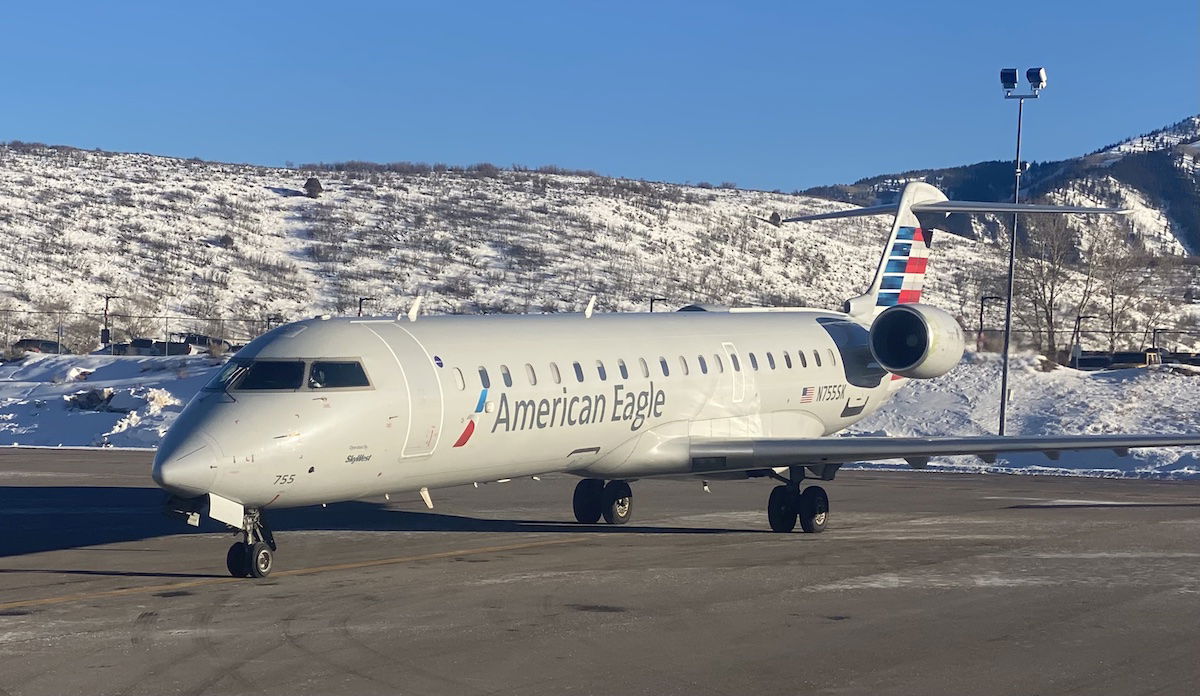
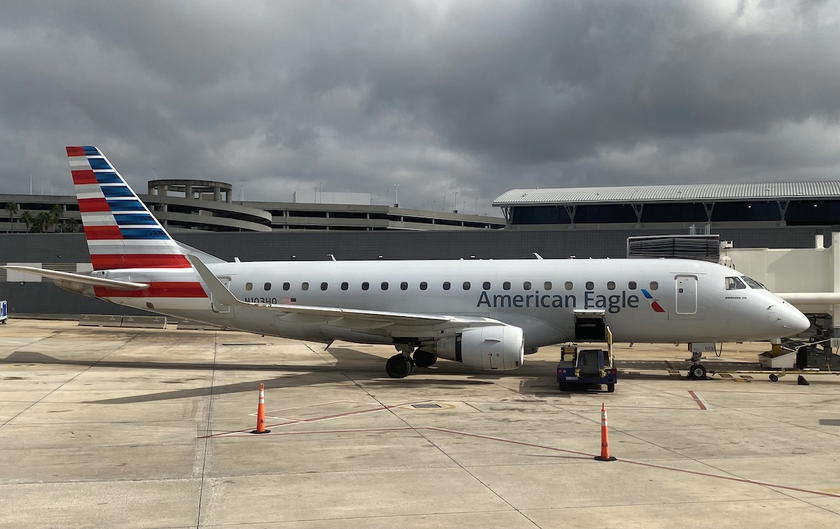
The only commercial aircraft that flies to Aspen Airport is the Bombardier CRJ-700, which is no longer the preferred aircraft of many regional airlines. Flying this aircraft to Aspen is no coincidence — it’s because the more popular Embraer E175 family of aircraft can’t fly to Aspen Airport.
The reason for this is because of the layout of the airport. As it’s currently certified, Aspen Airport can only accommodate planes with a wingspan of up to 95 feet. This is due to the limited separation between the taxiway and runway. In order to accommodate larger aircraft, there would need to be 400 feet of separation between the taxiway and runway, while Aspen Airport has only 320 feet of separation.
While the Federal Aviation Administration (FAA) has issued some exceptions in the past, regulators have made it clear that in order to continue receiving government funds, the airport must widen its separation between the taxiway and runway, to allow larger aircraft.
The FAA’s logic makes sense. While the CRJ-700 could still keep flying for a long time, the reality is that many airlines are slowly phasing out these planes. Since 2020, the aircraft has no longer been in production, and over time we’ll see the number of these aircraft flying continue to decrease.
The major airlines have scope clauses (to protect the jobs of mainline limits), which limit the number of regional jets that can fly in relation to the number of mainline jets. With airlines having quite a few Embraer E175 regional jets on order, that presumably means we’ll continue to see the retirement of CRJ-700s.
The FAA doesn’t want government funds going into an airport that has an uncertain future, since there’s not any other modern commercial aircraft that could fly to the airport based on the current restrictions. With the FAA’s modernization plans, the airport would be able to accommodate planes with a wingspan of up to 118 feet.
Allowing planes with wingspans of up to 118 feet would pave the way for service from Embraer E175 aircraft, as well as service for small mainline jets, like the Airbus A220 Boeing 737 MAX 7, etc. To be balanced, it’s also worth mentioning that expanding the airport would allow service from some larger private jets, like the Gulfstream G650.
Why locals oppose the Aspen Airport expansion plans
Many locals in Aspen are opposed to the concept of expanding the airport to allow larger aircraft. Polls have shown that over 50% of locals oppose this expansion, and there are even groups set up campaigning against the plans, like the Aspen Fly Right group.
The argument against expanding the airport is basically what you’d expect whenever locals oppose any sort of expansion. For example, as one local explains:
“This airport, in some ways, feels like a last stand of sorts. I know that’s dramatic. But it’s a big part of the quality of life conversation. This is about Pitkin County voters having a say in the future of their airport.”
Lobbying groups against the airport expansion have stated that they want to reject public funds from the FAA, and have everything funded locally, so that they don’t have to comply with the FAA’s expansion plans.
To me, the logic of those opposed to this growth is flawed. Their argument seems to rest on the belief that the CRJ-700 will keep flying for 30 years. Could the CRJ-700 stay in service for around 30 years? Yes, that’s theoretically possible, since planes can fly for a long time, if properly maintained.
Is it likely that the CRJ-700 will be in service for the next 30 years at the regionals of all of the “big three” US carriers? Personally I think that’s highly unlikely.
In reality, if the airport were expanded, we’d probably just largely see E175s replacing CRJ-700s. Even though the former has a bigger wingspan, the plans have roughly the same capacity, so this wouldn’t actually lead to a capacity increase.
Sure, maybe we’ll also eventually see some small mainline jets flying to Aspen, but would that really be a bad thing? If the concern is about noise, wouldn’t larger aircraft to the airport be good for the local community, since it would lead to fewer takeoffs and landings?
But it just seems like this argument is based largely on there being some massive increase in commercial air service to Aspen, which just doesn’t seem likely to me. Currently airlines have the option of greatly expanding service to Aspen with their regional subsidiaries, but they choose not to.
Ultimately Aspen can only accommodate so many visitors, since there’s just not much hotel and home inventory, and local authorities want to keep it that way.
Bottom line
Aspen Airport is in a tricky situation at the moment. Currently the airport is restricted to commercial service from CRJ-700s, because of a wingspan limit that applies due to the distance between the runway and taxiway. The FAA wants the airport to be modernized, and is willing to provide funding to cover much of it.
The “catch,” as locals see it, is that larger aircraft would be allowed to fly there, and that’s something many residents are opposed to. If you ask me, this upgrade makes perfect sense, and in reality, we’d just mostly see CRJ-700s replaced by Embraer E175s. But locals seem to think that this will lead to some massive increase in service.
Something’s gotta give here, so I’m curious how this plays out. Either these upgrades will have to be made, or the FAA will stop providing funding for airport improvements.
What do you make of this debate over the future of Aspen Airport?


Membership is free and takes no more information than commenting as a guest. Earn status points for good contributions, and see fewer ads as your status grows.