
The Federal Aviation Administration (FAA) is bringing back a program that hasn’t been active since before the pandemic, whereby air traffic controllers can fly in the jumpseat on commercial flights. What a cool concept!
FAA resumes Flight Deck Training program for ATC
Air traffic controllers and pilots of course both perform vital roles that keep our aviation system moving. While they ultimately work together with the same goal, that’s not to say that they always see eye-to-eye, given their very different functions.
So along those lines, the FAA is bringing back a program that’s intended to help air traffic controllers see things from the perspective of pilots. Specifically, the FAA is bringing back the Flight Deck Training program, giving air traffic controllers the opportunity to gain firsthand experience aboard commercial, general aviation, and military aircraft.
The idea is that the program allows air traffic controllers to apply for jumpseat access on eligible flights, to gain firsthand experience with flight deck operations, including pilot workload, cockpit procedures, and how air traffic control instructions impact flight crews. The FAA has worked with the National Air Traffic Controllers Association (NATCA) to reinstate this program, as it was paused at the start of the pandemic.
The expectation is that this will launch after Thanksgiving. All major US airlines have agreed to participate in this program. Controllers can fly on two flights per year under this program, and a controller’s air traffic manager will consider the facility’s available staffing and needs in evaluating a request.
The way this works, controllers will apply electronically to fly on specific flights, including identifying a training objective. Once approved internally, the FAA will transmit the request to the airlines. Controllers will go through multiple steps of vetting at the airport and when they reach the airplane. After the flight, controllers will submit a report explaining what they learned.
As the FAA explains, this program has already been tested, and benefits have been identified, including helping controllers understand when they should refrain from issuing complex instructions, and the impact that instructions, such as changes in the landing runway, can have on pilot workload.
Here’s how FAA Administrator Bryan Bedford describes this:
“After listening to our frontline controllers, we’re excited to bring back the Flight Deck Training program. Our controllers are the backbone of the National Airspace System and giving them opportunities to build their knowledge and gain firsthand experience makes them better at what they do. Communication is key and this program will give controllers and pilots an up-close view of each other’s responsibilities and challenges.”
Meanwhile here’s how NATCA President Nick Daniels describes this:
“NATCA is pleased to see this vital component of air traffic controller training reinstated. There is no substitute for firsthand experience in the cockpit. The Flight Deck Training program gives participants a unique perspective on the challenges pilots face and how their decisions and actions interact with the air traffic control system, ultimately strengthening their understanding of the National Airspace System.”
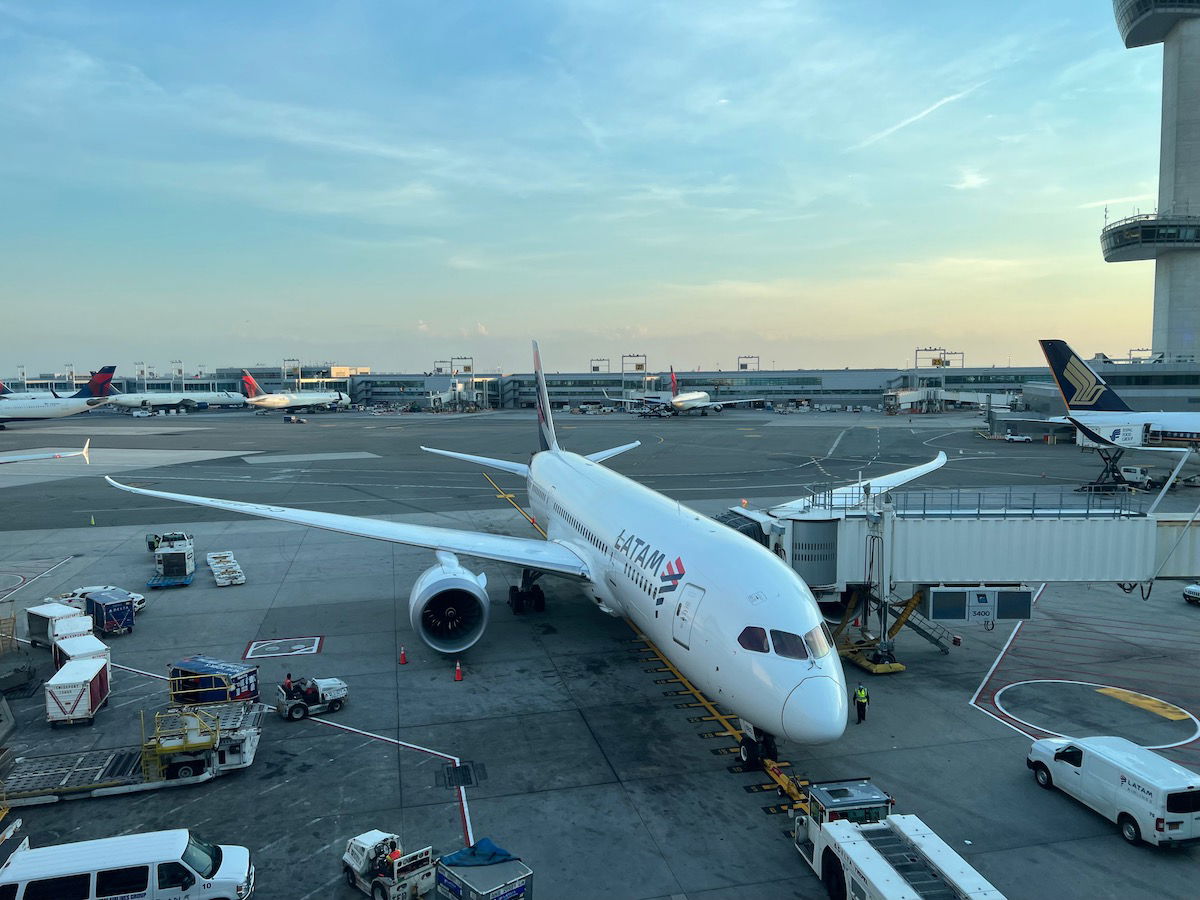
I’d love to be a fly on the wall on one of these flights
In general, it’s of course fantastic for people who are essentially working together to get a firsthand look at how their actions impact those performing other functions. So this is a learning experience, and it’s of course also really fun — as an avgeek, there’s nothing like flying in the cockpit of a large jet!
Now, I have to imagine that those who actually take advantage of this opportunity are the great controllers who already do their best, and who are genuinely looking to learn through firsthand experience. What would crack me up is if one of those notorious JFK controllers took a ride in the jumpseat. Specifically, that one guy who is the “star” of roughly half of the memorable ATC interactions we hear at JFK.
Gosh, I would love to be a fly on the wall if he were in a jumpseat. Admittedly the person in the jumpseat has to be silent during critical phases of flight, but goodness, I’m sure he’d have quite some “coaching” for pilots, as to how they should do their job.
Bottom line
The FAA is bringing back a program that has been suspended for well over six years, whereby air traffic controllers can fly in the jumpseat on aircraft. The idea is to give air traffic controllers a sense of what it’s like to be a pilot, and how instructions can impact the workload in the flight deck.
This is of course an awesome concept, and it makes perfect sense. I’m just visualizing all kinds of hilarious interactions in my head involving that JFK controller.
What do you make of this jumpseat opportunity for air traffic controllers?




This will be helpful for some controllers to understand how things work in the cockpit. Unfortunately, pilots don't get the same opportunity to sit side by side w/ a controller, although visits to ATC facilities have been done.
There is still a sterile cockpit so there might be a lot less discussion that might otherwise be possible; flying in/out of busy airports provides little time for chit chat anyway.
Since alot of pilots use...
This will be helpful for some controllers to understand how things work in the cockpit. Unfortunately, pilots don't get the same opportunity to sit side by side w/ a controller, although visits to ATC facilities have been done.
There is still a sterile cockpit so there might be a lot less discussion that might otherwise be possible; flying in/out of busy airports provides little time for chit chat anyway.
Since alot of pilots use the cockpit jumpseats to commute on full flights, they might or might not be excited to see another group of people vying w/ them