
There’s often some confusion about which American Airlines wide body jets have which business class seats. In this post, I’d like to provide a rundown of which seats you should expect to find in business class on various long haul flights. I figure this is an especially good time to look at this, given that American recently introduced an all-new business class seat.
Note that this is separate from the seats you’ll find in premium cabins on narrow body domestic flights, as those are very different different…
In this post:
American’s four wide body business class seats
American has four different kinds of business class seats on its wide body aircraft, with the fleet comprised of Boeing 777s and Boeing 787s. The good news is that all American wide body jets feature fully flat beds and direct aisle access from all business class seats. Nonetheless, people have different preferences, and not all seats are created equal.
I actually think American’s long haul business class hard product is an advantage that American has, in terms of consistency:
- United Polaris business class is now available on most long haul aircraft, though the catch is that United has some 777s with eight seats per row in business class (used primarily for domestic flights), and also has some 757s that are used for long haul flights, including across the Atlantic
- Delta One business class lags the competition in terms of consistency of long haul product; specifically, I think Delta’s 767 business class is inferior to the business class products offered by American and United
So with the above out of the way, let’s take a look at American’s four types of business class seats, from most common to least common. Then in the next section, I’ll cover on which planes you’ll find which seats.
Collins Aerospace Super Diamond seat
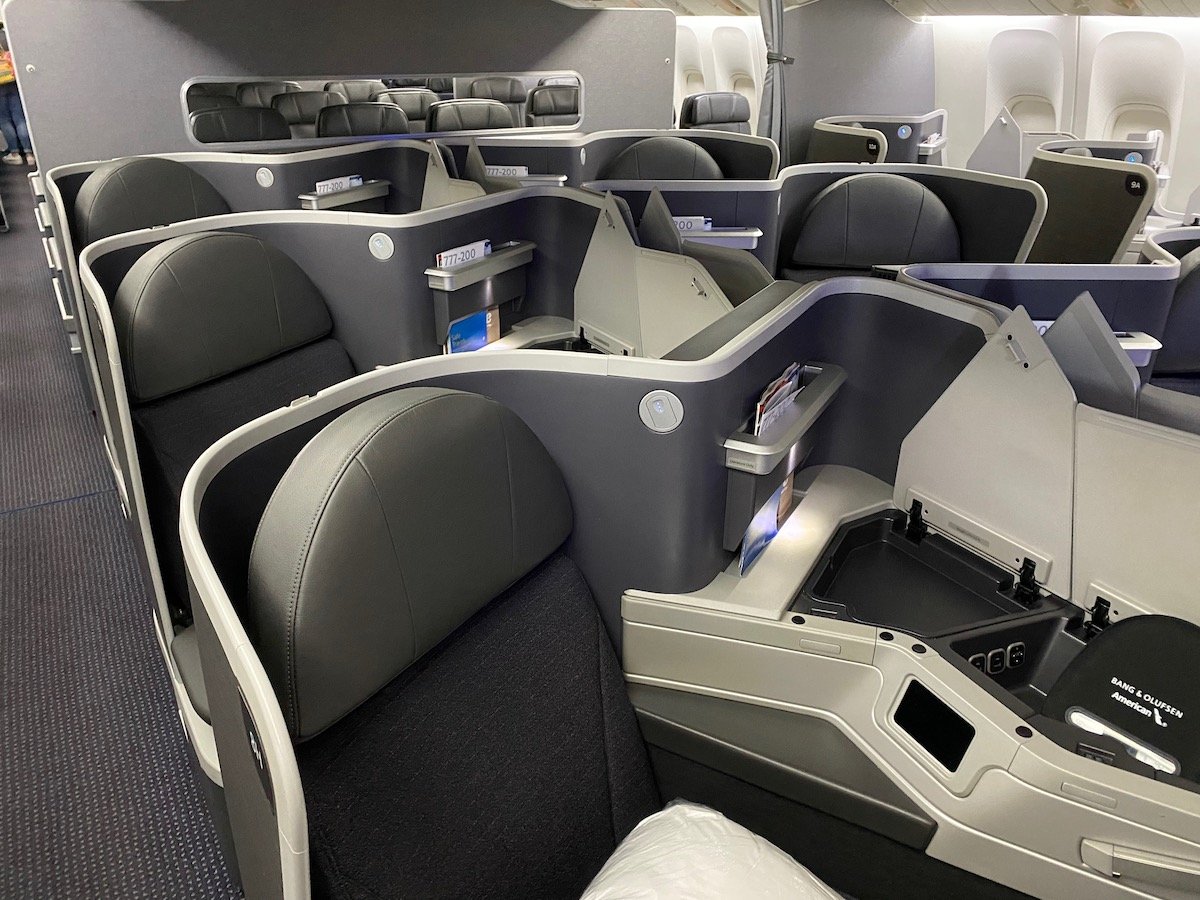
The Collins Aerospace Super Diamond product is American’s most common business class seat. This is a reverse herringbone product in a 1-2-1 configuration, with all seats facing forward. It’s also the same seat that you’ll find on many airlines nowadays.
Aside from American’s brand new business class (which is least widely available), I’d say that this is the product that’s most popular with passengers. There’s not much variance in quality between seats, the seats are still quite modern, and tech is good. The only catch is that I find the footwell in this product to be quite small, as is common in many modern business class seats.
See my review of American’s Collins Aerospace Super Diamond seat.
Safran Concept D seat
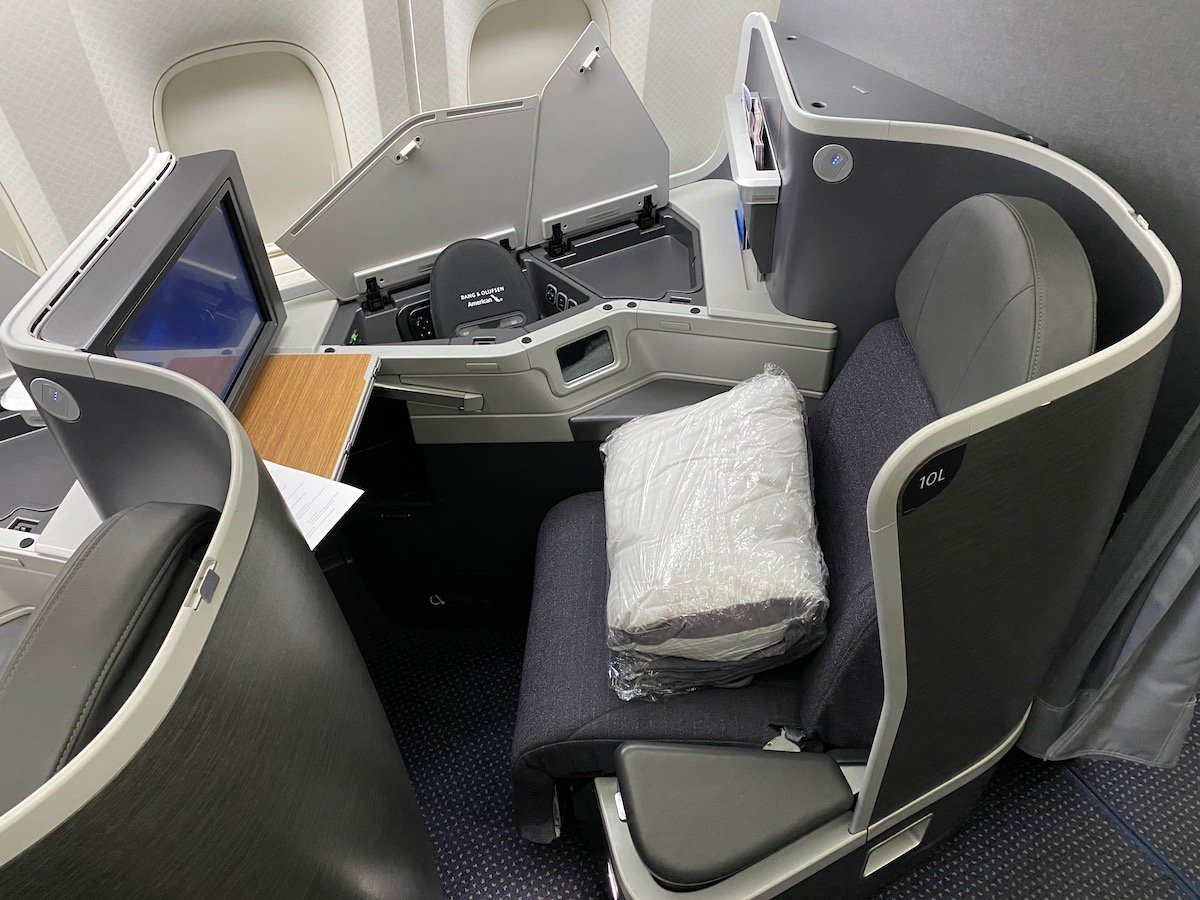
The Safran Concept D seat is American’s next most common business class seat. This is a staggered product in a 1-2-1 configuration, with seats alternating between being forward and rear facing. You won’t find these seats on any other airlines.
Many people don’t like these seats due to the lack of storage, plus there’s an issue whereby these seats “shake,” due to how they’re paired. Furthermore, these are some of American’s older business class cabins, so many of them have some wear and tear. However, I quite like that these seats have ottomans rather than footwells, so it’s quite comfortable in bed mode.
See my review of American’s Safran Concept D seat.
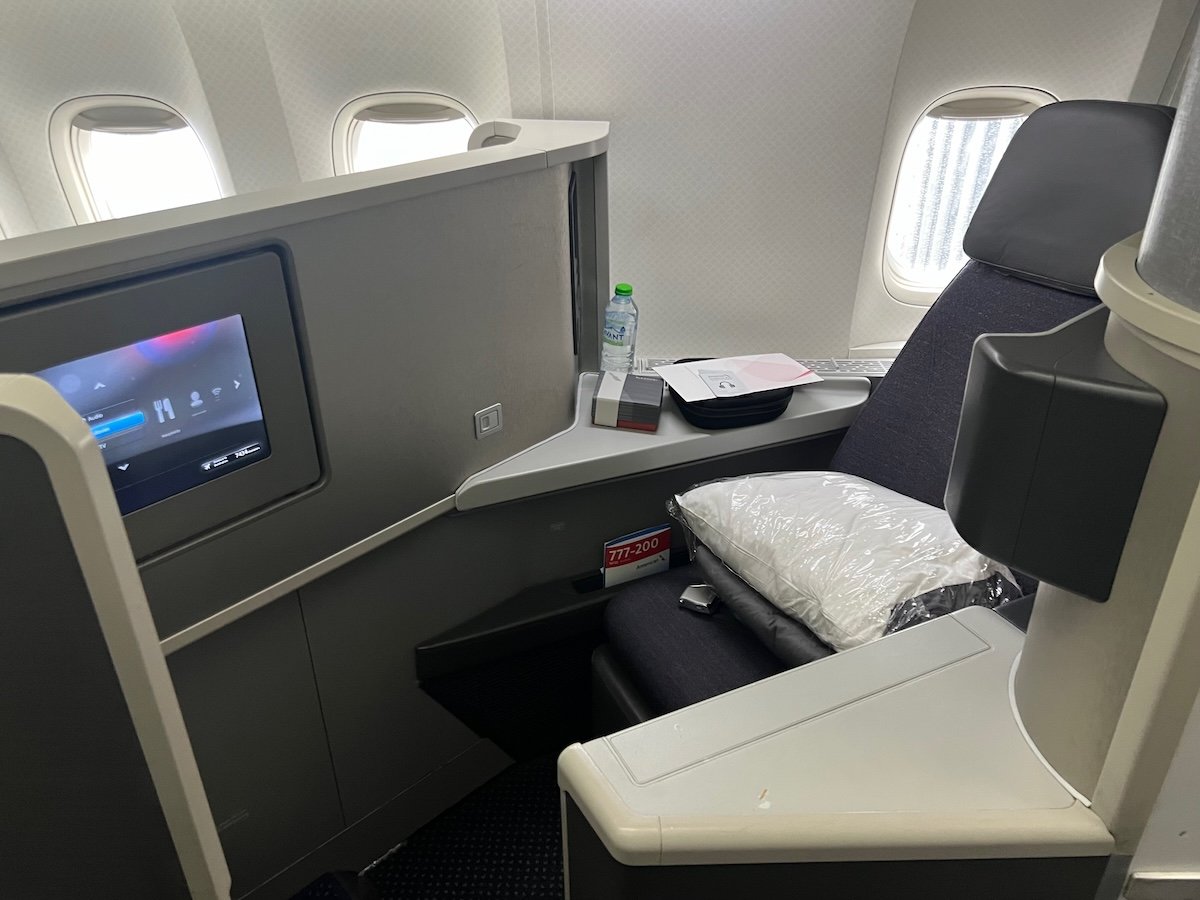
Safran Cirrus seat
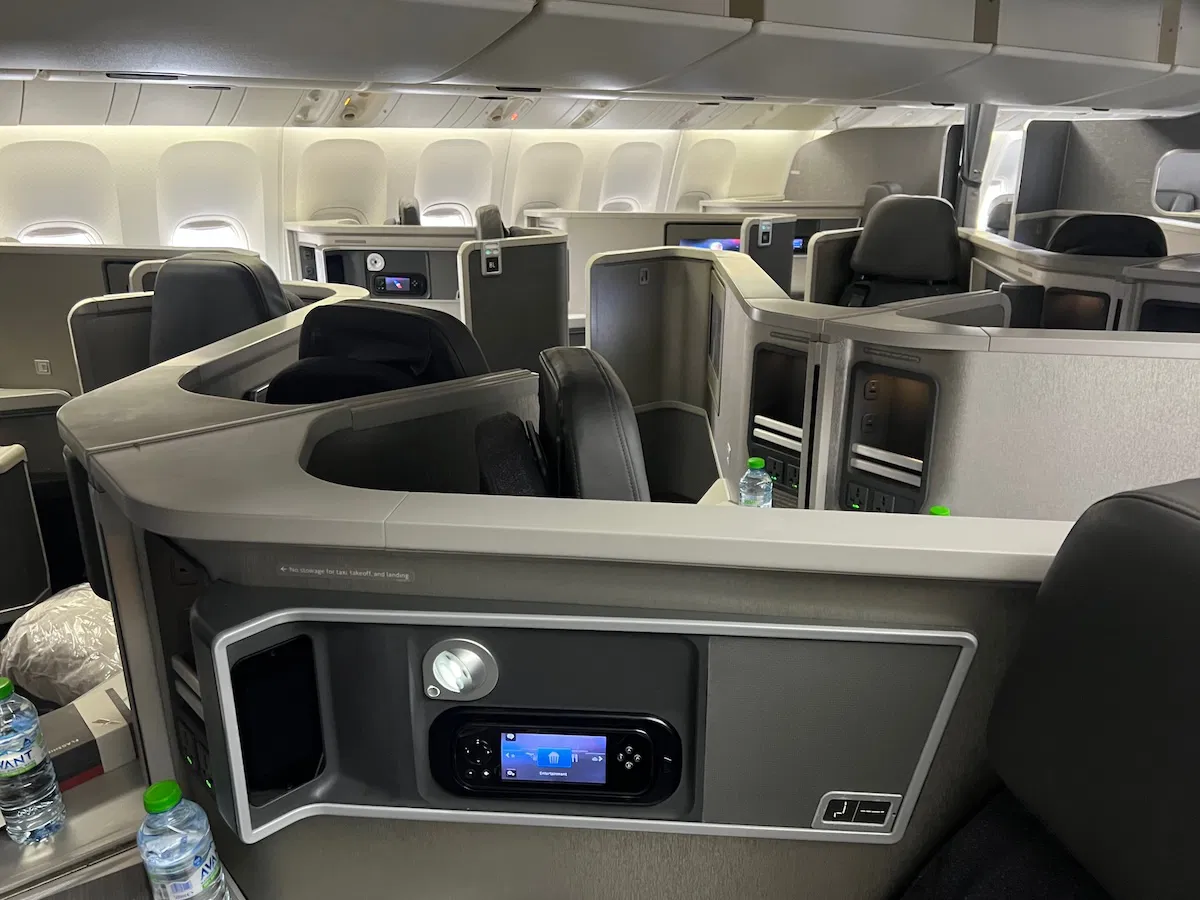
The Safran Cirrus seat is American’s third most common type of business class seat. This is a reverse herringbone product in a 1-2-1 configuration, with all seats facing forward.
Personally I think the Collins Aerospace Super Diamond seat is just a bit more “evolved” than the Safran Cirrus seat, but many people like this product as well. Note that within the next couple of years, you’ll no longer find this seat on any American plane, so it’s slowly on the way out…
See my review of American’s Safran Cirrus seat.
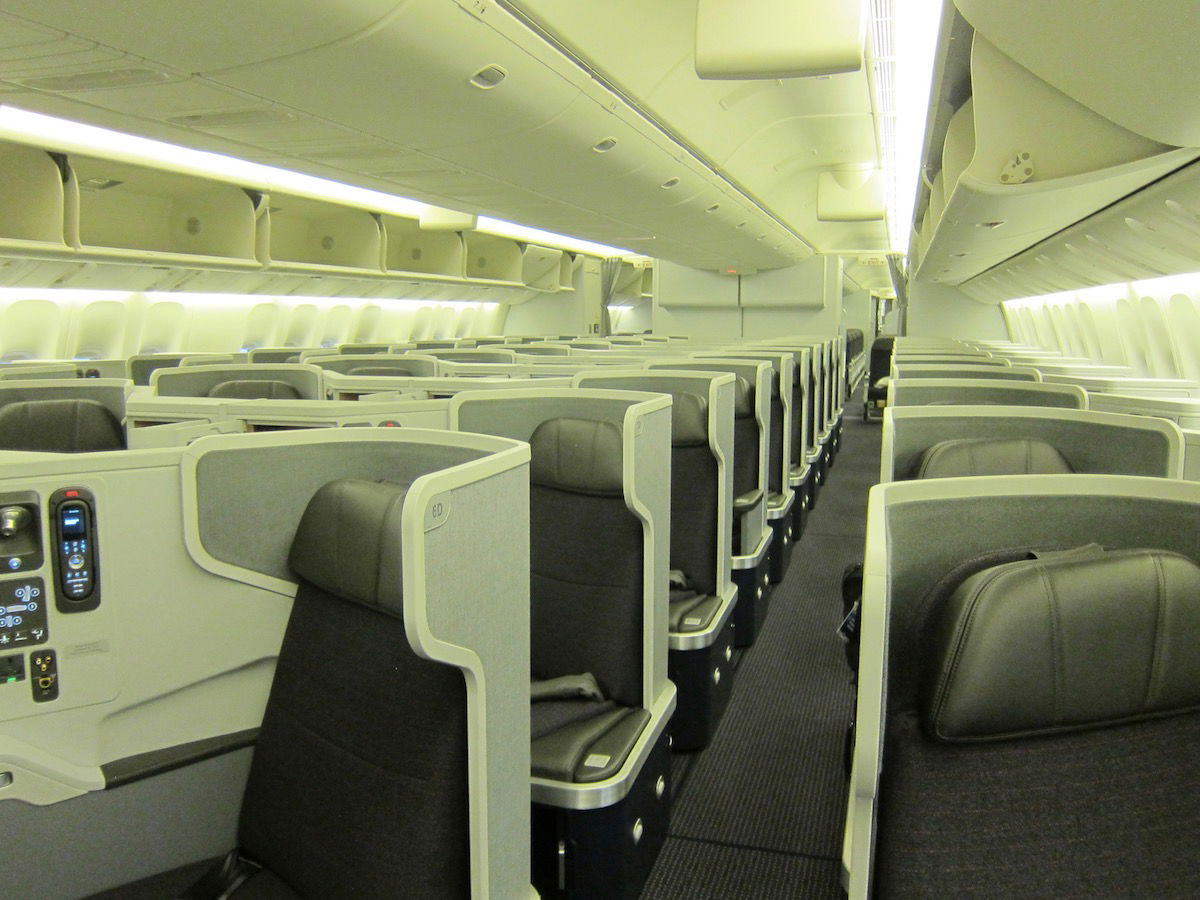
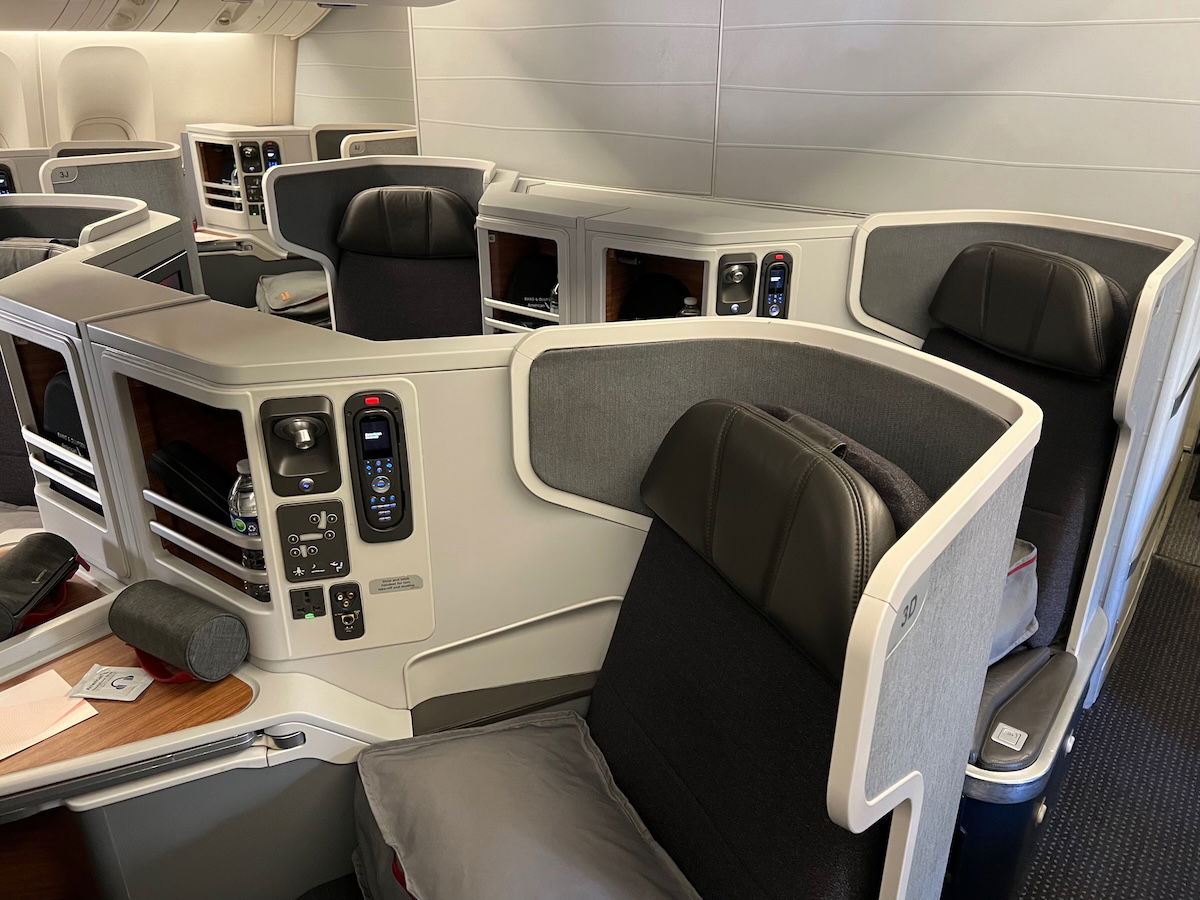
Adient Ascent seat
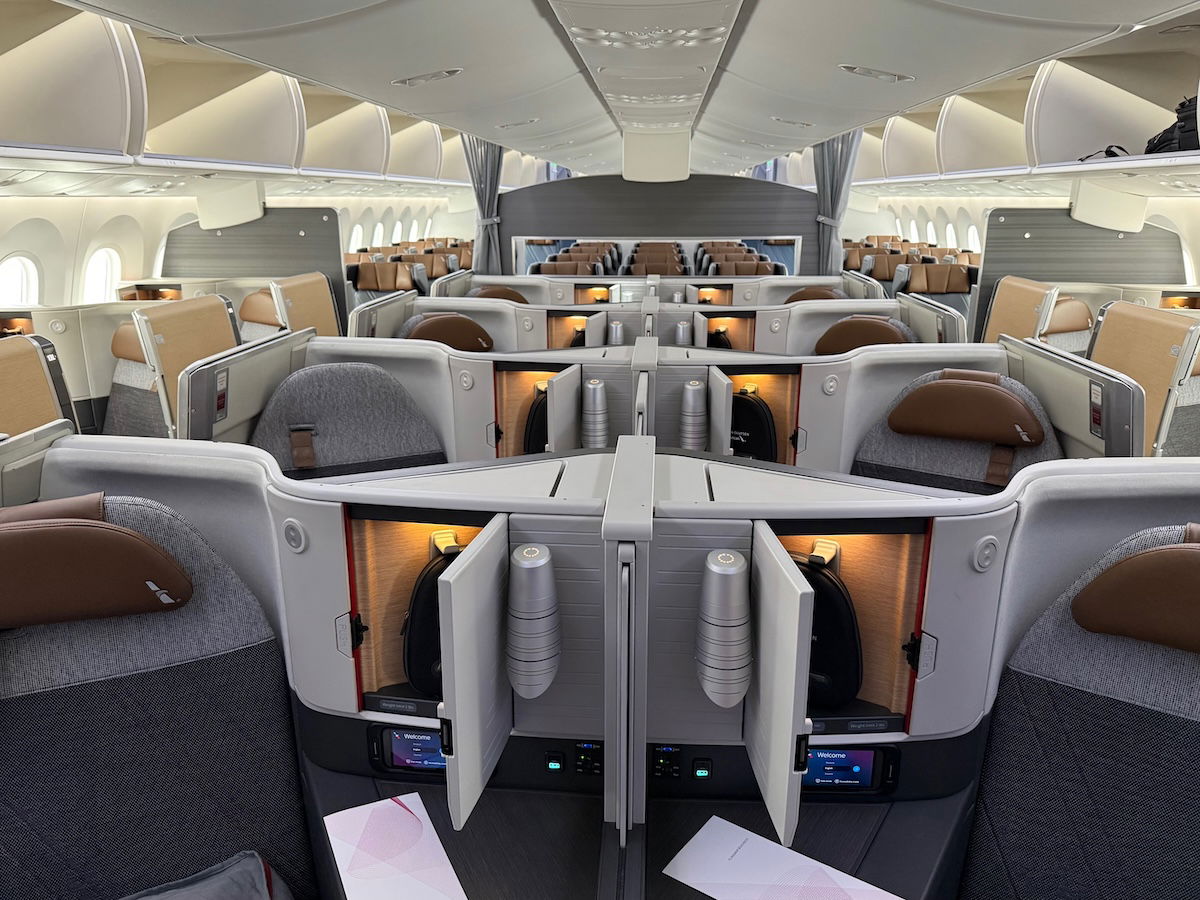
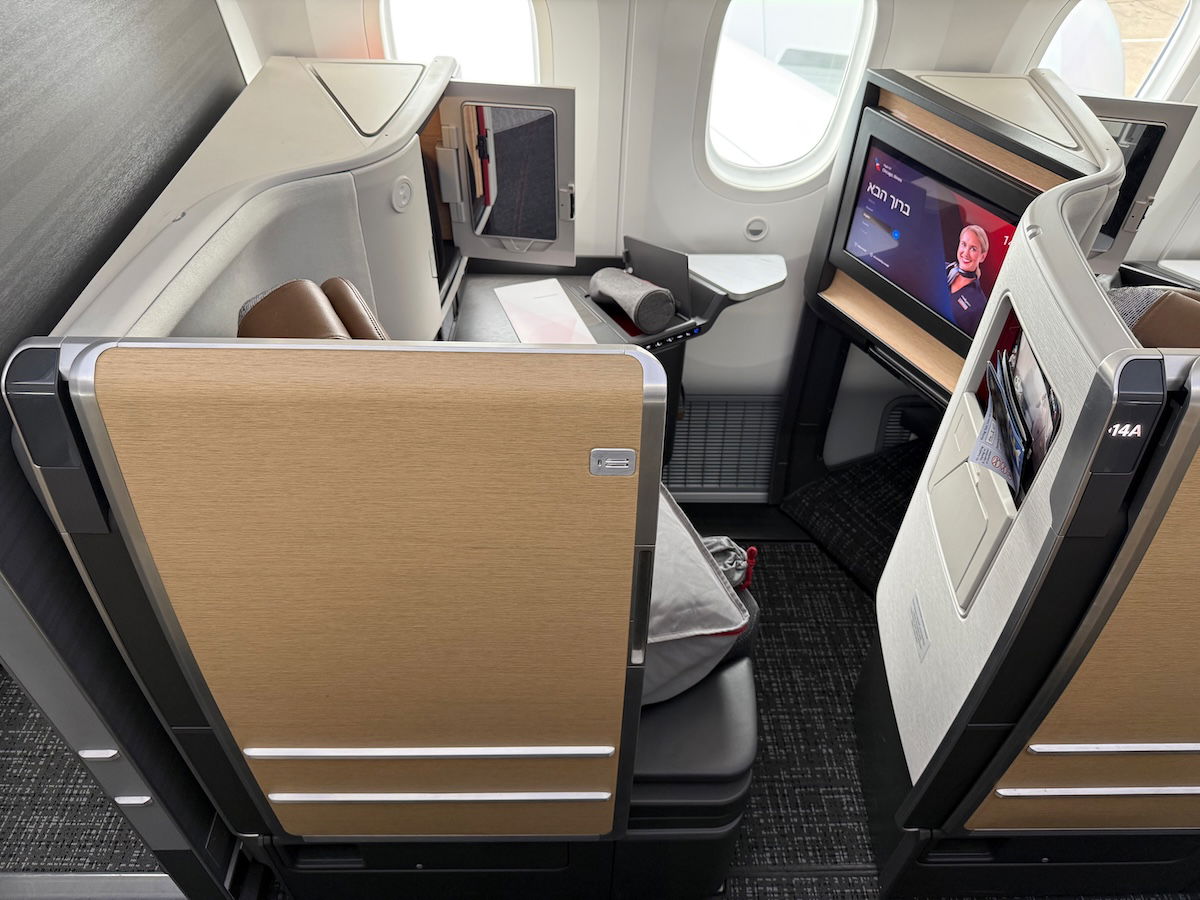
The Adient Ascent seat is American’s brand new business class seat. This is a reverse herringbone product in a 1-2-1 configuration, with all seats facing forward.
This seat is significantly upgraded over American’s previous reverse herringbone seats, with each seat having a door, and greatly upgraded tech. This includes bluetooth audio, upgraded Visasat Wi-Fi, and lots of charging options, with USB-A, USB-C, AC, and wireless charging.
See my review of American’s Adient Ascent seat.
American’s business class seats by aircraft
While the above covers American’s four types of long haul business class seats, let’s talk about which seats you’ll find on which aircraft. Specifically, American flies four wide body long haul aircraft variants, all from Boeing — the 777-200ER, the 777-300ER, the 787-8, and the 787-9. One of those jets has only one type of business class seat, while three of the jets have two kinds of business class seats.
American’s Boeing 777-200ER business class seat
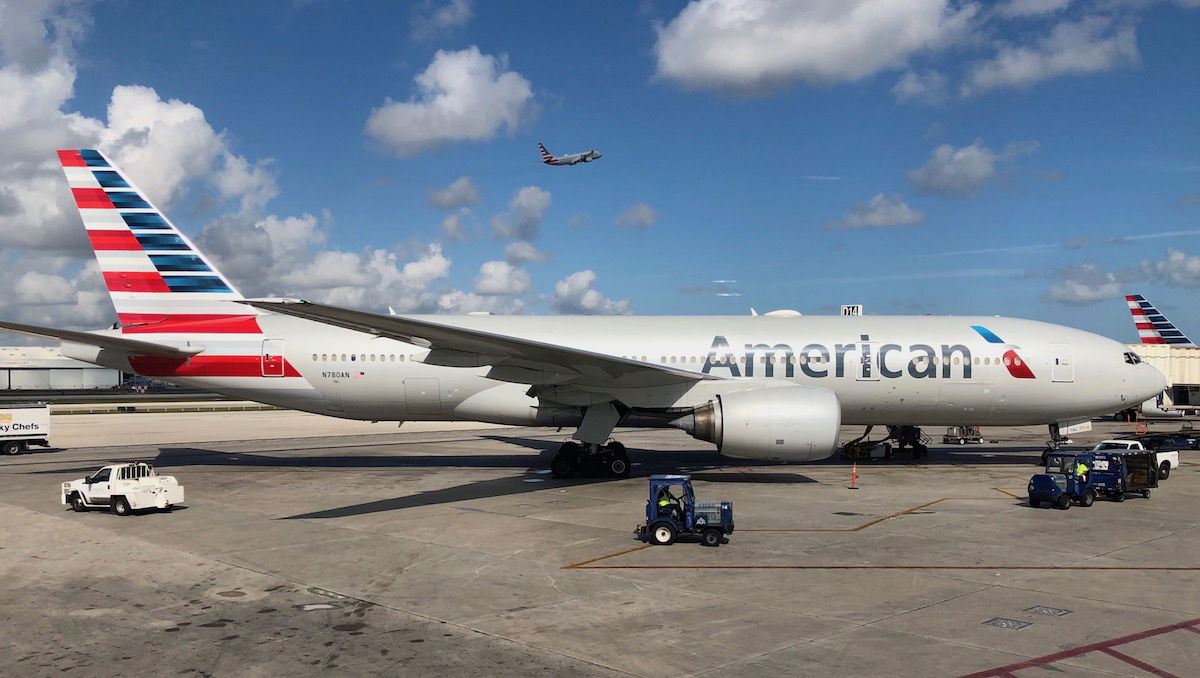
American has 47 Boeing 777-200ERs in its fleet, each with 37 business class seats. Of those jets, 28 have the Collins Aerospace Super Diamond seats, while 19 have the Safran Concept D seats. As you can tell, the fleet is split about 60% and 40%.
Since the number of seats is identical, American swaps these planes between routes interchangeably, so there’s no way to know at the time of booking which product you’ll get. By default, American will display the Super Diamond seat map (since those planes are more common). Then within a few days of departure, American starts to firm up aircraft assignments, and adjusts seat maps accordingly.
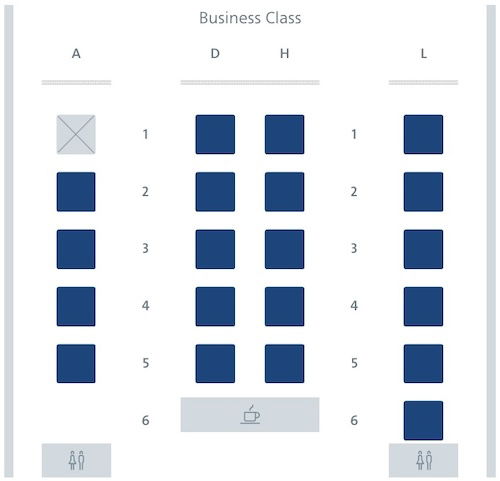
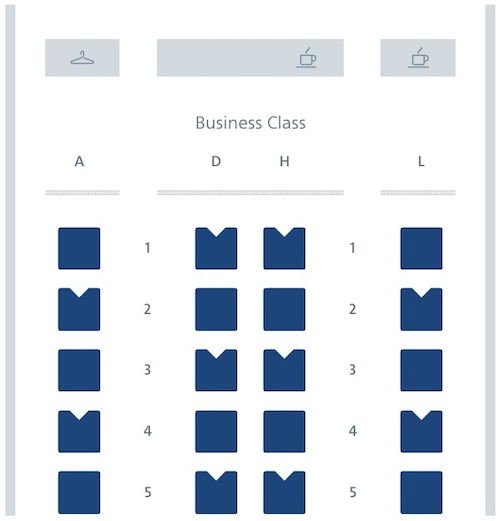
The way to spot the difference on the seat map is based on whether seats in alternating rows have a little “V” cutout at the top. The seats with those cutouts are rear facing seats. So if the seat map has the cutout (shown with the 787-8 seat map a couple of sections down), it represents the Safran Concept D configuration, while if it doesn’t, it represents the Collins Aerospace Super Diamond configuration.
American has plans to eventually reconfigure existing 777-200ERs with the new business class, though the timeline for that remains to be seen (I wouldn’t expect the project to start before 2027).
American’s Boeing 777-300ER business class seat
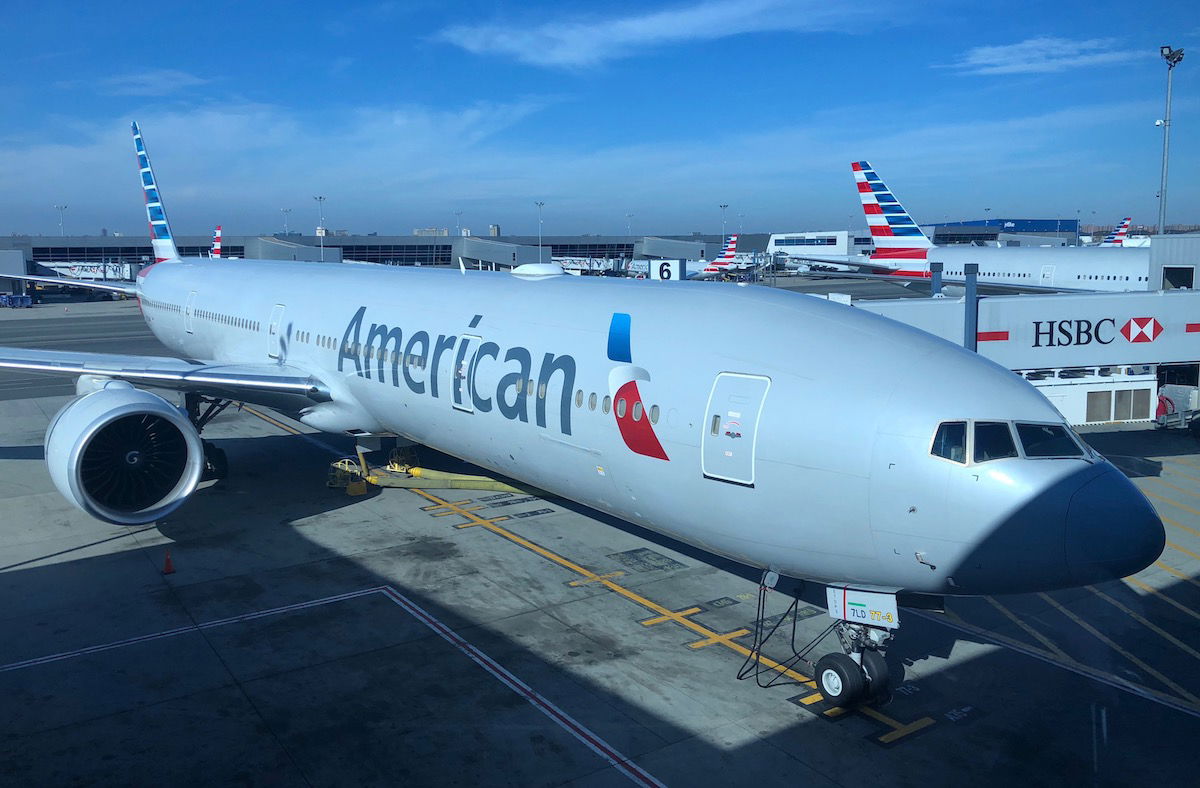
American has 20 Boeing 777-300ERs in its fleet, each with 52 business class seats. These planes all feature the Safran Cirrus product, so you know exactly what you’re going to get.
Note that American plans to reconfigure its 777-300ERs with the new business class, and it’s expected that the first plane with updated interiors will be in service in the first half of 2026. Once these planes are reconfigured, we’ll also see first class eliminated.
American’s Boeing 787-8 business class seat
American has 37 Boeing 787-8s in its fleet, each with 20 business class seats. Of those jets, 20 have the Safran Concept D seats, while 18 have the Collins Aerospace Super Diamond seats. As you can tell, the fleet is split pretty evenly, with the slight edge going to the Safran Concept D seats.
Since the number of seats is identical, American swaps these planes between routes interchangeably, so there’s no way to know at the time of booking which product you’ll get. By default, American will display the Safran Concept D seat map (since those planes are more common). Then within a few days of departure, American starts to firm up aircraft assignments, and adjusts seat maps accordingly.
The way to spot the difference on the seat map is based on whether seats in alternating rows have a little “V” cutout at the top. The seats with those cutouts are rear facing seats. So if the seat map has the cutout, it represents the Safran Concept D configuration, while if it doesn’t (shown with the 777-200ER seat map a couple of sections up), it represents the Collins Aerospace Super Diamond configuration.
American has no plans to reconfigure existing 787-8s with the new business class.
American’s Boeing 787-9 business class seat
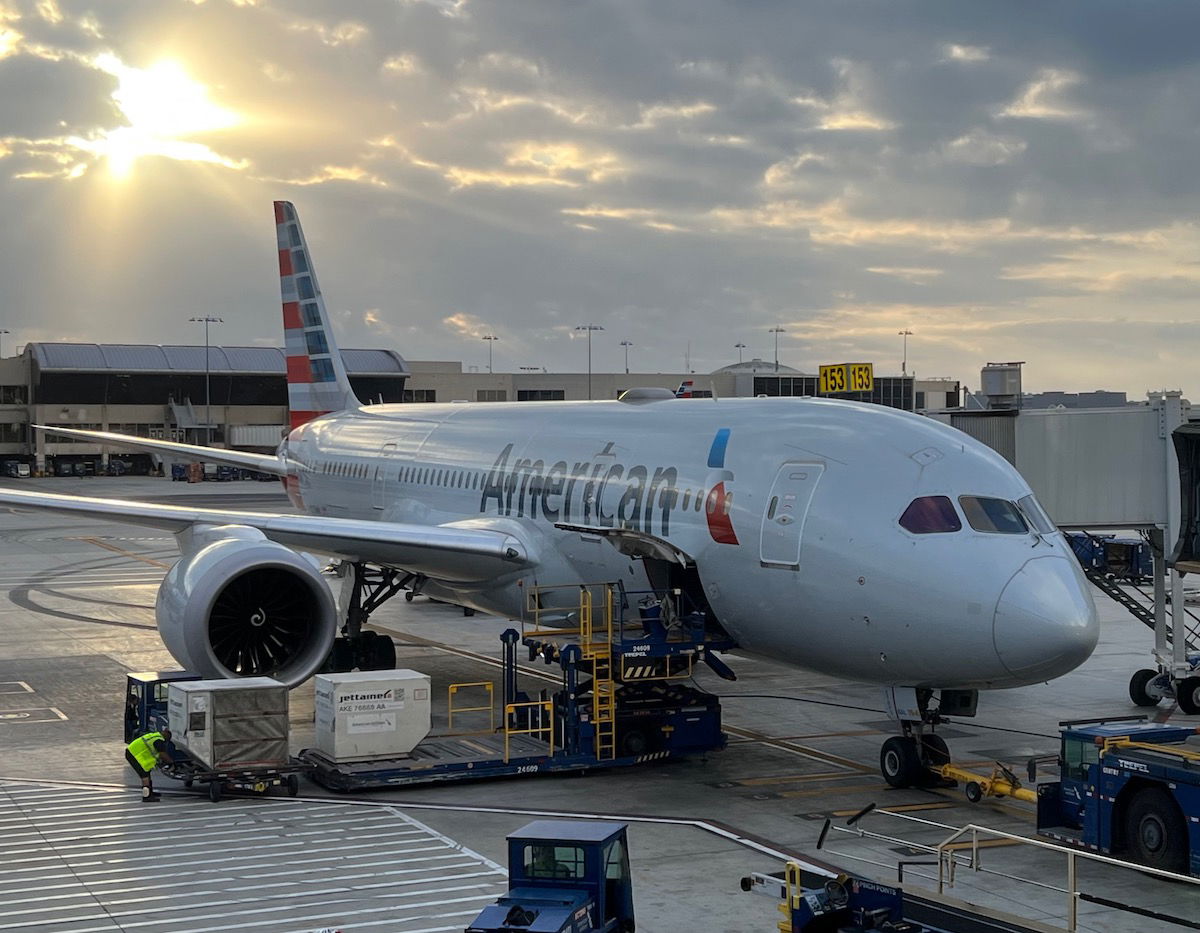
American has 32 Boeing 787-9s in its fleet, and these have two very different layouts, and you know at the time of booking which product you’ll get.
22 of these 787-9s (designated on American’s website as “789-Boeing 787”) feature 30 business class seats. These planes feature the Collins Aerospace Super Diamond product, the same as on some 787-8s, so you know exactly what you’re going to get.
American has also introduced a new business class product, which debuted on the 787-9. Specifically, American has 10 787-9s (designated on American’s website as “78P-Boeing 787”) featuring 51 business class seats. These planes feature the new Adient Ascent product, which is without a doubt American’s best business class seat.
American has a total of 30 of these new 787-9s on order, so you can expect another 20 to join the fleet in the coming years. These planes are assigned to specific routes, so you can pretty reliably book this product in advance.
Bottom line
American has four different long haul wide body business class seats, and for the average traveler, it can be hard to keep track of which seat you’ll find on which aircraft. Hopefully the above is a useful rundown.
To summarize, all 777-300ERs have Safran Cirrus seats, 777-200ERs and 787-8s have a mix of Safran Concept D seats and Collins Aerospace Super Diamond seats, and 787-9s have a mix of Collins Aerospace Super Diamond seats and Adient Ascent seats.
For 777-200ERs and 787-8s, you won’t know until a few days before departure which type of product is scheduled for your flight. Meanwhile for 787-9s, American schedules the type of product you can expect more reliably, since the two versions of the plane have very different layouts.
The good news is that all four of these seats are pretty great, at least in my opinion. Obviously the Adient Ascent seat is the best, but the other three are competitive as well.
What do you make of American’s long haul business class cabins?




All of American's business class seats are better than Delta's seats. United provides some competition.
Flew the new Adient Ascent with AA the normal outbound and the front row larger seat on the way back. Yes it is a very good seat though not sure the larger seat would be worth the extra cost (when they start charging more) unless you are a large person though you do get two sets of bedding and a better goodies bag. Personally I find the BA Club Suite a better product for two...
Flew the new Adient Ascent with AA the normal outbound and the front row larger seat on the way back. Yes it is a very good seat though not sure the larger seat would be worth the extra cost (when they start charging more) unless you are a large person though you do get two sets of bedding and a better goodies bag. Personally I find the BA Club Suite a better product for two main reasons. Firstly I think there is more storage in BA, there is only one small compartement on the surface of AA versus two on BA and other storage is also more limited on AA. My other issue with AA is which wizard decided to put the headphone jack point in the compartment that holds the headphones making it difficult to close when they are connected. You can force it closed but why not just have the connection surface mounted.
I don't love the Safran Concept D seats on the 788. Each forward-facing seat is connected to a rear-facing seat and you can feel every time the person in the connected seat moves.
Maintenance will become burdensome over the next few years. Do yourself a favor and check the seat moves into bed mode as soon as you board. That sometime in the “first half of 2026” rollout with the new business class seat ; we’ve all heard that before.
"Every aircraft ready to fly at the start of every day." That slogan hasn't quite panned out.
AA's greatest accomplishment w/ its international network is that they don't fly narrowbodies on routes that should be widebodies.
They are also replacing their 321Ts with XLRs so will have a pretty consistent business class product across their entire narrowbody and widebody fleet.
just as is true w/ the other airline w/ a hub at ORD, AA can't turn its fleet attributes into anything more than bottom of the big 3 profitability.
Be that as it may, AA's long-haul fleet is in shambles and is also totally uncompetitive. Retiring the 763s was the worst thing they could have done.
Russ,
AA's 767 fleet was not well-maintained and had poor dispatch reliability.
DL and UA will get another 5-8 years out of their 767-300s; some of AA's 763s were younger than DL and UA's 764s but nearly all are 25+ years old now.
Don't confuse having a smaller international fleet with not being the right strategy; AA has struggled to make money on its international network and that has not changed - esp. since...
Russ,
AA's 767 fleet was not well-maintained and had poor dispatch reliability.
DL and UA will get another 5-8 years out of their 767-300s; some of AA's 763s were younger than DL and UA's 764s but nearly all are 25+ years old now.
Don't confuse having a smaller international fleet with not being the right strategy; AA has struggled to make money on its international network and that has not changed - esp. since AA hiked pay for all of its workgroups, something that UA has yet to do - following DL.
AA, as it has for decades, believes that a new fleet type will help fix its international system; this time it will be the 321XLR after leaning into the 788 which was supposed to be a replacement for the 763s - but the 788 is a high CASM widebody due to being fairly new and also small. I'm not sure that the XLR will change much in terms of economics but AA has done as good of a job as possible in recognizing the need to update its cabins.
Timothy, you do NOT tell me what to do. Understood?
Wrong, on every point.
Just because you don't like the facts that are pretty easily verifiable doesn't mean they aren't true.
but go ahead and debate them one by one if you would are certain you are right and I am wrong.
and, Merry Christmas to you too, Russ
Any idea why AA 45 (CDG-JFK) got shifted from 11.30am to 9.15am [starting Dec 20th]?
That’s a very early departure time from Paris.
The head of AA network planning is named Znotins. Drop him an email. His handiwork started the ball rolling with my departure from AA.
@RB
AA seems to have made major schedule adjustments to many flights. When you find out, please let me know.
I am restricted to flying them on business and they have adjusted all three of my ex-DCA trips booked for early next year by up to 5 hours on some legs. I have had to cancel all trips and now in the process of rebooking them as some went from 75mins connecting times to 3+ hours. No body has time for that foolishness.
I eliminated AA long haul from my travels a few years ago. And, given the explosion in AA long haul point prices, I don't see me ever returning.
The headrest on the Super Diamond doesn’t move and is uncomfortable.
The Safran Concept D is a terrible seat. The Collins seat is excellent and still looks crisp and modern.
100%. Safran Concept D is shite. The rear-facing is especially ‘not-great.’
Disagree. One of the most awarded seats in the business.
Eskimo …. To which awards and which awarding authorities are you referring?
AeroB13a, Eskimo is correct, looking just at last year it won Premium Seat of the Year (lie-flat/angle-flat category) through Skytrax.
Skytrax.... ROFLMAO
Rear facing seats suck.
If you find yourself in a concept D seat there are a few that are not connected to another, eliminating that rocking. But I agree, it’s not my first choice. Super diamond is one of the best seats out there.
Your standards are slipping 1990 …. your post is moving away from the usual ’Ben-like’ tone and towards the more base language of some of Eskimo’s muckers …. :-)
"Your standards are slipping 1990"
Agreed. Must be upset about club lines and mileage devaluation.
If you find yourself in a concept D seat there are a few that are not connected to another, eliminating that rocking. But I agree, it’s not my first choice. Super diamond is one of the best seats out there.
Timmy, comment? Did you hear that? Inferior Delta? AHHHHHH.
Get a life, you fool.
Now, now. Don't be "a Nasty little bugger."
That is very rude, you '"nasty little bugger".