

Here’s a topic I get questions about every so often, which I think makes for an interesting discussion…
In this post:
Making sense of airlines and their differing safety policies
The airline industry is heavily regulated across the globe in terms of safety. Many aviation authorities are on the same page when it comes to rules, and there are some minimum safety policies you’ll find across the board.
For example, virtually every airline requires passengers to put their phone in airplane mode while inflight, requires exit row passengers to acknowledge that they’re willing and able to assist in the event of an emergency, requires carry-on bags to be placed underneath the seat in front or in the overhead bin, etc.
But here’s what I find interesting — above and beyond the regulations you’ll find in the United States, you’ll often find that airlines from outside the United States have specific regulations that we don’t see here. Just to give some examples of policies that some non-US carriers have:
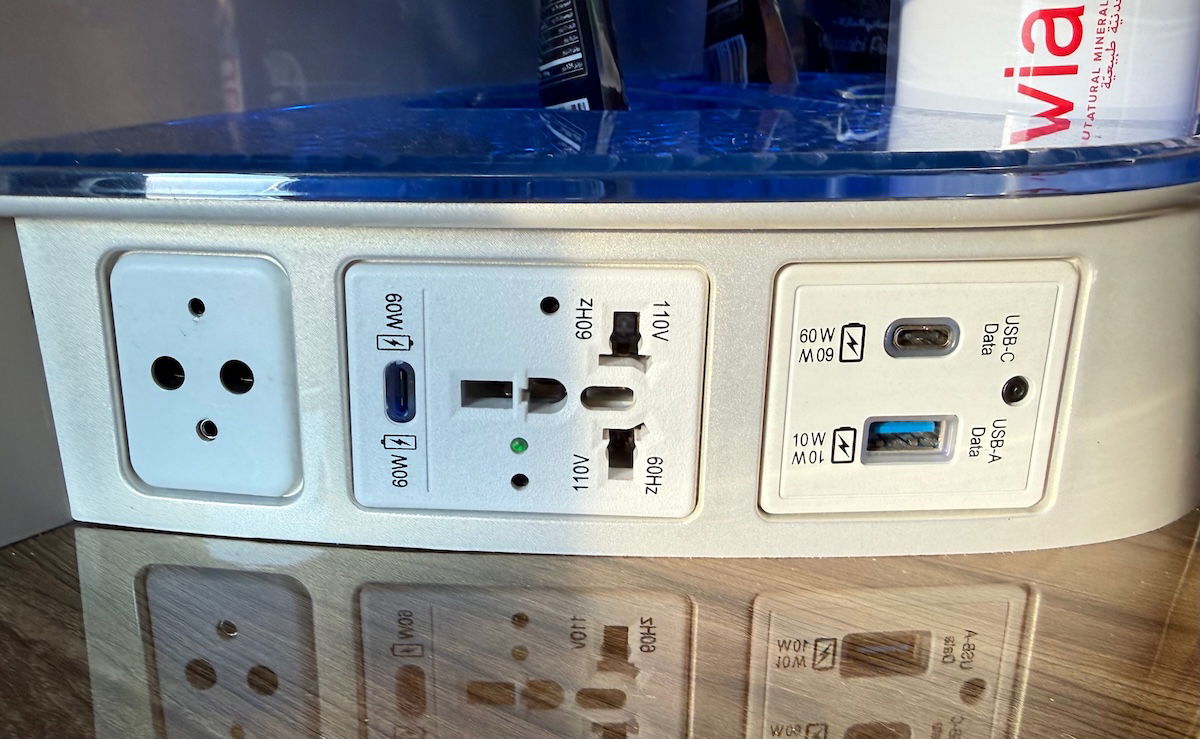
- Disconnecting all electronics from power sources during taxi, takeoff, and landing
- Opening all window shades for taxi, takeoff, and landing
- Removing all personal headphones or earbuds during taxi, takeoff, and landing
- Keeping shoes on during taxi, takeoff, and landing
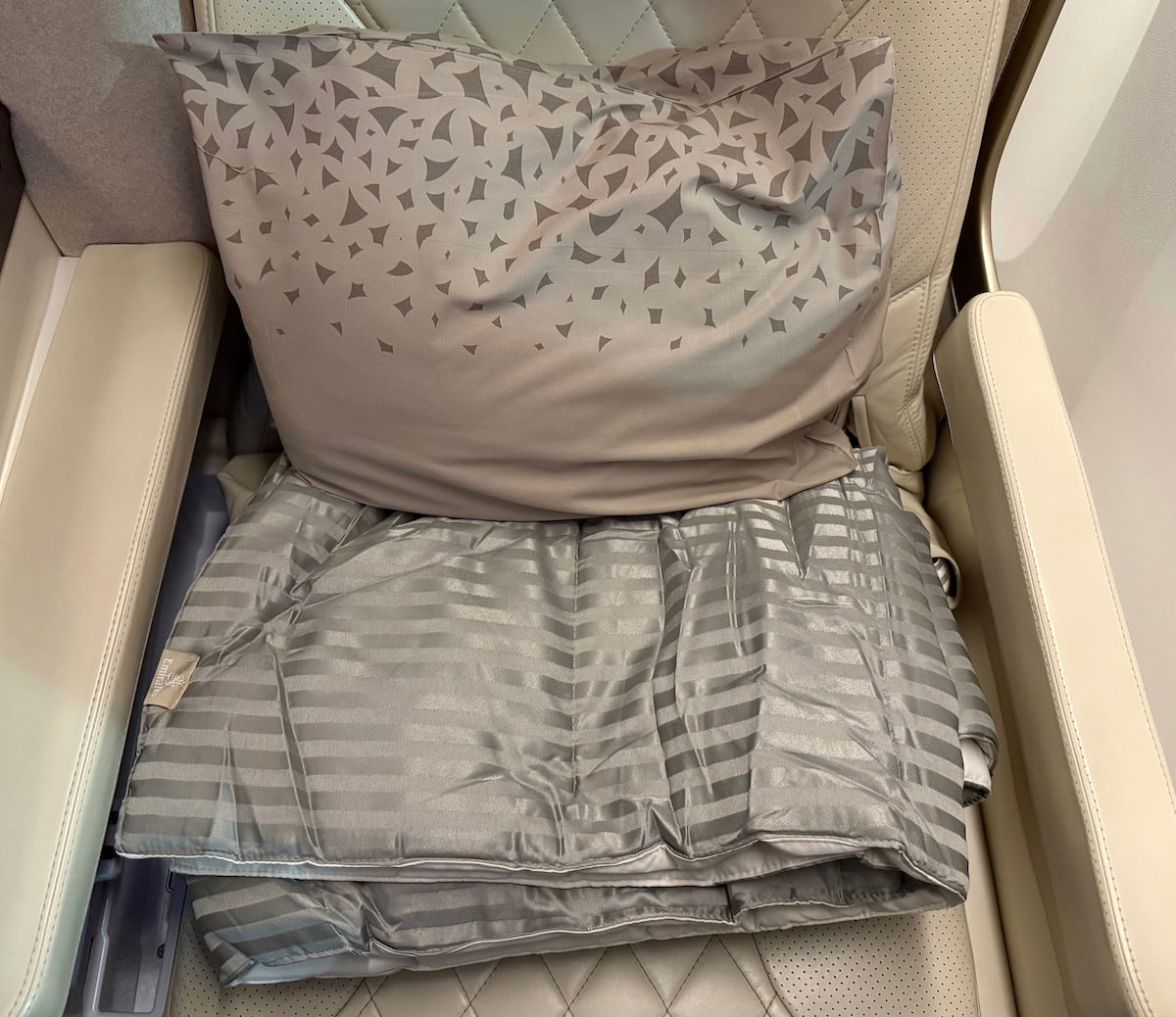
- Not using blankets during taxi, takeoff, and landing
- Not serving hot beverages or soup when the seatbelt sign is on
- Not placing bags underneath the seats in exit rows
It’s funny, because on my current trip, I’ve experienced five of those policies on various airlines, even though none of those rules apply to airlines in the United States. Ordinarily, I pride myself in being a good airline passenger who instinctively knows what rules I need to follow before being told to do so, though I also sometimes get caught off guard, especially on policies around headphones, blankets, etc.
What explains the inconsistency in these aviation rules?
Here’s what I find interesting, and what I’d like to briefly discuss. It essentially seems like the Federal Aviation Administration (FAA) sets the basic standard globally for aviation safety, and then we see other countries pile on their own rules, above and beyond what’s required here.
So that brings us to all of these rules. Is the FAA being careless by not having some of the above policies? Are regulators in other countries (or in some situations, airlines independently) just more concerned about safety, taking things a step too far, or how do you justify the disparity in terms of policies?
As I see it, all of the above policies are best practices:
- It makes sense for window shades to be open during takeoff and landing, since those are the phases of flight where things are most likely to happen, and there’s value in being able to assess the surroundings in the event of an emergency
- Having electronics plugged into power ports, using blankets, and having bags under seats in exit rows, during takeoff and landing, can cause a tripping hazard in the event of an evacuation
- Having personal headphones on can make it hard to hear crew instructions in the event of an evacuation
- Hot beverages could cause a burn if there’s turbulence, and they spill on you, so there’s merit to not serving those if there’s a risk
So I do absolutely think these are all best practices. That being said, aviation is outrageously safe. If you want to absolutely maximize the likelihood of no injuries or negative outcomes, those policies make perfect sense. However, how many lives have been saved as a result of the above policies? Not many, as far as I know.
I think this ultimately comes down to the quirkiness of our relative risk tolerance. We’re happy getting in a car every day without thinking twice, even though it’s exponentially more dangerous than flying even the most unsafe airline in the world (it’s one of the reasons that from a safety perspective, I’m happy to fly just about any airline).
So in the context of maximizing odds of the best possible outcome, these rules make sense. For that matter, that’s what the aviation industry strives for, and that’s a good thing. However, if across billions of annual enplanements we can’t actually point to any saved lives, are these policies strictly necessary? I dunno, I guess it all comes down to how you balance minor inconveniences with best practices.
Again, I’m not meaning to in any way question these policies, as I think they’re logical. I’m just noting how it’s interesting how regulators arrive at different conclusions when it comes to the necessity of the rules.
Bottom line
Regulations for airline passengers differ around the world, and what I always find most interesting is the rules that some regulators have above and beyond what the FAA requires. This mostly involves restrictions around behavior during critical phases of flight (taxi, takeoff, and landing), including charging of electronics, use of blankets and headphones, wearing of shoes, placement of carry-on bags, etc.
I know some foreigners who travel to the United States are surprised to find that these rules don’t exist (like restrictions around window shades), and I sometimes get comments from people about that.
What do you make of this inconsistency when it comes to safety regulations?




Window shades open during takeoff/landing rule actually does make a lot of sense: the idea is that passengers' eyes should be used for the light conditions outside. For the same reason most airlines turn off lights during takeoff
Back in the mid 80's flew DXB CAI on Egyptair and they ran out of luggage space so offloaded the last 20 rows or so, filled the area with bags and tied a few setbelts over the mess. Off we went.
Displaced passengers were not pleased of course.
All of the European or world requirements make emminent sense.
Getting the US public to accept them would result in mayhem and fights
Fly Asian
Flying around Australasia and the Pacific islands on numerous airlines, the rule is always to have the window shades up for takeoff and landing. This makes sense: $hit is more likely to happen during those two phases of flight. Then going to America for the first time (and thereafter) and seeing all the window shades down for takeoff. That was a shock at first. Also, not having the FA's check your boarding pass on entry. That was even more shocking.
"Also, not having the FA's check your boarding pass on entry. That was even more shocking."
Why? Your BP has already been checked many times, most recently at the other end of the very same jetway you're walking away from. The front door BP check is pointless.
We went to the Galapagos recently, and Avianca insisted that everyone turn off their electronic devices while we were refueling in Guayaquil—and flight attendants actually went around the cabin enforcing this. Meanwhile I've been on several direct but nonstop flights on Southwest (pre-Elliott of course) where this was of course not an issue at all on the layover.
Same reason gas stations post signs not to use your phone while refeuling.
I think Spirit does have the policy about window shades being open during takeoff and landing
As a BA flyer I was very surprised on a LOT flight (on a 737 MAX) earlier this month to see a front row passenger being allowed to put his luggage on the empty seat next to him and simply wrapping a seat belt around it. I asked the FA about it and she said it was allowed. (I did this while the chap was using the facilities, as I didn't want to cause trouble).
I find this policy really weird - I've never been on an airline that allows this anywhere else in the world!
Quite common on JAL and ANA, if your bag has a handle or something fixed that the belt can be looped through and secured.
I have had flight attendants get angry with me for having my window shade down when the aircraft is on the ground and I have had flight attendants get angry with me when I had my window shade up when the aircraft is on the ground. There are reason for both configurations but the lack of consistencey is annoying.
Once the aircraft is parked in warm sunny locations it is not unusual that the crew asks passengers to lower the shade in order to avoid heat build up, and reduce aircondition needs. Though getting angry over it is a bit much
And yet the heat never seems to be a problem here in SE Asia where planes sit at gates with shades up. Perhaps the AC here is better.
It is not a problem.
It is just to reduce energy consumption and there by operating costs.
But I have also had that request in South East Asia....
In Canada, the requirement to remove headphones not connected to the IFE is only during the safety demo itself, not during taxi/takeoff/landing, so it isn't even about hearing emergency instructions, just the basic stuff about how to buckle a seatbelt.
Australia and NZ recently added the rule that you can't charge portable powerbanks / batteries while in flight. You also have a limit of 2 such devices and must keep them within "easy reach" at all times.
But I do like how the fasten seat belt is switched off while you're still ascending - like fully 10 minutes before an American carrier would do so.
Not charge or use the powerbank to charge something else. Simply, you cannot use it in any way.
B6 used to explicitly announce and require passengers to unplug everything from the power outlets, but on my last 2 flights, there was no mention of such. I believe UA also requests passengers in the exit row to open their window, shades and unplug all devices, and I believe Hawaiian did as well for a while, but not sure if they still are.
Here's one a domestic airline...recently flew to Hawaii on Hawaiian, plus 2 inter island flights on Hawaiian and the return on Alaskan livery. All the Hawaiian branded flights required the window shades to be open for take off and landing, but no such requirement on the Alaska return. Maybe they're trying to align more with some of their Asian destinations?
I had noticed that as well...Hmmm
Some airlines are more oppressive than others… and then there’s Finnair… another level of control-freak for taxi, takeoff, landing. You’d better not have a single item anywhere. Or you’ll get a paddlin’
JAL always insists that I put my tablet in the overhead compartment not the seat pocket in front of me when I'm seated in the exit row.
"The Risk of Too Much Air Safety Regulation," published in the journal Regulation.
The article argues that because air travel is already incredibly safe, additional safety spending follows the law of diminishing returns. It suggests that the millions spent to prevent a single potential death in aviation could save significantly more lives if diverted to other industries, such as road safety or healthcare, where the cost-per-life-saved is much lower.
The piece also highlights...
"The Risk of Too Much Air Safety Regulation," published in the journal Regulation.
The article argues that because air travel is already incredibly safe, additional safety spending follows the law of diminishing returns. It suggests that the millions spent to prevent a single potential death in aviation could save significantly more lives if diverted to other industries, such as road safety or healthcare, where the cost-per-life-saved is much lower.
The piece also highlights a "substitution effect": if regulations make flights more expensive, travelers often switch to driving, which is statistically much more dangerous and paradoxically leads to more net fatalities
Although things like blinds up for take-off and landing are very low-cost.
I certainly agree with you and Ben about the double-gates behind the cockpit being expensive for no/minimal benefit.
The stupidity of over regulation of the airline industry for "fake" safety makes absolutely NO sense.
Spending more money on airline safety is a case of diminishing returns. That money would be far better spent on other safety on other forms of transportation.
In terms of overall deaths you have a valid point, although quite a few of these things are not fake, just less important.
But in terms of opprobrium all over the newspapers/internet for airline executives and airline regulators ...
Mate the more I read from you, the less sense you make. What a dufus.
What it appears you are saying is that the US FAA is God and they know better than every other Aviation authority on the planet. And every other authority should simply mimic the FAA and all will be good.
Many of your “FAA” rules, regulations and procedures have been developed, not solely by the FAA but by aviation exports from around the world meeting under the auspices of the UN organisation ICAO. Their Recommended...
What it appears you are saying is that the US FAA is God and they know better than every other Aviation authority on the planet. And every other authority should simply mimic the FAA and all will be good.
Many of your “FAA” rules, regulations and procedures have been developed, not solely by the FAA but by aviation exports from around the world meeting under the auspices of the UN organisation ICAO. Their Recommended Practices (RPs) were universally accepted and applied making the industry even more safe.
Regrettably the current US administration does not believe in the multilateral approach and thinks it can go it alone without the rest of the world. Our way or the hiway.
The US no longer attends ICAO expert meetings or finds it OK to send the mail-boy rather than key decision makers. They are also refusing to pay their bills and are threatening to withdraw completely.
The world certainly does not need the US FAA to develop aviation standards.
Better read the blog one more time . I think you missed the point.
You mean the FAA that refused to ground the 737MAX until after most of the world have grounded them.
Well, there had been no 737MAX crashes due to MCAS in the USA.
And what happens in the rest of world is given lower priority in the USA.
I happen to had funny encounters with Iberia express. They forced me before landing that due to security risks I have to put my I phone away from my hands. Next flight on them, I was sitting upfront and had a backpack which I stored in the overhead bin. One flight attendant came and asked me if I had any beverages in the backpack. I had purchased two bottles of cola. She insisted that those...
I happen to had funny encounters with Iberia express. They forced me before landing that due to security risks I have to put my I phone away from my hands. Next flight on them, I was sitting upfront and had a backpack which I stored in the overhead bin. One flight attendant came and asked me if I had any beverages in the backpack. I had purchased two bottles of cola. She insisted that those bottles could leak and she made me gave her the bagpack to store it in the bag of the plane. I had to wait for everyone to deplane before they could hand me my bagpack. This airline is such a joke with these own rules.
The stupidest one I remember was Qantas's rule that if you were boarding / deboarding by bus to a plane, you couldn't use your cell phones while walking on the ramp.
You shouldn't use (for texting) cellphone while walking, period. I have to evade so many morons texting while walking on the sidewalks of NYC.
They said it was for radio frequency sparks having to do with refueling safety.
Australia is a bit slow catching up with science!
Really? What an idiotic comment.
I suspect that is for the same reason you're told not to use your phone while refueling your car.
ANA not dimming the cabin lights during take off and landing at night (entire flight on domestic flights) is strange to me.
I see that the real reason is so that passengers are not completely blind in the dark if they have to evacuate, but I remember at least one European airline announcing that it was to minimise light-pollution to people on the ground!
Well, to be fair, US airlines have quirky rules too. For example, never ever do anything that might even slightly annoy an FA because they will then kick you off the plane. Strangely, this is not a rule outside the US, where FA are considered to be adults and you don’t have to treat them like 6 year olds who haven’t learnt to regulate their emotions yet.
Another one: lap belt extenders fir infants.
I'd seen these distributed in many places, but as a recent Dad in Brazil, I was shocked to learn the airlines here don't offer them at all.
Duct tape
Cuct tape for the mouth or just t restrain the body ? ... LOL ...
Each airline designs its own FAA-approved Training programs, Manuals, Safety management system, Emergency procedures, and Minimum Equipment List (MEL). Even if two airlines fly the same aircraft, their Evacuation procedures and Cabin procedures may differ slightly because the FAA approves each operator’s program individually. Whatever their agreed upon operational specifications are, they must uphold (regardless of what another carrier does) another example would be seatbelt extensions (they are not allowed in the exit row at...
Each airline designs its own FAA-approved Training programs, Manuals, Safety management system, Emergency procedures, and Minimum Equipment List (MEL). Even if two airlines fly the same aircraft, their Evacuation procedures and Cabin procedures may differ slightly because the FAA approves each operator’s program individually. Whatever their agreed upon operational specifications are, they must uphold (regardless of what another carrier does) another example would be seatbelt extensions (they are not allowed in the exit row at some airlines like Southwest, but they are at others like American)
FAA is a US government agency, not IATA/ICAO agency so it's only relevant to US airlines (and to limited extent to airlines flying to the US). The rules airline has to follow will generally be based on whatever the local regulator requires. E.g. window shades policy is required by EASA.
The presumption in the article that it sets some sort of a global baseline requirements isn't really correct, just like there are rules that don't...
FAA is a US government agency, not IATA/ICAO agency so it's only relevant to US airlines (and to limited extent to airlines flying to the US). The rules airline has to follow will generally be based on whatever the local regulator requires. E.g. window shades policy is required by EASA.
The presumption in the article that it sets some sort of a global baseline requirements isn't really correct, just like there are rules that don't exist in the US but exist elsewhere, there are rules that exist in the US but not in some other jurisdictions.
I actually experienced it from the other perspective. I'm a former cabin crew member at a European airline, and I very recently flew on a domestic trip within the United States for the first time. I was seated at the emergency exit on an Airbus 321. I was genuinely shocked to see that not all window blinds were open, there were still luggage items at the emergency exit, and the cabin crew member had a...
I actually experienced it from the other perspective. I'm a former cabin crew member at a European airline, and I very recently flew on a domestic trip within the United States for the first time. I was seated at the emergency exit on an Airbus 321. I was genuinely shocked to see that not all window blinds were open, there were still luggage items at the emergency exit, and the cabin crew member had a blanket over her lap during take-off. At first, I thought I just encountered a very lazy crew member who didn't follow the rules, but after some online research, I learned that all these things are not mandatory in the United States.
If we would have an emergency, I'm very curious to see how fast the flight attendant could react if she's comfortably under a blanket and with a coffee in her hand at the emergency exit. I know it's unlikely to end up in such a situation, but still...