
Often I’ll write about new airport terminals, and someone will point out the lack of moving walkways, and wonder how airport designers could make such a mistake for a new facility. Heck, we’ve even seen some airports rip out perfectly functional moving walkways. What are they thinking?!?
Well, this trend is no coincidence, so let’s discuss that in a bit more detail.
Lack of airport moving walkways aren’t a coincidence
Airport design is really deliberate, for obvious reasons. It’s definitely not the case across the board, but at an increasing number of airports you’ll find that there are no moving walkways, despite large spaces funneling passengers in a particular direction.
Why is that? Well, it’s because of how airports are monetized. Airports are businesses, and they make money in two primary ways — fees related to airplanes (landing fees, gate fees, etc.), and then all the other revenue opportunities, including airport concessions.
Generally speaking, the goal of an airport operator isn’t to get you to your gate as quickly as possible. Instead, the goal is to monetize your journey between your arrival at the airport and the gate as much as possible. After all, the more money you spend, the more money they can charge in rent (and often airports also get a cut on revenue generated). When you consider airport design, you really have to frame everything through that lens.
So when you pass through security and you first have to go through a duty free “maze,” that’s no coincidence.
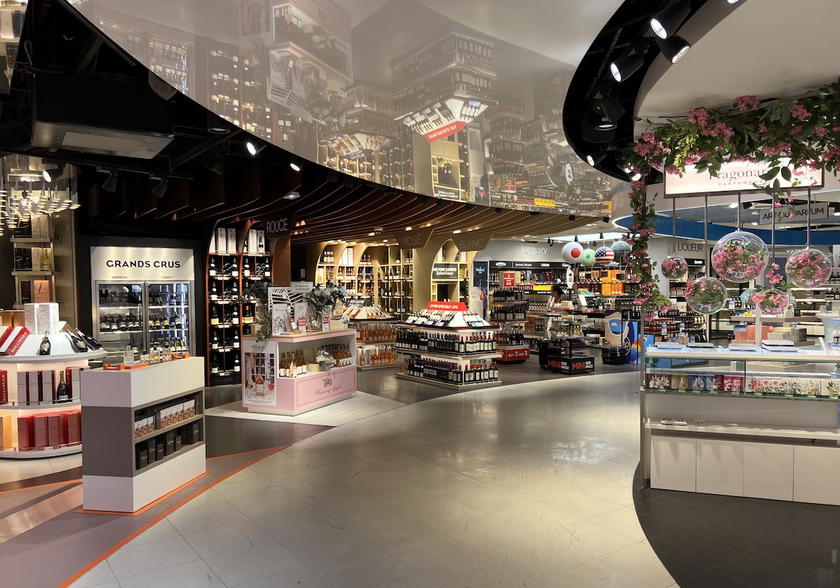
The same is true for the lack of moving walkways. Moving walkways are bad for business, because they don’t have many exit points, so it reduces foot traffic for businesses. Maybe you’re on a long moving walkway and you see a store or cafe you would visit if you could easily access it by just stopping, but you don’t want to backtrack a long distance to get there.
The issue isn’t just the people on the moving walkway, but the moving walkway also acts as a divider, with people walking on each side of it. It’s like being in a car and seeing a business on the other side of a six-lane road — it’s not exactly easy to access.
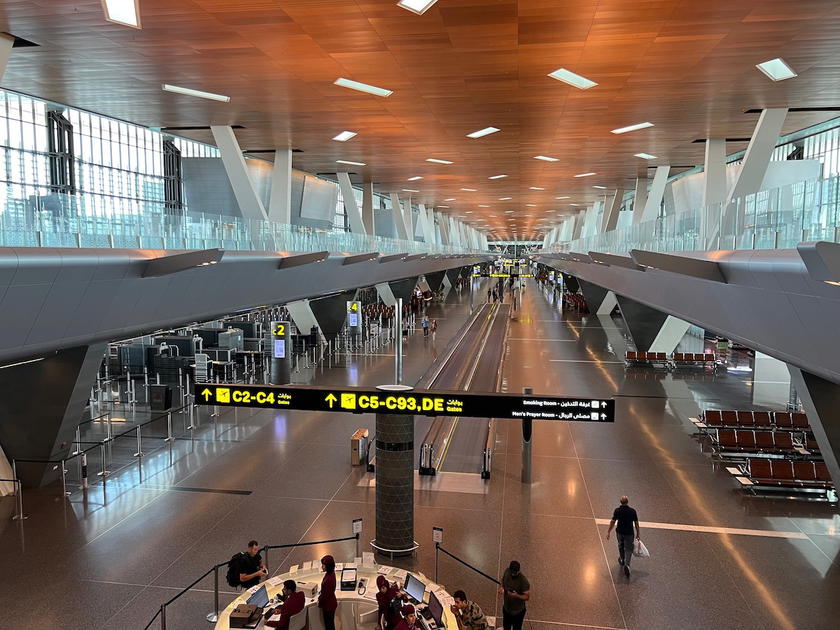
When you do notice modern airports with moving walkways, you’ll almost always notice that there aren’t many stores around them. For example, look at some of the world’s top airports, like Hong Kong (HKG) and Doha (DOH), where there are lots of moving walkways, but you don’t see many businesses between gates. Instead, the stores and dining outlets are largely located in clusters around of the end of moving walkways and train stops.
All of this says nothing of the cost of installing, operating, and maintaining the moving walkways, so that’s a significant advantage for airports as well.
Moving walkways are a double edged sword
Even taking airport economics out of the equation, I must admit that I’m not a huge of moving walkways in terminals.
Let me of course acknowledge that I’m lucky to not have mobility issues, and given the option, I’ll always try to walk rather than taking a moving walkway or train system, since I try to rack up as many steps as possible, in my day-to-day life.
The challenge with moving walkways is that they’re typically designed to be wide enough for one person with luggage. The issue is that people interpret the purpose of moving walkways differently — some people want to stand on them to rest, while others want to walk on them to speed up their journey.
Both are valid, yet walkways are typically designed so that it’s a tight squeeze to pass someone else on a walkway with bags, especially if you’re not in a place like Japan, where respect for others is a primary consideration.
Like, if have moving walkways in Miami, expect to see someone standing right in the middle of it watching a video without headphones, and if you ask them to move to the side, they might cuss you out. Not so helpful!
Just as moving walkways prevent people from visiting certain businesses, they also kind of mess with the general directional flow of passengers, and they make it more difficult to overtake others when walking.
For those who struggle more with mobility, I can see merit to moving walkways. Then again, those who truly have limited mobility generally use airport wheelchair services, and those often don’t use the moving walkways. So in some ways, the moving walkways also make it more difficult for wheelchairs to navigate the terminal.
Bottom line
A lot of thought goes into airport design. Often that thought isn’t about how to make the journey as easy as possible, but instead, about how to make it as profitable as possible. Airports want you to visit concessions, and moving walkways get in the way of that. So the next time that you’re in an airport and confused by some design choices, try to frame design choices through that lens.
What’s your take on the trend we’ve seen with airport moving walkways, and how much do you value them?


Membership is free and takes no more information than commenting as a guest. Earn status points for good contributions, and see fewer ads as your status grows.