British Airways Mixed Fleet: What Is It?

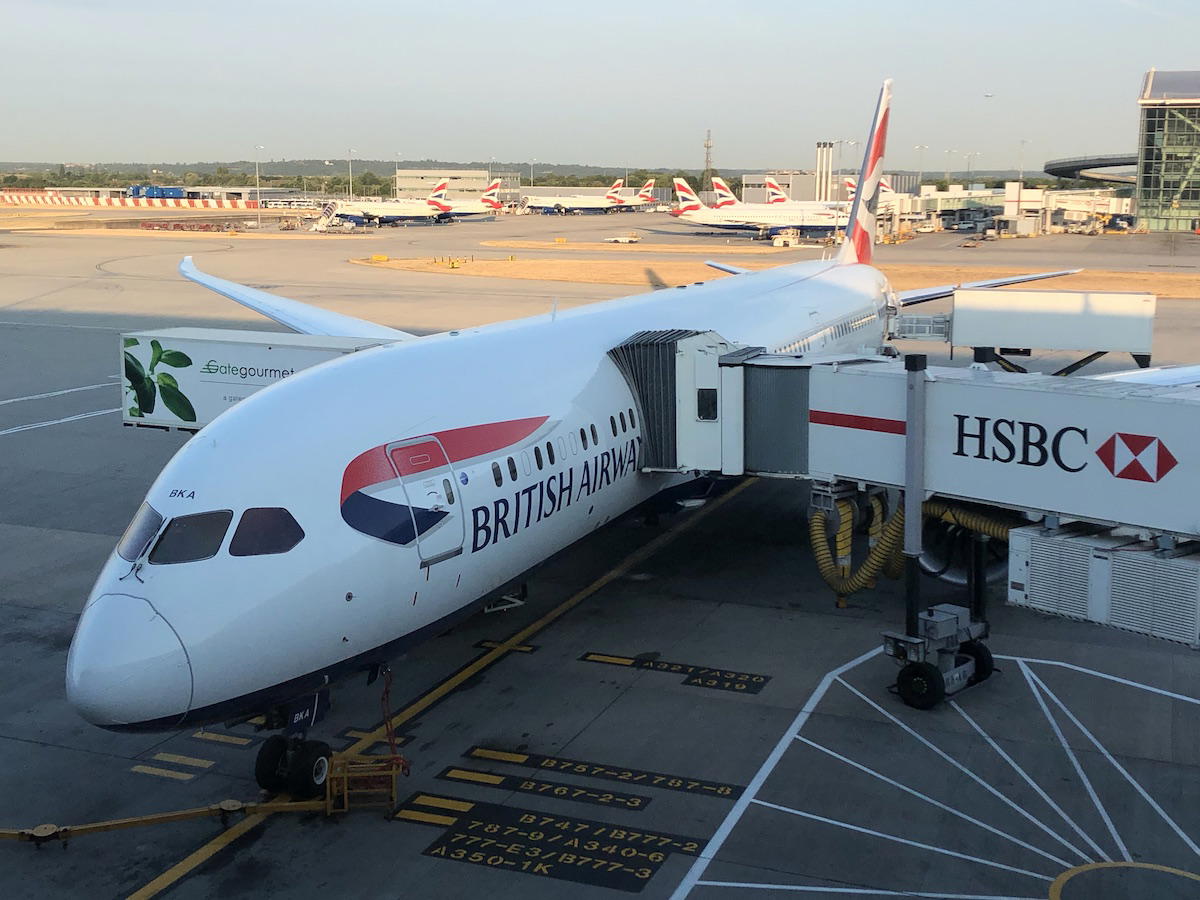
Most airlines have some quirks when it comes to their workforce and labor contracts, though British Airways’ cabin crew situation is among the most interesting to me.
Continue reading: British Airways Mixed Fleet: What Is It?
Share your questions, experiences, and thoughts below.

I am quite certain we had a mixed fleet crew a few years back on a 773 LHR-SEA. Most seemed to be in their late twenties or early thirties. As you said, service was friendly and well-intentioned, but lacking in execution. Examples: 1. It took something like 20 minutes to get a Fullers London Pride after take off. You wonder if they just forgot the order or are really that busy, but you don’t want to hit the call button and be “that guy”. 2. My wife and I were in the honeymoon seats in the middle, being served my different FAs from each aisle, and my food came out way before hers - like 15 minutes’ difference. We always order different appetizers, mains and desserts and like to sample from each other’s so that was annoying. 3. No chocolate! The guy on my aisle simply forgot to pass them out. I had to go to the galley and ask for one.
First world problems to be sure, but that’s just basic cabin service, and they did not do it well at all.
My heart sinks when I see a worldwide crew as my experience is that they are near universally poor. You’ll get the odd one who still cares, but they are lost amongst the surely attitude of the rest of the crew.
Give me young and enthusiastic every time
It used to be that Mixed Crew were confined to specific routes. Is that still the case and, if so, which routes?
Sometimes they'll have mixed fleet written on their badges. I had that when I was flying to Miami a couple of months ago. The mixed fleet cabin crew are some of the friendliest I have ever had and quite often they've been very polite, funny and flirtatious. A lot of the glamour of the job comes from BA itself. In the UK it's seen as an institution by many and still commands some glamour and prowess over many rivals. Even though they have gone down hill recently.
Btw £15000 is incredibly hard to live on in London particularly now as the house prices are painfully expensive.

@Paul
My experience is different: I’ve had lovely chats with worldwide crew on longhauls, the last time from an f/a who was explaining how much she and her crew loved talking to pax. “We’re in the service industry: we do this because we love interacting with people”. Delightful.
In fairness to you, I’ve had some grumpy crews too. But in both mixed fleet and worldwide.
Though I don’t think I’ve flown a single airline where I’ve never had a grumpy crew or a poor service experience.
@paul
My experience is exactly the same, whilst I agree that mixed fleet can definitely have their hiccups, I have yet to find a worldwide crew without horrible attitudes. Customer service doesn't seem to exist, and lifting a finger is too much work for them. It's mind boggling. I mostly don't fly BA any longer because of this.
@ Ryan - yes they are, the list of destinations is googleable although not always fully up to date.
Does this hold true for European short-haul also? Could you get a Euro vs Mixed crew flight?
As Ben says there are pros and cons of both the legacy and mixed fleets. An ideal crew would be a mix of the two groups working together on the same aircraft - the experience and efficiency of Worldwide with the enthusiasm of Mixed Fleet.
There are many other differences between the working groups apart from salary though.
But starting with the salary - the gulf is quite wide. A 'junior' main crew member on WorldWide fleet takes home more than a Customer Service Manager on Mixed Fleet. Which is why although there have been many opportunities for Worldwide junior crew to apply for Mixed Fleet CSM few have taken up the opportunity. I mean who would take a pay cut to work more?
Another huge difference is the Terms and Conditions. WW Fleet have high union membership with the closed-shop union BASSA. The agreement between BASSA and BA covers things like how much rest inflight (in addition to legally required) to how much rest downroute to how much rest after a trip. As well as how many crew will be on each aircraft and how many International Cabin Crew will be on flights where these are carried.
An example - LHR- CPT used to be 'owned' by Worldwide Fleet. WW fleet would have two nights in CPT before returning to LHR. Then four full days off (plus arrival day). When the route transferred to Mixed Fleet they were give one night there. And two days off after returning to LHR. Similar has happened with LHR-JNB, LHR- LAS, LHR-PHX. If WW crew operate these routes they get a double night there, MF has one local night.
Seniority also is not a thing on MF. On WW, Cabin Crew choose where they work on the aircraft (eg F/J/Y) based on their seniority. MF do not.
The CSM/CSD in charge crew member role varies also. The MF CSM has a 'team' of crew they manage and also are involved in training and recruitment and is considered management grade. A WW CSD is strictly aircraft based manager and is considered Crew grade.
Of course the biggest difference is that (the clue is in the name) Mixed Fleet operate a mix of long and short haul routes. WW only operate longhaul routes from LHR. Eurofleet short haul routes from LHR. Then there is also 'Single Fleet' at Gatwick which operate along the same lines as LHR Mixed Fleet. London CItyFlyer is also a separate fleet operating all routes from LCY except for LCY-JFK which is operated by LGW SF crew.
In terms of crew numbers LHR WW is still the biggest fleet with around 9000 cabin crew. HOWEVER as the majority of LHR WW crew are on some form of part-time contract (75%/50% or 33%) Mixed Fleet is now the biggest fleet based on Headcount Equivalent with around 5,800 mostly full time crew.
Turnover is high on MF but that is exactly what BA wants. They have zero desire in staff hanging around. Two years is the 'sweet spot' where the Mixed Fleet crew have covered their training, recruitment and uniform costs.
When MF was born the jewel in the crown was to establish a 'union-free' fleet. They would have 'Our Voice' groups who would be employees raising issues directly with management via regular forums. Obviously, only one side held all the cards. MF finally unionised and had some extensive industrial action of their own in recent years.
I'm not sure if this is still the case, but when BA introduced a uniform cap for the female flight attendants a few years ago, only the Mixed Fleet crew members were allowed to wear it - making it easy to tell if a cabin crew was Mixed Fleet or not.
Ofcourse mixed fleet crews are enthusiastic. If they weren't, why would they take that job if everything else about it is garbage.
The 'hat' situation is ridiculous.
MF - female crew wear them for all flights
EF/SF LGW/LCY - do not wear them.
WW LHR - female crew where them when operating on A380/787/A350
Its true. You get great service one flight-poor the next. Good explanation but the reason there were European and international crews is that before British airways there was BOAC-British overseas Airways Corporation and BEA-British European Airways. They merged to form British Airways.
Boac used to fly the VC10. Still my favourite subsonic airline of all time.
What I've always found curious is how BA was allowed to create a whole new class of crew. Seems like a loophole that any employer could use to weaken strong unions and negotiated contracts.
Mixed Fleet crews are not only underpaid but also overworked.
Unlike some of the comments from readers above, my experience with the Worldwide crews have consistently been top class, admittedly in F and J.
This is one of many examples where the workers of today, often young people, get the short end of the stick. Many jobs in the US now have a "two-tier" wage system. New employees are on a severely lower pay scale than older, incumbent employees. Some unions, dominated by mostly senior workers approaching retirement, vote for this as a "concession" to management. Hey, it doesn't personally impact them, so what's the downside?
The lower-tier pay scales have a major impact on one's lifetime earnings. We're not talking about a brief probationary period or establishing seniority. One can work 5-10 years before their under consideration for classification with the "normal" pay scale. Even then, there are quotas and restrictions. As employers have invested less in training and developing their employees, this has been disastrous.
It's kind of sad, really.
@ MarkP -- Yep, on short haul you have some mixed fleet and some non-mixed fleet.
I am often concerned about the ability of some Worldwide crew to function adequately in an emergency given their age.
15,612 pounds may be about $20,500 today, but back in August and September it was more like $19,000 -- and there are those who predict that after Brexit, the pound will drop to parity with the dollar.

Love Pam-Ann’s take on what the BA acronym ‘CSD’ ACTUALLY means...”***t Standing At The Door”.
Guess I got lucky...
Had a Worldwide crew on a KRK-LHR flight in early September. I had low expectations for such a short flight, but they were phenomenal. The champagne flowed constantly. When I raised a concern that more than five glasses would render me unfit to disembark unaided, they joked that they were always available to assist.
For the vast majority (probably 98% of the time) I have had absolutely lovely crews (both WW and Mixed). I fly in F so that may have an impact and I tend to be low maint and easy going which may help as well. But honestly it has been years since I had an "issue" and honestly it was an interaction with another passenger I witnessed (the passenger didn't deserve the attitude). I can't really remember another flight with any issues. I will say some of the mixed crew may want to talk a bit too much but I do appreciate their enthusiasm and their desire to make a passenger feel welcome.
What are the crew who do Bahrain, Doha etc to LHR? And do they operate any other routes?
@ JOHAN BA have international crew bases in DEL/BOM/MAA/BLR/TYO/MEX/CAI/BAH/PVG/PEK. SIN/GRU/EZE bases closed within the past few years. A new HYD base will open next year.
The International Cabin Crew at all bases except for BAH/CAI operate from their home port only to LHR and back. The BAH/CAI crew also cover JED/RUH/DMM/AUH/MCT.
There are no flights solely crewed by international flights. Route and aircraft dependent they make up anything from two to four the total crew complement.
WW fleet certainly don’t think that MF have ‘stolen their jobs’. It was BA that stopped recruiting to WW.
WW are sympathetic to those in MF because of the vastly poorer employment terms - salary, rostering and pensions to name but a few.
I have a friend of mine who is a CSD with WW and every year he gets asked if he wants to retire as it would get another WW staffer off the books but as he loves his job and gets high passenger ra I gave he says no but there is no pressure on him and nor is there any sort of retaliation against him poor routes or rotas etc. Another is the level below CSD and he’s the same.
@Duck Ling female LCY crew DO wear hats
It's important to understand how pay at BA works. While the basic pay may look shockingly low, on top of this crew are paid an elapsed hourly rate (which is partially tax-free). This is paid from check in at the start of the trip, until check out on return to base which may be some days later. This, along with commission from in-flight sales and various allowances and performance bonuses tops up the pay to the amount BA quotes.
I myself am LCY crew. In my first year I earned ~£27.5k ($36k) - when you're not subject to daily commuting costs (which in London can be £135 to £245 a month depending on how many Travelcard zones you need) and have meals provided for you when you're working plus breakfast when staying in a hotel this isn't a bad wage for a job that requires no real qualifications.
The CSM role at LCY is closer to that of a WW CSD, with no line management or recruitment responsibilities, and training and development restricted to completing in flight assessments and performance management interviews.
From someone who's flown BA for 20+ years, I welcome the MF crew. They've resulted in WW fleet improving their service, which generally was getting worse thru the early 2000's - no real customer friendly service, complacency etc. I agree with Lucky that it can be hit or miss on either crew, but generally the services is noticeably better. I was very skeptical when flying first a few years back and having someone who appeared to be barely in their twenties, but that individual remains the most friendly, warm and engaging staff member I've ever had on a BA flight.
While folks are commenting on the salaries, keep in mind that out of pocket costs in the UK are much lower than the US. Your health insurance is paid for thru NI contributions, and taxes are relatively low at those salary levels. A salary of £25k, gives you take home pay (after all taxes etc.) of £1,700 or ~$2,200.
As the post above notes, for a job that pays for accommodation / food / normal expenses when away, despite the London/South East rental / commuting costs, and a job that doesn't require college qualifications, it's a good salary. And, bottom line, people wouldn't take the job if it wasn't reasonable pay.
I sympathize that MF crew don't get the same contracts / salaries as the WW fleet... but as some of the examples above note, the terms WW had extracted over the years were excessive. Take the LHR-CPT flight example - as above indicates, WW had 2 nights in CPT and 4 nights + arrival day off back in LHR - so basically a week of time for working 24 hrs (though I'd argue more like 12 hrs of work, as they are both 12 hr overnight flights are very quiet for staff for 6-8 hrs.
The new MF time of one night in CPT and then 2 back in LHR is much more realistic, particularly given the flight (a) leaves in the evening and arrives in the morning both ways (one night in CPT is nearly 2 full days, 2 nights in LHR nearly 3 full days) and (b) there's no jet lag/time differences. Yes it's an overnight flight, but as it's 6-8 hrs of downtime each way due to that, WW had somewhat forced BA's hand by getting conditions for flights that were unreasonable and resulted in significant unnecessary costs on the airline. And BA throughout the 1990's and 2000's were struggling to compete against others much lower staff cost base.
I have flown about 15 LH flights so far this year. 4 on QR in J and the rest on BA in F. Have had great service from both WW and MF crews but also had shocking service from both. Last week flew to MIA in F with MF. The flight to MIA was fantastic - 2 golden tickets given out and also wrote to head of cabin crew which resulted in an internal thank you to both crew. Flight back to LHR again MF but appalling as I was completely ignored by my crew and had to find another crew member to get something to eat and drink. Tried to complain but CSM just hid. So it’s anyones guess what my flight to GIG will be like next week
MF crew mostly live nowhere near London with their parents - not many people can live independently in London on such a low wage. For some it's not much more than a gap year/equivalent to a year or two out travelling, and for the crew living with their parents the wage isn't such a big deal (but losing travel benefits would be a massive blow, hence why many Mixed Fleet crew were too scared to join industrial action/strikes by MF). Of course MF crew are enthusiastic, eager and keen - you'd have to love the job to take it with such poor pay. I'd always pick an experienced crew with decades of experience over a young and poorly paid crew. Unfortunately the MF/Ryanair model seems to be the future.
@ LCY Confidential - apologies!
@ Khatl - i'lll bunch BA crew into two groups here. 'Legacy' (WW longhaul LHR and EF Shorthaul LHR) and the 'newer' crew (LHR Mixed Fleet, LGW Single Fleet, LCY). The mentality between the groups at the time of applying is likely quite different. 'Back in the day' being cabin crew was a career choice. People applied for the role with the intention of staying a long time. Airlines like BA rewarded this by having a payscale made up of increments - for every year you complete your pay scale goes up. Back then applying for cabin crew with airlines like BA was extremely competitive - recruitment wasn't so often, the bar was set high (languages and arduous recruitment processes) and there were hundreds applying for every two or three jobs.
Then the airlines cottoned on that although there is a benefit to having long serving loyal staff a 'cost effective' employee base was far more desired. Before Mixed Fleet was born, BA management basically put the MF T&C's to the legacy crew and said 'accept these or we will recruit a new fleet of staff to eventually replace you'. And this is exactly what happened.
The salary offered to Mixed Fleet is fine if you are in your early 20's, living at home or happy living in a flat share of four of five colleagues in Hounslow or Slough. But with the Mixed Fleet payscale the increments do not exist. SO sure, for two or three years when you are young you are more than happy with such living situations, travelling around the world. But then you get older and realise you want to get a mortgage, live on your own etc. The BA Mixed Fleet salary does not allow for that. So, they leave.
Each week the Cabin Crew at BA LHR are communicated the 'customer scores' by BA which are divided by fleet. WW LHR fleet and LHR MF are usually within just a few percentage points of each other although LHR WW is consistently highest.
But of course it's all about the dollar. Who is cheaper, rules.
As I said in an earlier post the best possible Customer Service on board would be gained by the two groups working together on the same aircraft. But BA is adamant this not happen. Why? Only they know. But other airlines have made a success of this especially when their 'new fleets' were in their infancy. Qantas is an example. It gave long serving legacy crew financial incentives to take secondments on the new fleets. They brought their experience, they saved costs for qantas as they were more efficient (working to the new fleets T&C's) but importantly were not left out of pocket (they retained their same take home pay). BA could do the same but chooses not to.
BA did nothing illegal in ending WW recruitment and starting up MF on different contacts. And MF still has high union membership with the same unon as WW fleet staff so the union certainly wasn't broken.
What would be illegal in the UK is forcing WW staff onto the MF contract.
hi ChrisC, I didn't say they did anything illegal. I'm just curious how/why it happened. Seems like a loophole that would allow end runs around any unions.
Can I just say that your comment about MF crew having their food and other expense payments paid for them is completely Incorrect! They have to pay for food and drink (subsidence) out of their own remuneration package. This is not expensed or paid back to them!
Regarding the South Africa flights, while we may be quiet for 6 hours, we are still missing out on two nights sleep in 3 consecutive nights. And 34 hours in CPT is certainly not 48! As I say, missing out on two nights sleep out of 3 certainly isn’t easy even with the time difference as when you land in the morning into CPT the crew generally sleep during the day (becoming jet lagged even with no time difference due to having to be awake for the previous 24 hours or so. It’s certainly not how you describe.
Just to advise you that we do not stay in worse hotels. When we route swap every so often the hotels are the same. Don’t make us out to be cheap. This post is rather insulting.
@hkatl. I think one of the biggest misconceptions people have of the cabin crew role is that the ‘easy’ part is the bit in the middle of long flights where all the customers are asleep.
On the contrary it’s probably the hardest. The middle of the night, you’re jet lagged, in a dark metal oxygen depleted tube and your body is telling you it just wants to
S L E E P.
But you can’t. You’re looking at your watch every minute counting down the time.
At most reputable airlines notions of cabin crew pulling the curtain across and having a snooze on a crew seat or popping into an empty passenger seat whilst on duty during the quiet times are false. A report of us doing that at BA and we’d face a disciplinary process for sure.
Yes, on long range flights we get designated rest breaks. That doesn’t guarantee you will sleep during your break. You have just served 400 people dinner, you shovel some plane food down your throat then minutes later ‘first break’ crew are on their way to the bunks. You undress in front of your colleagues and climb into your bunk. You are probably still wired from the action in the cabin as well as still digesting your dinner so it takes a while to wind down. You may nod off for a bit. Then the lights come on bright and you have five or ten minutes to get dressed and be back on duty.
This is by no means a ‘poor us’ story as I know there are many professions that work throughout the night without a break.
But the view that we are resting for six hour during a long flight is a false one entirely.
I think my comment regarding meals for crew may have been misunderstood. What I meant was that if you’re flying over a mealtime you get fed; additionally LCY crew get breakfast paid for if staying in a hotel although I understand MF don’t get this.
Dear Ben, your infos are quite precise except that WW went on strike because they wanted to stop the birth of MF (I was still working for BA at the time) . I also would like to clarify a few risk element of the job of cabin crew/pilots that seems to go unnoticed by the majority of the public; health risk factors: lack of sleep, jet lag,night shift,working long hours defying gravity at high altitude (which doubles your working hours), poor quality of food mostly salty,highly salted processed food as at high altitude food losses 30% of its flavour; solar and cosmic radiations that pilots and crew absorb especially on the long haul routes(that lead to tumors)...and the list goes on... also (not you) someone mentioned that it is not a skilled job; how wrong to state something like that! Crew are trained to save lives through very intensive yearly training; their knowledge ranges from the use of the defibrillator,CPR ,administering medications, fire-fighting capabilities (yes,they are the ones that will put down a fire on board!),evacuations techniques in case of danger.... and yes,also serving foods to passenger and sorting out problems at 10.000feet.... it is a skilled job and it should be paid accordingly! The old contracts were paid up to 1996,after that all salaries had a massive drop of thousand and thousand of pounds! BA is always been a money making machine and managers and CEO's have been paid millions with bonuses of 000,000 that will never be made public! The only thing is that if a plane crashes the ones that go down is the crew and pilots and pax of course (and pax are paid millions by insurance companies,where a cabin crew family member will only get less than 60,000£)....anyone whom performs high risk jobs like policeman,firefighters,nurses,crews and nuclear power plants workers etc. should all be paid fairly! Contracts paid after 1996 were adequate to the job qualifications and skills and also most of the crew speak several international languages in order to aid and respond adequately to customer needs! It is silly and ignorant to state that a cabin crew job is unskilled! I left some time ago and feel sorry for the treatment of MF crews by BA's managers greed.... cause that's what it is,just management and sharers greed.... MF is totally underpaid for their performances and the majority of them cannot afford to rent a room; they stay in the job for a year or so which is not good for the company future business; as well as loyal customer,BA should invest on loyal staff; ergo your sometimes "grumpy" crews whom feels left down and haunted by their managers with fear of losing their jobs! Maybe they were declined their Christmas leave for the fourth year in a row to spend it with their children...or someone in the family just died and they cannot make it back in time for the funeral...a delay could make you miss the birth of your first child....just some examples of what certain jobs can take away from you and your life,but someone must do it otherwise many of us will never fly whether is for holidays or work... you will never know!
the list of WW & EF vs MF routes is kept reasonably up to date on FT
2 small points, one of which has been alluded to
1 - you can’t really make comparisons of spending power when looking at salary differences between countries so difficult for them to mean anything on a US based blog
2 - London house prices change within a few hundred yards. LHR and LGW aren’t in London. LCY is on the outskirts. It would not be advantageous for a commute to any of them to live ‘in London’.
I thought it was a shame to ruin a decent piece about an interesting approach to employee relations with the poverty chat and trying to make out of context claims about underpaying
@Ned
What are you talking about? LHR and LCY are both in London — Heathrow is in the London Borough (sic) of Hillingdon; City is in the London Borough (sic) of Newham.
Both are in the Greater London area under the GLA and London Mayor.
But you are right that LGW is outside London.
Judging by the vast numbers of people wearing BA uniforms on the Tube, huge numbers of LHR-based staff live on the central London side of the airport. When my local station was Earl’s Court, there would always be BA staff there heading out to LHR on the Piccadilly line. Special staff fares operate on what was London Connect, from LHR to the suburbs on the central London side of the airport. Presumably they offer staff fares because, er, staff use that line to commute?
Commuting from outside London to LHR is much more difficult by public transport. Maybe rich pilots might do it by car, but there are few obvious routes.
@the nice Paul, as crew I have to say that a large majority of my flying colleagues are definitely not living in London. On Mixed fleet it is usually because they don’t enjoy it in London or because they can’t afford to live in London. Commuting from Glasgow costs around 300 a month plus maybe 100 if you have to use a hotel for 3 nights in the month. So 400 max, whereas a room in London is about 600 plus, plus travel so 700 minimum. You can get a room in Glasgow for 150-200 so It makes complete sense. Most crew who do this live with their parents or partners too thereby at least halving all their bills. I’m Not disagreeing that LHR is in London though. It is!
Lots of the staff you see on the tube are check in staff and other ground staff too and legacy fleets also. Don’t get me wrong, there are mixed fleet crew living in London, but they are few and far between to find them. I myself use the tube after my trains and other tube and I do not live in London either. But MOST CREW BY FAR commute from outside London by air of by car which saves them a fortune.