

Korean Air will be reinstating a codeshare agreement with one of its former partners, but not necessarily because it wants to…
Alaska & Korean Air restore codeshare agreement
Alaska Airlines and Korean Air have just filed with the Department of Transportation (DOT), requesting permission to launch a codeshare agreement (thanks to Steve for flagging this).
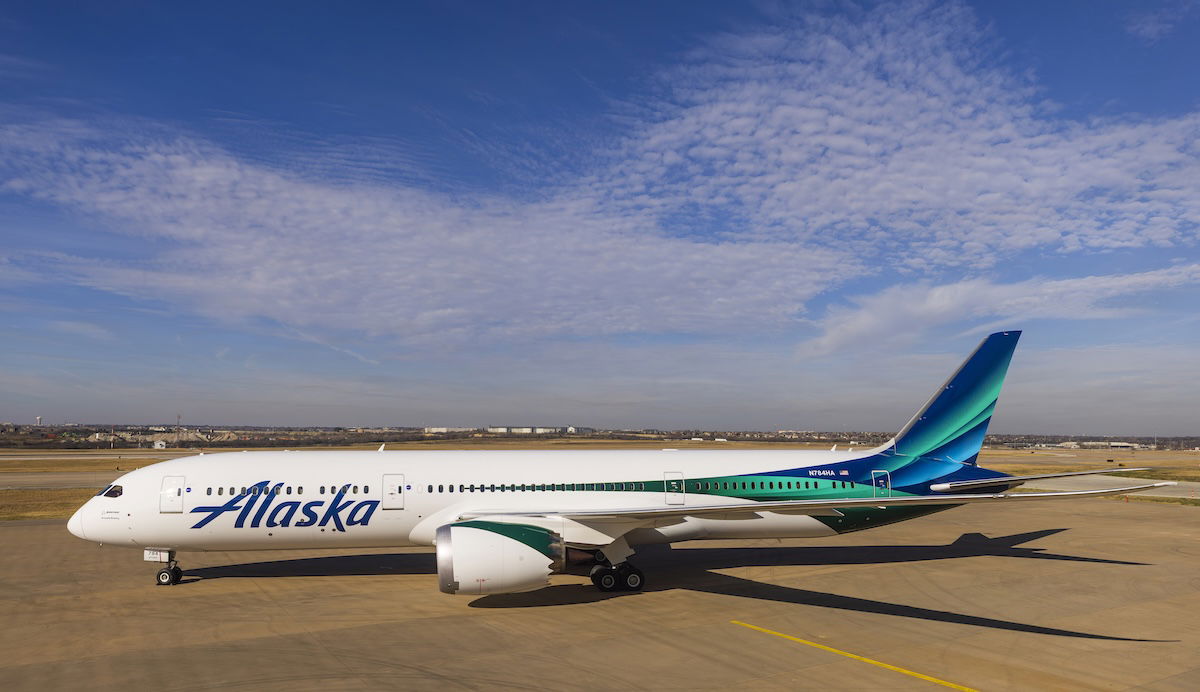
Alaska flies from Seattle (SEA) to Seoul Incheon (ICN), and the idea is that Alaska wants to codeshare on Korean Air’s flights from its Incheon hub to Bangkok (BKK), Busan (PUS), Delhi (DEL), Hanoi (HAN), Ho Chi Minh City (SGN), and Singapore (SIN). It seems this is a unilateral codeshare, so Korean Air will not be codesharing on any Alaska flights.
With a codeshare agreement, Alaska will be able to place its “code” on Korean Air flights between those cities. When it comes to airline partnerships, a codeshare agreement is more than an interline agreement, and less than a joint venture.
On the surface, this is a totally logical level of cooperation, and it’s a win-win. Alaska flies to Incheon, and presumably the routes on which it is requesting to codeshare are those with the highest passenger demand. So this will allow both airlines to fill seats on their respective flights.
Fair enough, right, so what’s the problem? Well…
What’s really driving this new codeshare agreement?
Delta and Korean Air have a transpacific joint venture, which is the closest level of cooperation you can have between airlines. Delta’s transpacific network is based so heavily around funneling passengers through the Incheon hub (though Delta is finally adding flights to other destinations in Asia).
Delta even owns a stake in Korean Air, and if we’re being honest, Delta is a very controlling airline partner. That’s understandable, because the airline has the clout to request that from its partners.
Alaska and Korean Air had a close partnership for many years, including a codeshare agreement, reciprocal points opportunities, etc. However, over the years, that was progressively scaled back. One would logically assume that Delta had a part in that, and pressured Korean Air to cut ties with Alaska, since Alaska will partner with just about anyone, as long as it’s a win-win.
Keep in mind that Delta has a special dislike for Alaska, given that it has been trying to grow in Seattle and go head-to-head against Alaska, but Alaska has stayed dominant. Delta is so used to going into markets and being number one, while the story has been a bit different in Seattle.
Delta wants to do everything it can to hurt Alaska, so why is this happening? Well, it appears that this isn’t so much voluntary on Korean Air’s part, but instead, it’s a remedy from the Korean Air and Asiana merger. With this, Korean Air had to agree to codeshare with competitors in markets that those competitors don’t serve. In other words, Korean Air is being forced into codesharing with Alaska on intra-Asia flights.
So while a codeshare agreement is happening, don’t expect any sort of restoration of loyalty program perks, since I can’t imagine that Korean Air actually wants this partnership (and it’s not required to restore loyalty perks).
For what it’s worth, Alaska is in oneworld, and hopes to join the transpacific joint venture with American and Japan Airlines. However, that doesn’t preclude a codeshare agreement, especially out of a hub without much oneworld service.
Bottom line
Alaska and Korean Air have requested permission to launch a codeshare agreement, which really represents the restoration of such a partnership. The idea is that Alaska could place its code on Korean Air’s flights between Incheon and select destinations in Asia.
On the surface, this is a logical commercial agreement. The reason it’s a bit surprising is because this kind of an arrangement was cut some time back, and I have to imagine that Delta played a part in that. What’s really happening here is that this is a concession that Korean Air has to make as part of its merger with Asiana, to ensure competition.
What do you make of Alaska and Korean Air once again strengthening ties?




Just a Korean Government requirement for the KE/OZ merger to go through.
I don't know if Ben will read this comment, but..
I wanted to share what I found about this matter. It really is a regulatory requirement.
You can find it from the PDF press release of Korea Fair Trade Commission here :
https://www.ftc.go.kr/eng/selectBbsNttView.do?key=563&bordCd=821&nttSn=13529
In [Appendix 4], it says:
"Not reject the following requests of new entrants without good cause:
- Transferring slots at foreign airports
- Signing the Fare Combinability Agreement, Interline...
I don't know if Ben will read this comment, but..
I wanted to share what I found about this matter. It really is a regulatory requirement.
You can find it from the PDF press release of Korea Fair Trade Commission here :
https://www.ftc.go.kr/eng/selectBbsNttView.do?key=563&bordCd=821&nttSn=13529
In [Appendix 4], it says:
"Not reject the following requests of new entrants without good cause:
- Transferring slots at foreign airports
- Signing the Fare Combinability Agreement, Interline Agreement, Codeshare Agreement"
It applies to 26 international routes, and Alaska is the remedy taker for ICN-SEA route. Therefore, Korean Air must not reject any codeshare request from them without a good reason.
Other remedy takers include Air Premia(HNL), Virgin Atlantic(LHR), United(EWR), T'way(many European routes), etc., so technically they can all request codeshares with Korean Air.
VS already have codeshares(they're SkyTeam anyway), and it remains to be seen if United will do so, too.
Thanks for finding this.
this type of requirement has been commonly used by governments to prevent a carrier from using its market strength to harm competitors.
but even if it wasn't a requirement, DL and KE have lots of reason to throw a few bones to AS and other non-DL/KL JV airlines.
JVs don't have indefinite approvals.
AS is trying desperately to build a TPAC system and it is very doubtful that ICN is doing well for them...
this type of requirement has been commonly used by governments to prevent a carrier from using its market strength to harm competitors.
but even if it wasn't a requirement, DL and KE have lots of reason to throw a few bones to AS and other non-DL/KL JV airlines.
JVs don't have indefinite approvals.
AS is trying desperately to build a TPAC system and it is very doubtful that ICN is doing well for them or ever will. DL and KE operate their TPAC systems as a JV so any additional passengers that AS helps put on KE helps DL. additional beyond ICN traffic that AS puts on KE helps the integration process with OZ.
DL and KE including OZ's current capacity - which will be rearranged and redeployed - now have the world's largest TPAC JV with the most capacity at a single Asian hub. DL and KE will use their JV to open new routes across the Pacific to cities and on routes that have never had TPAC service.
Unike other airlines, DL has proven it wins without crushing its competitors or wishing them out of existence.
and AS faces enormous financial challenges due to high fuel prices and strong competition to/from/within Hawaii on top of high fuel prices and the need to settle with labor. AS' moves so far indicate that it is far from success and its HA acquisition could end up just like w/ Virgin America.
Many commenters seem to think that KE is looking to code share with AS because of regulatory requirements around the acquisition of Asiana. However, while several other regulatory requirements of the deal are well documented, I can find no evidence of this online. If anyone has documentation, I would love to see it.
I think it's far more logical that KE is just looking for more connecting traffic at ICN. This probably doesn't sit well...
Many commenters seem to think that KE is looking to code share with AS because of regulatory requirements around the acquisition of Asiana. However, while several other regulatory requirements of the deal are well documented, I can find no evidence of this online. If anyone has documentation, I would love to see it.
I think it's far more logical that KE is just looking for more connecting traffic at ICN. This probably doesn't sit well with DL at all as it's likely to be very advantageous to AS and their SEA-ICN flights. As for its being advantageous to DL (because it takes regulatory eyes off of the TPAC JV), I don't buy it. The JV has been in effect for years--no one is going to cancel it if KE doesn't suddenly start codesharing with AS.
The real question is what will happen to Asiana flights to the US once Asiana no longer exists. The merger DOES require no reduction in employment. KE is gaining Asiana's aircraft and crew, so where will they fly? Both carriers currently serve SEA-ICN. Will KE drop a daily flight if both flights are currently performing well? I doubt it. If true, that means AS isn't replacing Asiana but will continue to represent net new capacity. Despite the DL JV, DL frequent flyers historically have not had great benefits on KE. I suspect that's because DL doesn't treat its partners very well. So, it's entirely possible that part of KE's motivation to partner with AS is to stick it to DL, as Ben suggests. Whether that is actually true is less important than the reality that this helps DL's main rival at SEA tremendously if it gets approved. AS and subsidiaries already have double DL's market share at SEA, even after 10 years of DL's SEA hub. The bright spot for DL has been its dominance in international long hauls from SEA. Now that AS is flying similar services on its own metal, DL's one area of dominance at the airport is under serious threat.
Just because there is no legal requirement for Korean to cooperate with carriers other than Delta, doesn’t mean that it doesn’t make good business sense to pacify regulators
And, as I have noted before, Korean and Delta will launch more flights to US cities that don’t have any access to Asia right now as a result of the excess capacity that Delta and Korean will have
Nice to hear from you, Tim. That said, I don't agree that it makes good business sense for Delta. It might for Korean because they will actually get additional traffic out of it beyond ICN. For Delta, though, it's entirely uncharacteristic to do this. Have you forgotten how DL responded when AS announced its new SEA-FCO flights? They matched that route and also added SEA-BCN. Of course, after that, AS responded by making SEA-FCO daily,...
Nice to hear from you, Tim. That said, I don't agree that it makes good business sense for Delta. It might for Korean because they will actually get additional traffic out of it beyond ICN. For Delta, though, it's entirely uncharacteristic to do this. Have you forgotten how DL responded when AS announced its new SEA-FCO flights? They matched that route and also added SEA-BCN. Of course, after that, AS responded by making SEA-FCO daily, which has been the story of the Battle of Seattle for a while now. (Domestically, AS flies to more nonstop destinations from SEA than DL does and where they compete directly, AS usually offers more frequencies.). So, by your logic, why do you think DL hasn't pushed for more AS code sharing on TATL route connections, since they also have a TATL JV to protect?
Your response about excess capacity to ICN is interesting. I am not sure what markets that don't currently have service to ICN are big enough to support nonstop service but sometimes, if you build it, they will come. SEA-TPE is a good example, as it recently went from 1 carrier with up to 2 flights per day to 4 carriers and up to 5 flights per day. And it has seen good load factors. OTOH, there is
What new cities do you think will get ICN nonstop service? Sometimes, if you build it, they will come, but there is also a reason hub and spoke models have been so successful for so many airlines. Given the distances involved, it would have to be someplace with high yields and load factors to make it work.
I finally found the answer from Korea Fair Trade Commission. It really is a regulatory requirement. It's in the PDF file here : https://www.ftc.go.kr/eng/selectBbsNttView.do?key=563&bordCd=821&nttSn=13529
It says :
Not reject the following requests of new entrants without good cause:
- Transferring slots at foreign airports
- Signing the Fare Combinability Agreement, Interline Agreement, Codeshare Agreement
So, Korean Air should not reject any codeshare request from remedy takers, and Alaska is one of them.
I finally found the answer from Korea Fair Trade Commission. It really is a regulatory requirement. It's in the PDF file here : https://www.ftc.go.kr/eng/selectBbsNttView.do?key=563&bordCd=821&nttSn=13529
It says :
Not reject the following requests of new entrants without good cause:
- Transferring slots at foreign airports
- Signing the Fare Combinability Agreement, Interline Agreement, Codeshare Agreement
So, Korean Air should not reject any codeshare request from remedy takers, and Alaska is one of them.
I wonder if the final integration of Asiana and the elimination of their flights caused this to come into play. Probably not, but it is something that from a timing aspect is interesting.
Wow, finally, maybe so good AS news! My suspicion is that any J awards will be obscenely priced or on old crappy configurations. We'll see. Some F awards would be nice while that is still a thing.
Forgot about the SkyTeam thing. Well, since Delta is such a bad, controlling wife-beater, maybe it's time for a divorce...
United and Korean also launched a codeshare over the past 2 years. It was a requirement of the KE/OZ merger. KE pretty much has to give a very favorable agreement to the competitors of the DL KE OZ joint venture. Delta has no say in this whatsoever.
@ PSC -- So United and Korean Air interline, but they don't codeshare. In other words, United's website will sell you a connecting flight on Korean Air, but it's KE-coded. That's different than this, which is that Alaska wants to put its AS code on Korean Air flights.
Reading through the list of routes, the intra-Asia codeshares on KE look like a bit of quid pro quo for KE codeshares on HI interisland flights that now belong to AS.
I think we’re going to see a lot more of these cross-alliance codeshare agreements from KE once OZ shuts down at the end of the year…because who else can a foreign airline who wants feed at ICN partner with?
Some airlines (like Air Canada…) have tried partnering with 7C, but the experience is awful because 7C’s computer systems can’t handle connections so they require all passengers to recheck bags at ICN.
Hopefully the...
I think we’re going to see a lot more of these cross-alliance codeshare agreements from KE once OZ shuts down at the end of the year…because who else can a foreign airline who wants feed at ICN partner with?
Some airlines (like Air Canada…) have tried partnering with 7C, but the experience is awful because 7C’s computer systems can’t handle connections so they require all passengers to recheck bags at ICN.
Hopefully the “hybrid” carriers like T’way or Premia can step up their game but, it’ll probably be a while until they have an expansive enough network…
My goodness, the amount of speculation you incite with your posts is mind-boggling. The most logical explanation for this is that the approval of the Korean/Asiana merger requires KE to provide codeshare connections on domestic routes for airlines operating in markets where remedies were required. As expected, AS' performance on SEA-ICN is terrible, so they are taking advantage of the opportunity.
What is your source for the performance being terrible? It’s quite well being an insider here.
@Debbie
Jetatl sounds a lot like "jetlanta" from airliners.net
He posts a lot of pro delta nonsense and knows all the mods on the website to protect his business and get anything negative about him deleted but he was let go by delta in 2005 and basically runs a "Music Man" sham company that small airports fall for his sleight of hand and mirror tricks.
He's basically Tim Dunn Delta schill that doesn't...
@Debbie
Jetatl sounds a lot like "jetlanta" from airliners.net
He posts a lot of pro delta nonsense and knows all the mods on the website to protect his business and get anything negative about him deleted but he was let go by delta in 2005 and basically runs a "Music Man" sham company that small airports fall for his sleight of hand and mirror tricks.
He's basically Tim Dunn Delta schill that doesn't post as much but convinces small airports he knows something. It's an impressive way to build a company but no one in the airline industry takes him seriously.
nor should you.
Terrible? Alaska leadership has been citing >90% load factors and claimed the route was profitable before they even repainted the 787s. What’s your source?
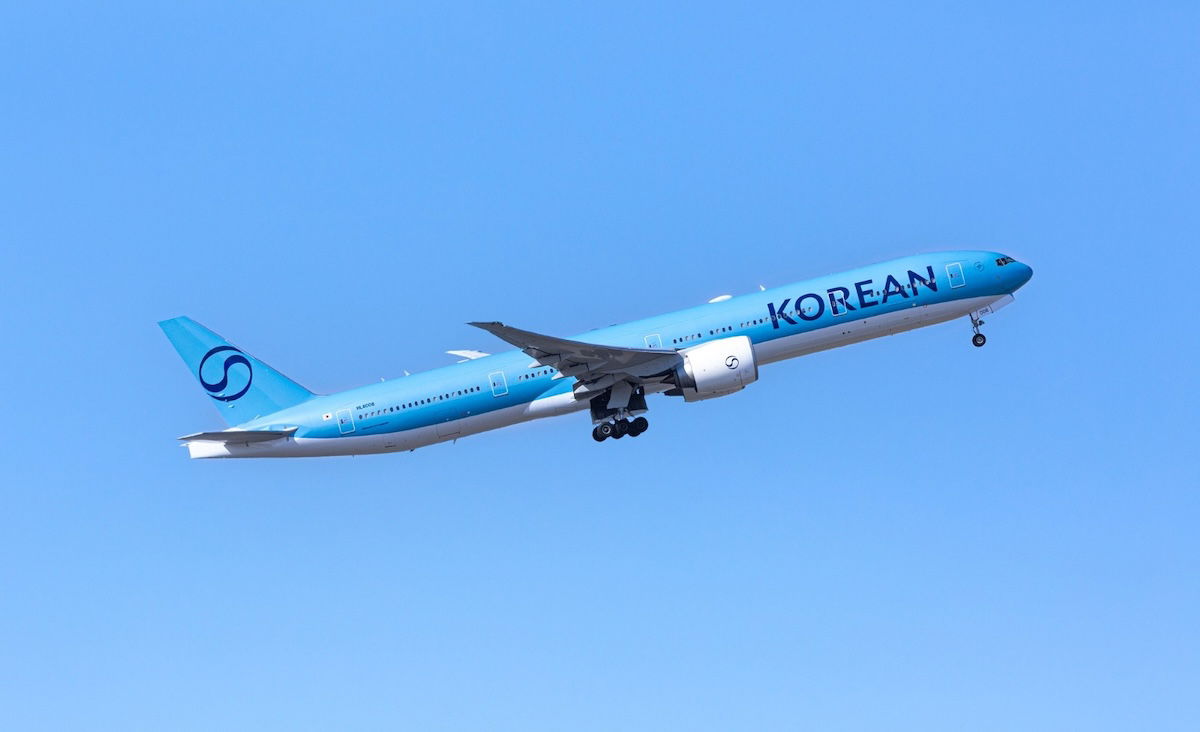
Yet another reminder of how basic that new Korean livery is.
As long as they keep serving bibimbap with the tube of gochujang… color the outside whatever
Would one get Alaska miles if one flies in Alaska code-share from Seoul to Delhi? Would one get one world miles say in American for the same?
There are other similar examples. Qantas codeshares with Air France and KLM on flights to Europe from SE Asia. What matters for crediting flights to an airline is generally the airline code on the ticket. If it's QF or AS on Skyteam metal, then crediting it to any Oneworld airline should be routine.
Even today, you can already get Alaska miles and status points for Korean-operated flights booked through Alaska. So most likely yes to earning with Alaska, and not necessarily for crediting to another oneworld program.
relax, Ben.
It actually benefits DL to show that DL/KE do not dominate the market to the exclusion of AS which is rowing uphill trying to survive on SEA-ICN.
???? elaborate
the DL/JV is already far larger than any of the JVs involving Tokyo.
It is in DL and KE's best interest to demonstrate that it is not using its power to block competitors.
sometimes that involves helping AS w/ beyond ICN flights or KE w/ beyond SEA domestic flights.
The latter actually helps DL because DL and KE have a JV.
Beyond ICN flights don't help DL but it eliminates the perception that DL...
the DL/JV is already far larger than any of the JVs involving Tokyo.
It is in DL and KE's best interest to demonstrate that it is not using its power to block competitors.
sometimes that involves helping AS w/ beyond ICN flights or KE w/ beyond SEA domestic flights.
The latter actually helps DL because DL and KE have a JV.
Beyond ICN flights don't help DL but it eliminates the perception that DL is using its market power to eliminate competition.
Remember that KE is in the process of shutting down OZ which KE acquired.
Your data is inaccurate again. The UA/NH JV is the largest TPAC joint venture.
Please back up your claim with data.
to the core city of each of the JVs, the DL/KE JV is larger than UA/NH to Tokyo.
and it will only grow larger and competitively stronger as OZ is digested.
sorry for you but you truly do need to accept that UA is not even close to #1 in a whole lot of things
Give the data, Tim.
You claim to know what it is. Post the data and source, Tiger.
Delta Korean and Asiana I have far more seats to the United States from Seoul than American, United and their partners have from Tokyo
Too bad you have no critical thinking skills
again.
post the data, tiger.
you claim to have the data.
Post it or STFU
A codeshare agreement is hardly a "partnership." These deals are so very common and really don't mean much at all.
Any link to SkyPesos and how DL has massively devalued its program ?
Call it out every time you can. It’s a disgrace!
Any chance this is a required concession as part of the Asiana/KAL merger? I believe there were requirements that KAL had to continue codeshares with Asiana partners...
I also thought their existing codeshare agreement was required in order for the DL/KE JV to be approved. So this seems blown out of proportion.
Transferring between T1 and T2 is too much hassle. If KE invites AS into T2 and share the lounge, then it will be a big middle finger to DL, but until then, I wouldn't read too much. Maybe as a JV partner, DL would benefit if KE's intra-Asia sells well too.
T2 will be better for connection, but as a Korean myself, I'd like AS to stay in T1. ICN T2 now is a mess since Asiana and its subsidiaries all moved there. Overcrowded, ridiculously long waiting lines for everything including lounges..
On the contrary, ICN T1 can't be better now. It's like a breeze since the largest airline at T1 moved to T2 for the merger.
I did the T2 to T1 transfer at ICN and it's quite a trek. (I was booked on PEK-ICN on Korean connecting to ICN-SEA-SFO on Hawaiian/Alaska.)
Korean Air did consider joining Oneworld before joining Skyteam as a founding member. They've been very close with JL for decades(almost from their birth), and KAL currently have codeshares with some Oneworld carriers such as JL, AA, AS, MH.
and yet KE is a founding member of SkyTeam.
again, codeshares outside of alliances are fairly normal in the industry.
Yeah, there's zero possibility that KE will leave Skyteam, and it's common to have codeshares outside of alliances. It's just not surprising.
I'm afraid this is just another example of the strategic alliances slowly falling apart. Sure, for DL Skyteam never was very important. But you see the same with GOL in Brazil, partnering with AF/KL (Skyteam) and Aviance (Star) to compete against DL (Skyteam) and Latam (ex Oneworld, still strategic partner for BA/IB). The world is a mess ... also in airline industry.
It's Joe Biden's fault.
No, it's Jill Biden's fault. Joe wasn't coherent enough to be responsible.
But, but… he was having a stroke!
*ignores Trump’s gangrene hand*
Delta is losing it. They have lost their premium status. The Koreans have had enough. When will Delta wake up? Three big losses in a few weeks - a subpar internet provider, a messed up first class seat program, and now getting punched by Alaska.
The big winners are Southwest and United. Delta better get used to their prize medal.
I'd be so thrilled if this would be a prelude to ICN-PDX where AS connectivity could help Portland regain transpac service.
Although this wouldn't be consistent with DL's normal line of thinking, there's an argument to be made for lose the battle to win the war - i.e. this can then be held up as evidence that DL doesn't *really* control its partners, that they aren't stifling competition, etc etc etc.