

Emirates is currently undergoing an aggressive retrofit project for the interiors of its aircraft, to introduce a new product standard, and also to roll out premium economy. Along those lines, the airline is now reconfiguring the highest capacity aircraft that it flies. With this, we’ll no longer see any commercial aircraft with over 600 seats.
Emirates’ densest A380s go from 615 to 569 seats
Emirates has a fleet of well over 100 Airbus A380s. While a vast majority of those feature first class, there are also 15 of these planes that historically haven’t had a first class cabin, intended primarily for short and medium haul flights with less premium demand.
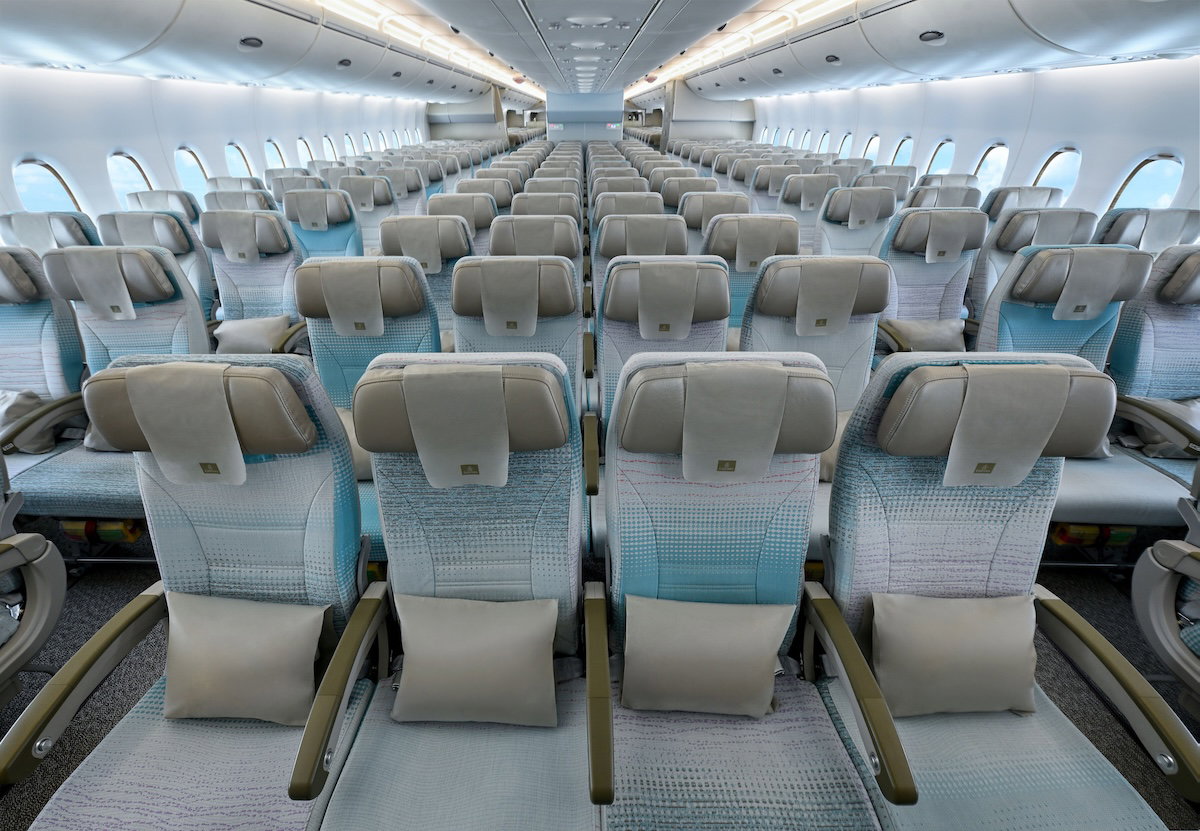
These are the world’s highest capacity aircraft, as they boast 615 seats, including 58 business class seats and 557 economy class seats. Emirates is in the process of rolling out premium economy throughout its A380 fleet, and as part of that project, the cabin is also coming to the carrier’s high density A380s.
Emirates is now showing off how its first A380 without first class has just been reconfigured, and has already entered service (the plane has the registration code A6-EUX). We can expect the remaining A380s to be reconfigured in the coming months.
With this, we’ll see overall capacity of these A380s reduced by around 8%, from 615 seats to 569 seats, as follows:
- Business class will be increased in size by 18 seats, from 58 to 76 seats
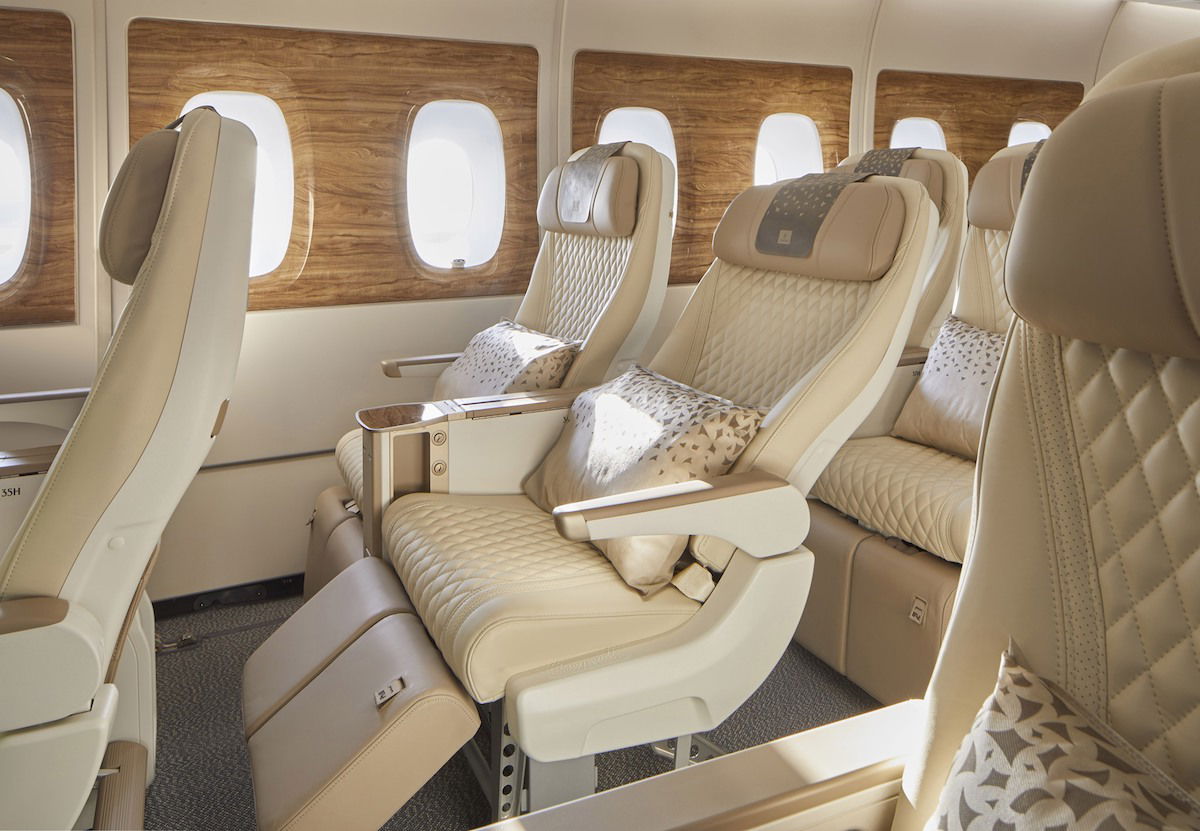
- Premium economy will be introduced, with 56 seats
- Economy will be reduced in size by 120 seats, from 557 to 437 seats
Bigger picture, it’s interesting to look at how exactly the cabin layout is changing. For context, here’s the seat map for Emirates’ old high density A380, and here’s the seat map for Emirates’ new high density A380. In the old configuration, business class is at the back of the upper deck, while the front of the upper deck has 120 economy seats, and the lower deck has 437 economy seats.
With these changes, the business class cabin will be increased in size to 76 seats, the same number of business class seats you’ll find on all of Emirates’ A380s with first class. So that means the entire Emirates A380 fleet will have 76 business class seats, all located in the middle and back of the upper deck, with the bar and lounge area in the very back.
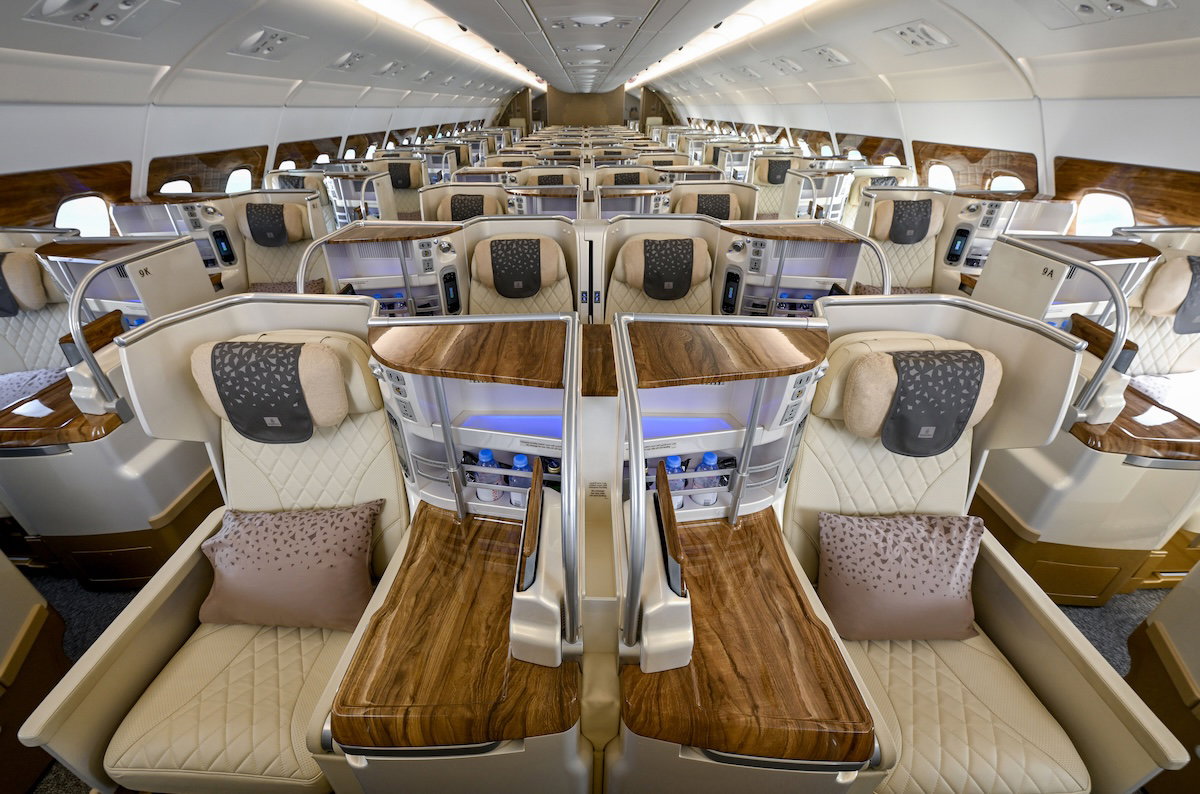
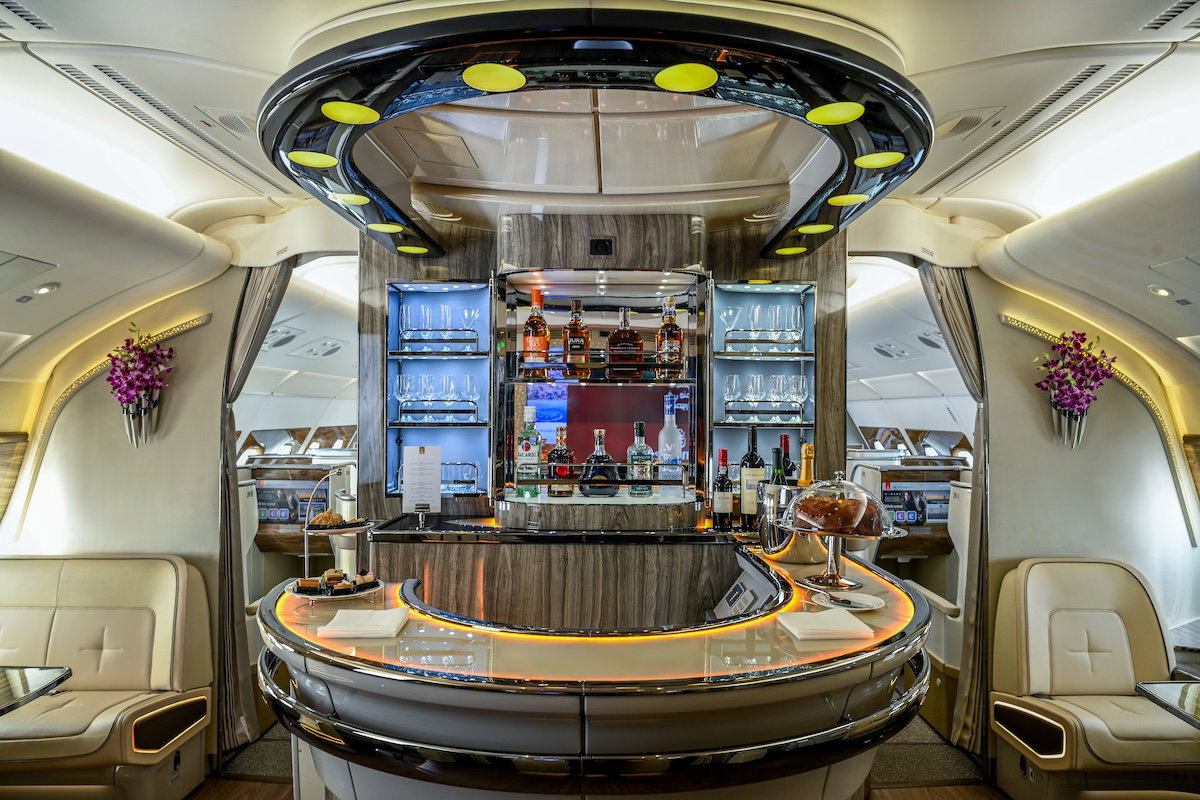
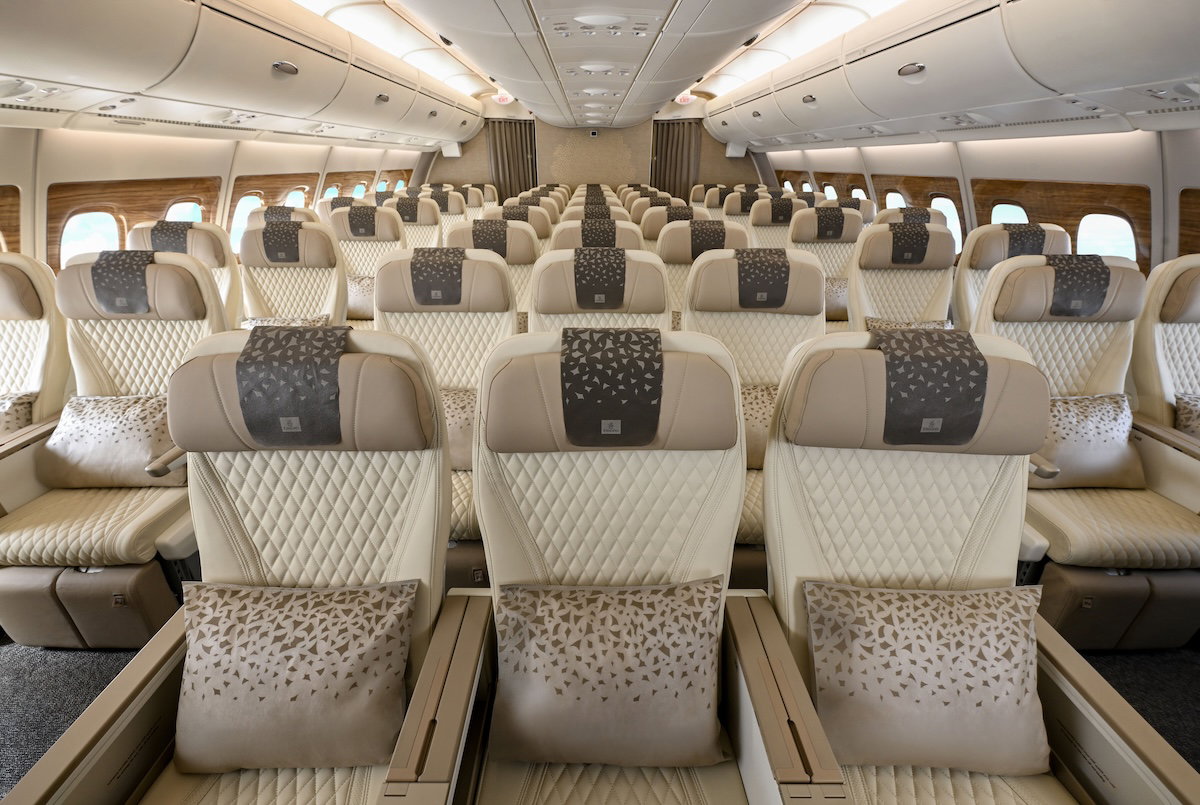
Then premium economy will be in the space of where the first class cabin typically is, meaning that there will be 56 premium economy seats in lieu of 14 first class seats. That means the upper deck will be entirely dedicated to premium seating throughout the Emirates A380 fleet.
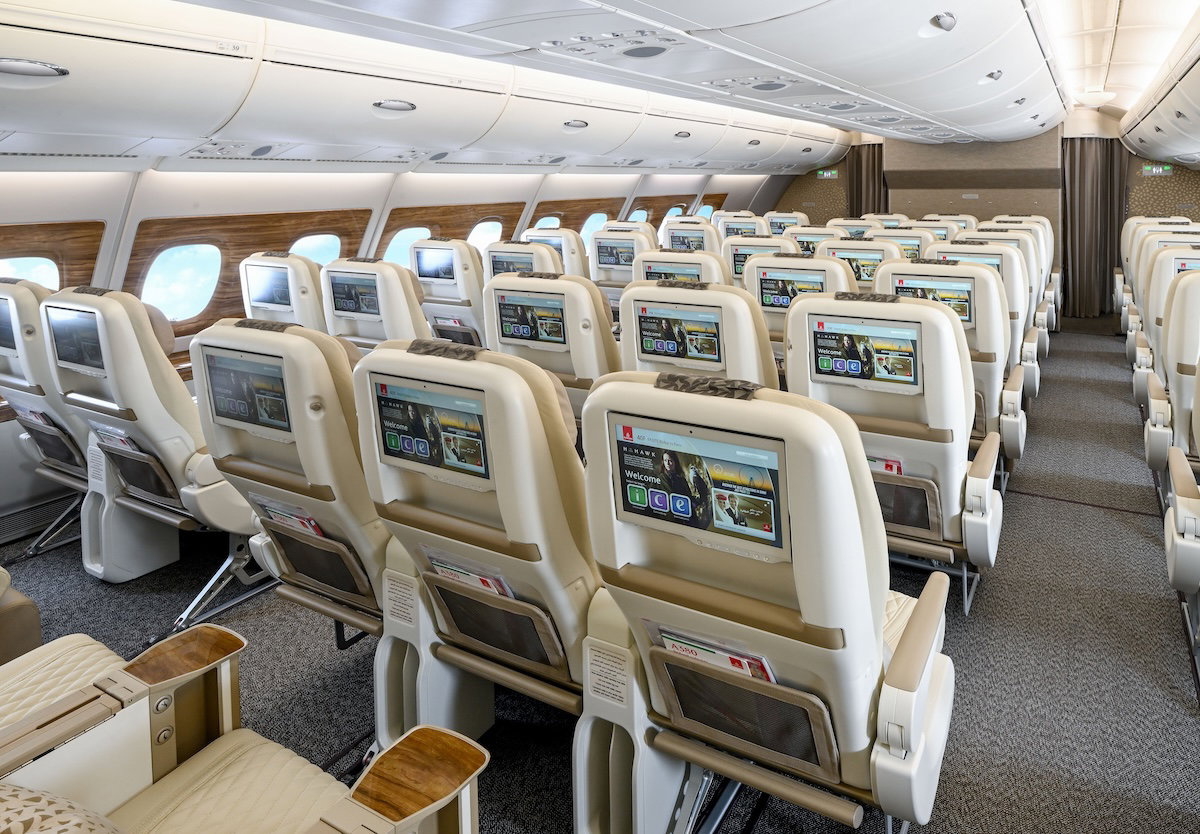
Then the lower deck will have 437 economy seats, so there’s no change there.
This seems like a sensible A380 retrofit project
It’s not surprising to see Emirates reconfiguring its high density Airbus A380s. After all, the idea is that these A380s fly in markets where there might not be much first class demand, but there is still potentially a fair bit of business class and premium economy demand.
We have seen an increase in premium travel demand globally over the years, so it’s logical that after many years in service, the airline would rethink the layout of these planes. And if you’re going to introduce premium economy on the upper deck, then you might as well also streamline things, in terms of having the upper deck entirely dedicated to business class and premium economy.
Emirates’ premium economy is great in general, but should be especially nice on these A380s, given the location at the front of the upper deck, plus the 2-3-2 layout. On the four-cabin A380s, premium economy is at the front of the lower deck, and is in a 2-4-2 layout.
Bottom line
Emirates plans to reconfigure the cabins of its high density Airbus A380s, which currently feature 615 seats. These planes will see business class capacity increase by 18 seats, the introduction of a new 56-seat premium economy cabin, and economy capacity reduced by 120 seats.
It’s logical for Emirates to roll out premium economy on these planes, and in the process, rethink the layout to reflect how travel demand has evolved.
What do you make of Emirates’ high density A380 retrofit project?




Boo, hiss, once again the cattle in steerage class get shafted in favor of moneybags premium players.
That upstairs economy cabin - for which they have started to charge a higher assignment fee since I last flew on the whale - was very pleasant with fewer pax per row, its own galley and a better FA ratio than down in the basement.
We get those on the midday BHX rotations from DXB and...
Boo, hiss, once again the cattle in steerage class get shafted in favor of moneybags premium players.
That upstairs economy cabin - for which they have started to charge a higher assignment fee since I last flew on the whale - was very pleasant with fewer pax per row, its own galley and a better FA ratio than down in the basement.
We get those on the midday BHX rotations from DXB and I guess those who can afford it will welcome the PE availability.
I was booked in upstairs on the final return segment of a planned long haul trip which I had to cancel after Trump started yet another unnecessary US war. “It’ll last two weeks.” Sure it did. And only ‘advisers’ would ever go to Vietnam…..
As the old saying goes, "you get what you pay for".
By the looks of it, the reconfigured plane has basically shuttled to and from BHX for the last week. I can't imagine that route will ever go back to a 2-class A380, especially while they're only running one plane a day (not that the removal of the 777 is a loss in either cabin).
BHX is an odd market. They have an Emirates branded lounge right next to the A380 gate that they use...
By the looks of it, the reconfigured plane has basically shuttled to and from BHX for the last week. I can't imagine that route will ever go back to a 2-class A380, especially while they're only running one plane a day (not that the removal of the 777 is a loss in either cabin).
BHX is an odd market. They have an Emirates branded lounge right next to the A380 gate that they use but it's clearly never been a premium market as most premium demand has gone either to MAN or LHR from the surrounding area
EK’s latest schedule shows the evening 777 rotation is coming back from 1 July. Showing only two classes - economy and business for both A380 and 777.
A380 has a maximum certified capacity of 853 passengers in an all-economy configuration. And yet, Operation Solomon in 1991 has the official record... 1,088-1,122 on an El Al 747-200 (usually 400 seats, but all seats were removed). If you stripped an a380 down and packed it, probably could fit 2,500-3000 people... if most of them stayed on the lower level... (structural engineers, please correct me on floor load limits if you wish.)
Also, applying an Operation Solomon packing style to a C-5 yields a theoretical maximum capacity of roughly 1,500 to 1,800 people... but it will be hot and at lower altitudes... (military folks, correct me.)
C17 probably hit it's maximum during the evacuation of Afghanistan, with 820 odd people. I suspect it's a bit lower than your figures - probably around 1,200 - for the C5 - unless they manage to build a second deck utilising the extra height.
I've flown this aircraft in the cosy little upper deck economy cabin and it was awesome. Shame that its going away!
Theya dded a restroom? In this economy?
Sh*t don't quit!
Funny!
It seems that Premium Economy passengers will have access to the First class sized restrooms. There significantly larger than for Business class passengers