
Since President Trump took office in January 2025, we’ve known that he planned to introduce a new travel ban, targeting citizens of certain countries. Well, those details have just been announced, and we’re seeing new restrictions for travelers from 19 countries.
Trump’s new travel ban kicks in June 9, 2025
When he took office on January 20, 2025, Trump issued Executive Order 14161, titled “Protecting the United States from Foreign Terrorists and Other National Security and Public Safety Threats.” Over the past several months, national security agencies have been “engaged in a robust assessment of the risk that countries posed to the United States, including regarding terrorism and national security.”
With that in mind, we’re finally seeing new restrictions based on this. As of June 9, 2025, the United States will fully restrict and limit the entry of nationals from 12 countries, “found to be deficient with regards to screening and vetting, and determined to pose a very high risk to the United States.” These countries include the following:
- Afghanistan
- Burma
- Chad
- Republic of the Congo
- Equatorial Guinea
- Eritrea
- Haiti
- Iran
- Libya
- Somalia
- Sudan
- Yemen
Furthermore, the United States will partially restrict and limit the entry (for B-1, B-2, B-1/B-2, F, M, and J visas) of nationals from seven countries that “pose a high level of risk,” including the following:
- Burundi
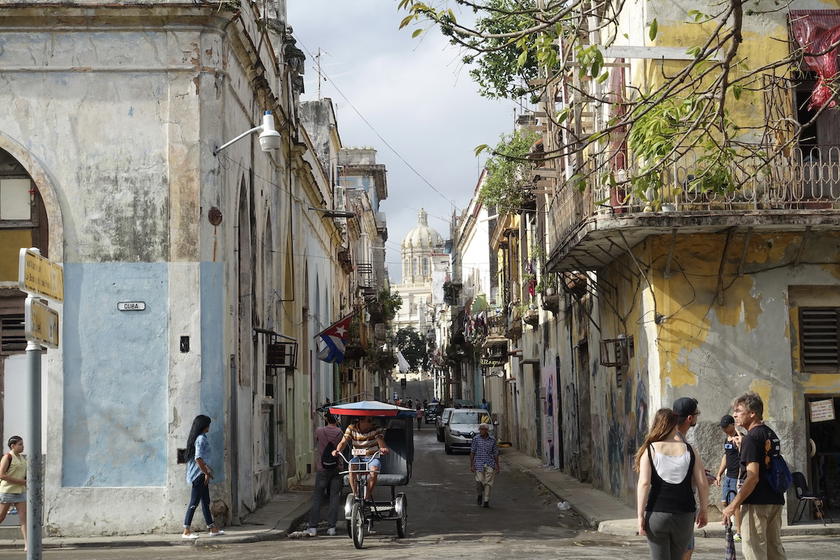
- Cuba
- Laos
- Sierra Leone
- Togo
- Turkmenistan
- Venezuela
This proclamation includes exceptions for lawful permanent residents, existing visa holders, certain visa categories, and individuals whose entry serves national interests.

How Trump justifies new travel restrictions
In 2017, we saw Trump impose his first travel ban, an executive order titled “Protecting the Nation from Foreign Terrorist Entry into the United States.” This included banning travel for people from seven Muslim-majority countries, including Iran, Iraq, Libya, Somalia, Sudan, Syria, and Yemen.
As you can see, the new ban list is significantly bigger, and doesn’t just include Muslim countries. However, as the countries under consideration were described some time back, they’re “generally Muslim-majority or otherwise nonwhite, poor and have governments that are considered weak or corrupt.” In total, hundreds of millions of people are from the countries that are on this ban list (though admittedly most people from those countries probably don’t have plans to travel to the United States in the coming years).
The White House provides an explanation for why each country is on the list. For example, here’s the explanation for Afghanistan:
The Taliban, a Specially Designated Global Terrorist (SDGT) group, controls Afghanistan. Afghanistan lacks a competent or cooperative central authority for issuing passports or civil documents and it does not have appropriate screening and vetting measures. According to the Fiscal Year 2023 Department of Homeland Security (DHS) Entry/Exit Overstay Report (“Overstay Report”), Afghanistan had a business/tourist (B1/B2) visa overstay rate of 9.70 percent and a student (F), vocational (M), and exchange visitor (J) visa overstay rate of 29.30 percent.
And here’s the explanation for the Republic of the Congo:
According to the Overstay Report, the Republic of the Congo had a B1/B2 visa overstay rate of 29.63 percent and an F, M, and J visa overstay rate of 35.14 percent.
Interestingly, when Trump announced the new travel ban, he specifically referenced the recent terror attack in Boulder, which was carried out by an Egyptian. So I find it curious that Egypt isn’t impacted by these new restrictions in any form…
Bottom line
President Trump has just announced the details of a new travel ban. It impacts travelers from 19 countries, with those from 12 countries being almost entirely banned from visiting the United States, and those from seven countries having new restrictions. We knew this was coming, and it’s one of the biggest travel bans that we’ve ever seen in the country…


Membership is free and takes no more information than commenting as a guest. Earn status points for good contributions, and see fewer ads as your status grows.