
The Federal Aviation Administration (FAA) is investigating a close call that happened at Phoenix Sky Harbor International Airport (PHX) on Saturday, January 11, 2025. This is a case where automation prevented a potential disaster.
TCAS saves the day for jets on approach to Phoenix
This incident happened around 11AM this past Saturday, while two aircraft were on approach to Phoenix:
- Delta flight DL1070 was coming from Detroit (DTW), and was operated by a 17-year-old Airbus A330-300 with the registration code N820NW; it had 245 people onboard
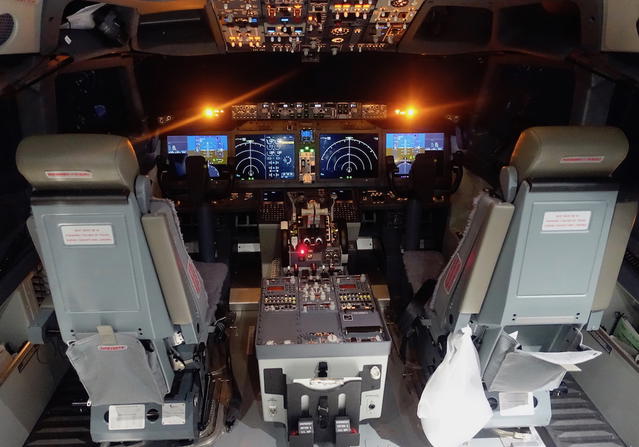
- United flight UA1724 was coming from San Francisco (SFO), and was operated by a nine-year-old Boeing 737-900ER with the registration code N68891; it had 123 people onboard
Phoenix Airport has three parallel runways. There are runways 7L and 7R, and then there’s runway 8.
Runway numbering is supposed to reflect the heading of a runway (just add a zero to the end), so runway 7 is supposed to be at a heading of 70 degrees, while runway 8 is supposed to be at a heading of 80 degrees. However, in the case of Phoenix, all three runways are parallel (I’m not sure why they don’t use 7L, 7C, and 7R instead, but that’s a tangent).
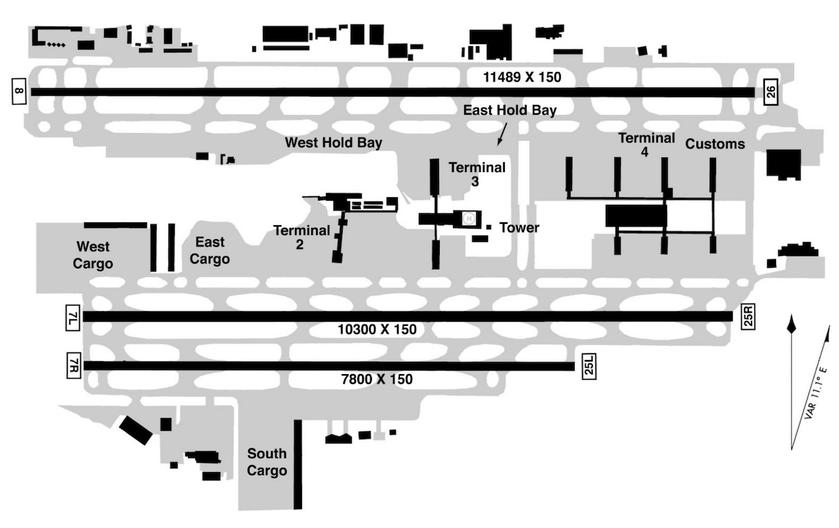
The United 737 was coming straight in to land on runway 7R. Meanwhile the Delta A330 was on a base leg for runway 8. This essentially means it was flying at a 90 degree angle to the runway, so it needed to make a left turn, to get on the runway heading for the final approach.
The air traffic control frequency was really busy, and the United 737 that was on a straight approach and the Delta A330 that was being vectored for the approach got uncomfortably close.
They got so close that both aircraft got a TCAS warning. TCAS stands for “Traffic Alert and Collision Avoidance System,” and it’s an aircraft system designed to avoid mid-air collisions. So that’s what alerted the crews of both jets to just close they were, because the air traffic controller didn’t otherwise pick up on it until after that happened.
Estimates suggest that the planes were within roughly 500 feet of one another vertically, and within roughly 1,200 feet of one another horizontally, which is way too close for comfort for aircraft of this size. Both planes ended up being resequenced, and landed several minutes later without incident.
VASAviation has an excellent recreation of the incident, including the air traffic control audio, plus a visualization of the location of the aircraft. It’s absolutely worth a watch, as it gives you a good sense of how this all went down.
What can we take away from this incident?
You’ve gotta give credit to TCAS for being awesome. It’s always impressive how many checks are in place to ensure that aviation is safe, and ultimately us humans just can’t compete with automation when it comes to catching every possible catastrophe.
Next, I’m impressed that all parties remained calm and professional throughout this incident. The pilots of both flights, plus the air traffic controller, maintained good communication throughout, and ultimately averted a potential disaster.
That being said, obviously the air traffic controller put these pilots in an unfortunate situation. We’ll see what an investigation determines to be the root cause, though as I see it, two things stand out:
- It’s risky to have a plane flying a straight-in approach, and then having a plane on a base leg, and turning at the same time as that other plane, while on a parallel approach; that greatly limits potential separation, especially since not all planes turn equally quickly
- It seems the air traffic controller couldn’t instruct the Delta pilots to turn for final soon enough, due to the lengthy communication between the controller and the UPS jet; when she finally gave the instructions for the Delta plane to make a turn, you could hear that she was speaking with urgency, and wanted them to do it ASAP (though she didn’t explicitly express that)
The pilots did everything correctly here, and obviously the controller put the pilots in a situation where the TCAS was activated. She was obviously overworked and had a lot of planes to juggle on the frequency. Not that this is an excuse, but it contributes to there being human error…
Bottom line
A Delta Airbus A330 and United Boeing 737 got uncomfortably close while on approach to Phoenix Airport. The planes were supposed to land on parallel runways, with one plane flying straight in, and the other on a base leg (90 degrees from the runway heading). Unfortunately due to how busy it was on the frequency, the plane only ended up being turned very late, triggering a TCAS alert.
Fortunately a crisis was averted here, though you still don’t want big jets this close to one another.
What do you make of this close call at Phoenix Airport?


Membership is free and takes no more information than commenting as a guest. Earn status points for good contributions, and see fewer ads as your status grows.