
The Delta 2024 Investor Day is taking place today, and as usual, executives at the airline shared some details about the direction the carrier is headed. There was one statistic that’s particularly interesting, which should really make consumers think twice before being loyal to an airline.
Delta selling a vast majority of domestic first class seats
As flagged by View from the Wing, Delta executives have today highlighted just how much progress the airline has made when it comes to selling premium seats. Specifically, nowadays just 12% of Delta’s first class seats are going to passengers getting upgrades.
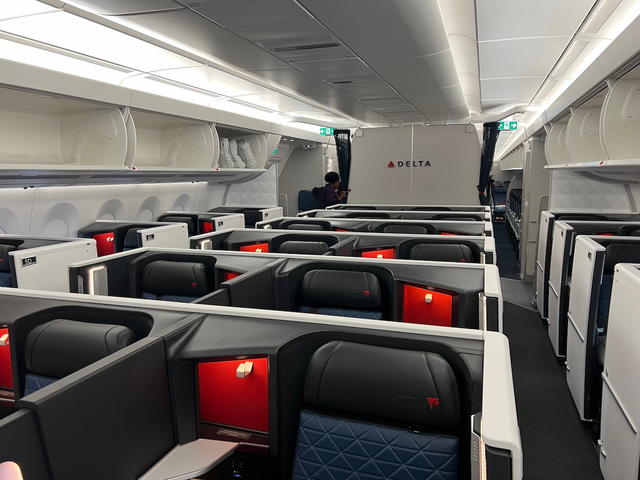
It’s absolutely wild to think how that number has changed over the years. Going back to 2011, Delta only sold 14% of its first class seats. So in 13 years, we’ve seen a more than six-fold increase in the percentage of first class seats sold.
It’s clear in which direction things are headed, as complimentary first class upgrades are increasingly becoming a thing of the past. First class domestically has gone from a cabin that loses money, to one that’s incredibly profitable.
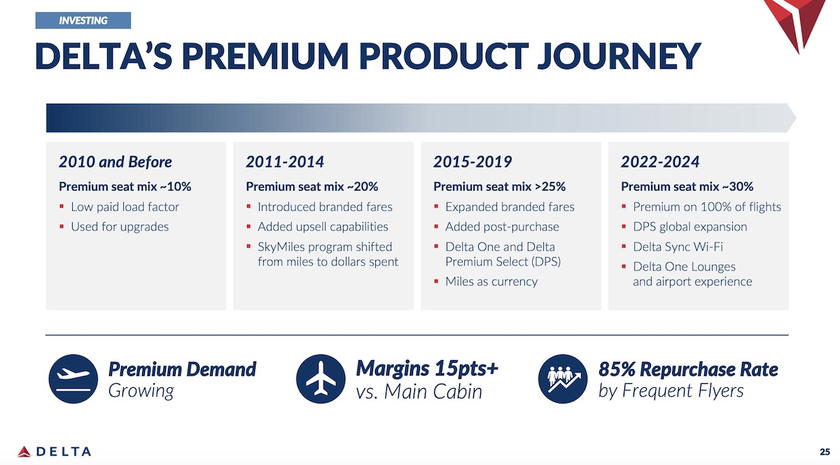
It’s also worth emphasizing how quickly this is changing. Just over a year ago, Delta executives claimed that around 74% of first class seats were being sold, so that increase is continuing, and it sure feels like Delta won’t stop until that number is close to 100%.
Presumably the statistics about the number of first class seats being sold includes cash upgrades, mileage tickets, etc., with just complimentary elite upgrades contributing to that 12%.
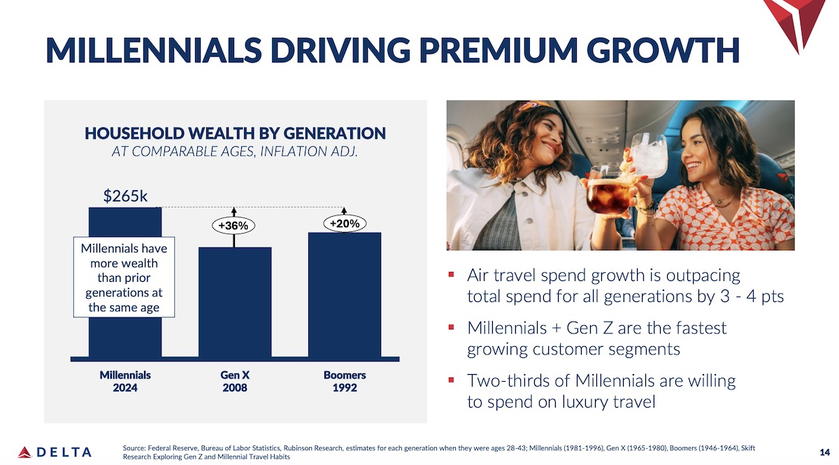
Delta attributes a lot of the premium growth to millennials, who have more wealth than prior generations at the same age, and are also willing to splurge more on luxury travel.
Will SkyMiles members be more loyal while receiving less?
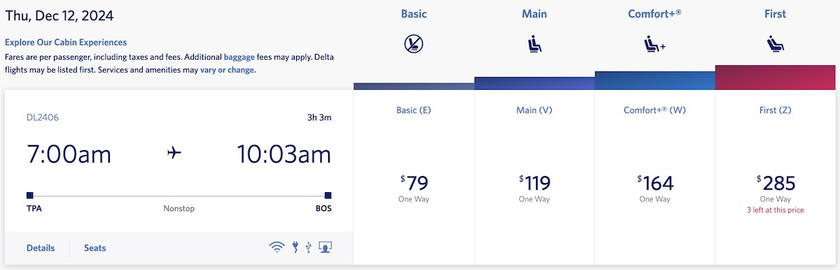
I don’t think anyone faults airlines for trying to sell as many first class seats as possible. That’s only logical. I also think Delta in particular does the best job of any US airline when it comes to pricing its first class reasonably, in a way where a leisure traveler could find it to be worthwhile.
Just take the below flight from Tampa to Boston as an example, and you’ll see the reasonable fare premium for each product “upgrade.”
But here’s the challenge, as I see it. In the United States, airlines make a large percentage of their profits from their loyalty programs, and in particular, from their co-brand credit card agreements. Airlines want their loyalty program members to not just be loyal when they book a flight, but also when they pull out their credit card, book a hotel, etc.
Airlines only seem to see upside in this area, and Delta hopes to increase its revenue from Amex by around 50% in the coming years.
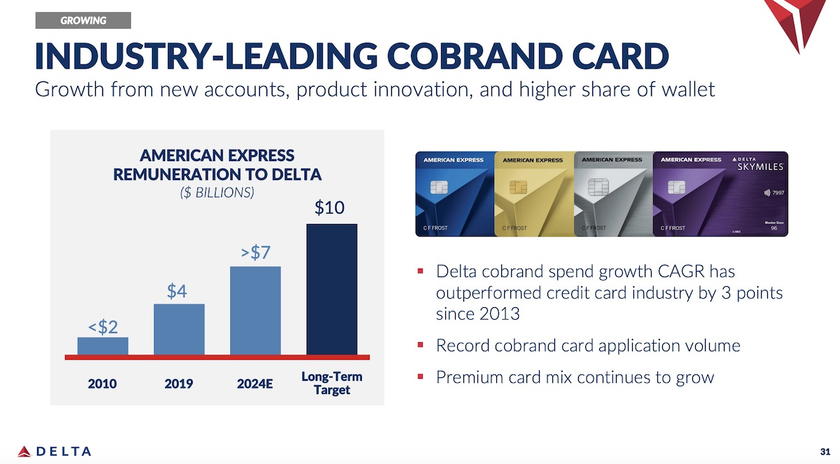
If you ask me, those goals are kind of at odds with one another. The airline wants more people to pay for first class — which is totally fair — but also wants more people to be loyal to the airline, when one of the primary perks of elite status is complimentary upgrades.
We’ve seen Delta continue to increase elite requirements, arguing that there’s just such high demand for the carrier’s premium services. But at some point that just becomes pointless, when almost no seats are being “given away” to upgrades.
How does Delta justify this, and think the airline will keep increasing wallet share, while offering less? Well, Delta views SkyMiles as “a manifestation of [the] brand.” In other words, you won’t be loyal to SkyMiles because it offers the most value, but rather because you like Delta as a brand, and therefore you’ll want the company’s credit card.
Is there a certain point at which consumers will stop showing more loyalty to companies while continuing to receive less? Will people vote with their wallet, and look at the overall value proposition of what they’re receiving?
Call me a cynic, but I think Delta management is probably right, and the answer is “no.” The reality is that most consumers aren’t particularly savvy, and aren’t doing much to maximize their rewards. They spend on a credit card that’s connected to an airline or hotel group that they travel with a lot or like, without crunching the numbers and considering if they’re actually getting the best value.
A vast majority of consumers would be best off as “free agents,” not being loyal to any airline, and instead flying the airline with the best value and schedule. They’d also either use a lucrative cash back card, or a card earning transferable points, rather than investing in a program to earn status, only to be disappointed when they don’t get upgraded. But that doesn’t seem to be how most consumers approach things.
Bottom line
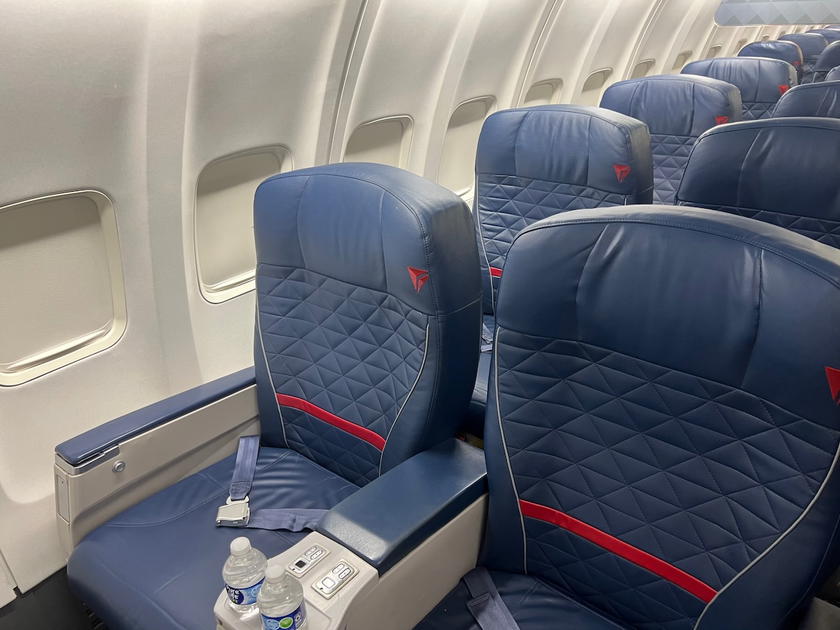
Delta is reportedly selling 88% of its first class seats. That’s not surprising, and is roughly what I would have expected. Airlines have gotten much better at monetizing premium cabins, so we’re a long ways off from just over a decade ago, when a vast majority of first class seats went to upgraders.
What’s even more interesting is that the percentage of first class seats being paid for continues to increase by the year, as last year we were told that 74% of first class seats were being sold.
There’s nothing wrong with Delta (or any other airline) selling most of its first class seats. The issue is only that airlines expect their loyalty revenue to continue to increase considerably, while offering members less and less.
What’s your take on the number of first class seats Delta is selling, and what it means for SkyMiles?


Membership is free and takes no more information than commenting as a guest. Earn status points for good contributions, and see fewer ads as your status grows.