
In the near future, American Airlines passengers may notice a subtle change to when crews prepare the cabin for landing, and it has some implications for passengers, as flagged by PYOK.
American updates cabin landing preparation policy
As is standard on virtually every airline, flight attendants prepare the cabin for landing at some point prior to arrival. This includes suspending inflight service, having passengers store their belongings (including laptops), and asking passengers to put their seats and tray tables in the upright position.
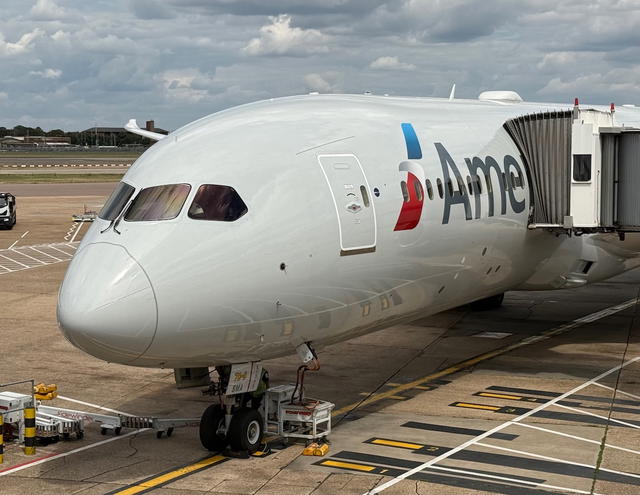
The Association of Professional Flight Attendants (APFA), which represents American’s flight attendants, has just informed members of a policy update that’s coming soon.
With the new policy, flight attendants will prepare the cabin for landing at an altitude of 18,000 feet, and will then be seated in their jumpseats as soon as possible, well before the plane descends through 10,000 feet. So with the updated procedure, when you hear the double chime (at 10,000 feet), all flight attendants should already be in their jumpseats.
Previously, American flight attendants made final cabin preparations as the plane passed through 10,000 feet. So with these updates, that procedure will start 8,000 feet higher. While it will vary depending on a flight’s descent profile, you can expect that this will typically translate to the cabin being prepared for landing roughly four to eight minutes earlier than before.
As you probably guessed, this means that passengers will have less time to use their laptops, and crews will also have less time to perform service. This shouldn’t impact service on longer flights, though on very short flights with a drink service, this could limit the crew’s ability to perform a full service.
Why American is changing its cabin preparation policy
Why are we seeing this policy change at American? Well, here’s how the union describes the change:
“Turbulence remains one of the leading causes of occupational injuries for flight attendants. Unlike passengers, flight attendants are frequently standing, walking, conducting service, or completing compliance duties when turbulence occurs. The revised procedures are intended to provide additional time to prepare the cabin, improve communication regarding anticipated conditions, and reduce the time flight attendants are exposed to turbulence while performing required duties during descent.”
Interestingly, Southwest introduced a similar policy change a couple of years back. At the time, the airline claimed that the policy change reflected years of research, plus reports through the carrier’s safety management system.
Based on thousands of data points from flight attendants and pilots, paired with information from the flight data analysis program, the belief was that this policy change would reduce flight attendant injuries by at least 20%.
While turbulence can happen at any altitude, there’s of course a greater risk at a lower altitude, when it’s more common to encounter turbulence, and to fly through thick clouds. Reducing injuries is of course a logical and fair objective.
I’d be curious to know what the total number of injuries among flight attendants during the descent phase is, and how many of those are considered serious. Yes, stuff happens, but in the case of Southwest, we’re talking about 20% of what number?
Bottom line
American Airlines crews will shortly start preparing cabins for landing at 18,000 feet, rather than at 10,000 feet. The idea is that by the time the plane gets to 10,000 feet, crews are already strapped into their jumpseats. This is intended to reduce injuries among flight attendants, given the increased risk of turbulence at low altitudes. This is fairly minor, but passengers may still notice this policy change, as it will impact seat recline, laptop use, etc.
What do you make of American changing its cabin landing procedures?


Membership is free and takes no more information than commenting as a guest. Earn status points for good contributions, and see fewer ads as your status grows.