
Last week, the preliminary report was released about the tragedy of Air India flight AI171, a Boeing 787-8 that crashed shortly after takeoff from Ahmedabad, killing 260 people. The cause of the accident was that the fuel control switches were turned off just seconds after takeoff, one after the other, putting the plane into a situation it couldn’t recover from.
While the preliminary report contained a lot of details, there were also a lot of things that were left open-ended. Along those lines, The Wall Street Journal has some more details into the current investigation focus, which points to a chilling (but perhaps not surprising) explanation…

Did Air India Boeing 787 captain intentionally down jet?
On the tragic Air India Boeing 787 flight that crashed, the first officer was the pilot flying, and the captain was the pilot monitoring. Based on the preliminary report, we knew that one of the pilots asked the other pilot why he turned off the fuel control switches, and he responded that he didn’t.
In the report, no additional details about that interaction were revealed. However, WSJ sources shed some more light on that situation:
- It was the first officer who asked the captain why he turned off the fuel control switches
- Once this happened, the first officer expressed surprise and then panicked, while the captain remained calm
- The investigation further reveals that it was the captain who is believed to have turned off the fuel control switches, since the pilot flying (the first officer) would’ve had his hands full, while the pilot monitoring (the captain) would’ve had his hands free
Obviously it’ll take some time (likely a year or more) before the final report is released. However, with no signs of anything abnormal leading up to the moment where the fuel control switches were turned off, it certainly suggests this was a deliberate act.
The timing here is also quite something. If the fuel control switches had been turned off seconds earlier, while the plane was still on the ground, this catastrophe could’ve been avoided. Meanwhile if the fuel control switches had been turned off some time later, a recovery and engine restart may have been possible.
The engines were cut off quite literally at the one point in the flight where there’s zero chance of recovery. The fact that the captain had free hands, was accused of turning off the switches, and then calmly denied turning off the switches, certainly points to a likely explanation. The fact that the switches were turned off one second apart is consistent with a human doing it (since that’s roughly how long it takes), rather than some dual malfunction.
Obviously the thought of an experienced airline pilot intentionally taking down a plane is a horrifying prospect. It wouldn’t be the first time, though.
Who was the captain of Air India flight AI171?
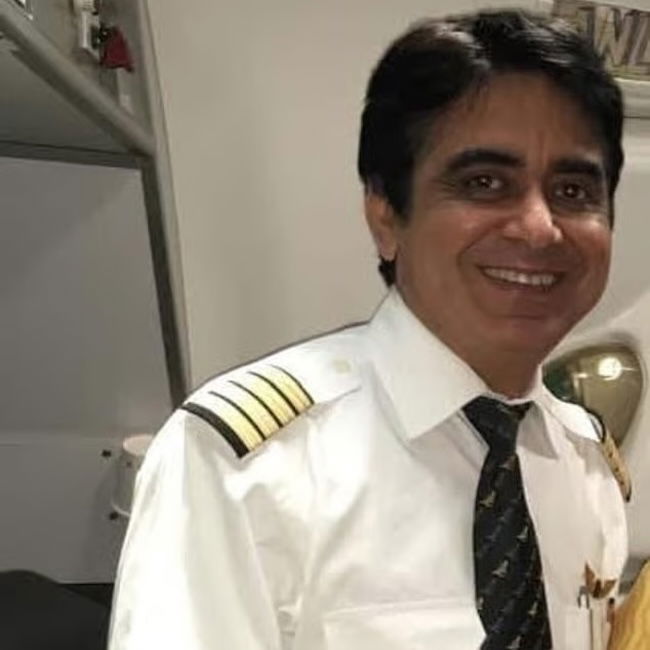
56-year-old Sumeet Sabharwal was the captain of the doomed Air India Dreamliner, and he had over 15,000 flight hours. Sabharwal joined Air India in 1994, and was described as a soft-spoken man devoted to caring for his ailing father. His father had inspired his aviation career, as he worked in India’s civil aviation ministry.
In 2022, Sabharwal had taken leave following the death of his mother. Some sources suggest he had recently been considering retiring, in order to spend more time with his father. Other sources (not the WSJ) suggest he may have been struggling with depression and mental health in recent years.
Going back decades, Sabharwal started his flying career in the early 1990s, attending the Indira Gandhi Rashtriya Uran Akademi flight school, run by India’s civil aviation ministry. A classmate of Sabharwal said that he stood out at his school, as he was very polite, never cursed, never drank alcohol, and spoke so softly that he sometimes had to be asked to speak louder. His classmate claims “he was a very reserved guy right from the beginning.”
He was incredibly passionate about flying, and liked mentoring younger students. Some students who shadowed him claimed that he explained flying concepts better than some instructors.
This specific incident aside, it’s clear that the industry has a major problem when it comes to pilots with mental health concerns, and getting those treated. Essentially, if pilots acknowledge that they’re suffering from depression or other mental health issues, they could be grounded, and have their licenses revoked. So it creates a culture where pilots are better off not addressing those issues, and instead, trying to sweep them under the rug.
Bottom line
The investigation into the crash of AI171 is specifically centering around the 56-year-old captain (who was the pilot monitoring). Just seconds after takeoff, the first officer (who was the pilot flying) asked him why he turned off the fuel control switches, and he denied it. While the first officer panicked, the captain reportedly remained calmed, even as the plane sunk toward the ground.
It’s going to be interesting to see how this investigation continues to unfold, as (potential) intentional acts by pilots tend to ruffle some feathers with regulators, and sometimes cause the outcome to be skewed a bit.
What do you make of the investigation focusing on the Air India Dreamliner captain?


Membership is free and takes no more information than commenting as a guest. Earn status points for good contributions, and see fewer ads as your status grows.