

Nut allergies are a serious concern for many people, particularly when they travel by air, given that they’re in an enclosed space for extended periods of time. While many airlines offer to take some precautions to help these passengers, I’ve never seen something like this before. I’m curious if anyone knows the backstory, or if this is just more common, and I’m not familiar with it…
In this post:
Philippine Airlines has designated nut allergy seats
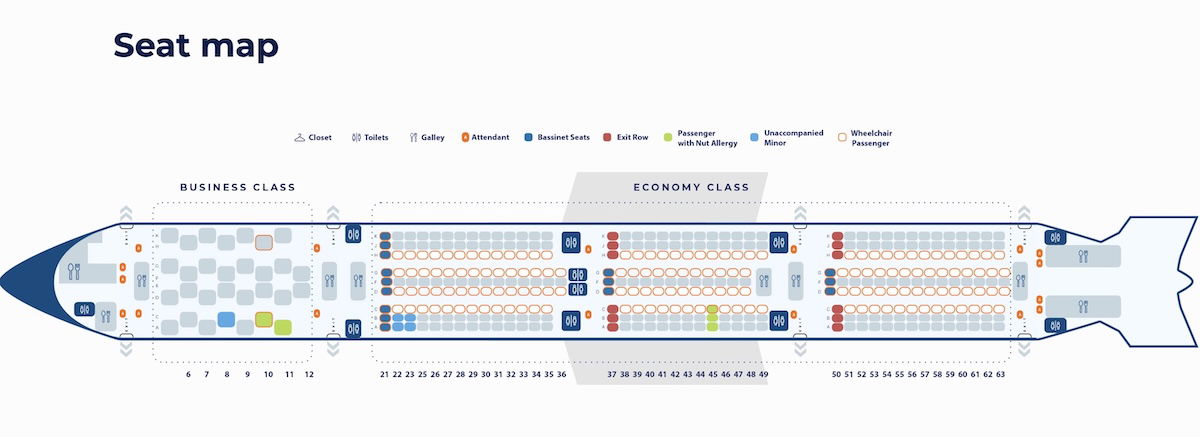
While randomly reviewing Philippine Airlines’ seat maps (as one does), I noticed something that I don’t think I’ve ever seen before. The carrier’s seat maps have special seats marked in green, which are supposedly for passengers with nut allergies, per the key.
For example, on the Airbus A350-900, this includes a random center aisle seat in business class, a random aisle seat in premium economy, and a row of seats on the left side at the back of the forward economy cabin.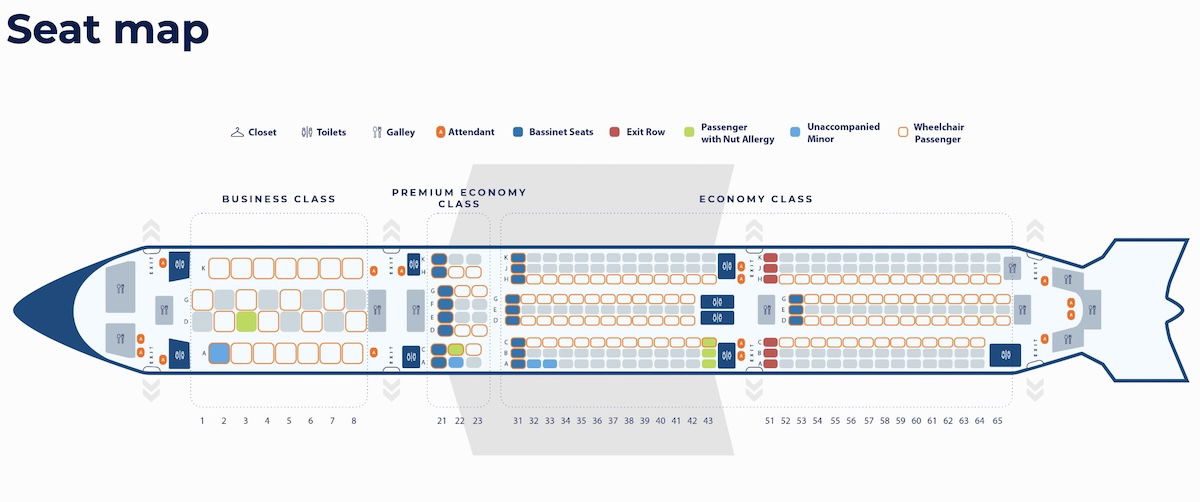
Meanwhile on the Boeing 777-300ER, it includes the last two seats on the left side in the back of business class, and a row of seats on the left side in the center of the economy cabin.
What makes these nut allergy seats special, though?
As I understand it, airlines will often try to make basic accommodations for passengers with nut allergies, like potentially announcing the allergy to other passengers, allowing passengers with nut allergies to pre-board so they can wipe down their seat, etc.
But what purpose do these seats serve for passengers with nut allergies, exactly? In theory, I could understand if the idea was to have seats as far away from others as possible, to minimize contact. But in some cases these are just seats in the middle of the cabin, and I can’t really figure out any rhyme or reason to which seats are designated this way.
I checked Philippine Airlines’ page for passengers with nut allergies, and there’s no mention of these blocked seats being part of the carrier’s nut allergy protocols.
Bottom line
Philippine Airlines seemingly designates certain seats for those with nut allergies, which is something I don’t think I’ve ever seen before. It’s not entirely clear to me what purpose these seats serve, though, and how they protect those with nut allergies.
Anyone have any guesses or insights?




AFAIK, these reserved Nut-Allergy seats gets a serious wipedown before they are allowed to sit the nutty-victim. Kudos to PAL for giving their best to accomodate Deez Nuts passengers.
Strange. I literally have tickets booked from San Francisco to Manila this Thursday. I mentioned my daughter has a nut allergy, they said they couldn’t accommodate. I proceeded to select my seats and no where is there a nut allergy section.
Could it be when your nuts ache from sitting too much? But seriously, if the oils from the skin of nut-eating people can cause it, then the cleaners have to thoroughly clean those designated seats.
I’m allergic to nuts. I really need to stop consuming so much of the comments section here, it’s full of them.
Looking forward to the A35K review ;)
Those economy seats are really narrow and the seatback cushion looks thin. And they don't really need the antimacassar anymore on the headrests as they're leather and could easily be wiped down unlike traditional cloth headrests.
Nut allergy is not a disability and should not receive special accommodation. FFS Just keep your epi pens/meds ready ppl.
Maybe the designation allows the FAs to be aware of passengers w/ allergy for catering purposes and also to prevent passengers in surrounding seats from consuming their own/being served peanuts, etc.
This is such a niche, enjoyable, piece.
As a mom of a food allergy kid, I do appreciate the sentiment. When we travel with my child, we absolutely block the child into a row in attempt to isolate him. I would imagine the seat type would also correspond to any snacks or catering. The location of the blocked seats don’t seem to provide any meaning IMO. If they were at the start or end of a section and an attempt to isolate...
As a mom of a food allergy kid, I do appreciate the sentiment. When we travel with my child, we absolutely block the child into a row in attempt to isolate him. I would imagine the seat type would also correspond to any snacks or catering. The location of the blocked seats don’t seem to provide any meaning IMO. If they were at the start or end of a section and an attempt to isolate the nut free area, then I could see benefit.
Flying with my child is very nerve wracking, as flying and nuts have such an intertwined past. Because the oils in nuts are so prevalent, the cross contamination risk is high. I know the food allergy community will watch this development closely.
It’s also showing on the A350-1000 seat map (which has a new business class with doors!)
It seems very few airlines do anything about nut allergies, Delta being one of them. I was twice on Delta domestic flights where the FAs made announcements asking passengers not to eat any nuts because there were some passengers with nut allergies on board. Never mind that research indicates that inhaled nut allergens do not cause a reaction at all compared to the real threat of ingesting nuts for people with such allergies. And cleaning...
It seems very few airlines do anything about nut allergies, Delta being one of them. I was twice on Delta domestic flights where the FAs made announcements asking passengers not to eat any nuts because there were some passengers with nut allergies on board. Never mind that research indicates that inhaled nut allergens do not cause a reaction at all compared to the real threat of ingesting nuts for people with such allergies. And cleaning the seat/tray table should eliminate the possibility of a contact allergy. But I digress. I'm surprised Philippine Airlines is trying to do anything at all considering how much peanuts are used in Asian cuisine. Maybe those seats get extra cleaning?
Just a reminder that the "airborne nut allergy" is a myth and absolute nonsense.
So says the American Academy of Allergy, Asthma and Immunology.
https://www.aaaai.org/allergist-resources/ask-the-expert/answers/old-ask-the-experts/peanut-air-travel