

When it comes to airline passenger experience, we all have different things we value. A lot of airlines are laser focused on passenger experience, and invest a lot in new seats, great food and drinks, and more, but then totally ignore one feature that can make a big difference to passengers. I’m talking about individual air nozzles in the passenger service unit, and I’d like to talk more about that in this post.
In this post:
Why I value individual air nozzles immensely
I know I’m not alone among frequent flyers (especially those of us from the United States) in appreciating when airlines offer individual air nozzles in the overhead consoles. This allows you to control the airflow directly to your seat.
While the air is recirculated, airplanes do have good HEPA air filters, so the quality of the air is about as good as you’ll find in any indoor space. Furthermore, while I recognize this isn’t the equivalent of “air conditioning,” having some air blowing in your direction can impact your comfort, and your perception of feeling hot (especially with premium seats increasingly being “boxed in”).
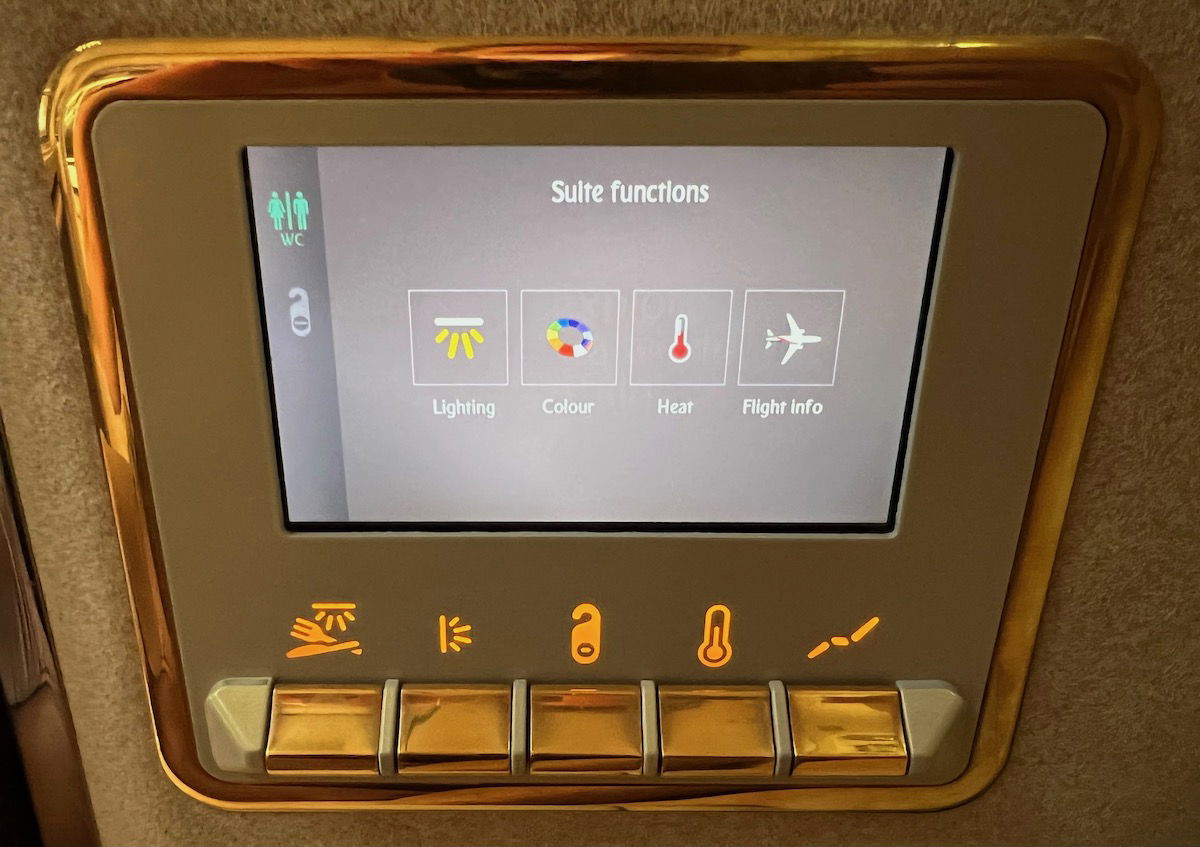
We all have different preferences when it comes to our preferred sleeping conditions and temperatures. Some prefer to sleep in warm environments, while others prefer to sleep in cold environments. In that regard, giving passengers individual air nozzles is about as much control as airlines can offer (well, other than in Emirates’ new 777 first class, where you sort of kinda of have temperature controls).
As someone who prefers to sleep in cool(ish) conditions, I find that I sometimes wake up sweating when I’m on a plane without air nozzles, while air nozzles help me to stay somewhat cool.
Virtually all modern aircraft manufacturers give airlines the option of installing individual air nozzles in the passenger service units (where reading lights and the seatbelt signs are loaded), but not all airlines elect to install this.
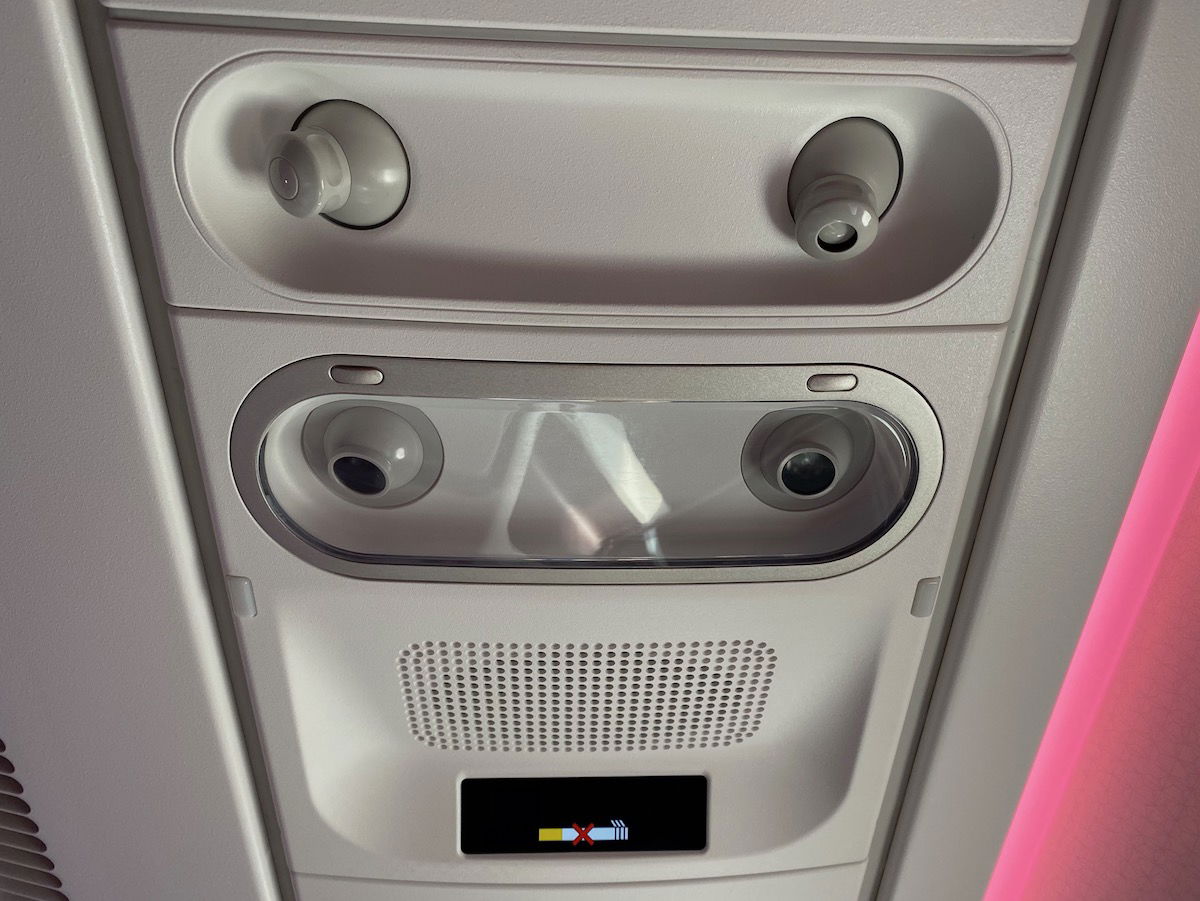
For example, Virgin Atlantic’s Airbus A350s do have individual air nozzles at all seats…
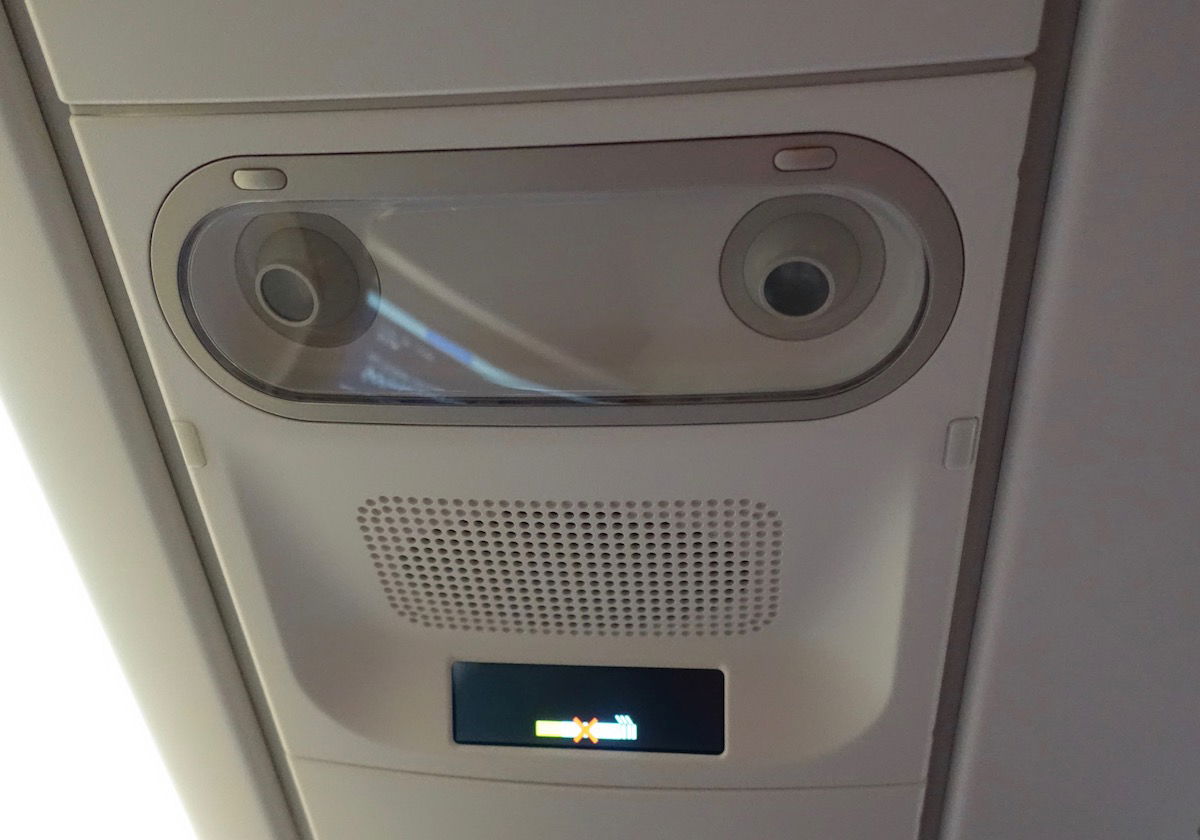
…while British Airways’ Airbus A350s don’t have individual air nozzles.
When I publish my reviews of flights, I always mention if there were individual air nozzles or not, for those who are like me and care. And as far as I’m concerned, it’s one of the (many) features that make a business class product great.
Why some airlines choose not to install individual air nozzles
When the topic of individual air nozzles is raised in the comments section of the blog, one question that frequently comes up is why airlines sometimes elect not to install individual air nozzles on planes. Those of us who like individual air nozzles really appreciate them. Meanwhile those who don’t care about them aren’t typically put off by their existence (after all, they can just be closed).
Why do some airlines choose not to install them? Well, it’s probably the explanation you’d expect — they do come at a cost. This is an option that airlines have when they order planes, and based on my understanding:
- Installing individual air nozzles costs extra, given the additional parts and wiring required
- The existence of air nozzles adds a (marginal) amount of weight to the aircraft, given the additional wiring
- Air nozzles potentially add maintenance costs, since this is a complex system that has to be maintained
It’s my understanding that the cost is negligible in the scheme of the sticker price of aircraft. I mean, that must be the case, because Spirit Airlines has individual air nozzles on its Airbus A321s…
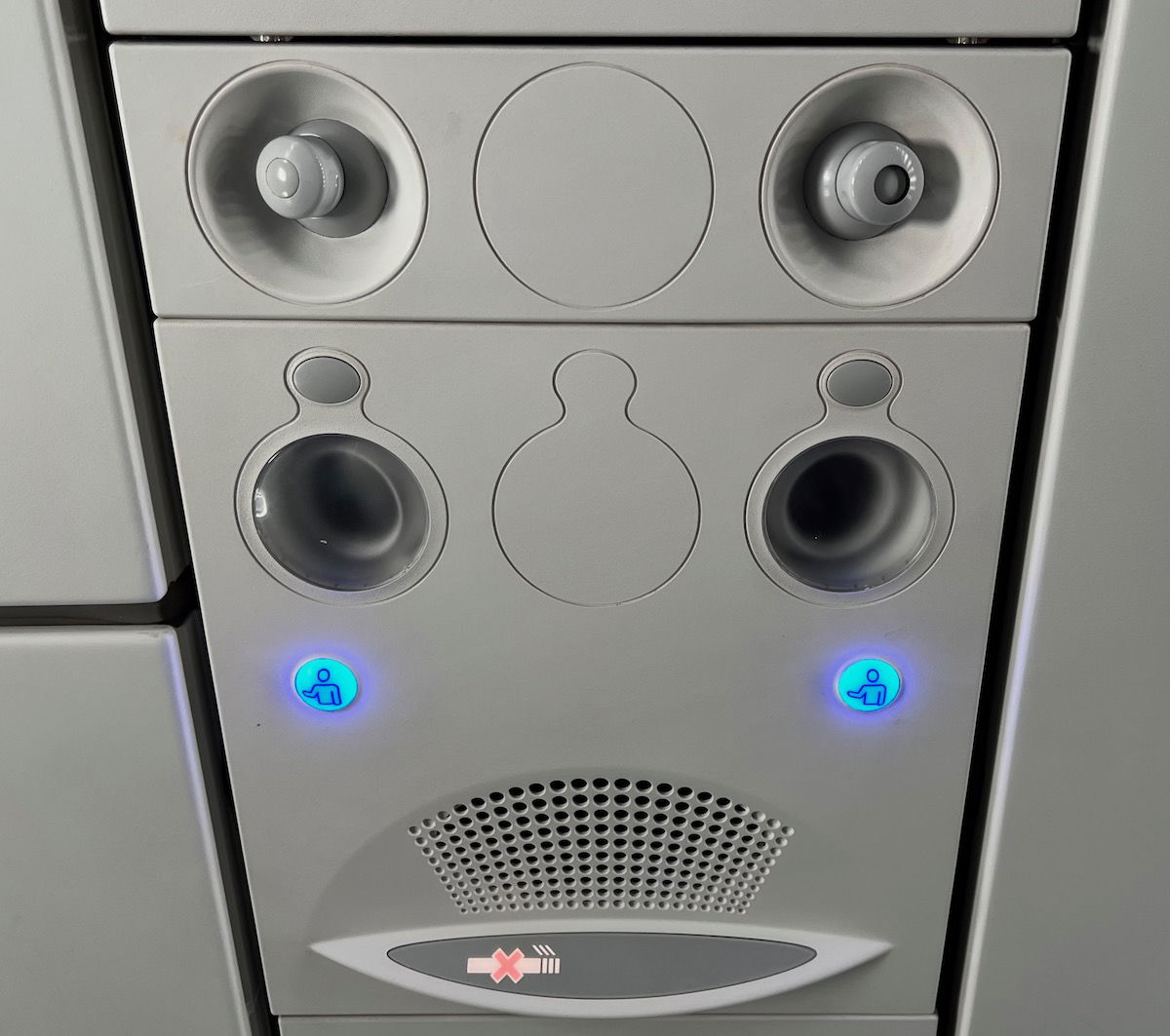
…while Singapore Airlines doesn’t have individual air nozzles on its Boeing 787s.
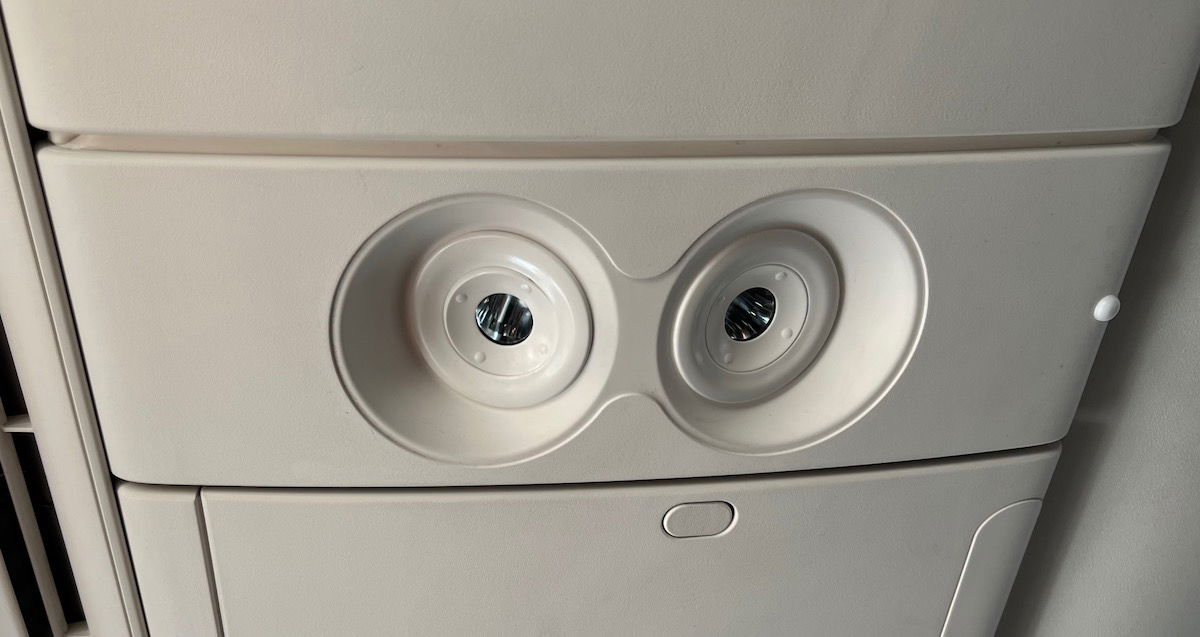
In reality, I think the other biggest factor is just confirmation bias among airline executives in some regions. For example, in Asia and Europe, people tend to prefer (or at least tolerate) sleeping at warmer temperatures than those of us in the United States.
As a result, I think when it comes time to order aircraft and decide on options, some executives just say “oh, people don’t actually care about that, we don’t need to include that option.” And that’s likely because they don’t mind sleeping at warmer temperatures. At least that’s my assumption. I’ve never been responsible for ordering billions of dollars of aircraft, though, so if someone with more first hand experience has insights, I’d love to hear them. 😉
Bottom line
We all have different temperature preferences, and individual air nozzles offer about as much customization in that regard as you’ll find on planes. I really appreciate when airlines do install individual air nozzles on planes, and I’m puzzled when premium airlines don’t.
There is some cost to selecting this option, but it must not be very big in the scheme of things, since even many ultra low cost carriers offer it.
What’s your take on individual air nozzles? Do you value them? Why do you think some airlines don’t install them?




Love this article and hope, hope all airlines understand this or give guidance on how, especially biz class long haul, can navigate this if warm, bc....SAME: from Singapore biz flight to my recent flight on Finnair biz long haul, I woke up sweating and congested as my body overheats and...well, its funny, studies have shown the healthiest temp to sleep in is like 65-67. ive been too much a wimp to ever ask them but...
Love this article and hope, hope all airlines understand this or give guidance on how, especially biz class long haul, can navigate this if warm, bc....SAME: from Singapore biz flight to my recent flight on Finnair biz long haul, I woke up sweating and congested as my body overheats and...well, its funny, studies have shown the healthiest temp to sleep in is like 65-67. ive been too much a wimp to ever ask them but def next time I will bc it ruined any sleep I could have gotten on those flights.
its easy to warm up yourself with layered clothing and blankets but you cant cool yourself so this really needs to be addressed. Older, cold prone folks pls do not comment ;-).
def something that must be done bc id rather have AA long haul if it has air nozzles then a superior product/airline but doesnt bc rest is important. and its supposed to be luxury.
absolutely need air vents.. AF does not and it gets soo warm... The 737's flat air vents are useless...very little air counts out of them...
I really dont care about air nozzles or not, only if its warm on a plane. I would also say that american based airlines are normally warmer then asian airlines. As i can remember i neither have been hot on a flight of a asian carrier, but where in the US I have ... I would say europe is sonewhere in between.
The air nozzles were the only thing that kept me sane during a flight in Finnair’s coffin-like, “new” business class. The seat was truly lousy, the cabin temp (in February) was like a hot summer’s day. I clung to the cooler air flowing from those overhead beauties.
I agree - I cannot stand hot cabins. I flew SQ A380 Business and found it warm but not unbearable to sleep (to be fair I was sitting towards the back of the plane).
Several commenters seem to be dragging Ben like this is a weird personal quirk of his but I relate and I think a lot of other warm sleepers do too. Being unable to sleep due to being overheated is miserable. It’s also absolutely infuriating if it was avoidable. For an airline to decide to buy $500+ plus bottles of alcohol and premium caviar for their high end product while “saving cost” by skipping individual air...
Several commenters seem to be dragging Ben like this is a weird personal quirk of his but I relate and I think a lot of other warm sleepers do too. Being unable to sleep due to being overheated is miserable. It’s also absolutely infuriating if it was avoidable. For an airline to decide to buy $500+ plus bottles of alcohol and premium caviar for their high end product while “saving cost” by skipping individual air vents is a wild mis-spend, particularly if the cabin crew is cranking the thermostat to “satan’s armpit” to keep some people cozy.
On every passenger airline with the single exception of 787, that nozzle air is engine bleed air - the reason it occasionally smells oily. There are some engine failure modes that result in the engine dumping lubrication oil which can get into the bleed air, vaporized due to the high temperature pre-cooling and ends up coming out of the nozzles as a white acrid suffocating smoke. Your chances of survival improve marginally if you shut...
On every passenger airline with the single exception of 787, that nozzle air is engine bleed air - the reason it occasionally smells oily. There are some engine failure modes that result in the engine dumping lubrication oil which can get into the bleed air, vaporized due to the high temperature pre-cooling and ends up coming out of the nozzles as a white acrid suffocating smoke. Your chances of survival improve marginally if you shut off all such nozzles in your proximity. Less serious "fume events" happen on about 1 in 5,000 flights with resulting toxicity concerns, particularly for flight crew who statistically inhale the resulting toxins more frequently than the average passenger.
I'm with Ben on this one. Not having an air vent is a potential deal breaker for my partner and I, particularly on long-haul flights, and we value Ben's reviews for noting this amenity (or lack thereof).
Air gaspers on 787 cost $500k a plane. Not huge considering the purchase price but when product managers are weighing costs of other amenities, it can be an easy one to say “no” to, in order to spend on other features (like foot pedals for trash cans, covered galley cart doors, etc).
This is a massive factor for me and one of the reasons I think Singapore Airlines has very poor hard products. Whenever I fly with them I always end up waking up in sweat because the cabin is always VERY WARM and yet does not even have any air nozzles. I always dread flying them because there’s absolutely nothing worse than trying to sleep but just constantly drifting in and out because of the heat....
This is a massive factor for me and one of the reasons I think Singapore Airlines has very poor hard products. Whenever I fly with them I always end up waking up in sweat because the cabin is always VERY WARM and yet does not even have any air nozzles. I always dread flying them because there’s absolutely nothing worse than trying to sleep but just constantly drifting in and out because of the heat. No matter how good service or how wide the seat is, they can never make up for discomfort in heat. Turkish also does this but at least they aren’t charging up to five-figure fares and touting being “world class”.
And generally speaking here - it’s absolutely ridiculous to keep cabins warm, as if someone feels cold, they can just use blankets or wear a sweater. But if it’s hot, what do they expect us to do? STRIP??! Then get dragged on social media??!
I remember when early models of the DC-10 had air nozzles on the seat backs facing you. This was at a time when the DC-10 and L-1011 TriStar also had a 2-4-2 configuration in main cabin,
When airlines opted to go 2-5-2 on the DC-10 (looking at you American, United and Western big 10 operators) the vents went away. The Lockheed TriStar kept the overhead nozzles.
I have never been a particular fan...
I remember when early models of the DC-10 had air nozzles on the seat backs facing you. This was at a time when the DC-10 and L-1011 TriStar also had a 2-4-2 configuration in main cabin,
When airlines opted to go 2-5-2 on the DC-10 (looking at you American, United and Western big 10 operators) the vents went away. The Lockheed TriStar kept the overhead nozzles.
I have never been a particular fan of the DC10 but don't recall being warm on them EXCEPT Japan Airlines.
I LOVE the nozzles and that would be a huge factor in choosing a non-US carrier.
Would be helpful if you could get heat from the nozzles. Many people freeze on planes.
Dress apropriate.
Like the young girls in a fitness class complain while it is sooo cold but they hardly wear any clothes.
Cost and passenger comfort is definitely not the answer. Ryanair has air nozzles on their planes. Unless Ryanair thinks that it's uncomfortable to have some control on your air (don't tell O’Leary that I'm grateful that he included it)
EasyJet also has nozzles on their planes.
Maybe Ben needs to fly some more low cost carriers!
This is a pet peeve for the author.
But there are several basic facts you get wrong
1) Air nozzles may not be a super big delta in terms of cost when buying the airplane - but it most certainly add maintenance (regular) cost
2) Air nozzles does not regulate cabin temperature. The can provide a flow of air/draft - and can help you cool down, just as a fan does. But...
This is a pet peeve for the author.
But there are several basic facts you get wrong
1) Air nozzles may not be a super big delta in terms of cost when buying the airplane - but it most certainly add maintenance (regular) cost
2) Air nozzles does not regulate cabin temperature. The can provide a flow of air/draft - and can help you cool down, just as a fan does. But does not touch temperature
3) True that many US Americans prefer much lower cabin temperature than the rest of the world. I personlly feel like I am walking into a fridge whenever I board a US airline frame
@ CPHflyer -- I'm sorry, but which facts did I get wrong?
You said:
"Air nozzles may not be a super big delta in terms of cost when buying the airplane - but it most certainly add maintenance (regular) cost"
But in the post I said this:
"Air nozzles potentially add maintenance costs, since this is a complex system that has to be maintained"
You said:
"Air nozzles does not regulate cabin...
@ CPHflyer -- I'm sorry, but which facts did I get wrong?
You said:
"Air nozzles may not be a super big delta in terms of cost when buying the airplane - but it most certainly add maintenance (regular) cost"
But in the post I said this:
"Air nozzles potentially add maintenance costs, since this is a complex system that has to be maintained"
You said:
"Air nozzles does not regulate cabin temperature. The can provide a flow of air/draft - and can help you cool down, just as a fan does. But does not touch temperature"
But in the post I said this:
"Furthermore, while I recognize this isn’t the equivalent of “air conditioning,” having some air blowing in your direction can impact your comfort, and your perception of feeling hot"
Cold cabin, gaspers, and decent bedding make the rest of the sub-par Polaris experience tolerable. Get the sleeping part right and I'll forgive almost everything else.
what are gaspers?
The old UA FAs?
I prefer airlines with air nozzles. I sleep hot as well. Also a lot of planes run warm.
Excuse me Ben I know that this is a pet peeve of yours but apart from extreme personal taste this time you are wrong.
Individual air nozzles add weight, cost and most importantly another source of noise in a plane. Whenever I enter a plane with those obnoxious things I immediately turn them off.
And cherish the silence.
Yes they might help one or the other passengers to cool things down for them…...
Excuse me Ben I know that this is a pet peeve of yours but apart from extreme personal taste this time you are wrong.
Individual air nozzles add weight, cost and most importantly another source of noise in a plane. Whenever I enter a plane with those obnoxious things I immediately turn them off.
And cherish the silence.
Yes they might help one or the other passengers to cool things down for them… but all other passengers have to live with the sound and planes are loud enough.
So I cherish every airline that forgoes those loud items.
@ Florian -- In the context of the noise of aircraft cabins, I'm surprised you find the sound of air nozzles to add meaningfully to that. And it's funny how people are different as well when it comes to noise preferences -- I sleep with a white noise machine at home, so I appreciate any extra noise.
@Ben, 100% agreed.
I know that several East Asian cultures are deathly afraid of "wind" which includes air nozzles blowing air on you. It can bring bad luck, disease, and anxiety.
Happy year of the fire horse…
Ugh , I cant fly Turkish Airways because they keep the cabin so HOT, and they have NO air vents.
I love UA because the cabin is COLD
Exactly. Flew TK on a 10 hr flight on their 777 and loved the food and service but the cabin was UNBEARABLY HOT. I couldn’t sleep. If my priority is sleep on the flight (which majority of the time it is) then US carriers especially United excels. With the air vents blasting in addition to the crew already setting the cabin to freezing plus the excellent bedding = best sleep in the sky.
They actually have them in the window seats of the ex-Aeroflot A350s
This is why I now travel with a portabale battery powered fan. It also comes in handy at night in rooms with bad air circulation in the room from the AC
I think the collective hiss of hundreds of nozzles increases cabin noise. I swear it’s sounded quieter to me on planes without them. I still prefer them though.
There is another utility of individual air nozzles. Clearing the air when one of your neighbors "stink up" the immediate vicinity for a few minutes. I just open up the nozzles in full speed to help circulate the air faster.
Helps dissipate BO too.
I simply prefer airplanes without the individual nozzles. In many cases the air from neighboring seat nozzles keeps blowing at me which I do find uncomfortable.
Having an air nozzle or three is certainly important to me, too. My heart sinks when I board an aircraft built without them.
Read this article 25 minutes ago, was just about to say that air nozzles are mandatory on narrowbody jets and not mandatory on widebody jets (I've never been on a narrowbody without air nozzles), and went down a ChatGPT rabbit hole from then until now. Here's what I think is going on (GPT quoted sources from OEMs, so I think I trust it, though I'm not sure):
Airlines don't generally love air nozzles – they're...
Read this article 25 minutes ago, was just about to say that air nozzles are mandatory on narrowbody jets and not mandatory on widebody jets (I've never been on a narrowbody without air nozzles), and went down a ChatGPT rabbit hole from then until now. Here's what I think is going on (GPT quoted sources from OEMs, so I think I trust it, though I'm not sure):
Airlines don't generally love air nozzles – they're expensive and require extra ducting, weight, and maintenance. So if airlines can get rid of air nozzles, they can (particularly in Asia where people are less sensitive to warm cabin temperatures).
On a narrowbody aircraft, the airflow throughout the cabin flows through a small space with low ceilings and passengers' bodies being a "barrier" for airflow, which creates pockets of recirculated air. FAA requires a minimum fresh air provision per passenger, so air nozzles solve that problem. So virtually every narrowbody you'll fly will have an air nozzle.
On a widebody aircraft, the cross-sectional area that the air flows through is much larger, especially with the high ceilings. The recirculated air pockets are a much lower risk, so it's easier for the fresh air provided per passenger to meet FAA regulations without air nozzles. So it's largely added as a comfort feature, as opposed to meeting minimum FAA standards.
Interesting to see the physics happening here, and it sounds intuitive – happy to stand corrected if I'm wrong.
Yeah no please spare us the factless robo rambling. Keep your AI slop farts to yourself
Well, I wrote this myself based on my interpretation of ChatGPT after asking it to pull from sources (it also checks out with what I know from my engineering degree).
Go ahead and ask ChatGPT 15 times “Does FAA mandate air nozzles on narrowbodies but not widebodies” and tell me if it ever lands in the same place twice. And no, citing your comment on this blog does not count (which I just witnessed the AI do)
Benny… a larger conversation about low quality AI comments on your site needs to be had.
My experience with air nozzles has been sometimes I arrive at my seat and find an obnoxious amount of air blowing in my hair and face, at which point I switch off the air nozzle, and that’s the last I think of it for the remainder of the flight. I’m high class - be like me.
You are a real scoundrel 1990Bot …. We know you know …. :-)
Just pointing out that the Lufthansa A350 Allegris business class does indeed have individual air nozzles. They're located in the side panel, next to the tablet with seat controls, below the reading light. It's easy to mistake it for a light but it's actually a nozzle and the great because you get better airflow than from a ceiling nozzle. Separate question -- do you think it is appropriate to ask the FA to turn down...
Just pointing out that the Lufthansa A350 Allegris business class does indeed have individual air nozzles. They're located in the side panel, next to the tablet with seat controls, below the reading light. It's easy to mistake it for a light but it's actually a nozzle and the great because you get better airflow than from a ceiling nozzle. Separate question -- do you think it is appropriate to ask the FA to turn down the temp if the cabin is too warm to sleep comfortably?
The same plane can have warm areas and cold areas, as I've noticed walking to the lav.
I agree - I cannot stand hot cabins. I flew SQ A380 Business and found it warm but not unbearable to sleep (to be fair I was sitting towards the back of the plane).
Yea I have - worst they can say is no.
I could not care less.
All they do is blow my long hair around which gets more uncomfortable than the temperature in the plane so I keep them shut if they're present. I don't miss them if they're not installed.
I usually wear shorts and a t-shirt and use blankets if available if I'm cold, but it usually isn't too bad on ANA's longhaul.
I'm definitely curious about the economics of installing them vs not installing them though.
Ben, You do you, and thank you for that.
Just noting that if feels like you write about this issue more than most any other seat amenity…. not having them clearly impacts you greatly.
I suggest a deeper dive into why some airlines skip them so we can put this to rest or at least know what we’re fighting against. (why not look at how it impacts resale of the plane too, because...
Ben, You do you, and thank you for that.
Just noting that if feels like you write about this issue more than most any other seat amenity…. not having them clearly impacts you greatly.
I suggest a deeper dive into why some airlines skip them so we can put this to rest or at least know what we’re fighting against. (why not look at how it impacts resale of the plane too, because I bet it does.) Have you considered interviewing some of the airline executives just about this issue ? I’m really not joking, at this point I just wanna see you happy.