Philippine Airlines Files For Bankruptcy, Will Shrink Significantly

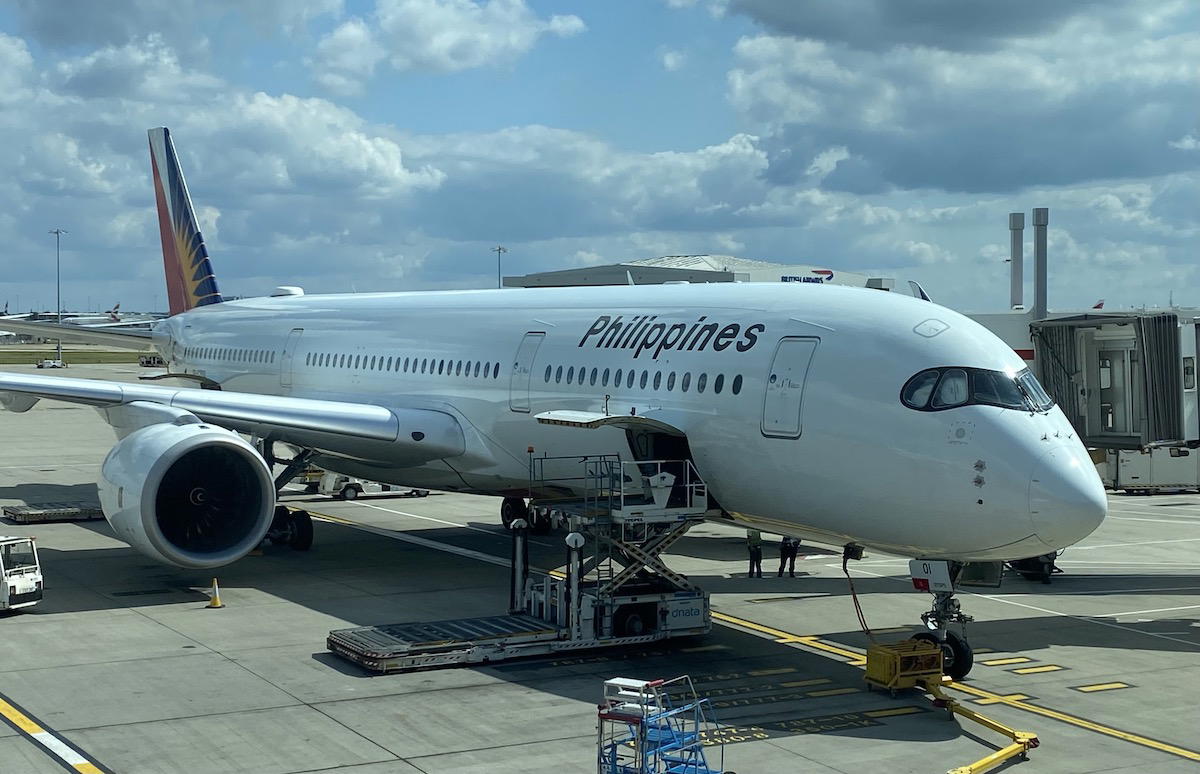
Around the start of the pandemic we saw some airlines file for Chapter 11 bankruptcy, including Avianca and LATAM. A few days ago we learned that Philippine Airlines has also filed for bankruptcy, and we now have details on how the carrier’s long haul fleet is expected to shrink.
Continue reading: Philippine Airlines Files For Bankruptcy, Will Shrink Significantly
Share your questions, experiences, and thoughts below.


Does it have any A350s left? They leased 4 of them to Lufthansa (whose Lufthansa Technik had been maintaining the birds) weeks ago. The 1st A350 to be leased landed in Munich in July.
Who want to fly with them and transit through terrible airport like Manila. Maybe ok if you need fly to Philippines that’s all.
Cebu is a dream to transfer. New efficient international terminal and the domestic was refurbished, although traffic has dropped with very few international flights. If they resume LAX CEB use that to transit.
EVA was planning to acquire PAL but got turning down, for more than once.
Now CAL and EVA must be exciting to see PAL shirking.
Manila is one of the world's worst airports. Unless you are actually going to the Philippines you are not going to choose PAL.
I love the Philippines. I had the good fortune to live there for a few years. But PAL has a few things working against it, that I'm not sure they can overcome. As others have said, Manila is a shitty airport. Second, there is a lot of corruption ingrained in their culture, which can make customs and immigration, transportation leaving the airport, and even the way the airport and airline is run subject to trouble and bad decision making.
I think it's mostly covid restrictions that the Philippines are applying even to US citizens. The fact is that it's a huge pain to go to the Philippines given their policies, and me and my Filipino wife will not even try for quite some time. I assume many others are thinking the same. This must drastically reduce PAL's revenue, and I'm sure the Philippines government isn't propping up the airline like the US government is doing for AA, etc.
Can someone give an elementary explanation as to why the bankruptcy was filed in NYC as opposed to Manila? Is it due to the location of their creditors or are they listed on the NYSE? It would seems that filing in their home Country would make more sense.
Ask for elementary, and you shall receive elementary.
When daddy owes more money to strangers more than what daddy can pay, daddy has to file for bankruptcy.
If daddy files for Chapter 11, the almighty USA will protect daddy and our family better than Duterte's courts.
Chapter 11 lets daddy keep our car so he can drive and make money while he negotiate to pay money he owes.
In Durete's court someone else will decide for daddy if he gets to keep our car, or he has to walk to work. Duterte might give daddy an offer he can't refuse too.
So the almighty USA will protect daddy more, while also making harder for people who daddy owes money to get their rightful money in full.
One last thing, even if daddy files Chapter 11, it doesn't mean the honorable judges of almighty USA will take the case.
When they sell tickets on A350 Vantage XL seats cheaper than Chinese carriers.
MNL might be a trash compared to HKG, but so does many Asian airport. Sometimes it's a country thing, just like India or Indonesia. But once you understand how the peculiar things work, it's just dealing with the dysfunctional systems i.e. the DMV.
My only concern is how long before the government realize if PAL were to survive, they need to open up INTL-INTL transfers.
I just saw the Philippines 350 in Munich yesterday. They hadn't repainted to tail yet.
Many foreign companies chose to file for chapter 11 protection in the U.S. LATAM, Avianca, and Aeromexico are also in chapter 11 in the U.S. right now. As is a large Brazilian financial company. Chile's national bus system also previously sought chapter 11 protection in the U.S.
Foreign companies chose the U.S. bankruptcy system to restructure their balance sheets and operations for a variety of reasons, but the primary reason is that the U.S. has the most well-developed and predictable insolvency/restructuring regime in the world. Although some countries are now catching up and modeling their insolvency laws on the U.S.'s bankruptcy laws, most are far behind or untested (exceptions include Canada, the U.K., and other Commonwealth countries). Filing for chapter 11 in the U.S. provides a respected, centralized, and predictable means to reorganize. The company, its creditors, and other stakeholders value the predictability and consistency.
Plus, in a U.S. chapter 11 case the default rule is that existing management and board directors stay in place and guide the company through the case. This contrasts with some countries' laws where management and board directors are immediately replaced by an independent insolvency trustee, receiver or similar entity. The people running companies tend to very much like this feature of chapter 11.
The U.S. also does not prohibit "trading while insolvent"--a legal concept in some countries that requires a company to shut down or otherwise change the way it does business when it approaches or reaches insolvency, or else the people in charge of the company may face personal liability for the debts the company incurs after it becomes insolvent. In the U.S., companies can and do continue to operate outside of a bankruptcy proceeding despite deep insolvency, and, except in exceptional cases (usually involving malfeasance), no one running the company will face personal liability for the debts of the company.
Many companies also choose the U.S. because their large financial creditors--bondholders, banks, etc.--are located in the U.S. or have assets in the U.S. So it is easy for a U.S. court to bind those creditors because if they fail to follow the U.S. court's orders, then the U.S. court can levy sanctions against the creditors' assets in the U.S.
Finally, many countries (including the U.S.) have adopted UNCITRAL's Model Law on Cross-Border Insolvency, which allows coordination between a main insolvency proceeding in one country (here the U.S.) and ancillary proceedings in another country that has adopted the model law--or even many ancillary proceedings in many countries. The Philippines, Chile, Mexico, Colombia, and many other countries have adopted the model law. The law makes it much easier to use another country's courts and laws to reorganize.
Here is a full list of countries that have adopted the model law: https://uncitral.un.org/en/texts/insolvency/modellaw/cross-border_insolvency/status
An interesting aspect of the international development of proceedings under the model law is that sometimes U.S.-based companies will file a main proceeding in another country (most often the U.K., Canada, the Cayman Islands, or Bermuda) and then file an ancillary proceeding in the U.S. So it goes both ways.
Manila (MNL) is a particularly troublesome transfer airport, but not the worst, that prize goes to Chennai in my book. I have flown PAL many times but before they try to become a 5 star airline at least get to 3 star. Their lounges are pitiful, and their customer service is terrible. I live and work in the Middle East and regularly fly either Riyadh / Manila or Doha / Manila (Pre Pandemic) PAL always puts its oldest most tired aircraft on this route because they know that 98% of the passengers will be Filipino OFW's returning for time at home. PAL therefore packs these flights full and offers little in the way of true in flight service. These planes do not even have personal TV screens but instead run a film streaming system to passengers devices. But for over a year this system was undergoing maintenance.
PAL will be more successful when they start looking after their core customers rather than tourists coming to the Philippines from China, Indonesia and Japan.
Why I fly PAL though is that because of their low quality and low service a Business class seat on PAL Doha / Manila is roughly the same price as an economy seat on Qatar Airways on the same route.
I had the dismal experience of their nine-abreast A330 MNL-HKG. Far from any concept of stars.
I’ve always wondered why no US domestic airlines fly to the Philippines. I would think this would be a successful route from Los Angeles and San Francisco given the large Filipino populations and even some business travel with all the jobs that have outsourced to the Philippines over time (prepandemic obviously).
If PAL could fix their Manila terminal airport mess, then it could attract global passengers. Until then, it will always be an OFW shuttle where the flight attendants begrudge serving the maids.
All good but do foreign companies at least pay for the proceedings to occur in US courts? Seems reasonable to me.
The thought of using that airport, which has been known by frequent travellers for decades (at least 50 years!) to be infamously horrendous, has always been a mental block to flying Philippine Airlines. But with the relinquishing of the a350s and their superior business class seats, I (and I suspect a lot of others) will have no reason/desire to fly PR and use their hub. How bad is Manila Airport? It makes even lowly LAX seem like the resplendent Changi airport.
Delta inherited service to MNL from Northwest and has operated it via Tokyo. Delta's flights to Tokyo from the US all moved to Haneda during the pandemic and they cannot operated flights beyond HND so MNL was switched to Seoul. Delta planned to operate its own aircraft as the continuation of a US-Seoul flight but that was put on hold during the pandemic.
I expect that Delta will restart its MNL service either via Seoul or could potentially add nonstop service from the US if enough capacity comes out of the market to push fares up.

United inherited service to MNL from Continental airlines and flies Guam to Manila. Once I flew EWR-HNL-GUM-MNL on Continental back in 2009. As Tim Dunn stated, Delta inherited MNL from Northwest.
But @Mfb123 asked for the elementary version. I don't think 4th grades would understand anything from the very well explained version from @Matt.
Big shame to hear that most of their A350s are going. I flew them 2019 LHR - MNL business class. Fantastic hard and soft product - a good 4.5 star quality. Manila airport and lounge were a let down
Has Delta ever restored its Manila--Seoul intra-Asia route, the last vestige of its once-great network out of Tokyo Narita?
I imagine Delta will buy those A350s given its track record.
Adam L -- They pay the same court filing fees (relatively modest at a one time fee of $1,717 per entity) and U.S. Trustee fees (less modest at up to $250,000 per entity per quarter) as any domestic company seeking chapter 11 protection.
And they pay their lawyers, whose rates may exceed $2,000 per hour, and other advisory firms like financial advisors and investment bankers, whose fees may be hourly or may be fixed (sometimes at $250,000/mo. or more, plus a success fee in the millions). These firms are based in the U.S., so the fees in these cases--which can run from the tens of millions to the hundreds of millions in the aggregate--represent a significant boon to the firms and therefore the local domestic economy.
It costs a lot of money to go broke.
You seem to have some knowledge into this matter. I always have this questions for bankruptcy lawyers, has any the Chapter 11 companies that firms represent ever got defaulted from that company because of Chapter 11. i.e. haircut Deloitte, Kirkland, or Goldman. Is there a fiduciary duty that these firms still have to uphold?
Every time I asked I always get a laugh but no real answer.
@Eskimo, I am not sure I understand your question. Happy to answer if you can clarify.
For what is worth, Deloitte does not do a lot of bankruptcy work, nor does Goldman.
PAL backroom service is terrible. If you have any trouble with something. You will end up with the short stick. I can expect some type of problem every three years. Service inside the plane is okay. Flying business class on long flights will get the usual flight attendant who needed to retire ten years ago.
When the new airport opens up in 2027. Competition will really hurt PAL when that happens on west coast flights. You cannot get landing right currently except for middle of the night.
Delta has tried to get Manila to west coast flights. Only landing and takeoff at Manila is middle of the night. While PAL was able to add more flights the past four years.
Dredging has begun on the new airport at Bulacan the past few weeks. There are thirteen ships at work. The dredging is suppose to take 3 years. In two phases. First phase is right down the middle when the terminal goes plus the runways on both sides. Then the second phase (to be completed within the three years) will be for the future third and fourth runways on both sides when they expand airport when business picks up.. I think they are saying five years to open the airport. I will guess six to seven. 2027-2028.
Sorry my word is a bit confusing.
So assume PAL is hiring these professional service firms or banks for their Chapter 11. So one way to look at it is these professional fees are also one of PAL's creditors for taking the job.
1. Can PAL default (or renegotiate) these firms as part of the Chapter 11 process?
2. If the answer to 1. is yes, do these firms still have some fiduciary duty to still do what is best for PAL knowing that it would result in the firms themselves not being paid full. Or they always do what it takes to get paid in full before any other creditors, even at the expense of PAL.
Customer service of PAL here in Toronto is very inefficient! EVA Airways is much better to fly with. We will not miss PAL.