
In the film Highest 2 Lowest (2025), starring Denzel Washington, legendary filmmaker Spike Lee portrays two distinct sides of New York City, depending on your altitude and bank account. Nowhere is that contrast more apparent than in the choices travelers face when commuting between Manhattan and John F. Kennedy International Airport (JFK).
Whether you are a visiting traveler or an NYC resident, navigating to and from the city’s primary international hub is a perpetual balancing act between cost, comfort, and time. Previously, I detailed what is literally and figuratively the “highest” mode of airport transit: Blade’s helicopter transfers (starting at $195 and easily topping $300, though rides can be “free” using Bilt Cash).
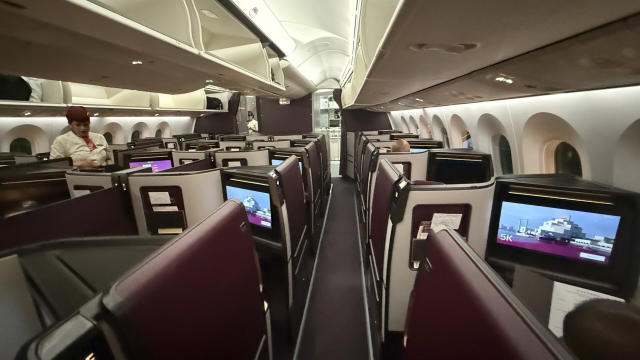
In this Reader Story, I’m taking you down, subterranean, to the lowest option available: the Metropolitan Transportation Authority’s (MTA) $3 bus-to-subway hack.
Take the “A” Train (at Lefferts)
Duke Ellington was onto something: “Take the ‘A’ Train.” However, he didn’t specify which A train branch, nor did he mention that a quick bus transfer might be involved!
Even some locals may ask: “Wait, isn’t the AirTrain $8.75, plus a $3 subway fare?” That’s true if you exit the AirTrain at Jamaica or Howard Beach. However, there is a lesser-known and dramatically cheaper workaround: just $3 total from JFK to nearly anywhere in NYC with the MTA, provided you don’t mind adding a few extra minutes to your journey.
JFK to Manhattan: Step-by-step
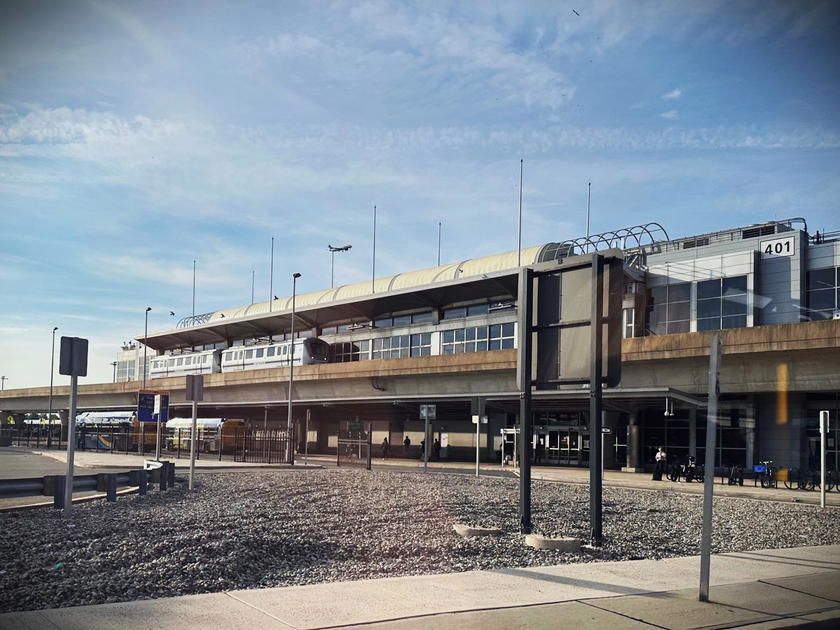
- Take the Green AirTrain to Lefferts: Hop on the JFK AirTrain Howard Beach line inside JFK and disembark at the Lefferts Boulevard Station (long-term parking stop). Since this stop is within the airport perimeter, there are no exit turnstiles or $8.75 fees.
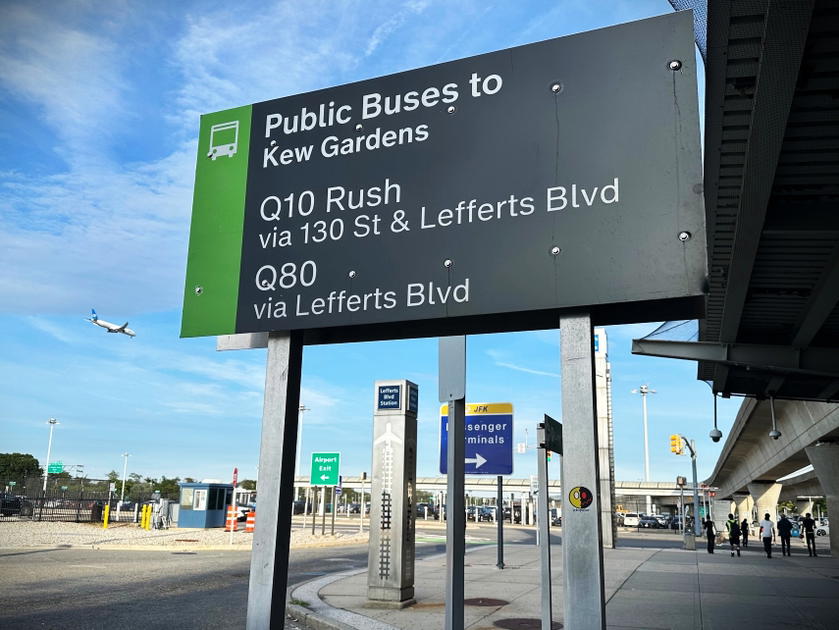
- Catch the Q10 or Q80 Bus: Head downstairs to the bus stop directly outside the station. Look for the Q10 or Q80—take whichever comes first, ideally the Q10 Rush (also referred to as Limited or LTD), which skips local street stops and shaves some time off the ride.
- Pay via OMNY: Tap any contactless credit card, phone, or wearable at the front bus door to pay the flat $3 MTA fare (you can review full tap-to-pay rules on OMNY.info).
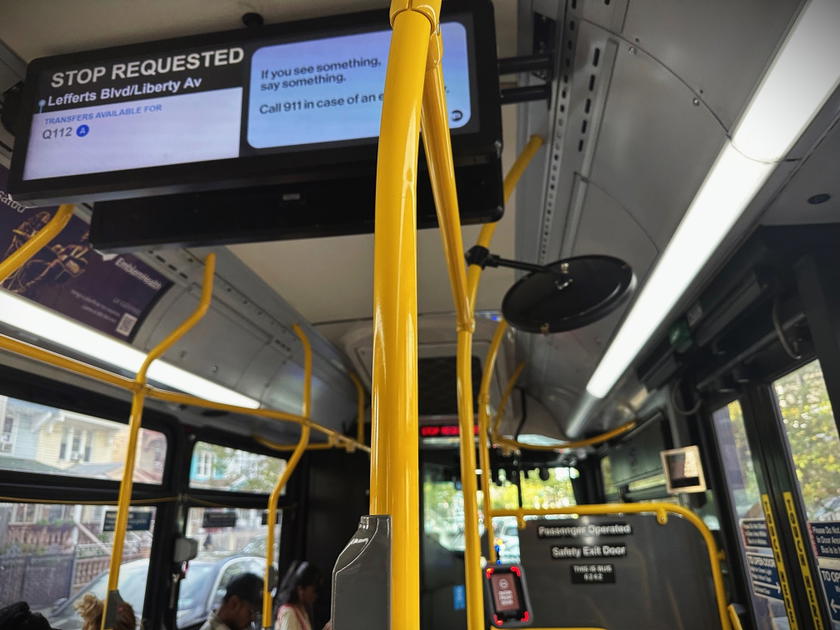
- Transfer to the A Train: Get off the bus at the Liberty Ave / Lefferts Blvd stop. Walk across the street and upstairs into the Ozone Park–Lefferts Boulevard station. Tap the same payment method at the turnstile within 2 hours (of the first tap at the bus); OMNY will process a $0.00 free transfer.
- Head to Manhattan: Board the next Manhattan-bound A train, connecting to anywhere in the New York City Subway network (and not just Manhattan, either).
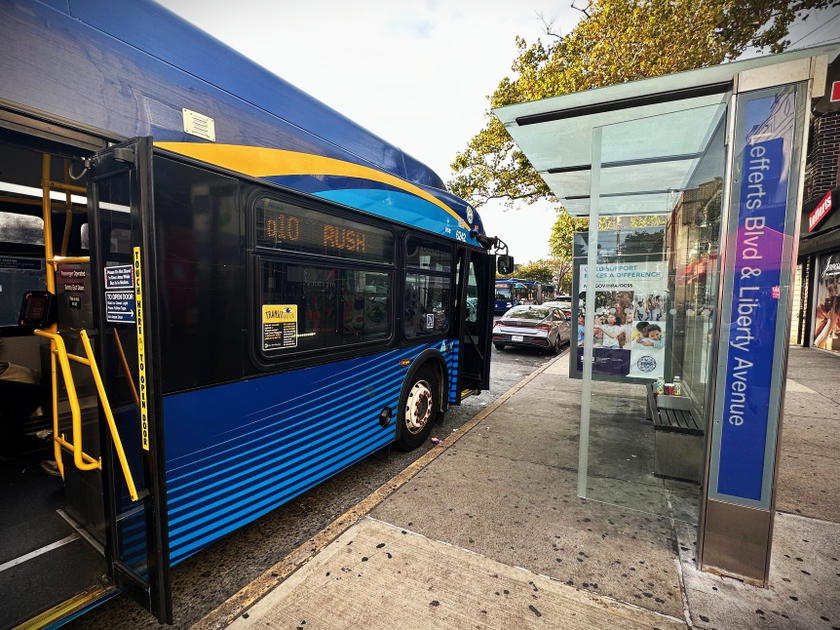
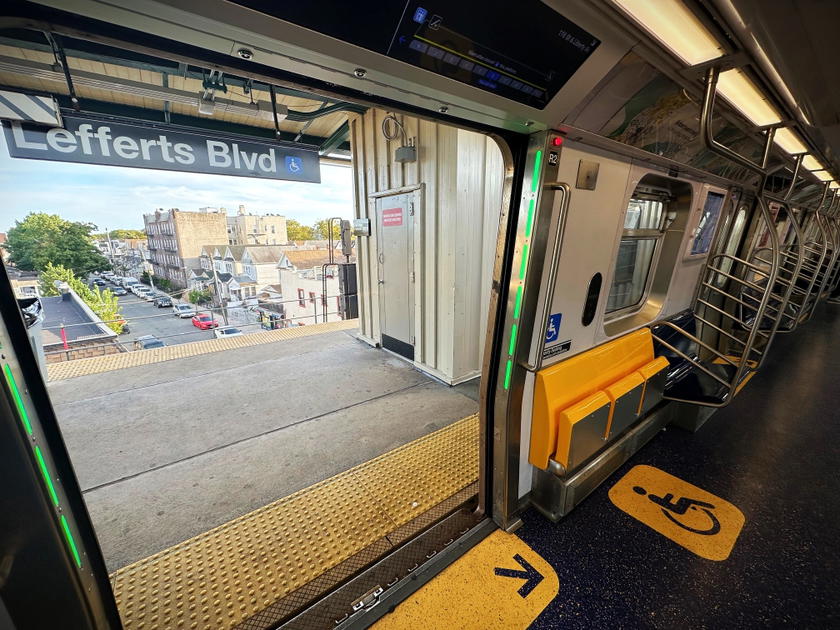
Manhattan to JFK: The reverse journey
For the reverse trip, take any Lefferts Blvd-bound A train, ensuring the destination sign explicitly says “Lefferts Blvd” rather than Far Rockaway or Rockaway Park. Importantly, Far Rockaway A trains often display “JFK Airport” on their digital side displays because most travelers use the more expensive $8.75 Howard Beach transfer route, so do not board those if you want the $3-only route. Once on the correct train, get off at Liberty Ave / Lefferts Blvd, exit to the street, locate the bus stop, catch a JFK-bound Q10 or Q80 bus to the Lefferts AirTrain station, and take the free AirTrain directly to your terminal.
Your map apps likely won’t suggest this routing
If you type “JFK Airport” into Google Maps or Apple Maps, the app will almost never display the $3-only hack. Navigation algorithms prioritize minimizing the number of transit transfers over saving money, automatically suppressing the bus transfer in favor of the standard $8.75 AirTrain connection at Jamaica or Howard Beach.
Even typing “Lefferts Blvd AirTrain Station” into navigation apps often causes confusion because the AirTrain station and the Ozone Park A-train terminal are located roughly 1.5 miles apart.
To force your map app to show the correct route, search for the street-level bus-to-subway transfer point at “Lefferts Blvd & Liberty Ave.” From JFK, this will display the Q10 Rush or Q80 bus taking you to the A train turnstiles; from Manhattan, it will guide you on the Lefferts-bound A train directly to your bus connection.
The city that never sleeps
Other than extreme weather events, strikes, and major crises, all three legs of this route—the AirTrain, the Q10/Q80 bus, and the A Train—operate 24 hours a day, 7 days a week, though timing varies. During daytime and peak hours (6:00 AM – 10:00 PM), AirTrain cars run every 7–10 minutes, Q10 and Q80 buses depart roughly every 8–15 minutes, and A trains run frequently as express services through Brooklyn and Manhattan.
However, late-night transit frequency changes significantly in NYC, so keep that in mind for overnight or early-morning flights: AirTrain headways drop to 15–20 minute intervals, late-night Q10/Q80 bus departures stretch to every 20–30 minutes, and the A train may shift to local-only service (check MTA Service Status for possible re-routings).
How far can you really take this?
Thanks to the flat-fare structure of the New York City Subway (as opposed to distance-based transit networks found in cities like London, Tokyo, or Washington, D.C.), that single $3 fare (and free transfer) unlocks access to nearly the entire city once you pass through the turnstiles at the Ozone Park–Lefferts Boulevard station.
Because there are no exit turnstiles or zone caps inside the subway network, you can ride from Queens through Brooklyn, up Manhattan, and deep into the Bronx, all on that same initial $3 tap—as long as you stay within the fare-paid zone. And, if you exit the subway system in Lower Manhattan, you can walk over to Whitehall Terminal and board the free Staten Island Ferry to reach the fifth and final borough. While attempting to tap onto a Staten Island bus or the Staten Island Railway (SIR) on the other side would consume a second $3 fare (and likely break the 2-hour transfer clock), at least JFK to Manhattan for $3 remains one of the greatest transit bargains in the world.
Is it worth it?
All told—AirTrain, bus, and subway—you can get between JFK and Manhattan in about 75 to 90 minutes. Depending on brutal rush-hour highway traffic, you might even tie or beat a $100+ rideshare. That said, I would recommend this route exclusively for those traveling light (backpacks and carry-ons), willing to spend the extra time, and comfortable navigating city transit. But for the right traveler, it is a relatively safe, clean, reliable, and wildly affordable hack.
How does it compare to alternatives?
To put the $3 bus-to-subway hack into perspective, it helps to see how it stacks up against the other primary options for traveling between Manhattan and JFK:
- Free AirTrain + Q10/Q80 Bus & A Train ($3.00 | 75–90 minutes): The lowest possible fare, though it takes a little longer. Best for light packers.
- Paid AirTrain + Subway ($11.75 | 50–75 minutes): The classic public transit route via Jamaica or Howard Beach. Reliable, but includes the $8.75 AirTrain exit fee.
- Paid AirTrain + Long Island Rail Road (LIRR) ($13.75–$16.50 | 35–50 minutes): The fastest public transit option directly into Penn Station or Grand Central via the LIRR; however, it costs more, and you may still need to take the subway afterwards.
- Uber Shuttle (~$20–$35 per seat | 45–90 minutes): Uber’s shared-van option running fixed routes between Midtown hubs (like Grand Central, Port Authority, and Times Square) and JFK terminals. It gives you a guaranteed seat and luggage space for a fraction of a private UberX, though it doesn’t drop you directly at your doorstep.
- NYC Yellow Cabs (~$90–$115 total | 45–90 minutes): Convenient door-to-door transit for groups or heavy luggage, though vulnerable to rush-hour highway traffic. While the official NYC Taxi and Limousine Commission (TLC) flat rate base fare for Manhattan-JFK is $70, mandatory state surcharges, congestion fees (Manhattan South of 60th Street), bridge/tunnel tolls, and tip bring the real-world total to $90–$115. The key benefit? Rates never surge, meaning heavy traffic or high airport demand won’t increase your base fare.
- Rideshare Apps (Uber & Lyft) (~$70–$150+ | 45–90 minutes): Offers seamless in-app booking and pickup coordination, but pricing fluctuates wildly based on dynamic demand. While off-peak fares can occasionally undercut a taxi, rush-hour surges, weather events, or opting for larger XL/Premium vehicles will quickly push costs well past $120–$150+.
- Chauffeured Car Service (Blacklane) ($150–$250+ | 45–90+ minutes): The high end of ground transit. Bilt Members can also redeem their annual Bilt Cash credits ($50 to $150 based on status tier) directly toward Blacklane bookings in the Bilt app (see Ben’s breakdown of the Bilt & Blacklane partnership).
- Blade Helicopter ($195–$350+ | 20–30 minutes): The literal and figurative top of the spectrum. Bypasses ground traffic entirely with a 5-minute flight from Manhattan helipads—and can be fully covered using Bilt Cash (see my earlier Reader Story on booking Blade with Bilt Cash).
Of course, there are other, less conventional ways of getting to and from JFK:
- Driving Yourself: Driving your own vehicle likely means braving the forever-under-construction Van Wyck Expressway or Belt Parkway traffic and major out-of-pocket expenses. Beyond bridge, tunnel, or congestion pricing tolls, on-airport terminal parking gate rates run up to $70 to $94 per day (even Economy Lot 9 starts at $29 for the first day before jumping to hourly rates). For anything longer than a quick overnight weekend trip, parking fees can easily rival the cost of your flight.
- Asking a Friend or Family Member: Securing a personal ride to or from JFK is the ultimate test of friendship. If you can convince someone to pick you up at terminal arrivals during peak evening flight banks—navigating terminal loops and waiting in the free Cell Phone Lot—you have found a true friend indeed.
- Citi Bike: Unlike LaGuardia Airport (LGA), there are no Citi Bike terminals nearby JFK (the nearest is in Forest Hills, Queens, about 5 miles away). Besides, if you’re traveling with any baggage, bicycles are probably not the best idea. Additionally, if seeking the most affordable option, Citi Bike can be cost-prohibitive compared to the bus-to-subway option.
- NYC Ferry: For a scenic route that doesn’t break the bank, consider taking the NYC Ferry from Wall Street/Pier 11 to Rockaway (Beach 108th St), then the Rockaway Park Shuttle (S) to Broad Channel, the A train to Howard Beach, and the AirTrain to the terminals. It’s $16.25 total ($4.50 Ferry + $3.00 Subway + $8.75 AirTrain) and takes longer than even the Q10/Q80 hack. However, it may be my personal favorite if conditions are good (better for daytime) and time is no issue, so I may have to detail that journey in a separate Reader Story.
Deciding on payment methods
Because it’s One Mile at a Time, I would be remiss if I didn’t discuss the best ways to pay.
For the transit and commuter rail options above—including the Q10/Q80 bus, MTA Subway, AirTrain, LIRR tickets, NYC Ferry, and NYC yellow cabs—you should consider using cards with broad category multipliers:
- Wells Fargo Autograph®, No-Fee Citi Strata℠, & Bank of America® Customized Cash Rewards: The Autograph and Strata offer an uncapped 3x points per dollar explicitly on transit with no annual fee (see Ben’s review of the Citi Strata Card), while the Customized Cash Rewards allows cardholders to select “Travel” (which includes subways, buses, tolls, ferries, and taxis) as their 3% category (up to $2,500 per quarter), and up to 5.25% for BofA Preferred Rewards members.
- Blue Cash Preferred® Card from American Express: Earns 3% cash back (issued as Reward Dollars) on broad transit, including subways, buses, tolls, ferries, and rideshares (see Ben’s review of the Amex Blue Cash Preferred Card).
- Grandfathered Cards: For existing cardholders, the American Express® Classic Green Card earns an uncapped 3x Membership Rewards points on broad transit, subways, taxis, and rideshares, while the Citi Custom Cash® Card earns 5x points back if transit is your top spending category that billing cycle (up to $500). (Note: Both cards are currently closed to new applicants).
- Chase Sapphire Reserve®: While its updated baseline multiplier awards 1x points on general transit and ground transportation (outside of its elevated 5x rate on Lyft), these transit charges automatically count toward and trigger the card’s $300 annual travel credit (see Ben’s review of the Chase Sapphire Reserve® Card and his guide on Chase Sapphire Bonus Categories Explained).
For Rideshares (Uber & Lyft) & Micro-Mobility:
- Uber & Uber Shuttle: While most American Express cards do not have elevated transit multipliers, several cards are useful for redeeming monthly allowances—such as up to $200 annually in Uber Cash from The Platinum Card® from American Express ($15/month, plus $35 in December) or up to $120 annually from the American Express® Gold Card ($10/month). Additionally, you can link your Uber account to a primary loyalty partner—such as Marriott Bonvoy or Delta SkyMiles—for additional earnings. For example, setting Delta as your active partner earns 1x–2x SkyMiles per dollar on top of your credit card’s baseline multiplier.
- Lyft & Citi Bike: Both the Chase Sapphire Reserve® and Chase Sapphire Preferred® earn an elevated 5x Ultimate Rewards® points on Lyft rides through September 30, 2027—which extends to Citi Bike rentals and memberships when processed through the Lyft app. Additionally, Sapphire Reserve cardholders receive an in-app credit of up to $10 per month ($120/year), which automatically applies at checkout when the Reserve is set as the default payment method. This credit stacks with the $10/month in Bilt Cash available to Bilt Rewards members for Lyft rides ($120/year). To maximize earning, you can also link your Lyft account to a primary loyalty partner—such as Bilt Rewards, United MileagePlus, Hilton Honors, or Alaska Mileage Plan—for additional points. Setting Bilt as your active partner earns 2x Bilt Points per dollar on top of your credit card’s multiplier.
(Credit card multipliers, monthly credits, and partner earning rates change frequently, so double-check current terms and see Ben’s latest card guides.)
Bottom line
Whether taking a $300+ helicopter ride or a $3 bus-to-subway hack, commuting between JFK and Manhattan truly captures the two contrasting sides of New York City that Spike Lee brings to life in Highest 2 Lowest.
For light packers on a budget, the Lefferts Boulevard Q10 transfer stands as the undefeated champion of pure value. Duke Ellington was right all along—if you want to get to Sugar Hill or anywhere else in the city without breaking the bank, simply take the “A” train!
With so many options available, what’s your preferred way of getting to or from JFK, and which are your preferred payment methods to maximize value?


Membership is free and takes no more information than commenting as a guest. Earn status points for good contributions, and see fewer ads as your status grows.