Chase Ultimate Rewards is the standard-setter in transferable points programs. No other issuer has built a card portfolio this well-rounded, with options spanning no-fee personal cards, mid-range travel cards, premium cards with lounge access, and a full suite of business cards, all funneling into the same transferable points currency. If you are only going to engage seriously with one transferable points program, Chase is the most defensible choice.
The program transfers to 14 airline and hotel partners, including some of the most valuable programs available: Air Canada Aeroplan, United MileagePlus, Singapore Airlines KrisFlyer, Virgin Atlantic Flying Club, and World of Hyatt. The partner lineup is not as large as Amex Membership Rewards, but the quality is exceptional, and the combination of World of Hyatt and multiple strong airline partners makes it easy to extract outsized value.
What sets Chase apart from every other program is the ecosystem structure. There are three premium hub cards that unlock full transfer partner access and elevated portal redemptions, and four companion cards with no annual fees that earn points at strong rates in specific categories. Pool the companion card earnings into your hub card account, and you can build a points balance faster than almost any other program. Below I walk through Chase’s cards, how the ecosystem fits together, the transfer partner lineup, and the application rules you need to know.
Compare Chase credit cards
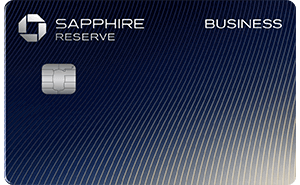
Sapphire Reserve for Business℠
Earn 200,000 bonus points
- Earn 4x points on flights booked direct
- Earn 4x points on hotel booked direct
- $300 Travel Credit
Earn 8x points on Chase Travel℠ for airline tickets, hotels, including The Edit℠, car rentals, cruises, activities and tours.
Earn 5x total points on Lyft rides through 9/30/27.
Earn 4x points on flights & hotels booked direct.
Earn 3x points on social media & search engine advertising on up to $1 million in spend each anniversary year, starting 11/15/26.
- Earn 200,000 bonus points after you spend $30,000 on purchases in your first 6 months from account opening.
- $7,000+ in value your first year. 200K points, valued at $4,000 for select flights and hotels through Chase Travel℠, plus $3,000+ in annual value through travel and business benefits.
- Earn 8x points on Chase Travel℠ for airline tickets, hotels, including The Edit℠, car rentals, cruises, activities and tours.
- Earn 5x total points on Lyft rides through 9/30/27.
- Earn 4x points on flights & hotels booked direct.
- Earn 3x points on social media & search engine advertising on up to $1 million in spend each anniversary year, starting 11/15/26.
- Get the most flexible travel credit compared to any other card, with up to $300 in statement credits each anniversary year on travel purchases.
- Enjoy complimentary access to the Chase Sapphire Lounge® by The Club network and Priority Pass™ Select membership. Two guests may accompany the Primary Cardmember to the lounges free of charge.
- Member FDIC
Earn 200,000 bonus points after you spend $30,000 on purchases in your first 6 months from account opening.

Ink Business Preferred® Credit Card
Earn 100k bonus points
- Earn 3x points on travel with the first $150k in combined purchases
- Earn 3x points on shipping purchases with the first $150k in combined purchases
- Cell Phone Protection
Earn 3 points per $1 on the first $150,000 spent on travel and select business categories each account anniversary year. Earn 1 point per $1 on all other purchases
Select business categories include:
- Shipping purchases
- Internet, cable and phone services
- Advertising purchases with social media sites and search engines
Learn more from these OMAAT posts:
- Earn 100k bonus points after you spend $8,000 on purchases in the first 3 months from account opening.
- Earn 3 points per $1 on the first $150,000 spent on travel and select business categories each account anniversary year. Earn 1 point per $1 on all other purchases
- Earn 5x total points on Lyft rides through 9/30/27.
- With Zero Liability you won't be held responsible for unauthorized charges made with your card or account information.
- Redeem points for cash back, gift cards, travel and more - your points don't expire as long as your account is open
- Go further when you book with Chase Travel℠. Enjoy competitive rates, seamless booking and premium benefits.
- Purchase Protection covers your new purchases for 120 days against damage or theft up to $10,000 per claim and $50,000 per account.
- Receive complimentary access to DashPass by DoorDash.
- Member FDIC
Earn 100k bonus points after you spend $8,000 on purchases in the first 3 months from account opening.
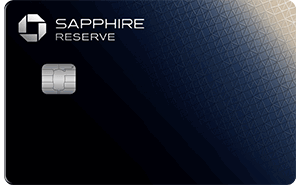
Chase Sapphire Reserve®
Earn 100,000 bonus points
- 4x points on flights and hotels booked direct
- 3x points on Dining
- $300 Annual Travel Credit
Earn 8x points on all purchases through Chase Travel℠, including The Edit℠ and 4x points on flights and hotels booked direct. Plus, earn 3x points on dining worldwide & 1x points on all other purchases
- Earn 100,000 bonus points after you spend $6,000 on purchases in the first 3 months from account opening.
- Get $3,000 in annual value with Sapphire Reserve.
- Earn 8x points on all purchases through Chase Travel℠, including The Edit℠ and 4x points on flights and hotels booked direct. Plus, earn 3x points on dining worldwide & 1x points on all other purchases
- $300 annual travel credit as reimbursement for travel purchases charged to your card each account anniversary year.
- Access over 1,300 airport lounges worldwide with a complimentary Priority Pass™ Select membership, plus every Chase Sapphire Lounge® by The Club with two guests. Plus, up to $120 towards Global Entry, NEXUS, or TSA PreCheck® every 4 years
- Get up to $150 in statement credits every six months for a maximum of $300 annually for dining at restaurants that are part of Sapphire Reserve Exclusive Tables.
- Count on Trip Cancellation/Interruption Insurance, Auto Rental Coverage, Lost Luggage Insurance, no foreign transaction fees, and more.
- Get complimentary subscriptions to Apple TV and Apple Music for a minimum of one year when activated by June 22, 2027, a value of $288 annually.
- Member FDIC
Earn 100,000 bonus points after you spend $6,000 on purchases in the first 3 months from account opening.

Chase Sapphire Preferred® Card
Earn 75,000 bonus points
- 5x total points on travel purchased through Chase Travel℠
- 3x points on dining
- 2x points on travel purchases
- 5x on travel purchased through Chase Travel℠
- 3x on dining
- 3x on vacation homes
- 3x on gas & EV charging
- 3x on top streaming services
- 3x on online groceries (excluding Walmart, Target, and wholesale clubs)
- 2x on all other travel purchases
- 1x on all other purchases
- Earn 75,000 bonus points after you spend $5,000 on purchases in the first 3 months from account opening.
- Enjoy benefits such as 5x on travel purchased through Chase Travel℠, 3x on dining, 3x on vacation homes, 3x on gas & EV charging, 3x on top streaming services and online groceries (excluding Walmart, Target, and wholesale clubs), 2x on all other travel purchases, 1x on all other purchases
- Earn up to $100 in statement credits each account anniversary year for hotel stays through Chase Travel
- Count on Trip Cancellation/Interruption Insurance, Auto Rental Collision Damage Waiver, Emergency Evacuation and Transportation and more
- Get a year of complimentary Apple TV when activated by December 31, 2026 - a value of $156.
- Complimentary DashPass which unlocks $0 delivery fees & lower service fees for 12 months when you activate by 12/31/27. Plus, a $10 promo each month on non-restaurant orders.
- Receive one statement credit of up to $120 every four years as reimbursement for the application fee charged to your card for a Global Entry, TSA Precheck® or NEXUS application.
- Transfer points to leading airline and hotel loyalty programs
- Member FDIC
Earn 75,000 bonus points after you spend $5,000 on purchases in the first 3 months from account opening.

Ink Business Unlimited® Credit Card
Earn $750
- Earn unlimited 1.5% cash back on all business purchases
- Car Rental Coverage
- Extended Warranty Protection
Earn unlimited 1.5% cash back on every purchase made for your business
Learn more from these OMAAT posts:
- Earn $750 bonus cash back after you spend $6,000 on purchases in the first 3 months from account opening
- Earn unlimited 1.5% cash back on every purchase made for your business
- No Annual Fee
- Redeem rewards for cash back, gift cards, travel and more through Chase Ultimate Rewards®.
- Earn rewards faster with employee cards at no additional cost. Set individual spending limits for greater control.
- Round-the-clock monitoring for unusual credit card purchases
- With Zero Liability you won't be held responsible for unauthorized charges made with your card or account information.
- 0% introductory APR for 12 months on purchases
- Earn 5% total cash back on Lyft rides through 9/30/27.
- Member FDIC
Earn $750 bonus cash back after you spend $6,000 on purchases in the first 3 months from account opening

Ink Business Cash® Credit Card
Earn $750
- Earn 5% Cash Back at office supply stores on the first $25k
- Earn 5% Cash Back on internet, cable TV, mobile phones, and landlines on the first $25k
- Car Rental Coverage
Earn 5% cash back at office supply stores and on internet, cable and phone services each account anniversary year on the first $25,000 in combined spend
Earn 2% cash back on dining and gas each account anniversary year on the first $25,000 spent in combined spend.
Earn 1% cash back on all other purchases with no limit to the amount you can earn.
Learn more from these OMAAT posts:
- Earn $750 when you spend $6,000 on purchases in the first 3 months after account opening
- Earn 5% cash back at office supply stores and on internet, cable and phone services each account anniversary year on the first $25,000 in combined spend
- Earn 2% cash back on dining and gas each account anniversary year on the first $25,000 spent in combined spend.
- Earn 1% cash back on all other purchases with no limit to the amount you can earn.
- Earn 5% total cash back on Lyft rides through 9/30/27.
- As a Chase cardmember, you'll be automatically checked for a credit line increase at least every 6 months.
- Complimentary three-month Instacart+ membership.
- No Annual Fee
- 0% introductory APR for 12 months on purchases
- Member FDIC
Earn $750 when you spend $6,000 on purchases in the first 3 months after account opening

Earn unlimited 2.5% total cash back on purchases of $5,000 or more and unlimited 2% cash back on all other business purchases.
Learn more from these OMAAT posts:
- Earn $1,000 bonus cash back after you spend $10,000 on purchases in the first 3 months from account opening.
- Earn unlimited 2.5% total cash back on purchases of $5,000 or more and unlimited 2% cash back on all other business purchases.
- Travel Benefits: Unlimited 5% total cash back on travel purchased through Chase Travel℠, No Foreign Transaction Fees and Trip Cancellation/Trip Interruption Insurance.
- The only business credit card with 2.5% cash back on every purchase of $5,000 or more.
- Get the buying power you need to make large purchases, cover monthly expenses and help your business grow. While you must pay your Pay In Full balance each month, this card has built-in flexibility. The Flex for Business feature allows for qualifying purchases to be paid over time with interest.
- Earn 5% cash back on Lyft rides now through September 30, 2027.
- Purchase with confidence with built-in protections like Fraud Protection, Zero Liability Protection, Purchase Protection, Cell Phone Protection, and Extended Warranty Protection.
- There's no additional cost for employee cards. Monitor spend with digital tools like purchase alerts, set spending limits, reporting, and more.
- Member FDIC
Earn $1,000 bonus cash back after you spend $10,000 on purchases in the first 3 months from account opening.
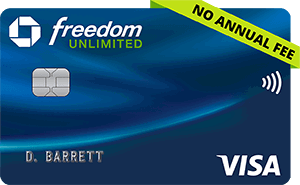
Chase Freedom Unlimited®
Earn a $200 Bonus
- Earn 3% Cash Back on Dining
- Earn 3% Cash Back at Drugstores
- Earn 1.5% Cash Back On All Other Purchases
Enjoy 5% cash back on travel purchased through Chase Travel℠, our premier rewards program that lets you redeem rewards for cash back, travel, gift cards and more; 3% cash back on drugstore purchases and dining at restaurants, including takeout and eligible delivery service, and 1.5% on all other purchases
Learn more from these OMAAT posts:
- Earn a $200 Bonus after you spend $500 on purchases in your first 3 months from account opening
- Enjoy 5% cash back on travel purchased through Chase Travel℠, our premier rewards program that lets you redeem rewards for cash back, travel, gift cards and more; 3% cash back on drugstore purchases and dining at restaurants, including takeout and eligible delivery service, and 1.5% on all other purchases.
- No minimum to redeem for cash back. You can use points to redeem for cash through an account statement credit or an electronic deposit into an eligible Chase account located in the United States!
- Enjoy 0% Intro APR for 15 months from account opening on purchases and balance transfers, then a variable APR of 18.49% - 27.99%.
- No annual fee - You won't have to pay an annual fee for all the great features that come with your Freedom Unlimited® card
- Keep tabs on your credit health, Chase Credit Journey helps you monitor your credit with free access to your latest score, alerts, and more.
- Member FDIC
Earn a $200 Bonus after you spend $500 on purchases in your first 3 months from account opening
Premium Chase personal cards
The two personal hub cards are what unlock the full value of Ultimate Rewards. Points earned on no-annual-fee companion cards are worth only 1 cent each in isolation, but pooled into a hub card account they become transferable to airline and hotel partners and eligible for elevated portal redemptions. You need at least one hub card for the ecosystem to work.
Top Pick: Chase Sapphire Preferred® Card
The Chase Sapphire Preferred is the best starter card in the miles and points world, and it remains a fixture in experienced travelers’ wallets too. The card earns 5x on Chase Travel℠ bookings, 3x on dining, streaming services, gas & EV charging, select vacation rentals (through Airbnb, VRBO, and more), and online grocery purchases, 2x on all other travel, and 1x on everything else. That is an excellent spread of bonus categories that aligns with how most people spend.
The welcome bonus is currently 75,000 Ultimate Rewards points after spending $5,000 within the first three months. At my valuation of 1.7 cents per point, that is worth $1,275, which is a strong return on a $95 annual fee card. The $100 annual hotel credit through Chase Travel brings the effective annual fee of -$5 in the first year and every year after.
A few things make the Sapphire Preferred genuinely better than the Chase Sapphire Reserve® for many people. Authorized users can be added without an additional annual fee on the Preferred versus $195 per authorized user on the Reserve. And, the card earns 3x on streaming, gas, and online groceries, categories the Reserve does not bonus. Also, the Preferred earns 2x on all travel, not just airfare and hotels booked direct.
The travel protections are also seriously underrated. Primary rental car collision damage waiver coverage is included, meaning you can decline the rental company’s CDW entirely and rely on the card. That benefit alone saves money every time you rent a car. Trip cancellation and interruption insurance covers up to $10,000 per traveler and $20,000 per trip. Baggage delay and lost luggage coverage round out a protection package that beats most cards at this price point, and compares favorably to many premium cards.
The Preferred redeems points through Chase Travel℠ with Points Boost at up to 1.75 cents per point, which is solid but below the Reserve’s 2 cents. For most people, that gap is less important than the $700 annual fee difference between the two cards.
Verdict: The best $95 annual fee travel card on the market, full stop. Ideal for someone getting started with Ultimate Rewards and equally compelling as an ongoing companion to the Reserve for those who want both. The welcome bonus justifies the fee many times over in year one, and the primary car rental coverage make it easy to justify keeping long-term.
Link: Learn more about the Chase Sapphire Preferred® Card
Chase Sapphire Reserve®
The Chase Sapphire Reserve is the premium personal hub card for Ultimate Rewards. It earns 4x points on flights and hotels booked directly and 3x on dining, with 1x on everything else. The card’s $300 annual travel credit is the most important benefit to understand: it reimburses any purchase coded as travel automatically, with no registration required, and covers everything from flights to rideshares to taxis. That credit helps with the effective cost of the $795 annual fee for anyone who spends at least $300 on travel annually, which is most cardholders.
The welcome bonus is 100,000 Ultimate Rewards points after $6,000 in spending within the first three months. At 1.7 cents per point, that is worth $1,700. Lounge access includes a Priority Pass Select membership with 2 guests per visit and access to Chase Sapphire Lounges, which are among the best credit card lounges in the United States, particularly the locations at New York LaGuardia and Boston Logan. Authorized users cost $195 each and receive their own lounge access.
Points Boost through Chase Travel allows Reserve cardmembers to redeem at up to 2 cents per point, the highest fixed-value redemption rate available in the program. The Reserve also includes a Global Entry, NEXUS, or TSA PreCheck credit every four years, and unlike most cards, it covers NEXUS, which is by far the best deal of the three programs at $50 for five years and includes Global Entry benefits for travel between the US and Canada.
Where the Reserve falls short relative to the Preferred: Authorized users are expensive. And the $795 gross annual fee is a high bar to clear even after the travel credit.
Verdict: Worth it if you will maximize the $300 travel credit, use the lounge access regularly, and value the 2-cent Points Boost redemption rate. If you are not checking those boxes consistently, the Sapphire Preferred delivers better per-dollar value at a fraction of the cost.
Link: Learn more about the Chase Sapphire Reserve® Card
Personal companion card
Chase Freedom Unlimited®
The Chase Freedom Unlimited is the essential personal companion card for any Chase ecosystem. It earns 5x on Chase Travel℠ bookings, 3x on dining and at drugstores, and 1.5x on all other purchases. The 1.5x flat rate on non-bonused spending is the key feature: paired with the Sapphire Reserve, that 1.5x turns into transferable points worth 2.55 cents per dollar at my valuation, which is hard to beat on everyday spending with no annual fee. The welcome bonus is $200 after $500 in spending within the first three months, one of the easiest earning thresholds among any card in this series.
The Freedom Unlimited also includes an introductory APR offer on purchases and balance transfers, making it useful for large planned purchases. Foreign transaction fees apply to this card, so keep your purchases limited to the US.
Verdict: Should be in every Chase ecosystem. The 1.5x on all spending is the strongest non-bonused earn rate available on a no-fee card, and the 3x on dining adds a useful redundancy to the Sapphire cards’ dining categories.
Link: Learn more about the Chase Freedom Unlimited®
Premium Chase business rewards cards
Chase has two business hub cards at very different price points. Both unlock transfer partner access and elevated portal redemptions for all points pooled into the account, including from no-fee companion cards. Business card eligibility is more accessible than most people realize: a sole proprietorship, freelance work, or small side business qualifies, and you can use your name as the business name and your SSN as the tax ID.
Top Pick: Ink Business Preferred® Credit Card
The Ink Business Preferred is the best $95 annual fee business card in the market, and one of the strongest value propositions in the entire Chase portfolio. The welcome bonus of 100,000 Ultimate Rewards points after $8,000 in spending within the first three months is worth $1,700 at my valuation, making it one of the most valuable welcome offers available at this fee level.
The card earns 3x points on travel, shipping, internet, cable, phone services, and advertising on social media and search engines, all on the first $150,000 in combined annual spending across those categories. That $150,000 cap is high enough that most businesses will never hit it. For a company spending meaningfully on any combination of those categories, the 3x earn is exceptional. The card has no foreign transaction fees and includes trip cancellation and interruption insurance, primary rental car coverage, and cell phone protection when the monthly bill is paid with the card.
Verdict: The best business card at this price point, and an essential part of any Chase ecosystem build. Apply for this alongside or after a personal Sapphire card to maximize welcome bonus earning and unlock full-value redemptions on all business card spending.
Link: Learn more about the Ink Business Preferred® Credit Card
Sapphire Reserve for Business℠
The Sapphire Reserve for Business is Chase’s newest premium business card, built on the framework of the personal Reserve. It carries the same $795 annual fee and the same $300 annual travel credit structure, but with a business-specific bonus category set and an expanded credits stack. The limited-time welcome bonus of 200,000 Ultimate Rewards points is offered after $30,000 in spending within the first six months.
The earn structure is the strongest in the program: 8x on Chase Travel portal bookings, 5x on Lyft through September 2027, 4x on direct flights and hotel bookings, 3x on social media and search engine advertising, and 1x on everything else. For a business that spends heavily on travel booked through Chase Travel, the 8x rate at 1.7 cents per point equals a 13.6% return on that spending, which is difficult to match anywhere.
Lounge access mirrors the personal Reserve: Priority Pass Select with 2 guests, and access to Chase Sapphire Lounges with the same unlimited visit policy. Authorized users are free, though they do not receive lounge access. The credits stack includes up to $500 in annual hotel credits through The Edit by Chase Travel (in two $250 semi-annual credits with a two-night minimum stay), up to $400 in ZipRecruiter credits, up to $300 in DoorDash credits, up to $200 in Google Workspace credits, up to $120 in Lyft credits, and up to $100 in giftcards.com credits. In practice, the $300 travel credit and the $100 giftcards.com credit are the easiest to use; the ZipRecruiter and Google Workspace credits are highly situational.
At $120,000 in annual spending, the card unlocks IHG Diamond status, Southwest A-List status, a $500 Southwest credit, and a $500 Shops at Chase credit. That spending threshold is significant, but the status benefits are genuinely valuable for someone operating at that level.
Verdict: Compelling primarily for the 150,000-point welcome bonus and the lounge access benefits. The earn structure is the best in the program for travel-heavy businesses. The credits stack requires active management to extract full value, and many cardmembers will find the $300 travel credit and giftcards.com credit to be the only reliably useful ones. A strong candidate to hold alongside the Ink Business Preferred for businesses that can justify both.
Link: Learn more about the Sapphire Reserve for Business℠
Business companion cards
The two no-annual-fee companion cards are what make the Chase ecosystem genuinely powerful. On their own, the points they earn are worth only 1 cent each. Combined with any premium card in the same Chase account, those points unlock full transfer partner access and Points Boost redemptions. The companion cards are not substitutes for a premium card, but they significantly amplify the total points you can accumulate.
Ink Business Unlimited® Credit Card
The Ink Business Unlimited is the business equivalent of the Freedom Unlimited, earning 1.5x on all business purchases with no annual fee. The welcome bonus is $750 after $6,000 in spending within the first three months. Like the Freedom Unlimited, the 1.5x flat rate is what matters: pooled into an Ink Business Preferred or Sapphire hub card, every dollar of business spending at 1.5x becomes transferable points. For businesses with a lot of non-bonused spending, this card captures value that would otherwise be left at 1x on a premium card.
Verdict: The default business companion for non-bonused spending. Apply for this once the Ink Business Preferred welcome bonus is earned, as it is fully independent in terms of eligibility.
Link: Learn more about the Ink Business Unlimited® Credit Card
Ink Business Cash® Credit Card
The Ink Business Cash earns 5x on the first $25,000 spent annually at office supply stores and on internet, cable, and phone services, and 2x on the first $25,000 spent at restaurants and gas stations, with 1x on everything else. The $25,000 cap on each 5x category means the card can generate up to 125,000 points per year just from office supply and telecom spending, before counting any other categories. For a business spending meaningfully on those categories, pairing the Ink Business Cash with the Ink Business Preferred makes the combined earn rate on telecom and office spending exceptionally strong. The welcome bonus matches the Ink Business Unlimited at $750 after $6,000 in spend in three months.
Verdict: The category booster in the business ecosystem. Most valuable for businesses with significant internet, phone, or office supply spending. Can be held simultaneously with the Ink Business Unlimited and Ink Business Preferred, each with their own welcome bonus.
Link: Learn more about the Ink Business Cash® Credit Card
Building your Ultimate Rewards ecosystem
How to pool points
All Chase cards with the same online login can pool their Ultimate Rewards points into a single account. The value of the combined points is determined by the highest-tier hub card in the account. That means the 1.5x earned on a Freedom Unlimited becomes transferable to airline and hotel partners as soon as you have a Sapphire Preferred, Sapphire Reserve, or Ink Business Preferred in the same account. To pool points, log into your Ultimate Rewards account, select the card you want to transfer from, click Combine Points, and choose the destination card. You can also transfer points to a household member or business owner linked to your account.
Suggested build order
For someone starting from scratch, the Sapphire Preferred is the right first card. The welcome bonus is strong, the annual fee is low, and the card unlocks full transfer partner access immediately. Once that bonus is earned, the Ink Business Preferred is the natural next card if you have any qualifying business activity, as its welcome bonus is fully independent and does not affect Sapphire card eligibility. From there, the Freedom Unlimited covers non-bonused personal spending at 1.5x with no fee. If business spending in telecom or office supply categories is meaningful, the Ink Business Cash adds another layer. The Sapphire Reserve makes sense as an upgrade from the Preferred once lounge access and the $300 travel credit become genuinely valuable to your travel frequency.
What about Shop through Chase?
Shop through Chase is an online shopping portal accessible through your Ultimate Rewards account that partners with hundreds of retailers to offer bonus points on purchases you would make anyway. Partner retailers include major brands across virtually every category. The bonus points stack on top of your card’s standard earn rate, meaning a 5x category plus a 5x portal bonus equals 10x on that purchase. This feature is underused and can meaningfully accelerate points accumulation for regular online shoppers.
Chase Ultimate Rewards Transfer Partners
The partner lineup
Chase transfers to 14 partners: eleven airlines and three hotels. The airline lineup covers all three major alliances plus several independent carriers. The hotel lineup of IHG, Marriott Bonvoy, and World of Hyatt covers the three major hotel programs. At 14 partners, Chase’s lineup is smaller than Amex’s 21 or Capital One’s 20, but the quality of the partners available and the breadth of alliance coverage make the program highly flexible for almost any redemption goal.
World of Hyatt
World of Hyatt is the most valuable hotel partner in the program and one of the primary reasons to earn Ultimate Rewards. Award nights at luxury Hyatt properties, including Park Hyatt, Alila, and Andaz locations, are available at rates that frequently deliver 2 to 3 cents per point of value. A free night at the Park Hyatt Maldives starts at 25,000 to 35,000 points for a room that retails well above $1,000.
United MileagePlus
United MileagePlus is the most accessible Star Alliance currency for most US-based travelers, given United’s extensive domestic network and hub presence. Transferring Ultimate Rewards to United is particularly useful for Star Alliance premium cabin redemptions on carriers like Lufthansa, ANA, and Swiss, as well as domestic economy redemptions on United’s saver award chart. Chase’s relationship with United is long-standing, and transfers post quickly.
Air Canada Aeroplan
Aeroplan is one of the most versatile programs available, covering all Star Alliance carriers plus several partners outside the alliance, with a favorable redemption chart and free stopovers on one-way awards. For anyone targeting premium cabin redemptions on Star Alliance carriers, Aeroplan frequently offers better pricing than the airlines’ own programs. Transfers from Chase post instantly.
Singapore Airlines KrisFlyer
Singapore KrisFlyer is the primary vehicle for booking Singapore Airlines awards, including one of the most sought-after first class products in the world aboard the A380. Award availability in Singapore Suites is limited but does exist, and a one-way redemption from the US West Coast to Tokyo in business class runs 67,500 KrisFlyer miles. Transfers typically take 24 to 48 hours.
British Airways Executive Club and Iberia Plus
Both British Airways Avios and Iberia Avios transfer from Chase at 1:1 and are interchangeable within the IAG Avios ecosystem. Avios are most valuable for short-haul redemptions on American Airlines and British Airways, where the distance-based pricing can produce exceptional value on flights under 1,000 miles. The ability to book American Airlines domestic flights at 7,500 Avios one-way makes this partnership particularly useful for US-based travelers.
Virgin Atlantic Flying Club
Virgin Atlantic Flying Club is a key partner for booking ANA first and business class, which is otherwise difficult to access through US-based programs. A one-way redemption in ANA first class from the US to Japan runs 110,000 to 120,000 Virgin Atlantic miles depending on routing. Flying Club also prices Delta One business class at competitive rates not available through any other transfer partner.
Southwest Rapid Rewards
Southwest transfers from Chase at 1:1.
Hotel partners: IHG and Marriott
IHG One Rewards and Marriott Bonvoy both transfer from Chase at 1:1. IHG points are generally worth less than half a cent each in cash redemptions, and Chase points are worth significantly more, so transferring to either hotel program directly is rarely optimal compared to a transfer to Hyatt. The primary use case for these partners is topping up a balance that is close to a specific award threshold, rather than as a primary redemption strategy.
Application rules & 5/24
The 5/24 rule
Chase’s 5/24 guideline means that applicants who have opened five or more new credit card accounts across any issuer in the past 24 months are typically not approved for most Chase cards. All seven Ultimate Rewards cards are subject to this rule. Anecdotal reports suggest Chase has been less consistent about enforcing 5/24 since around April 2023, but the safest approach is to prioritize Chase cards early in your credit card strategy before other issuers. Most non-Chase business cards do not count toward the five-card limit, meaning Amex, Citi, and Capital One business cards generally do not add to your 5/24 count. Chase business cards do not add to your personal 5/24 count but are still subject to it.
Sapphire card eligibility
The Sapphire Preferred and Sapphire Reserve are mutually exclusive in terms of holding both simultaneously, though you can product change between them after one year. Historically, Chase enforced a 48-month rule restricting you from receiving a new cardmember bonus on a Sapphire product within 48 months of a prior Sapphire bonus. The current policy uses effectively lifetime bonus language: you may not be eligible for the welcome bonus if you have ever received a bonus on that specific card. In practice, Chase applies a pop-up notification during the application process if you are not eligible for the bonus. If you received a bonus on the Sapphire Preferred, you may still be eligible for the Sapphire Reserve bonus, and vice versa, as long as you have never received a bonus on that specific card.
Ink card eligibility
The three Ink business cards are each fully independent in terms of bonus eligibility. You can hold all three simultaneously and have received a welcome bonus on each. There is no restriction linking Ink card eligibility to personal Sapphire cards or to other Ink cards. The Sapphire Reserve for Business is similarly independent of all other Chase cards. The practical implication is that a full Chase ecosystem build could include the Sapphire Preferred, Ink Business Preferred, Freedom Unlimited, Ink Business Unlimited, and Ink Business Cash, each with their own welcome bonus collected at different points in time.
Applying for Chase business cards
Eligibility for a Chase business card is more accessible than many people realize. You do not need an incorporated entity or separate business revenue. Freelance work, selling on eBay or Etsy, consulting, or any other side activity qualifies. For a sole proprietorship, you can use your legal name as the business name, your home address as the business address, your SSN as the tax ID, and report revenue honestly including $0 for a new venture. Chase will ask for the number of employees, years in business, and annual revenue, and there is no penalty for reporting a new or small operation.
Things to Consider
You need a premium card for full value
The Freedom Unlimited, Ink Business Unlimited, and Ink Business Cash earn points worth only 1 cent each without a hub card. Opening a companion card before a hub card means your points sit at reduced value until you add a Sapphire Preferred, Sapphire Reserve, or Ink Business Preferred. The right order is hub card first, companion cards after.
The Sapphire Preferred outperforms the Reserve for many spenders
Add in the free authorized users, 3x on streaming, gas & EV charging, and online groceries, and 2x on all travel, and the Preferred has a meaningfully broader and more rewarding category structure for most consumers. The Reserve makes sense when lounge access and the $300 travel credit are regularly used. It does not make sense purely on earn rate.
Chase Travel portal bookings have an opportunity cost
Earning 5x on Chase Travel℠ (Preferred) or 8x on Chase Travel℠ (Sapphire Reserve for Business) requires booking through Chase’s portal rather than directly with the airline or hotel. Portal bookings typically do not earn airline miles or hotel points and do not receive elite status benefits. For someone with valuable airline or hotel status, the opportunity cost of portal bookings can exceed the value of the bonus earn. Direct bookings at 3x or 4x on the hub cards are usually the better path for status-chasing travelers.
Hyatt is the transfer partner with the most outsized potential
World of Hyatt is the unique advantage of the Chase ecosystem over nearly every other program (Bilt aside). For anyone who wants to use points for luxury hotel stays, building a Chase Ultimate Rewards balance with the intention of transferring to Hyatt is one of the highest-value strategies. The Park Hyatt Maldives, Park Hyatt Tokyo, and similar properties regularly deliver 3 to 5 cents per point of value on award nights.
Bottom line
Chase Ultimate Rewards is the most versatile and well-rounded transferable points program available. The combination of seven cards at multiple price points, a full no-fee companion card tier that feeds into the same currency, and a partner lineup anchored by World of Hyatt and strong airline programs makes it the most defensible single-program strategy for most travelers.
The core of any Chase build is the Sapphire Preferred: strong welcome bonus, excellent category coverage, free authorized users, and primary rental car coverage make it the best $95 annual fee card on the market. The Ink Business Preferred adds a 100,000-point welcome bonus with independent eligibility for anyone with qualifying business activity. The Freedom Unlimited handles non-bonused personal spending at 1.5x with no fee. Together, those three cards represent a points-earning machine that is accessible, low-maintenance, and highly rewarding.
Upgrade to the Sapphire Reserve when lounge access and the $300 travel credit align with your travel habits. Add the Ink Business Cash for telecom and office supply category spend. Consider the Sapphire Reserve for Business if you are a heavy business traveler who can justify the fee and will use the lounge access. At every level of spending and every stage of engagement, Chase has a card that fits.



Membership is free and takes no more information than commenting as a guest. Earn status points for good contributions, and see fewer ads as your status grows.
There are currently no responses to this story.
Be the first to respond.