
To be clear, that question in the title doesn’t at all reflect my beliefs, but that is a ridiculous explanation that is being thrown around.
Here in the United States, we’ve just seen Spirit Airlines cease operations, and of course there’s a political blame game going on. But the simple reality is that Spirit failed to turn a profit for seven years, and lit many billions of dollars on fire.
There’s one question that often comes up — why do ultra low cost carriers in the United States struggle so much, while some foreign ultra low cost carriers are extremely profitable? For example, Ryanair is one of Europe’s most profitable airlines, and has among the best margins in the entire global industry.
What drives that disconnect? Well, let’s talk about that…
Spirit’s failure has nothing to do with Americans being “rich”
Dumb takes online are hardly worth calling out, because there are so many of them. However, Blake Scholl, the founder of Boom (which wants to bring back supersonic travel, or something), has a real skill for having obnoxiously bad takes (he also thinks airport security should be eliminated altogether).
His take on Spirit going out of business is so unbelievably bad that I can’t help but call it out.
Scholl suggests that the reason that ultra low cost carriers in the United States fail is because Americans are “more productive and wealthier than Europeans,” and “can afford nicer things,” and he points out how the UK is poorer than any of the 50 states. In other words, Americans don’t want cheap airfare, they want to pay for nice things… like American Airlines economy!
THAT IS SO FLIPPING STUPID and out of touch, as a vast majority of Americans struggle with affordability. But anyway, let’s ignore tech bro God complex logic, and talk about what’s actually going on. Though I do hope that before European airlines order Boom’s imaginary plane, they remember that their customer base is too poor to actually afford to fly on it. 😉
Why ultra low cost carriers struggle in the US market
Let’s talk about what’s really going on in the US airline industry, and what has caused the massive profitability divide that we’ve seen. I don’t really like the term “ultra low cost carrier,” because even airlines that used to be referred to as that are going upmarket, introducing premium cabins, bundled fares, and more.
But let me frame this largely in the context of Spirit vs. Ryanair, and why Ryanair continues to thrive, while airlines like Spirit fail.
Loyalty programs & credit cards rule US airlines
Simply put, the United States has the most robust credit card industry in the world (thanks to high interchange fees), and airlines have done a phenomenal job tapping into that, given how addictive loyalty programs can be.
Even among the most profitable airlines in the US, like Delta and United, they don’t actually transport passengers with great margins (just compare their cost per air seat mile to their revenue per air seat mile). Instead, every passenger is viewed as a new opportunity to sell a credit card. Just listen to any airline earnings call, and you’ll hear them talk about the extent to which loyalty programs drive decisions across the company.
So, why can’t smaller low cost carriers leverage credit cards in the same way as big airlines? Well, think about it. Airlines all want people spending hundreds of thousands of dollars per year on their cards. Those people generally want to redeem their miles to fly to Paris or Tokyo or Venice in a premium cabin, and not Baltimore or Houston or Orlando in economy. Or at least they’d like to think those are their aspirations.
The dynamics are completely different in Europe, where interchange fees are lower, and therefore credit card revenue also doesn’t contribute as much to airline profitability. In other words, in Europe, airlines actually have to compete on… transporting passengers! Novel concept, eh?
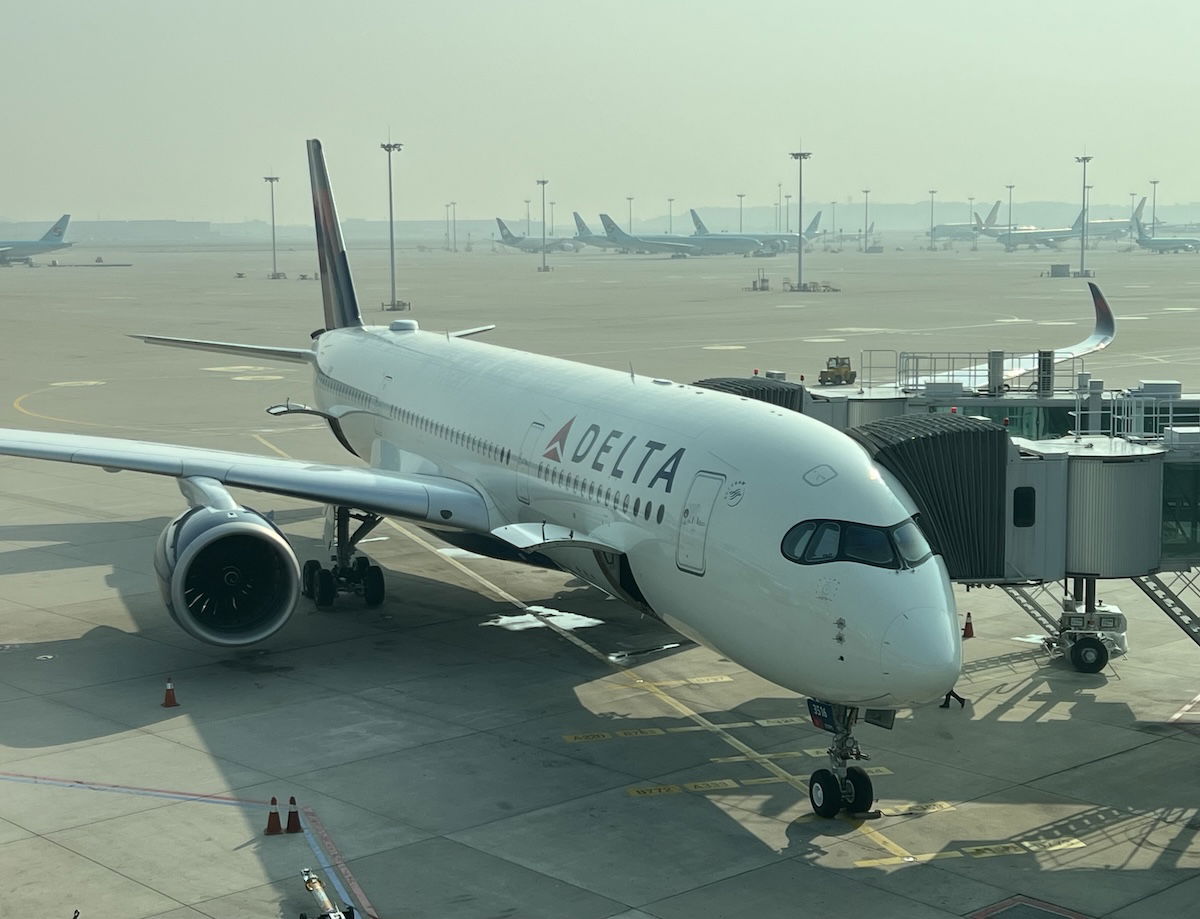
European low cost carriers are actually low cost
In the United States, the issue is that “ultra low cost carriers” are no longer actually ultra low cost. Their cost advantage has decreased over the years, between increases in labor costs, airport charges going up, product investments, and much more.
Don’t believe me, let’s look at numbers. Ryanair’s cost per air seat mile is somewhere around seven cents (in USD), while Spirit’s was closer to 12 cents. That’s right, Ryanair’s cost per air seat mile is around 40% lower, which is massive. How is the airline able to do that?
- Europe has some huge labor advantages, and Ryanair is known for using every labor loophole possible, from hiring crews through third parties, to setting up bases in very low cost markets, to avoiding unionization
- Ryanair primarily operates to secondary markets, in order to reduce airport costs, and the company is also a ruthless negotiator with regulators, vendors, etc.
- Ryanair doesn’t spend a dime on the passenger experience, unless it has to (unlike Spirit, which has been adding premium seating, Wi-Fi, etc.)
When your costs are about half those of competitors, it gives you a huge advantage, and that can’t be overstated.
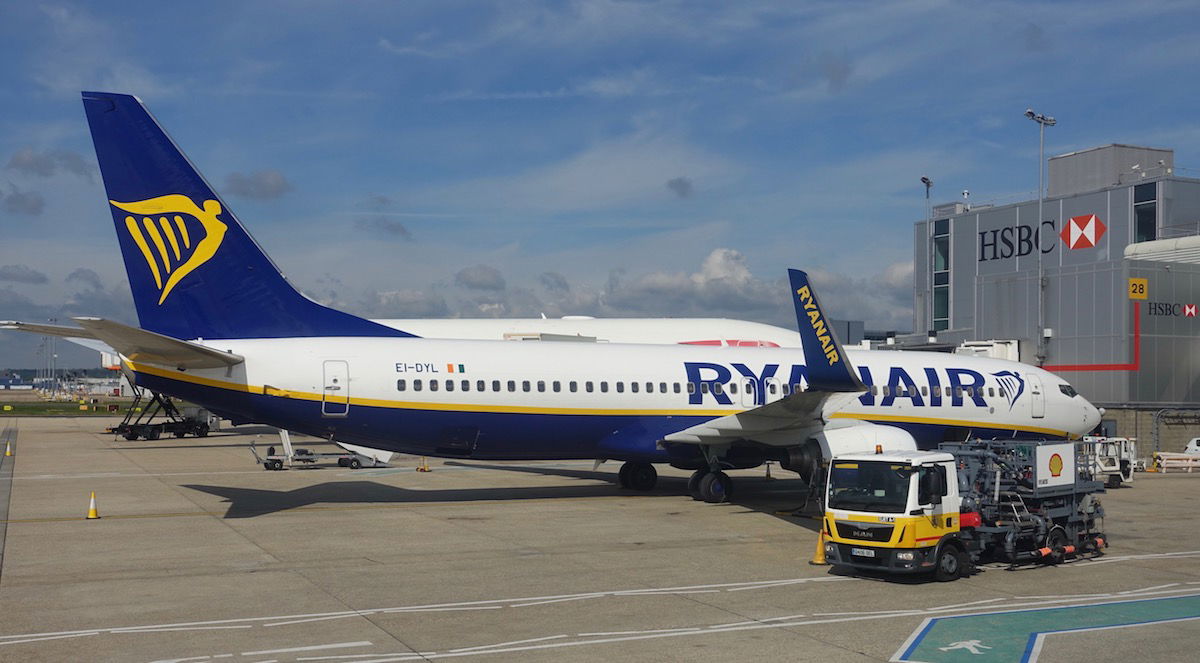
Europe has different point-to-point competition dynamics
For so long, Spirit’s business model has primarily been to replicate routes operated by the legacy airlines, by trying to undercut them on cost. That’s totally different than the reality of aviation in Europe, where most of the major airlines have one, or maybe two, hubs.
Ryanair doesn’t try to compete in markets served by legacy airlines. You won’t find the airline flying from London Heathrow (LHR) to Paris Charles de Gaulle (CDG), and saying, “oh, maybe we can offer a fare that’s a little cheaper.” Instead, the airline flies nonstop in markets that other airlines don’t bother serving, because it’s not part of the legacy airline hub-and-spoke model.
If you want to fly from Aberdeen (ABZ) to Alicante (ALC) or Krakow (KRK), you can fly Ryanair. Like, why would you connect through Heathrow on British Airways, only to possibly misconnect, and still have to purchase food and drinks onboard? The average sector length in Europe is also much shorter than in the US, so most people are willing to tolerate a basic experience on a 60-90 minute flight.
We know this is also true because of how Ryanair treats its customers. Just look at the carrier’s X account, where it basically tells customers to bugger off, because it knows they’ll come back the next time they want to fly, and are looking for the most convenient flight and best fare.
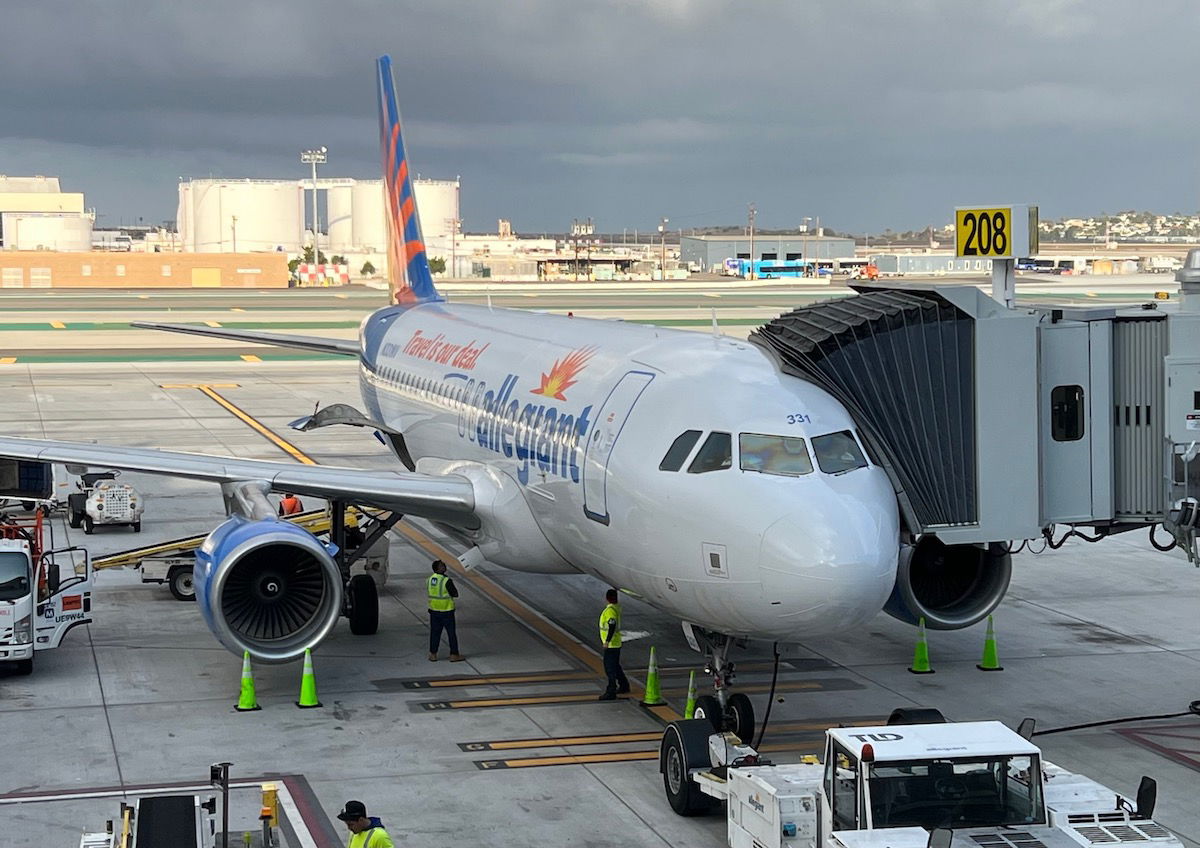
By the way, I’d point out that the US ultra low cost carriers that actually do reasonably well are those that don’t compete directly with the legacy airlines. For example, Allegiant has maintained decent profitability, by focusing on unserved point-to-point markets. Want to fly from Flint (FNT) to St. Petersburg (PIE)? Allegiant is for you… and the business model works!
US legacy airlines have been relentlessly upgauging
When it comes to airline fleet planning, one big decision airlines face is whether to get smaller or larger variants of an aircraft. For example, take the Airbus A319 vs. the A321. The A321 gives you several dozen more seats, and the incremental operating costs are minimal. The issue is, there’s only so much demand in a given market, and you don’t want to have too many seats, or else you’ll have to discount tickets too much, and you don’t want to destroy your yields.
Among the “big three” US carriers, we’ve seen a massive amount of upgauging, whereby airlines are increasingly acquiring larger narrow body planes, particularly the Airbus A321neo. This plane has great economics on a per seat basis, the challenge is just filling all those seats.
But this is where US airlines have transformed themselves, by aggressively rolling out basic economy, and essentially viewing those fares as an opportunity to market their loyalty program to travelers. It’s very different in Europe, where this increase in aircraft size isn’t happening in the same way.
For example, take Air France, which is standardizing its regional fleet with Airbus A220s. Air France is quite literally trying to skim the market and be a premium airline, not competing for cheap connecting traffic.
Bottom line
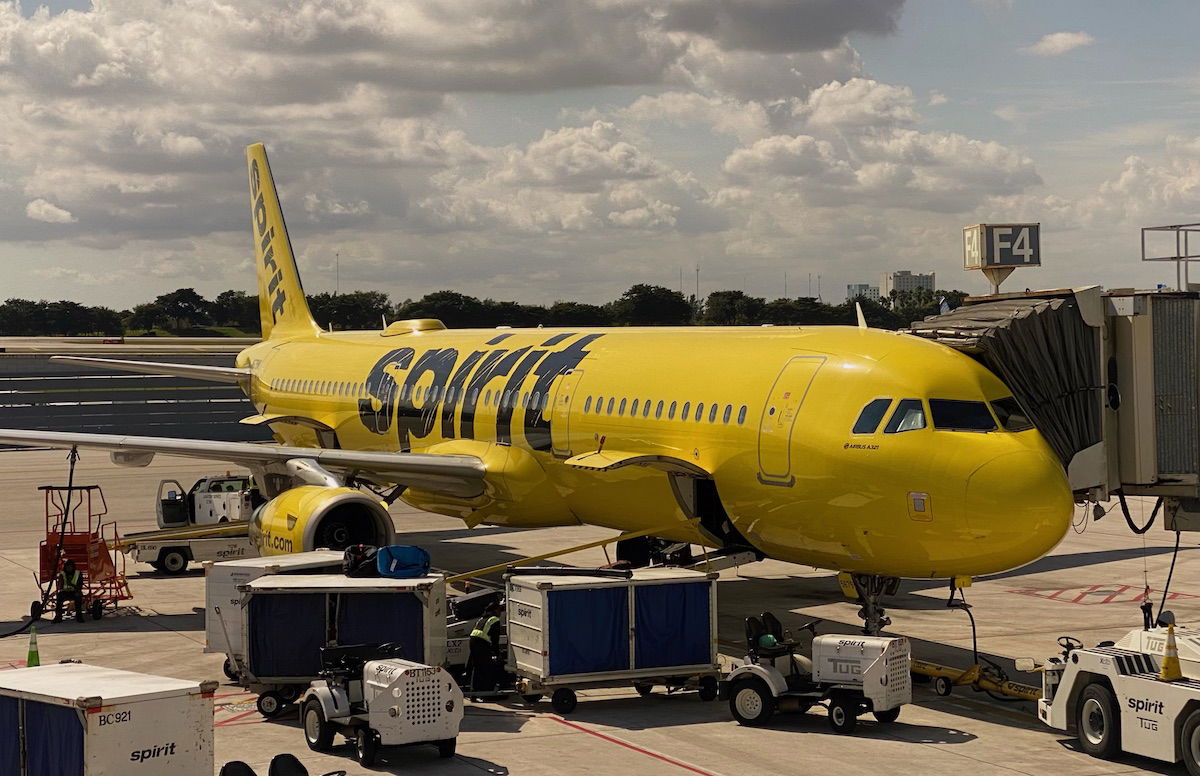
No, Spirit Airlines didn’t fail because Americans are too rich to want cheap airfare. Spirit failed because the US airline industry has evolved massively over the years, while some ultra low cost carriers failed to update their business models to reflect the times.
As US airline industry profits have increasingly become about loyalty programs, it has made it tough for ultra low cost carriers to compete. For that matter, the ultra low cost carrier cost advantage has largely been eroded, due to higher labor costs and higher airport costs.
For airlines like Spirit, the business model was so much about going head-to-head against legacies and undercutting them on cost, but unfortunately airlines like Delta and United got the last laugh there.
What do you make of the disconnect in economics between value carriers in Europe and the US?




IMO, two of the biggest reasons are:
a. the class of people who fly ultra low-cost carriers in the United States is simply repugnant. By and large, they are people I wouldn't want to be around for 60 seconds, much less an entire flight. There are people playing loud videos and music on the flight, constant loud talking and fistfights at the gate and on board.
b. ULCC in the UK and EU...
IMO, two of the biggest reasons are:
a. the class of people who fly ultra low-cost carriers in the United States is simply repugnant. By and large, they are people I wouldn't want to be around for 60 seconds, much less an entire flight. There are people playing loud videos and music on the flight, constant loud talking and fistfights at the gate and on board.
b. ULCC in the UK and EU and required by law to provide UK/EU 261 protections to passengers. You will not be left stranded and forced to find your own way home like you quite often are in the United States during IROPs.
By far the rowdiest flights I have been on were with RyanAir. Would never happen in the US. Pilots would turn back and pax would be arrested.
You're 100% correct. The Spirit meltdown videos on YT are epic and anyone that has a few more dollars will not want to be around that crowd.
@ Queen Esther -- Regarding your first point, that's certainly what people perceive, and it's the carrier's reputation. But I also think this is an area where Spirit has unfairly suffered, being the butt of jokes.
I've taken several flights on Spirit, and on the flights I've taken, the crowd has been perfectly pleasant. Yes, what you describe happens a very small percentage of the time, but that hardly makes up a majority of the carrier's customer base.
@Ben
It's exactly that, just a perception.
But it's so infamous, people who would pay a premium just to avoid LCC.
So many people who would avoid Spirit and pay more. Ironically many of these people never actually flown Spirit even once.
While only some minority of frequently flyers who got their loyalty abused by legacies turns to the Big Front Seat mega deals and enjoyed it while it lasts.
Just say Black people……..we all know what you meant.
Easyjet DOES fly to CDG, BER, and some major airports but your point works for Ryanair.
Labor costs or probably the single biggest factor
Yes, because EasyJet is not an ULCC! It’s a LCC (like, e.g., Vueling) with a different business model. Ryanair and Wizz are the main ULCCs in Europe.
EasyJet as I recall has always modeled itself a bit more like Southwest Airlines, so more LCC than ULCC.
Yes, followed by government subsidies Ryanair is receiving by serving crappy local airports a long way from the city center. They not only do this to save cost, often they receive subsidies by local government. By EU regulation the subsidies need to be limited to a certain time and that's the momemt Ryanair closes the station.
@ James k -- There's definitely some overlap (I'm not suggesting there's none). But to use BER as an example, it's not an airport where Lufthansa has any point-to-point presence. So even though it's a major airport, it's one where legacy competition is of limited concern.
He is partially correct.
Americans are willing to pay more.
But not because Americans are wealthier.
But because these narcissist would take on debt to pay for a lifestyle they couldn't afford. Just look at all the response on people who are willing to pay more just to avoid LCC. Europeans who couldn't afford suck it up rather than taking on more debt.
American likes to pay for nicer things even if...
He is partially correct.
Americans are willing to pay more.
But not because Americans are wealthier.
But because these narcissist would take on debt to pay for a lifestyle they couldn't afford. Just look at all the response on people who are willing to pay more just to avoid LCC. Europeans who couldn't afford suck it up rather than taking on more debt.
American likes to pay for nicer things even if they couldn't afford it. Maybe it's because some are too dumb to realize they couldn't afford such a lifestyle.
#RealHouswivesOfUSA
#WhoAreBrokeButFliesFirstClass
Well said & to the point
Ben says: Much of Delta’s profits come from its loyalty program.
Thanks Ben for writing that. As we all know except for one of your readers DL’s standing as the number 1 U.S. carrier in terms of profits is not because of transporting people or because of its products but because of making money from its partnership with AMEX leveraging its Skymiles program. Other airlines outside of the U.S. actually need to work harder to...
Ben says: Much of Delta’s profits come from its loyalty program.
Thanks Ben for writing that. As we all know except for one of your readers DL’s standing as the number 1 U.S. carrier in terms of profits is not because of transporting people or because of its products but because of making money from its partnership with AMEX leveraging its Skymiles program. Other airlines outside of the U.S. actually need to work harder to turn a profit by offering much better hard and soft products. Are U.S. airlines just an extension of the banks and credit card companies nowadays?
Labour costs are unquestionably the main factor. Particularly for Ryanair's Eastern European bases. This is why even the Euro legacy airlines (particularly BA and IAG) have better margins than their US competition.
Also, LCCs don't have the same bad reputation in Europe as Spirit. It's very normal and accepted to be flying Ryanair/EasyJet, probably because our legacy airlines aren't much better.
Perhaps a better comparison is with EasyJet - they make a big...
Labour costs are unquestionably the main factor. Particularly for Ryanair's Eastern European bases. This is why even the Euro legacy airlines (particularly BA and IAG) have better margins than their US competition.
Also, LCCs don't have the same bad reputation in Europe as Spirit. It's very normal and accepted to be flying Ryanair/EasyJet, probably because our legacy airlines aren't much better.
Perhaps a better comparison is with EasyJet - they make a big thing of operating to primary airports (largest hubs including LGW, MXP, AMS, GVA etc) and have much less of a cost advantage than Ryanair. But they still seem to be doing just fine and can command a fare premium compared to Ryanair.
I think another thing working against Spirit was the Pratt & Whitney fiasco on their A320neo fleet. EasyJet/Ryanair use CFM engines.
No argument with the analysis. But don't be so quick to blow off the idea that Americans are competitively wealthy. US per capita GDP is $93k. UK is $57k -- lower than any of the 50 states individually.
There's obviously a lot more then this that goes into lifestyle and perceptions of wealth/poverty. But "I feel like times are tough, so Americans aren't richer than Europeans" isn't convincing.
Its all relative tho. A bag of lays costs $9 compared to $3 in the uk. A bottle of mineral water in the US (actual mineral water, not that re-labelled tap water junk like dasanai) is $5 vs $2. In the US, the typical cost of medical insurance is 10% of their income or face bankrupcy if they get ill, food standards are low in the US, theres not really any concept of social care...
Its all relative tho. A bag of lays costs $9 compared to $3 in the uk. A bottle of mineral water in the US (actual mineral water, not that re-labelled tap water junk like dasanai) is $5 vs $2. In the US, the typical cost of medical insurance is 10% of their income or face bankrupcy if they get ill, food standards are low in the US, theres not really any concept of social care etc. Plus the beer is terrible :)
Plus percapita GDP actually means nothing when its heavily skewed. The average income in the US is more like $63k whereas the uk is $43k.
GDP per capita is misleading sometimes. If you have to pay $100 per person for a **** meal in a US chain restaurant, are you really twice as wealthy as someone in France who pays $50 for the same meal? You certainly added twice as much to GDP, but I’m not so sure.
See also, e.g., the US healthcare system which spends twice the GDP per capita of Europe (let alone the difference in absolute terms) to achieve almost universally worse outcomes.
GDP per capita is usually the wrong measure.
GDP is weird anyway — if vandals smash all the windows in my house and I pay to have them replaced, that’s counted as an increase in GDP and therefore is considered good.
Ireland’s GDP per capita has gone through the roof — but it’s largely artificial, a result of the low corporate tax regime for multinationals who therefore funnel money through Ireland. The population doesn’t...
GDP per capita is usually the wrong measure.
GDP is weird anyway — if vandals smash all the windows in my house and I pay to have them replaced, that’s counted as an increase in GDP and therefore is considered good.
Ireland’s GDP per capita has gone through the roof — but it’s largely artificial, a result of the low corporate tax regime for multinationals who therefore funnel money through Ireland. The population doesn’t see much benefit.
If you look at the median income, you’d have a much better indicator of the wealth (or poverty) of the people. Though even that’s tricky: different approaches to, eg, healthcare spending make it hard to compare like with like between countries.
Agreed and the airport structure in the US is very different. A niche player might be able to make a living off serving under utilized airports and maybe some routes from those small airports into larger airports. At best the US3 might throw a couple of CR7s a day on those routes.
But once the ULCCs try to compete on scale it does not work. I believe that Frontier might have another year before...
Agreed and the airport structure in the US is very different. A niche player might be able to make a living off serving under utilized airports and maybe some routes from those small airports into larger airports. At best the US3 might throw a couple of CR7s a day on those routes.
But once the ULCCs try to compete on scale it does not work. I believe that Frontier might have another year before it's in Chapter 11, particularly if jet fuel prices remain elevated.
Spirit's customer base doesn't do much Frontier unless Frontier can get higher fares out of them without quashing demand. Spirit was not able to do so.
Europeans are poorer overall in terms purely of income / GDP per capita, but as always, the truth is more complex. The person around the bottom quartile in the UK or France arguably has a much better life than the person around the same percentile in the US. In contrast the top 5% in the US has a better life than their equivalent in Europe. (I would also argue the person in e.g. Switzerland has...
Europeans are poorer overall in terms purely of income / GDP per capita, but as always, the truth is more complex. The person around the bottom quartile in the UK or France arguably has a much better life than the person around the same percentile in the US. In contrast the top 5% in the US has a better life than their equivalent in Europe. (I would also argue the person in e.g. Switzerland has a better life than the equivalent American across every income group!)
The poverty of the bottom quintile in the US as their customer base is one of the three problems Spirit faced, in addition to i) competing with the three legacy airlines who cross-subsidise via loyalty programs and ii) US geography just being much less conducive to LCCs - the distances are too large.
Its the same in Canada.
Looking at GDP has become a favorite past time of the loser conservatives clinging on to slogans and rhetoric without any plan of their own.
Their base is too dumb to understand what GDP does and does not measure anyway.
I've idly wondered why I've completely refused to fly on Spirit in the US but have been willing to fly Ryanair and Easyjet in Europe. I think the reason is mostly reputation: Spirit has a terrible reputation, whether it's deserved or not. The cost savings evaporate when you include the add-ons that make the experience more acceptable. That's also true of Ryanair, but for whatever reason, Ryanair doesn't really have a worse reputation than, say,...
I've idly wondered why I've completely refused to fly on Spirit in the US but have been willing to fly Ryanair and Easyjet in Europe. I think the reason is mostly reputation: Spirit has a terrible reputation, whether it's deserved or not. The cost savings evaporate when you include the add-ons that make the experience more acceptable. That's also true of Ryanair, but for whatever reason, Ryanair doesn't really have a worse reputation than, say, Lufthansa. The few times I've flown a European LCC, it's exactly for the reason Ben points out: they flew nonstop exactly the route I wanted, and the schedule worked out. I paid the same as I would have on a legacy carrier, for a similar experience, but without having to connect. What's not to like?
Also, I found that Ryanair is very efficient with its check-in and boarding processes. They have turning planes on time down to a science. Of course things can go wrong, but I've had far more problems with connecting flights getting messed up (and my bags getting lost and delayed) on legacy carriers in Europe than on nonstop LCC flights.
Ryanair is fine. Their policies are strict and you get what you pay for, but their operational reliability is excellent, and the system generally works as intended. There's no real reason for Ryanair to have a bad reputation as they deliver exactly what they promise most of the time. Something that can't be said about Lufthansa for example.
Ryanair is absolutely fine.
There is no incentive flying BA, LH, AF or whatnot over them.
Same restrictions, same seat pitch, and connections for 3x the price.
European carriers also treat passengers better, in-part, because they have better worker and consumer protections, too. Ryanair is the example of how an airline can operate profitably within those regulations. We should have an equivalent of EU-261 in the US. While it will not save everyone or everything (and should be further improved and streamlined), it often helps with recovery.
Another point - fuel is much more expensive in Europe and labor laws are also more strict. Despite that the LCCs seem to manage profitability.
@ John -- Yes, fuel is more expensive, but regarding labor laws, I'd say that's only sort of true. If you follow the spirit of labor laws that's definitely true, but Ryanair has managed to find a lot of "opportunities," and I'd say it has weaker labor protections than almost all airlines in the US.
Interesting take but it would have been important to point out Spirit's margins from 2010-2019. Spirit became a bad airline within the past 6 years. They were the darling of the industry in 2014. You can thank them for the big 3 introducing basic fares.
@ Alonzo -- But what I wrote also reflects the change in margins. That's the thing, almost a decade ago, Spirit had a MASSIVE advantage over the legacies in terms of cost per air seat mile. That has largely been eroded. In 2016, Spirit had a cost per air seat mile of just over seven cents, and less than a decade later, that has gone up to roughly 12 cents. The increase hasn't been as drastic at legacy carriers.
So I guess that means that Frontier, Breeze and Allegiant will meet the same demise as Spirit as they too do not have robust credit card programs to help balance out cost per an air seat mile.
Maybe, but I think Breeze and Allegiant have models that largely avoid competing with the bigger airlines. I think I might worry more about Frontier given their core operations at major legacy hubs like Philadelphia and Denver.
Good article, very interesting. Thank you.
I really love the "so we get better airlines" part of the tweet, ignoring the fact that the US is known for having the crappiest airlines outside of Africa.
"Are Americans Rich & Europeans Poor?"
Yes, but that has nothing to do with Spirit's failure :)
Actually no, typical Americans are not richer than typical Europeans. There are, however, fabulously rich Americans who bring the average up. The typical American is actually poorer than the typical European.
Yeah the bottom percentile American is far worse off than the bottom percentile European.
in terms of income per job, perhaps. but the us as a whole has far more problem.
Blake scholl is a moron lol
*whose business model is selling supersonic when he doesn’t have an engine yet…
Another difference is hotel costs. I can easily find beachfront hotels in Spain or Greece for $100/night in summer. In the USA you’d be looking at $500/night. This stimulates demand for travel in Europe.
When it comes to stimulating the demand, work/life balance is probably the most important element. Europeans have enough free time to travel and most use it. In my social circle (mostly middle class people in their 30s) it's almost impossible to find anyone who would take 4-5 private trips per year. In the US this is less common. One of the effects is that Europeans tend to spend less per trip because they take more...
When it comes to stimulating the demand, work/life balance is probably the most important element. Europeans have enough free time to travel and most use it. In my social circle (mostly middle class people in their 30s) it's almost impossible to find anyone who would take 4-5 private trips per year. In the US this is less common. One of the effects is that Europeans tend to spend less per trip because they take more trips, while US Americans who may only take one trip in many years often spend the same amount of money but all at once, hence spending far more per trip.
ding ding ding
Americans dont have vacation time.
Flying once or twice a year spending $500 on a luxurious Delta Y ticket to Boise vs taking 10 long weekends and 5 weeks off on Ryanair doesnt make the latter richer.
Americans are also less inclined to favor low-cost carriers because domestic flights tend to be much longer than in Europe.
In Europe, many popular routes are under two hours, so passengers are more willing to accept fewer amenities in exchange for lower fares. In the U.S., flights often last four to six hours or more, making comfort and included services, like seat selection and baggage, more important.
As flight time increases, the cost of discomfort...
Americans are also less inclined to favor low-cost carriers because domestic flights tend to be much longer than in Europe.
In Europe, many popular routes are under two hours, so passengers are more willing to accept fewer amenities in exchange for lower fares. In the U.S., flights often last four to six hours or more, making comfort and included services, like seat selection and baggage, more important.
As flight time increases, the cost of discomfort rises, which makes full-service airlines more appealing despite higher prices.
Also loyalty program are a huge plus for legacy in USA then in EU/UK.
That’s a good point- arguably traveling within the US and Canada is more like traveling across Europe as a whole rather than any individual European country.
I would add a nuance -- the US majors have stronger hubs because there's a lot of "everywhere to everywhere" demand in the US. There are some people who want to fly Savannah, GA to Boise, ID because they have family there or whatever, and there are lots of easy one-stop options to do so. There are proportionally far fewer people wanting to fly between some mid-sized city in Portugal and some mid-sized city in...
I would add a nuance -- the US majors have stronger hubs because there's a lot of "everywhere to everywhere" demand in the US. There are some people who want to fly Savannah, GA to Boise, ID because they have family there or whatever, and there are lots of easy one-stop options to do so. There are proportionally far fewer people wanting to fly between some mid-sized city in Portugal and some mid-sized city in Sweden because language/cultural/national differences mean there's just way less reason for people to be going between those places.
So the big European hubs can get you there if needed, but they're mostly focused on feeding major cities and long-haul service, and the LCCs serve major leisure destinations and whatever random bits of city-to-city demand do exist. And without some of those small city-to-small city routes helping support short haul service at the major hubs, it's harder for the European majors to control the short haul market.
I think you're applying American prejudices to areas you're not familiar with. Eg you said "language differences" would decrease interest... But unlike the states, most people in Europe can passably speak more than one language, certainly sufficiently to travel. Being close together but different drives more traffic, hence non-stops and 1-stops to so many little airports all over the continent.
I don't think you understand how Europe works in this century. Ryanair's model is viable precisely because there's enough demand on many obscure routes that legacies can't serve, which in turn has a lot to do with mobility and various family/business ties around the continent.
So how do we get to the same labor costs in the US should bet the question we should be asking over ad over. Why are we not bringing in foreign crews ad removing cabotage rules
We do it in many other areas of the US economy. There’s nothing special about the airline industry when the Europeans have the same safety record
Blake is a walking American stereotype
Another entitled yank believing they are richer and better. The UK certainly isn’t poorer than multiple US states. There are poorer areas however nothing like those in the Deep South. Switzerland. Luxembourg Lichtenstein are significantly wealthier per capita and we also work hard. Ryanair thriving is proof that Europe is more successful.
I agree that this was an entitled and generally rude comment as he delivered it. The reality though is he is not far off. Farnorthtrader is right - and much of this came out in the often cited study that even Mississippi alone has a better GDP per person than the UK. Of course, there can be a lot of deeper dives into this, far above my pay grade, that analyze disparities in wealth, health...
I agree that this was an entitled and generally rude comment as he delivered it. The reality though is he is not far off. Farnorthtrader is right - and much of this came out in the often cited study that even Mississippi alone has a better GDP per person than the UK. Of course, there can be a lot of deeper dives into this, far above my pay grade, that analyze disparities in wealth, health care, etc etc etc. When you break it down I don't think the overall difference in American vs European wealth is all that varied. However, I think that the European lower and middle class enjoys a much better quality of life in comparison to their American counterparts. Better health care, better education opportunities, and so forth.
Actually, on a per capita basis, he is correct, the average American is wealthier than the average UK citizen (same argument as the per capita GDP). That is simply because the GINI coefficient in the US is wildly higher than every other advanced economy. The gap between the wealthy and the vast majority of the citizens in the US is staggering. In average wealth, the stat that he is probably using, the US is 4th...
Actually, on a per capita basis, he is correct, the average American is wealthier than the average UK citizen (same argument as the per capita GDP). That is simply because the GINI coefficient in the US is wildly higher than every other advanced economy. The gap between the wealthy and the vast majority of the citizens in the US is staggering. In average wealth, the stat that he is probably using, the US is 4th in the world. In median wealth, which is a better measure of the typical life of a citizen, they are 14th. The UK is 13th in average wealth and 8th in median wealth. So, in reality, the typical Uk citizen is nearly 50% wealthier than the typical US citizen. There are more stark comparisons, the average Belgian has roughly 40% less wealth than the average American but the typical Belgian has more than twice as much wealth as the typical American. The US is a grand place for the wealthy, but a pretty miserable place for much of their population.
At *median* income, the U.S. is more than 33% higher than the UK. At median income, the U.S. is fifth in the world, behind Luxembourg, the UAE, Norway, and Switzerland (and excluding micro-states). The UK is 14th.
It does not take too many people who are worth over $100 billion to skew the averages. To paraphrase one of the keen American observers of how the other half live, when your house is mobile and your car is not and you are waiting/sleeping in your car, the one with the wood panel on the side, for the restaurant to open for the early bird special and you cannot get medication for your chronic...
It does not take too many people who are worth over $100 billion to skew the averages. To paraphrase one of the keen American observers of how the other half live, when your house is mobile and your car is not and you are waiting/sleeping in your car, the one with the wood panel on the side, for the restaurant to open for the early bird special and you cannot get medication for your chronic illnesses - yes America is a grand place for the 5% in the upper crust but not so good for the bottom 30 or so percent and the other 65% are mortgaged up and get by on two weeks vacation a year so they splurge for a few days before it is back to the grind. In Europe people can afford to travel from Stockholm to Paris for a weekend and the flight times are so short that the absence of a pre take off cocktail is not a hardship.
Ben is right in the individual points he makes.
Scholl is also right (both about this and airport security).
Ryanair has also been incredibly successful in driving down the level of service that intra-European legacy carriers deliver in economy, and therefore normalizing their own bare bones experience. BA is the prime example of that: on intra-euro short haul all you get is a bottle of water, everything after that you'll need to pull your credit card out. Obviously way back when, you could even expect a hot meal on that same route. Why pay...
Ryanair has also been incredibly successful in driving down the level of service that intra-European legacy carriers deliver in economy, and therefore normalizing their own bare bones experience. BA is the prime example of that: on intra-euro short haul all you get is a bottle of water, everything after that you'll need to pull your credit card out. Obviously way back when, you could even expect a hot meal on that same route. Why pay double/triple/quadruple to fly on BA, when you can bring your own water bottle and fly Ryanair?
Spirit et al have not been anywhere near as successful in driving down the quality of service on Legacy US carriers, and there are still those willing to pay for the (negligibly) better service.
You could argue the US legacy carriers already drove down quality on their own. I remember getting a hot meal on Continental Airlines in the early 2000's flying frequently TPA-EWR, then it became a cold turkey sandwich. Now you can fly a 6 hour transcon with nothing but pretzels or a Biscoff cookie.
I'm an economist who works in aviation. Scholl's explanation is not entirely false; it is a relevant reason, though not the top reason. I would place cost discipline and maybe network dynamics and airport competition higher.
But the claim that the "vast majority of Americans struggle with affordability" is false. Americans have higher disposable incomes than their European counterparts, even if you adjust for cost of living differences, and real median household incomes in the...
I'm an economist who works in aviation. Scholl's explanation is not entirely false; it is a relevant reason, though not the top reason. I would place cost discipline and maybe network dynamics and airport competition higher.
But the claim that the "vast majority of Americans struggle with affordability" is false. Americans have higher disposable incomes than their European counterparts, even if you adjust for cost of living differences, and real median household incomes in the US are higher than they've ever been. (Recall that medians incomes are not dragged up by inequality, unlike the means.) It's simply true that the typical American has more cash in his or her paycheque than the typical European does.
Moreover, the fact that the US is relatively unequal actually bolsters Scholl's point. There's a reason the vast majority of UA's 772ERs are 202Y and 789s are 188Y while AF's are 267Y are 228Y respectively, why AF (and AC) squeeze 450 seats or more on some 77Ws when AA barely puts 300, and why inter-Europe flights have little extra legroom seating coupled with a fake business class: there are not as many wealthy Europeans as there are wealthy Americans.
Less premium revenue makes it harder to use basic economy(/"light"/"hand baggage only") as effectively to price discriminate and kill ULCCs, as US carriers did. (One way this plays out is in route selection; there are routes that European mainline carriers can't operate that US carriers possibly could.)
The raw population density is like 3x EU vs. US. It just adds a degree of difficulty for transport in US.
I think there is some truth in Americans being richer than Europeans. But it is just one of many reasons why ulccs do not succeed in the us vs EU. I think Lucky is so consumed with the points game, he sees that angle more, which is also another reason among many. If you look at the markets that connect US to the rest of the world, the US originated flights are almost always more...
I think there is some truth in Americans being richer than Europeans. But it is just one of many reasons why ulccs do not succeed in the us vs EU. I think Lucky is so consumed with the points game, he sees that angle more, which is also another reason among many. If you look at the markets that connect US to the rest of the world, the US originated flights are almost always more expensive, especially in the premium cabin. The cost can be nearly half in business from eu to us than us to eu for example. But you see less of that in economy cabin. Also, as someone who lived in both us and eu, I can tell you that Europeans are poorer in terms of disposable income because of the low salary and high taxes.
One thing that I think plays a massive role is the geography. US is very large, EU (at least west eu) is small with many active cities that have a decent demand for direct routes. For airlines in the US the hub and spoke model is suitable because of the geography and demand for each route. And it is costly to fly long. In EU, the majority of the intra EU demand is direct, and it is kinda ridiculous to fly through a hub in terms of time. Let's say I want to fly to Barcelona from London, it is a waste of time to fly through Paris or Frankfurt for such a short flight. Same goes to many cities. As such there is a huge market for direct flights and the legacy airlines simply cannot fill that demand. Also many of these trips are weekenders to visit a new city etc. Ulccs do it well with low fares, which doesn't really need big bags etc.
The US has a higher volume of business travel (over 460 million business trips in 2022). In contrast, Europe's aviation market is dominated by leisure and short-haul intra-EU travel, driven by lower-cost carriers, high-speed rail competition, and shorter average distances between cities. Business travellers prefer full service airlines, partly due to corporate guidelines and partly due to better flight availability especially during schedule disruptions.
The US may have higher individual incomes, but it remains...
The US has a higher volume of business travel (over 460 million business trips in 2022). In contrast, Europe's aviation market is dominated by leisure and short-haul intra-EU travel, driven by lower-cost carriers, high-speed rail competition, and shorter average distances between cities. Business travellers prefer full service airlines, partly due to corporate guidelines and partly due to better flight availability especially during schedule disruptions.
The US may have higher individual incomes, but it remains one of the most affordable places I’ve lived (although the quality of goods and services remain poor) - especially compared to Europe.
And the fact that Americans are happy to live a miserable lifestyle of constant flying for their corporate overlord.
Just look at the sad flights on Sunday night of people heading out for a work week, or working on planes at 10pm.
In Europe people value their time and do not work outside of work hours.
I wouldn’t know about Sunday night travel since regular travelling for work aside from the occasional overseas trip is not common here in Germany. When I worked in New York, I was resistant to excess work travel, which was surprising for my US colleagues.
Anyways, my point was that ULCCs perform poorly in the US since the major travel is for work related DVDs ULCCs cater to the leisure traveller.
Also I would counter against...
I wouldn’t know about Sunday night travel since regular travelling for work aside from the occasional overseas trip is not common here in Germany. When I worked in New York, I was resistant to excess work travel, which was surprising for my US colleagues.
Anyways, my point was that ULCCs perform poorly in the US since the major travel is for work related DVDs ULCCs cater to the leisure traveller.
Also I would counter against some comments that while Europeans earn less and pay more in taxes, they still have a higher disposable income since medical is free, schools and universities are free and they have social security if times get difficult. Therefore, most of their remaining income is for living, and not planning for retirement. This is also why European tourists are seen all around the world while Americans are much fewer.
Ryanair is simply a cheap, no frills ‘cattle class’ airline, for which the proletariat pay with their hard earned currency.
In the U.S. the numerous carriers are also cheap, no frills ‘cattle class’ airlines, which are paid by the proletariat with almost anything but their hard earned currency.
Ryanair’s UK hub is Stansted. Hard. Pass.
Being originally from Ireland and seeing Ryanair explode in the 90s and early 00s, and having moved to the US 20 years ago, I think huge factors ate average flight time and willingness to be uncomfortable. The vast majority of flights within Europe are 1 to 2 hours long. Long takeoff queues and long taxis are also less common. People are willing to suck it up. Much like why we see people accept Euro Business.
Being originally from Ireland and seeing Ryanair explode in the 90s and early 00s, and having moved to the US 20 years ago, I think huge factors ate average flight time and willingness to be uncomfortable. The vast majority of flights within Europe are 1 to 2 hours long. Long takeoff queues and long taxis are also less common. People are willing to suck it up. Much like why we see people accept Euro Business.
In the US, a large percentage of flights are 2+ hours, and a big percentage are 3 or 4+ hours. Taking off from a clogged hub at peak hours and you will have another 30 minutes on the ground waiting to takeoff. Land somewhere like ORD and you taxi for 20 minutes. In my experience, Americans also have less tolerance for discomfort and sucking things up. Kind of like the desire for AC even in modest temperatures, ice cold drinks etc. It all plays into the bigger picture here.
Ugh, that should say “are average flight time”
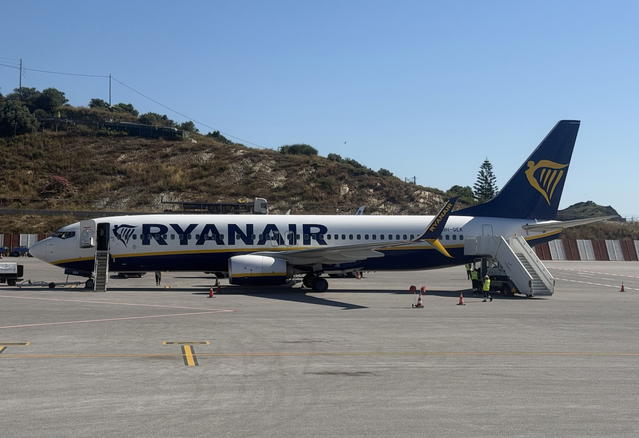
While you mention US aircraft fleet decisions, you missed out Ryanair policy. Boeing 737. Full stop. -800s and, more recently, -8200s (which are MAX 8s).
Standardised cattle class seat configuration throughout. No recliners, no window blinds, no seatback screens, no safety cards - they’re a sticker on the back of each seat or on the front bulkhead.
Planes are bought new at the lowest price ruthless negotiations can obtain. Cabin crew clean the...
While you mention US aircraft fleet decisions, you missed out Ryanair policy. Boeing 737. Full stop. -800s and, more recently, -8200s (which are MAX 8s).
Standardised cattle class seat configuration throughout. No recliners, no window blinds, no seatback screens, no safety cards - they’re a sticker on the back of each seat or on the front bulkhead.
Planes are bought new at the lowest price ruthless negotiations can obtain. Cabin crew clean the cabins at each turnaround. Jetways and boarding steps are unavailable at many airports Ryanair uses so each plane has built-in airstairs, a Boeing option since the 737 launched in 1968.
Ryanair may charge extra for everything and make EU261 claims difficult for delays and cancellations but it also has an excellent reputation for on-time departures and arrivals few of its competitors in Europe can match.
It very much has to do with differences in purchasing power. 95% of airline revenue comes from the top 5%.
Yeah, the plebs fly, too, but only generate some load with no profit to speak of.
And the top 5% in America are a helluva lot richer than the top 5% in Europe.
Geography plays a major role here that has been ignored unless I missed it. The UK which has the most LCCs is an ISLAND. It is not at all cheap to drive your car to Paris for the weekend because you have to take a ferry or Chunnel. In the US the distance between airports (population centres) is significant so cost per mile becomes a factor. Taking airport delays into account you can certainly drive...
Geography plays a major role here that has been ignored unless I missed it. The UK which has the most LCCs is an ISLAND. It is not at all cheap to drive your car to Paris for the weekend because you have to take a ferry or Chunnel. In the US the distance between airports (population centres) is significant so cost per mile becomes a factor. Taking airport delays into account you can certainly drive several hundred miles as quick or quicker in the US than flying and very cheaply (Europe has bad gas prices and astronomical tolls on major highways) whereas flying to Europe from the UK can be under an hour so that the cost to fly is very attractive. And Europe is so small and trains are so much better that taking a car is not necessary. And of course non-unionized labour is such a cost saving especially since the advent of the new super-charged contracts for FA and crew in the US.
There is not a chance in hell that I would fly Thomas Cook from Manchester to Sharm el Sheikh. But Manchester to France I could handle.
You're absolutely right about Ryanair when it flies on routes not served by legacy airlines.
One issue with Ryanair is that you'll typically pay more in the end. Meaning if I book now a flight from London to Krakow, I have the option to pay £150 on BA from LHR, or pay £30 on Ryanair from STN. Let's look at what you'll actually pay. For example from where I live to LHR you'll pay around...
You're absolutely right about Ryanair when it flies on routes not served by legacy airlines.
One issue with Ryanair is that you'll typically pay more in the end. Meaning if I book now a flight from London to Krakow, I have the option to pay £150 on BA from LHR, or pay £30 on Ryanair from STN. Let's look at what you'll actually pay. For example from where I live to LHR you'll pay around £6 for the underground, while to STN you'll pay minimum £35. For BA you can take a hand luggage without an issue, while on Ryanair you'll need to pay £60 if you arrive with a bag a drop bigger than allowed.
In other words you'll end up in many times paying more on Ryanair.
If you want to compare the US and European aviation market, which already is like apples and oranges, then I think easyJet may be a better candidate than Ryanair to compare. easyJet actually uses larger airports like CDG while presenting itself as 'low cost airline'. Ryanair is just rubbish in the sky and in many ways the opposite of Spirit. Perhaps you'd like to do a comparison of the US and (South) East Asian low...
If you want to compare the US and European aviation market, which already is like apples and oranges, then I think easyJet may be a better candidate than Ryanair to compare. easyJet actually uses larger airports like CDG while presenting itself as 'low cost airline'. Ryanair is just rubbish in the sky and in many ways the opposite of Spirit. Perhaps you'd like to do a comparison of the US and (South) East Asian low cost carriers to make the picture even more interesting? Adding pears to apples and oranges?
Oh, and to all those Americans dreaming of visiting Paris and Rome on a business class ticket with credit card points: as you can see, Europeans are poor. Tech bro tells so, so it's true. You'll be met with envy and you sure won't be safe. Just use it to fly to Florida, Hawaii and Vegas instead.
Europe's average flight is far shorter than a US average flight. There's only so much you can endure bare-bone soul-crushing low cost carrier's product, and a 6 hour transcontinental flight (or even a 4-hour mid-continent one) are definitely outside of that envelope.
I prefer Ryan Air when I'm in Western Europe. The people who fly that airline are those who get on with a decent sized carry on and not an oversized monster. The seats don't recline. I love that. I fly economy from Vegas to San Antonio, Premium Economy from Maui to the West Coast, and BC from Honolulu to Japan. Air travel is just a faster bus. The longer the distance, the better the bus needs to be.
I knew I liked Ben already, but "tech bro God complex logic" seals the deal. Highly accurate.