

It has obviously been an incredibly challenging several weeks for airlines in the Middle East, given the impacts of the Iran conflict. Not only have airlines largely had to suspend operations on safety grounds, but there’s also the bigger question of whether travelers will feel as comfortable on Gulf carriers going forward, even as things normalize again.
Anyway, while carriers in the Gulf are hoping that things get better from here, that’s far from a sure bet. So Dubai is taking what can only be described as an extreme stance when it comes to the normalization of flights being resumed.
Dubai caps foreign airline service through May 31
A few weeks ago, we saw Dubai ban all foreign airlines. This came at a time when fuel tanks near the airport were being blown up, so I think we can all sort of make sense of that on safety grounds. However, now there’s a new policy in place, as reported by Reuters — through May 31, 2026, Dubai has restricted foreign airlines to offering a single flight per day to the city’s airports.
Per a note from Dubai Airports, “carriers continue to be limited to one rotation per day, until capacity allows more to be facilitated,” and “additional slots will be allocated if capacity is available.”
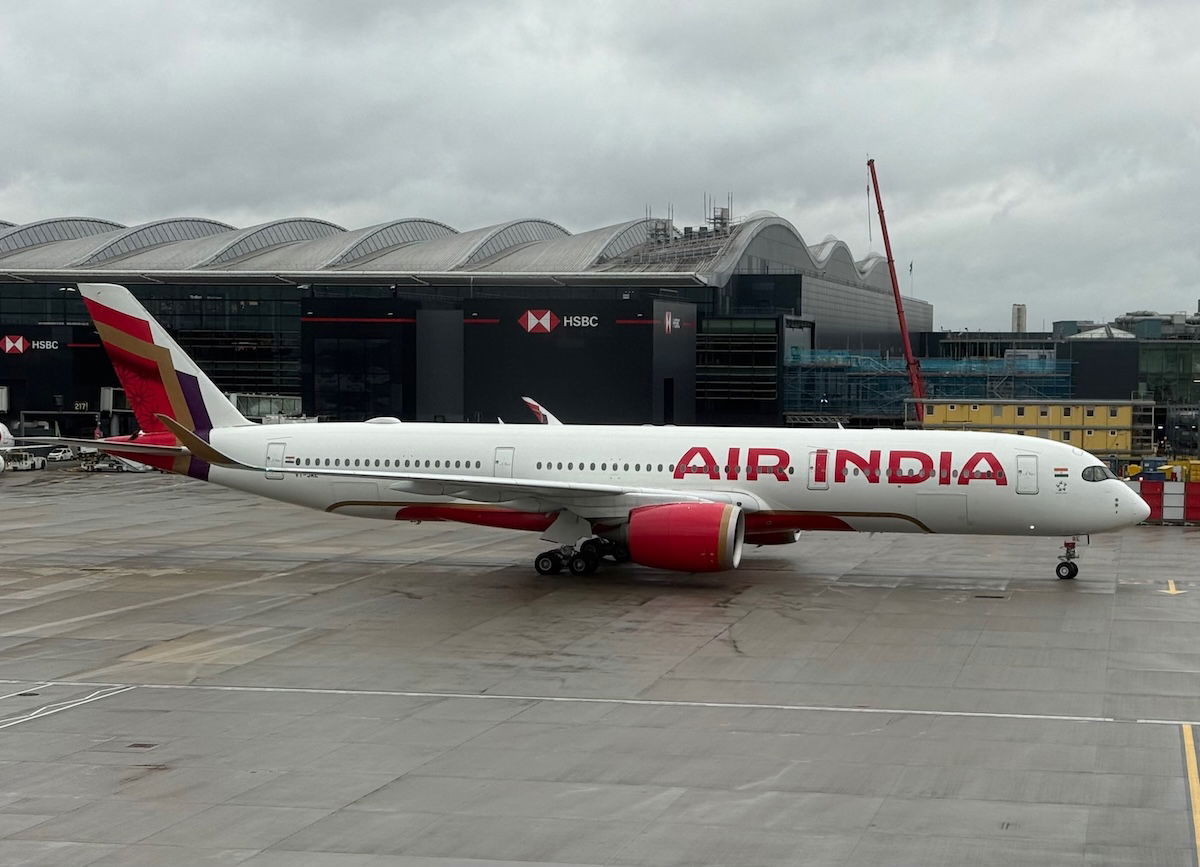
As you’d expect, a policy like this isn’t being well received by some airlines. For example, an airline like United wouldn’t care, because even if it did fly to Dubai right now (service is suspended), the airline has only one daily flight. Meanwhile for Indian airlines this has much bigger implications, since some of them have dozens of flights per day to Dubai, and the UAE is often their biggest international destination.
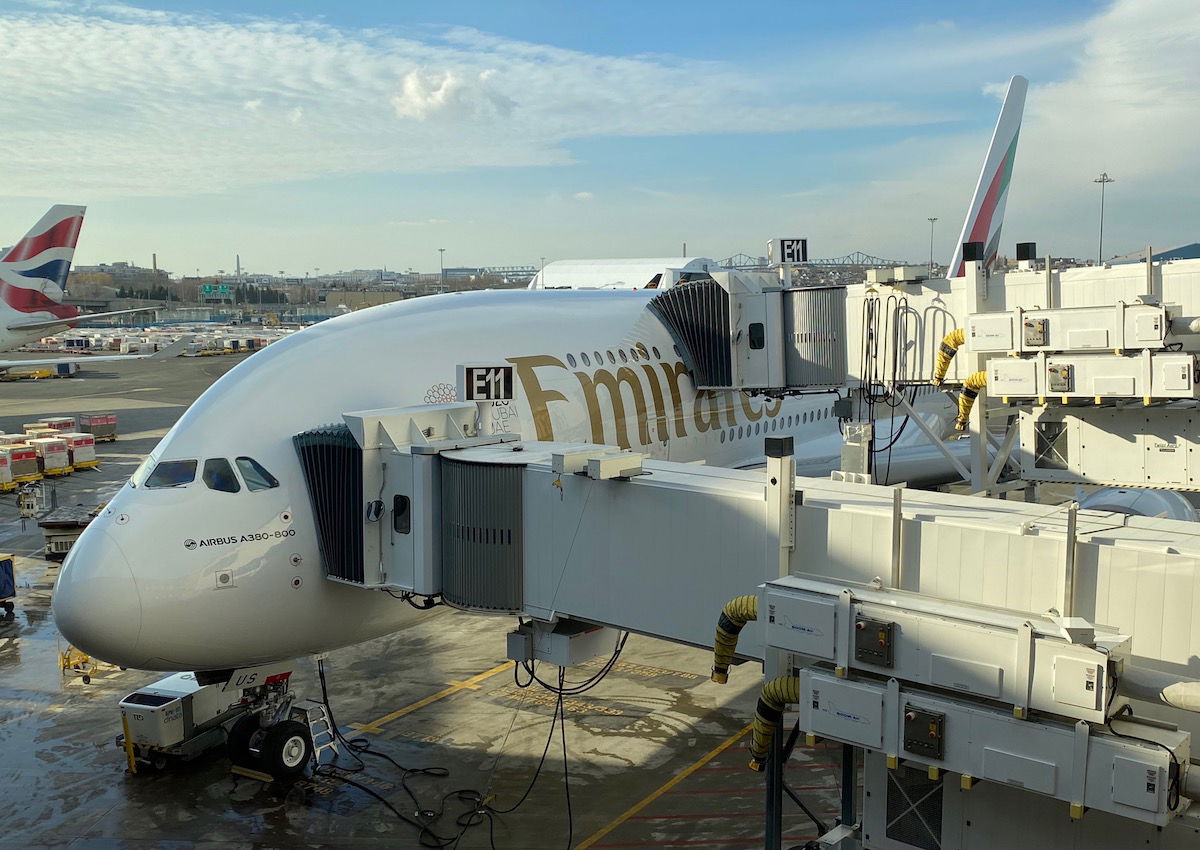
Groups representing Indian airlines are demanding that the Indian government take action, and impose reciprocal policies against airlines based in Dubai, like Emirates and FlyDubai. Suffice it to say that restricting Emirates to one daily flight to India would have major implications, if implemented.
Is this policy just protectionist, or what’s the logic?
Understandably, I think there’s some skepticism as to whether this policy from Dubai is simply intended to protect the local airlines, or actually has any logic beyond that. As I see it, there are two issues — restricting foreign airlines as such, and then also the way it’s being done.
To address that second point first, if you are going to restrict foreign airlines, I think the system being used makes zero sense. Sure, reduce capacity, but it should be proportionate to pre-conflict capacity. In other words, it shouldn’t be that an airline with 1x daily flights can continue service as before, while an airline with 10x daily flights has to reduce capacity by 90%.
Regarding the first point, yeah, I don’t really get the justification for a policy like this? Is it about safety? If so, is it safe for each airline to fly one plane per day, but not more? Is it about limited resources, like fuel? If so, it seems a policy could be put in place that airlines simply can’t refuel in Dubai (planes from nearby countries could easily carry enough fuel to go roundtrip).
It does seem to me like this policy is largely motivated by protecting “local” carriers, rather than actually something with independently sound logic… but maybe I’m missing something.
Bottom line
Airports in the Middle East have quite the challenge ahead of them to restore capacity, especially since the current Iran conflict is anything but settled. While we’re seeing operations stabilize a little bit, it’s still going to take some time for things to go back to normal.
As part of this, through May 31, 2026, Dubai is restricting foreign airlines to operating one daily flight to the city. That seems like an extreme policy and an illogical way to limit capacity, given the huge variance with which foreign airlines serve Dubai. Indian airlines clearly think that Dubai is simply trying to protect local airlines, so is demanding that India put reciprocal policies in place. I’m curious to see how this all plays out.
What do you make of Dubai’s capacity limits — do you think it’s logical, or just intended to protect carriers like Emirates?




May be it could be changed to one foreign airline per destination. Many EU and Asian airlines are in the same position as AI.
T
There is Qatar and Etihad
The funny thing about this Israeli-led war targeting Iran, Lebanon, and 7 other countries... people forget, this is the Middle East.
They ALL do as they please.
This works well for AI. Restrict the ME3 to the same, and force more people to fly Indian carriers...
Prior to the Israeli-led war, the ME3 were pushing over half a million passengers through these hubs daily. Millions did not take/ complete their trips East or West....
The funny thing about this Israeli-led war targeting Iran, Lebanon, and 7 other countries... people forget, this is the Middle East.
They ALL do as they please.
This works well for AI. Restrict the ME3 to the same, and force more people to fly Indian carriers...
Prior to the Israeli-led war, the ME3 were pushing over half a million passengers through these hubs daily. Millions did not take/ complete their trips East or West.
Friends have reported shockingly empty London hotels, restaurants, and tourist hotspots. I've seen the pictures over Easter weekend ...empty. A prominent hotel staff member told a friend that many restaurants are going out of business across Central London, due to a lack of tourists.
The ME3 are trying to protect their business. I can see India reciprocating.
Most countries operate with unbelievable, shocking kerosene reserves. UK 1 month! USA 7 months. Canada 24 months+ Japan 27 months (reported on Sky News).
Anyway, as always, those who know....know what all of this is about...and where it's heading.
Could it be that things got REAL BAD there and we do not know about it? Information has been trickling in very slowly. We have Flights in the ME in the next few months.
That's what I keep telling you here.
The most dangerous part of flying ME3 and through the middle east right now is misinformation. (Well maybe ME3 customer service sucks more than that)
True. This is where Dubai messed up. They should have shown all the damage (play the sympathy card) ...it would have played well.
Now there is a major distrust of the UAE by travelers (safety wise)...the info is sketchy, and who wants to get caught up in nonsense.
Airports have warned that jet fuel could run short within three weeks in Europe if oil supplies do not start to flow through the strait of Hormuz, raising concerns over flight cancellations in the UK and EU going into the summer holiday season.
Jet fuel shortages will become so acute without the resumption of supplies from the Middle East that cancellations across Europe will be inevitable, disrupting travel plans for potentially millions of passengers.
If you don't want to step on anyone's toes, call it the "Iran conflict." Don't say "war." Don't mention Israel or Trump.
It's the USrael conflict. Not Iran's fault.
Surely the argument is that domestic carriers are more able to work with the government to ensure safe operations based on the latest intelligence.
Although obviously it's mighty convenient...
The US just said it is preparing military action if Iran does not reopen the Strait.
Another US official said oil flow could normalize through the Strait in 2 months - but that is the latest of multiple predictions.
Global aviation is in for a world of hurt in 2026 including at the ME3 carriers.
TACO
EASA prohibits European carriers operating to the gulf. The situation is unsafe for passengers and crew, and not covered by insurance. Thanks to MAGA and their dictator.
Thanks to Israel, you mean?
MAGA's dictator is Benjamin Mileikowsky?
@Ben why is this sort of racist foolishness being allowed here?
@Dave do you know for a fact that Air India doesn't have soap in their lounges? I'm just trying to work out if this is a thing or you're just making the whole thing up.
It's complete backward bullshit. Yes it's true that the UAE carriers have taken a beating, but so have all the others. Giving preferential treatment to locally based airlines seriously undermines the idea of reciprocity and leads to harm to the whole system. Other countries should respond accordingly.
Do you fly Emirates into and out of Dubai, China?
Oh, and you're a racist pig child. Why Ben puts up with it we'll never know.
WHATS YOURE PROBLEM!!! AND WHST DID I EVEN SAY THAT WAS RACIST!!!
CockEnRoute, finds objective reality objectionable
Time to limit UAE airlines to 1 flight too, to one destination only. Pick your favorite Emirates and Etihad.
India has a lot of leverage here. Emirates carries something like 15% of all Indian international traffic. If India imposed a reciprocal rule, it would be very damaging to UAE airlines, which are already struggling.
Very dangerous and short sighted precedent set by Emirates. They have benefited from having excessive capacity in so many markets. But now they want to restrict access.
Just what happens if the authorities in Australia, Uk and India restrict Emirates to just one flight per day.
Yeah. The UK market is a surreal money maker for EK. I feel like they were sending 12-15 A380s in daily to LHR, LGW, BHX, MAN etc, and a smattering of 773s (cant be bothered to check). Imagine if the UK said "one flight" haha. Doubtful.
Foreign airlines drive economies, and is the UK government allowing their carriers to even fly to the Mid East at the moment?
I mean, there is a rationale to protecting Emirates. Presumably the government will be feeling the burden of Emirates as a loss-making carrier, given their recent load factors.
If the government is worried about the financial performance of their investment, they can send a bill for the financial impact to the government of USA, or personally to Trump and his family who they supported with investments into their shady businesses.
Agree with Ben; this policy is both overly protectionist and poorly executed. Presently, Dubai should be encouraging anyone to visit. AUH doesn't mind...
The beatings will continue...
(And you'd better not complain if you're over there, because, you know, censorship.)