

It’s an incredibly challenging time for ultra low cost carriers in the United States, and in particular, for Spirit Airlines. The Florida-based company has been in Chapter 11 bankruptcy twice within the past year, and the carrier’s prospects seem grim. Several times now, there have been suggestions that the airline is on the verge of liquidation, given the rate at which it has been burning through cash.
A few weeks ago, there was a rather surprising update, when the company suggested that it would soon emerge from Chapter 11 bankruptcy. There’s now a further update, as the airline has outlined its plan, and I’m not sure what exactly to make of it.
Spirit Airlines has restructuring & reorganization plan
Spirit Airlines has filed a Restructuring Support Agreement and Plan of Reorganization with the U.S. Bankruptcy Court for the Southern District of New York. This is described as an important milestone and another step toward Spirit’s restructuring process, as the company expects to emerge from Chapter 11 bankruptcy by early summer 2026.
So, what will be different about the new Spirit compared to the old Spirit? Here’s what the company has outlined:
Upon emergence, Spirit will reinforce its position as America’s leading value carrier with the following advantages:
- Rightsized Fleet: The airline intends to further rightsize its fleet to 76-80 planes by third quarter 2026, primarily consisting of Airbus A320/321ceo aircraft. In addition to previously announced fleet adjustments, the planned adjustment will further reduce Spirit’s debt, lease obligations and aircraft costs. The Company anticipates adding aircraft between 2027 and 2030, commensurate with profitable growth opportunities.
- Optimized Network: Spirit will continue to align its network with consumer demand and focus on its strongest routes and markets, including Fort Lauderdale (FLL), Orlando (MCO), Detroit (DTW) and the New York City area (EWR/LGA). The airline will increase aircraft utilization on peak days, reduce off-peak flying and maintain flexibility to adjust to seasonal demand across markets.
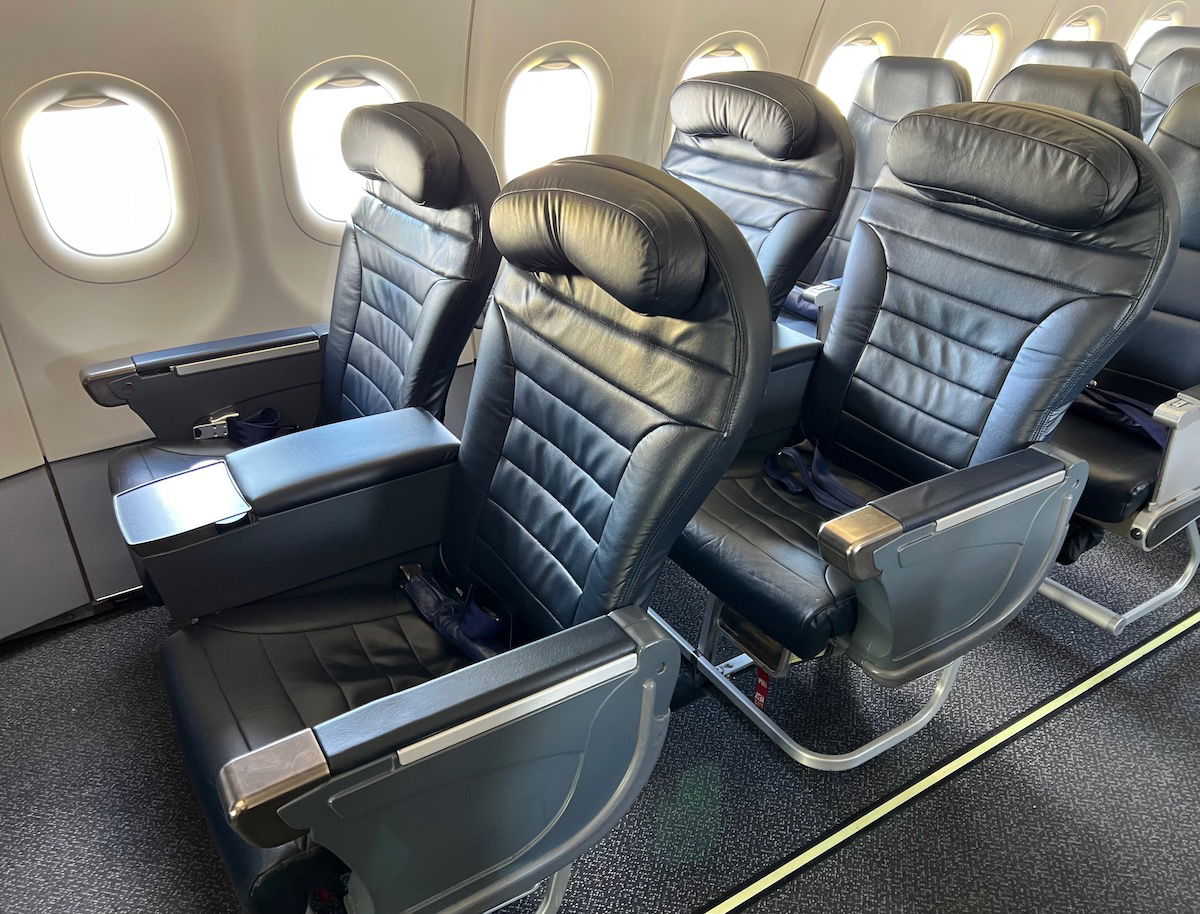
- More Premium Choices: Spirit intends to expand its Spirit First and Premium Economy products by adding a third row of the Big Front Seat and continuing its rollout of Premium Economy seating, while continuing to lead the industry on price and focus on value.
- Stronger Financials: The Company will further reduce its cost structure, expanding its cost advantage compared to legacy and other airlines. Spirit’s debt and lease obligations are expected to be reduced from $7.4 billion pre-filing to approximately $2 billion post-emergence. The Company will continue to pursue efficiencies and reduce costs across the business.
Here’s how Spirit CEO Dave Davis describes this:
“We are pleased to achieve another milestone that reflects the confidence our lenders and noteholders have in our future, with our plan better positioning Spirit to continue delivering value to American consumers.”
“While we still have work to do with other important stakeholders, today’s agreements and filings are very material steps forward toward emergence. I also want to thank our Team Members and Guests for their support as we work together to build a stronger Spirit.”
I’m curious if this is just a lot of optimism, or what
The airline industry is a tough business under the best of circumstances, but the past few years at Spirit have really been unlike anything else we’ve seen. First there was the planned Frontier and Spirit merger. Then JetBlue outbid Frontier to buy Spirit. Then a judge blocked JetBlue’s takeover of Spirit.
Then Spirit went into Chapter 11 bankruptcy for the first time, which was obviously necessary. The issue is that the airline did nothing to address costs and its awful margins, so when it emerged, it had to file for bankruptcy again just months later.
While debt can be addressed with Chapter 11 proceedings, it’s only so useful if you have the industry’s worst operating margins. For the past several months, Spirit has seemingly several times been on the brink of collapse, but always managed to make it to the next funding deadline.
Has something actually meaningfully changed for Spirit now, or is the company just going with the best possible narrative, and hoping things will continue to improve? Because last I heard, Spirit’s yields are still very negative, and the airline is burning through cash. And that says nothing of the mess we’re in now, in terms of oil prices and global instability.
Anyway, I certainly hope Spirit can survive, and I’m rooting for the carrier (though at the same time, Spirit’s survival is bad for Frontier and JetBlue, in terms of their odds of success). The whole concept of essentially trying to shrink into profitability is an interesting move for an ultra low cost carrier, given that the cost advantage largely also relies on growth (so that as many employees as possible aren’t at the top of the pay scale).
To summarize, Spirit’s plan is basically to shrink massively (by nearly two-thirds compared to its peak), and fly older planes (presumably with lower leasing costs, but higher operating costs). Then the airline wants to lean into premium (by adding an extra row of Big Front Seats, and completing the rollout of premium economy). And then the airline wants to focus on its strongest markets, while shifting its flying patterns, flying more on peak days, and less on off-peak days.
That is common sense enough, though I’m not sure any of this is really a true turnaround plan, given the carrier’s margins. So I’m very curious to see how this all plays out. Frankly, I think if Spirit is going to stick around, the airline should just completely rebrand and change its name, given what people have historically associated with the airline.
Bottom line
Spirit Airlines claims that it will emerge from Chapter 11 bankruptcy, with the process being complete by early summer. Given the massive challenges that the airline has faced, plus the continued negative operating margins, one certainly wonders how this will play out in the long run, as this isn’t what most people were expecting.
Spirit’s turnaround plan includes shrinking the fleet massively, flying older aircraft, trying to be more premium, and focusing on its strongest markets. All of that is common sense enough, but…
What do you make of Spirit’s plans to emerge from Chapter 11 bankruptcy?




Nothing has changed. This doesn’t guarantee they emerge and doesn’t reflect that the world changed 10 days ago and their fuel burn is crippling.
There is certainly some urgency for the creditors for NK to emerge or they face the prospect of being a takeover target at a low price.
Coming out of C11 as fuel soars is not a great formula but no airline can handle fuel costs as current levels which will result in significant cuts to earnings.
2+ months is still a long time
“as fuel soars” … buddy, ‘your guy’ did that. 234 days until next election…
The price of jet fuel is the wild card. Also, can Spirit get revenue per seat include ancillary fees really up?
Huh… it’s almost as if starting a war of choice, after promising no new wars, is bad for business… oh well, please do claim ‘TDS’ and say ‘no politics’ even though it’s directly responsible for those higher costs here.
Hubris of Spirit would likely do in any real benefit to an Avelo reverse merger scenario. Think ValueJet and AirTran. Both need some fresh thought even as the risk of losing two is likely far better than the shutdown of one, followed by the slow bleeding out of the other. We are in the Golden Age of America, so one never knows though.
Ben, I'm curious to hear your thoughts on SW calling it quits on ORD and IAD.
I would imagine their exit plan is now invalid with 100 a barrel oil