

This is definitely not a good look for Air India, especially given everything we’ve seen at the airline in recent times.
In this post:
Canadian authorities investigate intoxicated Air India pilot
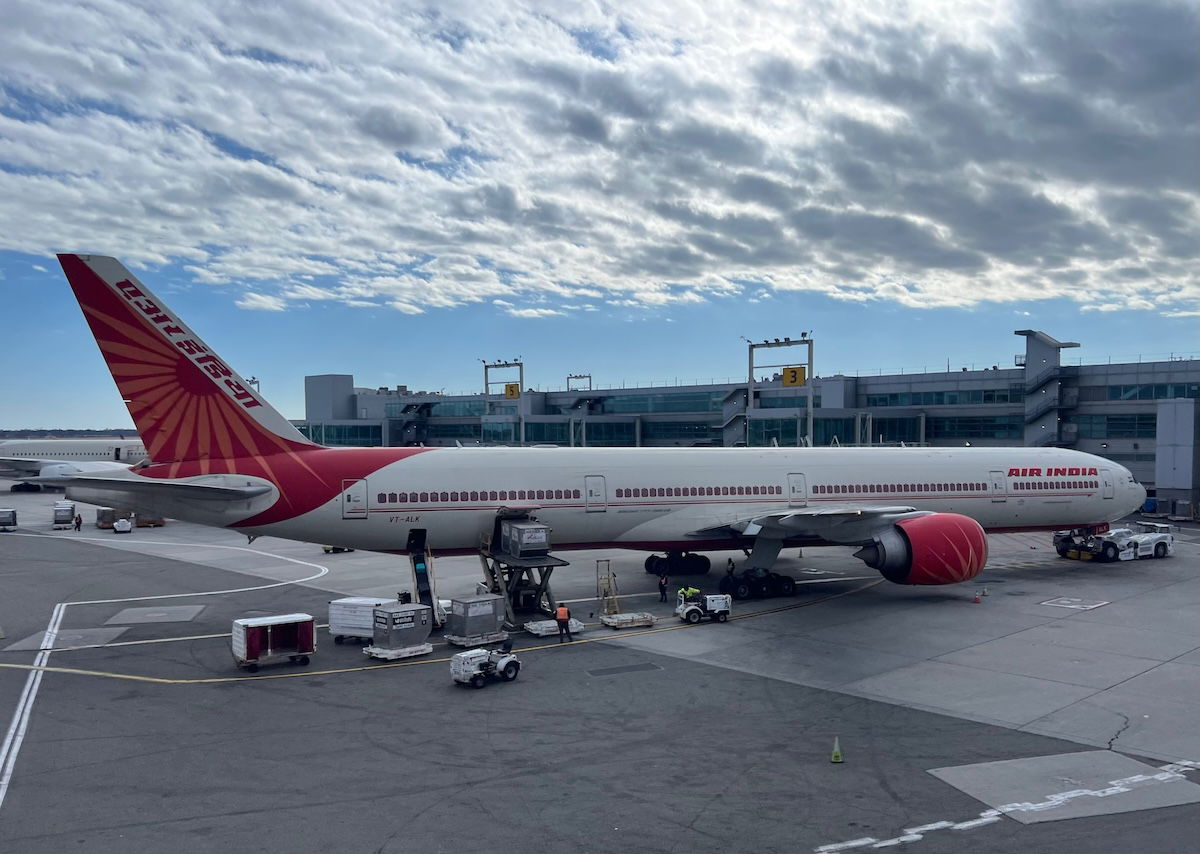
Canadian regulators are calling on Indian regulators and Air India to provide an explanation, after a concerning incident that happened on December 23, 2025. Specifically, this involves Air India flight AI186, a Boeing 777-300ER scheduled to operate from Vancouver (YVR) to Vienna (VIE) to Delhi (DEL).
What reportedly happened is that an employee at the airport’s duty free shops noticed the smell of alcohol coming from the breath of an Air India pilot. That person reported it to airport police, and subsequently, two breathalyzer tests were performed on the pilot, which confirmed that he had a blood alcohol level above the legal limit.
The airline eventually managed to roster a replacement pilot. While the flight was initially supposed to depart at 3PM, it ended up taking off around seven hours late, a little after 10PM. That’s actually sort of impressive, because I’m curious how exactly they went about rostering the crew. Was the initial crew (aside from the intoxicated pilot) otherwise still “legal” after a seven hour delay, or did they somehow swap the crew completely?
Transport Canada, Canada’s regulator for aviation, wrote a letter to their counterparts in India, plus Air India, demanding an explanation:
We were advised by the Royal Canadian Mounted Police (RCMP) that Captain Saurabh Kumar reported for duty on Air India flight AI186 on December 23, 2025, while under the influence of alcohol, and unfit for duty. Two breathalyzer tests conducted by the RCMP at Vancouver International Airport confirmed this, after he was advised to leave the aircraft.
This incident indicates a contravention of Canadian Aviation Regulations (CARs) 602.02 by the Operator and the Crew Member, and CARs 602.03 by the Crew Member, as well as condition (g) outlined in Air India’s Foreign Air Operator Certificate (FAOC # 1946) issued by Transport Canada Civil Aviation (TCCA). It is likely that enforcement action will be pursued by the RCMP, and by TCCA.
In light of this, we request Air India to
- Conduct a thorough review and investigation under your Safety Management System (SMS); and
- Provide details of corrective actions taken to prevent any such recurrence
In a statement, Air India has confirmed the incident, and has sort of apologized:
Flight AI186 from Vancouver to Delhi on 23 December 2025 experienced a last-minute delay after one of the cockpit crew members was offloaded prior to departure. Canadian authorities raised concerns regarding the pilot’s fitness for duty, following which the crew member was taken for further inquiry. In accordance with safety protocols, an alternate pilot was rostered to operate the flight, resulting in the delay.
Air India regrets the inconvenience caused to its passengers and is fully cooperating with the local authorities. The pilot has been taken off flying duties during the process of enquiry. Air India maintains a zero-tolerance policy towards any violation of applicable rules and regulations. Pending the outcome of the investigation, any confirmed violation will attract strict disciplinary action in line with company policy. Safety remains Air India’s highest priority at all times.
I’m curious just how over the limit this pilot was
It goes without saying it’s unacceptable to be over the legal alcohol limit when you’re a pilot, given the number of people you’re responsible for, and the zero tolerance rules in place. Interestingly, in this case we don’t actually know how much over the legal limit the pilot was.
While any amount over the limit is unacceptable, there’s also a difference between someone having a blood alcohol level of 0.04% (legal to drive, but not to fly), and 0.4% (for most people, completely smashed).
It’s one thing if this pilot had been subjected to a random breathalyzer, but it’s alarming that this all originated when someone in duty free reported the pilot to authorities. I imagine that person must have been confident the pilot was intoxicated, rather than wondering if the pilot had just used mouthwash, or something. Huge kudos to the person who reported the pilot, for looking out for the safety of others.
Along similar lines, I always find it dismaying how it’s so rarely the crews that report an intoxicated colleague, but instead, typically some third party. It shows the herd mentality and camaraderie among crews. I have a hard time believing that in the hotel lobby, on the bus to the airport, and at airport security, not a single Air India pilot or flight attendant noticed this guy’s smell.
It’s much easier to just go along with what everyone else is doing and not saying anything, rather than being the person to voice uncomfortable concerns.
Bottom line
Canadian authorities are demanding answers from Air India, after a duty free worker at Vancouver Airport smelled alcohol on an airline captain’s breath. He was then subjected to a breathalyzer, which returned two positive results.
The flight ended up being delayed by around seven hours, and the airline and Indian authorities are now having to answer for how this happened, and what will be done to prevent this in the future.
What do you make of this intoxicated Air India pilot situation?




Do the passengers receive any compensation for the delay in this incident?
After I watched a documentary on India and China, I came across one comment that brilliantly and accurately captures India so we will better understand India's deeply entrenched culture that will never be reformed.
" In the grand theater of global geopolitics, India stands as a colossal paradox, a nation brimming with potential yet perpetually ensnared in the webs of external influence and internal disarray. Despite its aspirations to sovereignty and superpower status, India finds...
After I watched a documentary on India and China, I came across one comment that brilliantly and accurately captures India so we will better understand India's deeply entrenched culture that will never be reformed.
" In the grand theater of global geopolitics, India stands as a colossal paradox, a nation brimming with potential yet perpetually ensnared in the webs of external influence and internal disarray. Despite its aspirations to sovereignty and superpower status, India finds itself inexorably positioned as an ally, servant, or subject to more dominant forces. This predicament is not merely a quirk of history but a structural inevitability, rooted in systemic patronage, institutional decay, and a fragmented national ethos. To understand this, one must dissect the layers of dysfunction that undermine India's autonomy, from its military and legal apparatuses to its fractured polity and duplicitous foreign policy. At the heart of India's vulnerabilities lies a pervasive culture of patronage, where appointments and promotions in critical institutions are dictated not by merit but by caste affiliations, religious loyalties, or political connections. This malaise is starkly evident in the nation's armed forces: the Indian Air Force, Army, and Navy, once envisioned as bulwarks of national defense, have devolved into second-tier entities plagued by inefficiency and favoritism. The police force fares even worse, resembling less a guardian of public order than a cadre of well-armed enforcers, often complicit in extortion and brutality. The rule of law, ostensibly enshrined in India's democratic framework, exists more as an aberration than a norm, enforced sporadically and selectively, contingent upon the whims of those in power. Constitutional observance, too, is a matter of expedient interpretation, bending to the prevailing winds of political expediency rather than upholding universal principles. This internal rot extends to India's polity, which remains profoundly fractured along linguistic, regional, and ideological fault lines. Unlike cohesive nation-states that rally around shared objectives, India grapples with a conspicuous absence of unity of purpose. National goals are obscured by parochial interests, and the federation's centrifugal forces, exacerbated by disputes between the center and states, undermine any semblance of coherent governance. Compounding this is India's myopic obsession with China, a fixation that has proven both distracting and humiliating. In the early 21st century, as India preened over its burgeoning middle class, the largest in the world at the time, China methodically transformed itself into the globe's manufacturing powerhouse. Today, a quarter-century later, India scrambles to emulate that model, its ambitions thwarted by the very divisions that allowed China to surge ahead unencumbered. Foreign policy, ostensibly a domain of strategic acumen, reveals another layer of duplicity. India operates a bifurcated machinery: the official channel, spearheaded by the eloquent and assertive External Affairs Minister S. Jaishankar, projects a veneer of diplomatic sophistication. Yet, paralleling this is an unofficial apparatus dominated by sensationalist media figures such as Arnab Goswami and Palki Sharma. These television personalities, far from embodying journalistic integrity, peddle a brand of outrage journalism that is loud, brash, and bereft of nuance. Their broadcasts, marred by grammatical lapses, mispronunciations, and a cavalier disregard for news prioritization, routinely flout international norms by labeling adversaries with inflammatory epithets like "terrorist" states. This selective indignation conveniently sidesteps India's own domestic afflictions: rampant drug addiction, entrenched sexism and gender discrimination, dowry-related femicides, caste-based atrocities of the most grotesque variety, political corruption, police malfeasance, and virulent religious bigotry. In stark contrast, China's more regimented society, albeit authoritarian, prioritizes order and progress, unburdened by such pervasive chaos. Historical grievances further illuminate India's propensity for self-sabotage. The 1962 Sino-Indian War, often invoked as a symbol of Chinese aggression, was in fact precipitated by India's own provocations. By permitting U.S. forces to train Tibetan insurgents on Indian soil, New Delhi actively abetted harassment against Chinese interests in Tibet, inviting the retaliatory incursion it now laments. Decades later, echoes of this hubris resurfaced in the 2020 Galwan Valley clash, where General M.M. Naravane's forces attempted a surprise maneuver amid the COVID-19 pandemic, only to suffer a decisive defeat. Once again, blame was swiftly apportioned to China, absolving India of its tactical miscalculations. These episodes underscore a deeper truth: India's lack of unified language, laws, customs, and political priorities renders it ill-equipped for sustained confrontation or cooperation, unlike China's disciplined, if harsh, regime. The culmination of these frailties is evident in contemporary realpolitik. Under Prime Minister Narendra Modi, India now seeks rapprochement with China not from a position of strength, but desperation, clutching at Beijing's coattails to shield its Hindu nationalist government from mounting Western scrutiny over human rights and democratic backsliding. This pivot, born of vulnerability rather than vision, epitomizes India's enduring subordination. Until it confronts its internal fissures and forges a truly cohesive identity, India will remain ensnared in the orbit of others, forever the ally, servant, or subject in a world it aspires to lead. The path to genuine independence demands introspection, reform, and unity, qualities that, for now, remain elusive."
Like I mentioned before, India is the world's largest democratic country. Yet, what has democracy brought to India? Compared it to China, a red communist country that is on its way to become an emerging non-white superpower which makes China a cardinal sin in the US eye. It did not mention India was a fertile ground to cultivate opium for Britain to flood China and lead to Opium War crippling Chinese sovereignty and autonomy. Nothing relates to the topic and it explains India's culture. India's unified language is English-- which explains its internal conditions as we see today. It is inexplicable and unacceptable to adopt a colonizer's language as a national language.
Corruption is a human problem, not just an Indian problem. We all need to work on this, at home and abroad.
As for India and China, yeah, Western corporations and their owners have shifted service and manufacturing industries to these two countries, mostly, and it has enriched and empowered them, at the expense of us back home. While I’m pleased that more humans get opportunities there, we need to do something for our own...
Corruption is a human problem, not just an Indian problem. We all need to work on this, at home and abroad.
As for India and China, yeah, Western corporations and their owners have shifted service and manufacturing industries to these two countries, mostly, and it has enriched and empowered them, at the expense of us back home. While I’m pleased that more humans get opportunities there, we need to do something for our own domestic workers, because otherwise they are getting left behind, and soon enough, won’t ‘take it’ anymore. The right-wing xenophobic populism is a partial reaction to this (I’d argue that’s the ‘bad’ way. See Trump, Brexit, etc.) The better way would be an inclusive progressivism that some are trying (see NYC, recently). I’m sure some will disagree, but, it’s kinda where we are. Meanwhile, the rich get richer, and the poor get poorer, so… yeah, let’s ‘do something’ instead of propping up that status quo, please.
By the way, is attempting to operate a passenger aircraft while intoxicated not an arrestable offense? and this pilot was not criminally detained on the spot?
A quick look at other AI West coast flights, and AI176 from SFO was delayed 21 hours on the 23rd. Whilst it still departed before this flight was scheduled, I wonder if a crew out of place related to the SFO delay helped recover the YVR flight
What a year it was for Air India. In just 12 months, we saw:
-Passengers urinating on each other
-Drunk Pilots
-Diversions when passengers were doing laundry and washing vegetables in laboratory
-Suicidal pilot that murdered 241 people
Hadn't heard any stories about pax defecating in the aisles, but that's such common practice in India that those incidents likely went unreported.
Laboratory? Suicidal pilot? Did you drink at the same bar as this pilot?
Pilot suicide is the most likely explanation for the 787 that crashed after takeoff. Fuel cutoff switches don't just move themselves to the off position.
I really think Air India should be blacklisted and not allowed in EU (and all other western) airspace.... its matter of time before next tragedy will happen....
These people are obviously not capable to operate a reliable airline
"I always find it dismaying how it’s so rarely the crews that report an intoxicated colleague."
Not saying this is proper but I do suspect crew often encourage their colleagues to "call in sick", when they suspect intoxication.
Happy new year. Although it’s a serious allegation, I also note that Air India constantly breaches privacy and names passengers and crew. Irrespective of what happened, the name should be redacted. I’ve also seen AI staff publishing internal documents on social media. I wouldn’t trust anyone booking with them.
How come they had a standby crew in YVR?
Quite the opposite. I find it hard to imagine you could put safeguards in place that would protect anonymous reporting of colleagues that wouldn’t leave them feeling the risk of reprisals.
From “smelly” breath to “smelly” country. Lol
From ¨Faron¨ Key to ¨Moron¨Key. Lol
All credit goes to the person who reported the pilot to the authorities. He saved lives.
Statistically probably not.
@1990 Air India flights currently cannot overfly Pakistan, resulting in the technical stop in Vienna for a lot of North American routes when headwinds prevent a nonstop flight. AI doesn't have fifth freedom rights between Austria and Canada or the USA.
Ah, so, no one gets on or off. Good to know. Thanks for clarifying. Had no idea about this. I don't frequent Air India or that particular routing (Vancouver to Delhi, etc.)
I flew Air India last year from Colombo to Mumbai and was pretty sure I caught the flight attendants either stealing or consuming alcohol in the back galley.
After reporting it to the lead attendant, the ground staff and Air India customer service the best I got from them was they would investigate.
I really pushed for the ground staff to investigate at the point we deplaned but they couldn't manage to find anyone to...
I flew Air India last year from Colombo to Mumbai and was pretty sure I caught the flight attendants either stealing or consuming alcohol in the back galley.
After reporting it to the lead attendant, the ground staff and Air India customer service the best I got from them was they would investigate.
I really pushed for the ground staff to investigate at the point we deplaned but they couldn't manage to find anyone to report to or do anything.
Air India also failed to get back to me about the investigation they performed.
In hindsight I should have pushed to talk to the captain but I will never fly Air India again
Unless you’re called by a court to act as a witness, they would never tell you anything as it’s an allegation. No company will ever provide you with details of an internal investigation.
Ithink it could be endemic
I was so excited when Tata stepped into buy Air India. I was hoping they'd be the company to turn the airline around and really give people a better option to get directly to India. So far, that has not been the case :( I hope they figure it out
Obviously, not cool.
YVR-DEL via VIE is an interesting route. Wonder if this is to avoid Russian/Chinese airspace, or, just to operate a fifth-freedom route, like, SQ’s JFK-FRA-SIN.
They cannot fly over Pakistan, so have to do a technical stop in Vienna. It is actually on the article.
What article? Ben didn't say that in his 'article.'
Also, that doesn't explain why Vienna over other options.
YYZ and ORD are operating vía VIE on westbound sectors. YVR and SFO have been operating via CCU as stopovers, but I wonder if also the Delhi fog situation is wreaking is local havoc again this time of year, requiring YVR to also go via VIE?
I wonder also if OS does their servicing in VIE.
INDIA?
KATHY?