

Well this is going to have some major impacts on the battle we’re currently seeing at Chicago O’Hare Airport (ORD), between American and United….
In this post:
Chicago O’Hare flights will be reduced by 10% this summer
At the moment, both American and United are adding a lot of capacity in Chicago, and this is part of a battle between the two companies. Both airlines have a hub in Chicago, but United has taken the lead (by far) in recent years, and now American is trying to regain some market share. So in reality, we’re just seeing a lot of capacity dumping in Chicago over the coming months (and a lot of smack talk!).
In light of all of this, the Federal Aviation Administration (FAA) has revealed that it’s planning forced schedule reductions at Chicago O’Hare, which will apply for the IATA summer 2026 season (which goes from late March until late October).
To what extent should we expect flight cuts? Currently there are 3,080 planned peak day operations at the airport in summer, compared to 2,680 peak day operations during the same period last year. The FAA believes that this “increase is significant and would stress the runway, terminal, and air traffic control systems at the airport,” and proposes that instead, 2,800 peak day operations should be the cap.
That means roughly 10% of planned flights at the airport will need to be canceled. During a meeting in early March, the FAA will review the most congested times of day, where the most schedule reductions are needed. They’ll then meet with US carriers to discuss where they could most practically cut their service, before publishing a final decision.
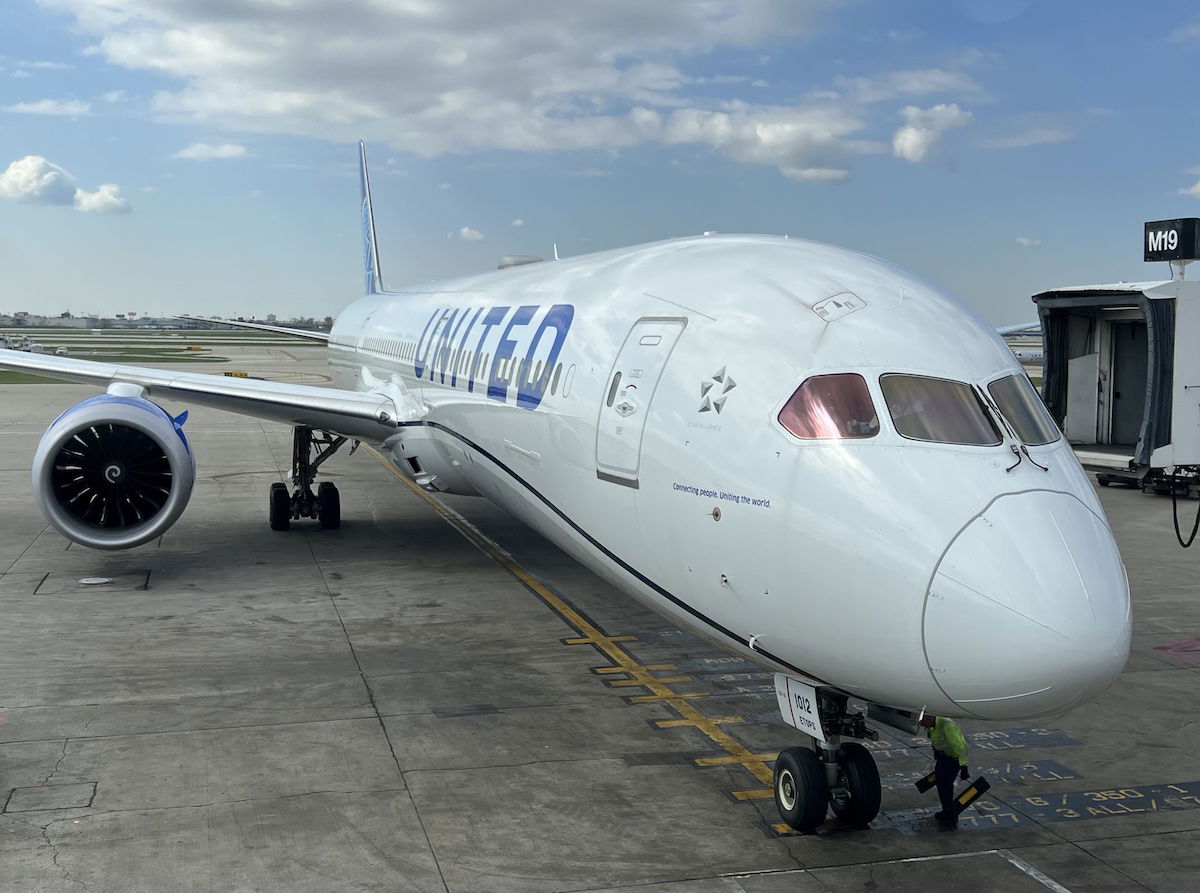
This is good news for American, bad news for United
The whole reason that American and United are now battling so fiercely in Chicago is because of the airport’s gate allocation process. Airlines are allocated gates in the future based on historical usage, so both airlines are now trying to flood the market, so that they don’t lose market share to the other airline.
In theory, this battle between the two airlines is good for consumers, in terms of added capacity leading to lower fares. However, what would’ve been significantly less pleasant is the impact to on-time performance at the airport. Chicago O’Hare can be a bit of a mess on a good day (especially in terms of taxiway congestion), and with such an increase in service, it was going to get bad.
So how do airlines feel about this news? While I haven’t yet seen anything from United, American released the following statement:
American commends Secretary Duffy, Administrator Bedford, and the FAA for taking proactive action to ensure the operational integrity of the airfield and airspace in Chicago. The FAA now has the opportunity to achieve an improved customer experience for passengers traveling from, to, and through Chicago this summer.
Hah, indeed, as you can see, American views this as good news. I think United will feel differently, though:
- This Chicago growth wasn’t going to be profitable for American, especially in the short term; United believed it was a good opportunity to make a weak competitor even weaker, especially given that American is barely profitable
- American just cares about its proportion of flights at the airport compared to United, so I imagine American thinks it may even score an advantage here, when United has to cut more flights (due to its larger size and bigger growth plans)
We’ll see how this process works out, but I definitely think American is more enthusiastic about this than United.
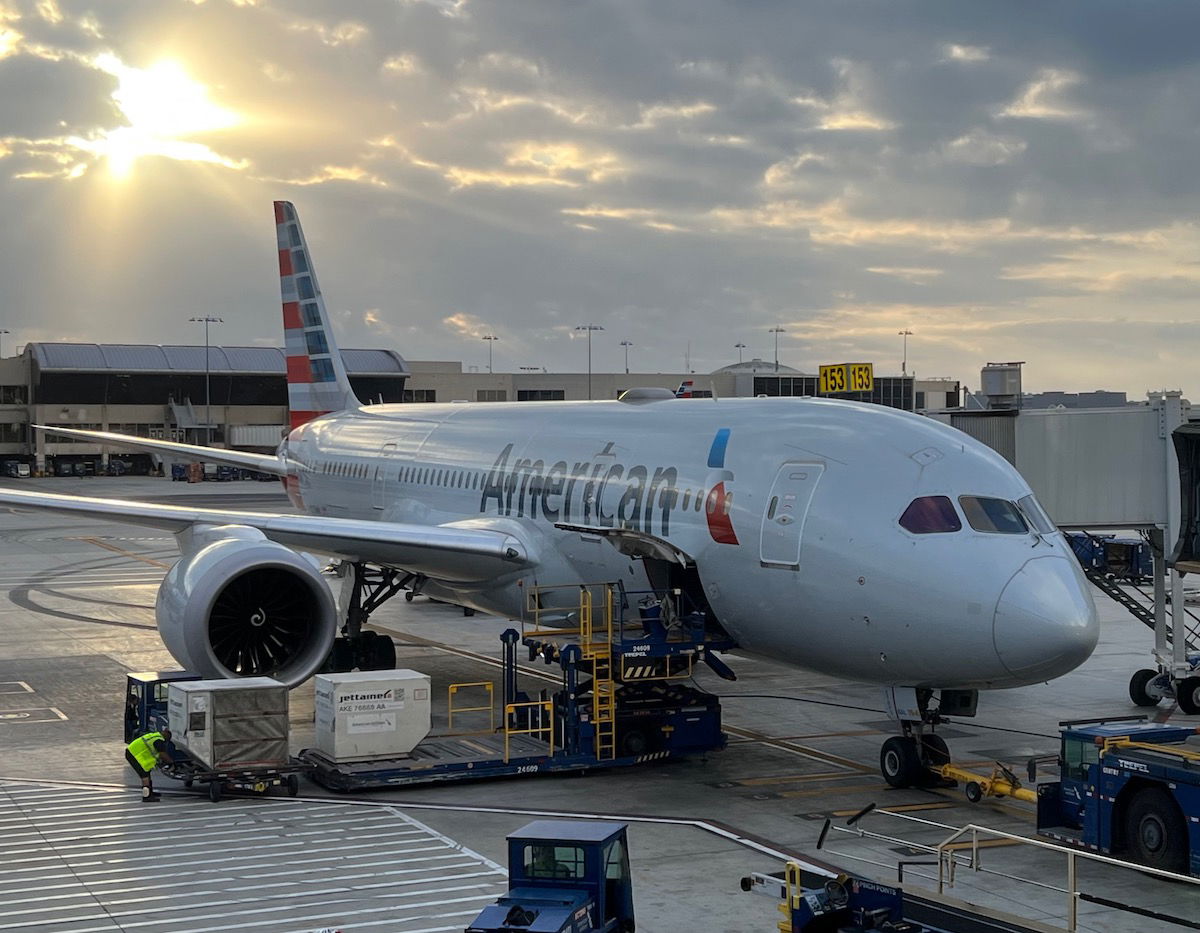
Bottom line
The FAA has announced plans to restrict flights at Chicago O’Hare Airport this upcoming summer, given the amount of capacity that we’ve seen added in recent times, by both American and United. The expectation is that flights will need to be cut by around 10%, bringing them closer to last year’s levels.
Given the gate allocation process in Chicago, this development is definitely better for American than United.
What do you make of the FAA’s plans to cut flights in Chicago?




White House retaliation against its political enemies in Illinois. Spinning other reasons is wishful thinking.
Does this include American Airlines Landline bus service? Does ramp congestion (it gets basically a tow, a car to lead it down the tarmac) count?
AA has killed all credibility it had by cutting flights out of ORD over the last 5+ years.
Just making O'Hare a connection airport made them the bad airline they are today.
In the words of the resident crazy (1990), BAH!!
Does this impact Tim Dunn Airlines?
Ben, you think this is good for AA but not UA?
This all started when AA added a bunch of flights to stop the gate losses they incurred in ORD. AA will now be forced to cut flights they wanted while UA cuts they likely added just to force this issue and get this outcome.
Kirby is a very smart man and I wouldn’t be surprised to see this playing out exactly as he...
Ben, you think this is good for AA but not UA?
This all started when AA added a bunch of flights to stop the gate losses they incurred in ORD. AA will now be forced to cut flights they wanted while UA cuts they likely added just to force this issue and get this outcome.
Kirby is a very smart man and I wouldn’t be surprised to see this playing out exactly as he wants.
AA was starting to grow and UA wanted to draw their “line in the sand” to ensure UA maintains a dominant position at ORD.
So UA adds a ton of flights, with several accounts saying they were hitting 790 flights, all to make the issue come to a head and up on the FAA’s desk.
AA growing while UA kept growth flat was never going to happen, so now all those added UA 50 seat CRJs that were never going to make much money or add to the bottom line force AA to draw down their schedule by 9% while UA does the same.
Their latest additions mean UA, after the cuts, will still be above 700 flights while AA while be forced to drop to somewhere around 475.
UA cuts many of those CRJ flights they didn’t want in the first place. UA will be able to focus all their cuts on the fluff while AA, without as much to choose from, will have to cut more meaningful flights.
UA will protect its yields in ORD, be able to deploy growth to other stations that they wanted to grow in the first place, AA is forced to cut flights they weren’t planning to cut, and UA won’t have to worry about losing gates to AA due to AA’s growth that UA didn’t competitively react too.
It looks to me like Kirby had this all played out in advance and it all went according to plan.
UA will face the biggest cuts in its added flights. AA didn't want to add as many flights as it now as scheduled but they don't have 50 passenger gnat planes clogging the skies over Chicago.
Other airlines besides AA and UA will tell the FAA to pound sand at the suggestion of flight cuts.
If UA was interested in protecting its yields, they wouldn't be doing stupid stuff like this. They trashed their yields...
UA will face the biggest cuts in its added flights. AA didn't want to add as many flights as it now as scheduled but they don't have 50 passenger gnat planes clogging the skies over Chicago.
Other airlines besides AA and UA will tell the FAA to pound sand at the suggestion of flight cuts.
If UA was interested in protecting its yields, they wouldn't be doing stupid stuff like this. They trashed their yields last summer due to overcapacity in every global region as well as domestic. They were ready to do it again this summer and focus it all on Chicago.
The FAA stepped in, UAL's shareholders are rejoicing and UA's attempts to kick AA out of the Chicago hub market got kicked to the curb.
You and your Kirby suckups can argue how it "all went according to plan" but you might sit tight until you hear who is forced to cut the most. I can say w/ certainty that UA will be cutting more flights than anyone else.
Getting hit the hardest by the feds is not a win.
Team member Paul,
Thank you for being a valued member of the Scott Kirby Internet Defense Force. 100 KirbyBux have been deposited into your account.
Nice!
Nice to Not Against!!
As I said with my first comment, the UA nutjobs would be in full meltdown mode and that has sadly but predictably been accurate.
It is a bold faced lie to state that Kirby got what he wanted at EWR; he wanted slot controls and that can easily be verified.
He overscheduled EWR which lead to repeated meltdowns until the FAA came in and imposed tougher SCHEDULE COORDINATION which is far from slot controls.
As I said with my first comment, the UA nutjobs would be in full meltdown mode and that has sadly but predictably been accurate.
It is a bold faced lie to state that Kirby got what he wanted at EWR; he wanted slot controls and that can easily be verified.
He overscheduled EWR which lead to repeated meltdowns until the FAA came in and imposed tougher SCHEDULE COORDINATION which is far from slot controls.
The FAA made all carriers agree to schedule reductions but there is nothing that prohibits any carrier from adding more flights as long as the FAA agrees to the number of flights; that is far different than slot controls.
The FAA is having to step in once again because of UA's incompetence and need to bully the competition, this time at ORD.
This time, every other airline besides AA and UA are going to tell the FAA to pound sand when the DOT looks for schedule coordination. The whole reason for this round of DOT intervention is the recent buildup. UA added far more flights than AA and is doing it on smaller gauge aircraft; UA will be expected to cut the most - that is simply a guarantee. Many carriers will not see any cuts.
If the DOT tries to push carriers other than AA or UA, the case will likely end up in court.
As for the fixation with market share in NYC as a distraction from the smack down that UA is getting at ORD, it is abundantly clear that UA nut jobs like UA execs themselves think that dumping capacity and market share is a successful strategy - and it clearly is not.
UA gets 2/3 of the profits that DL does even though UA flies 10% more capacity EVEN THOUGH UA HAS A ONE BILLION DOLLAR PER YEAR COST ADVANTAGE.
And DL has the highest market share relative to every other carrier besides AA at LGA and JFK that DL has had in years. It is clear that AA cannot compete for the high revenue that DL carries to/from NYC.
oh, and DL just exercised options for 3 dozen more 321NEOs - not a surprise since DL always exercises options. DL has more than enough capacity to deploy where it makes sense.
DL runs the best business and airline in the Americas.
Delta is an Olympic gold medal winner; United is an Ozempic rust aspirer.
TD says, "As for the fixation with market share in NYC as a distraction from the smack down that UA is getting at ORD"
The fixation is yours. You erroneously predicted the FAA/runway problems in EWR last spring would lead to DL's permanent market share dominance in NYC. Boy, it didn't take long to see how wrong you were on that one. Then you likened the FAA's actions in ORD to those at EWR. UA...
TD says, "As for the fixation with market share in NYC as a distraction from the smack down that UA is getting at ORD"
The fixation is yours. You erroneously predicted the FAA/runway problems in EWR last spring would lead to DL's permanent market share dominance in NYC. Boy, it didn't take long to see how wrong you were on that one. Then you likened the FAA's actions in ORD to those at EWR. UA can only hope they have the same level of success in ORD that they did in EWR.
@rebel, ha I forgot about Tim’s prediction of DL’s permanent NYC dominance in the face of what was clearly a temporary situation.
That sure didn’t age well, especially as DL’s share in LAX also continues to shrink (one of his other favorite talking points). lol
Tim, when will you stop making up financial metrics? Profits based on the amount of RPMs flown? That’s not a metric, and I know you already know that.
Yield is what measures financial success. There is a one percent difference between DL and UA. One percent. And the gap is closing. UA’s EPS grew last year. DL’s shrank.
DL exercising options is rare among the industry? Huh? UA has been exercising its options...
Tim, when will you stop making up financial metrics? Profits based on the amount of RPMs flown? That’s not a metric, and I know you already know that.
Yield is what measures financial success. There is a one percent difference between DL and UA. One percent. And the gap is closing. UA’s EPS grew last year. DL’s shrank.
DL exercising options is rare among the industry? Huh? UA has been exercising its options too, including with its 787 orders, furthering its huge international widebody advantage.
UA makes more money from the airline operation, which makes sense given its focus on the premium market, given its hub network and widebodies with huge numbers of premium seats.
UA has a $1 billion cost advantage? Huh? Yes the flight attendants are underpaid relative to peers, but that’s it. How much do you think the raises are going to cost? Yes other contracts are under negotiation, but all of those employees are making the same as their peers at other airlines. So that is not an advantage.
DL’s advantage is in credit card revenue but that advantage will soon be gone, then UA will truly be firing on all cylinders.
But I know you already know all of this, which is why you are always so triggered and defensive in all of your posts.
"Delta is an Olympic gold medal winner; United is an Ozempic rust aspirer."
Ozempic is a revolutionary drug that is truly making a difference in the #1 public health challenge in America (obesity) which will likely do far more to curb long-term costs and premature death and disease in America than almost any other drug introduced in the past 20 years.
Meanwhile, the Olympics are run by a corrupt committee and is only relevant about...
"Delta is an Olympic gold medal winner; United is an Ozempic rust aspirer."
Ozempic is a revolutionary drug that is truly making a difference in the #1 public health challenge in America (obesity) which will likely do far more to curb long-term costs and premature death and disease in America than almost any other drug introduced in the past 20 years.
Meanwhile, the Olympics are run by a corrupt committee and is only relevant about 2 weeks every 4 years while bankrupting nearly every city that is foolish enough to host it.
Tim, for once, you've nailed your analogies! I couldn't agree with you more.
Lune,
the results speak for themselves. Some people never have to use GLP 1 drugs and deliver outstanding performance. GLP 1s are indeed great for those that need them.
Let's not confuse the excess weight and attempts at bullying competitors that UA shows from real agility and long term strength.
The Olympics highlight the best athletes in the world. Regardless of what you think about how they are won, that is where more of...
Lune,
the results speak for themselves. Some people never have to use GLP 1 drugs and deliver outstanding performance. GLP 1s are indeed great for those that need them.
Let's not confuse the excess weight and attempts at bullying competitors that UA shows from real agility and long term strength.
The Olympics highlight the best athletes in the world. Regardless of what you think about how they are won, that is where more of the best athletes are found than any other event.
UA is simply not winning in the totality of financial health no matter how much the UA fan nutjobs want to cherrypick a datapoint here or there to act like they are winning.
UA's market dominating strategy destroys financial strength and it also has been and will be challenged by regulators.
Nobody wants an overweight, uncoordinated slob pushing other people around and that is exactly what UA has had for its strategy for years.
Great on the FAA, hooray for American's future in ORD, and I am certain that DL and WN both tapped the DOT Secretary on the shoulder and told him to put Scott Kirby back in its place.
Great weekend for a UA slap down.
Nice!
You know Tim, when you stick to real facts and not name calling, your posts are actually informative and generally on target. It’s just when you let your obvious UA (and Kirby) disdain seep in that you really start to lose credibility. We get it, you hate UA, Kirby and the UA “fanboys”. We get it, DL is the best. DL is the most premium and the most profitable.
Your analysis on this issue...
You know Tim, when you stick to real facts and not name calling, your posts are actually informative and generally on target. It’s just when you let your obvious UA (and Kirby) disdain seep in that you really start to lose credibility. We get it, you hate UA, Kirby and the UA “fanboys”. We get it, DL is the best. DL is the most premium and the most profitable.
Your analysis on this issue is incorrect. As of this writing one of us know what will or even might happen with ORD.
We know how you feel about UA. It’s well understood. It’s just a whole lot easier to read your posts when there’s no name calling, insults or emotion included. I love UA but I also love DL and I wish nothing but the best for everyone in this industry. There’s a lot to look forward to and both UA and DL (and AA, SWA) do some things very well. I can admit that.
Stay on high ground. The constant UA trolling and hate is unbecoming of someone so smart.
"As of this writing one of us know what will or even might happen with ORD."
I presume you meant "no one" and that would be accurate.
But it is beyond comprehension to think that any airline other than UA will face the deepest cuts.
AA clearly reduced its schedule too far doing covid and they got hit with the published gate allocation rules - which AA argued against whether they were right or...
"As of this writing one of us know what will or even might happen with ORD."
I presume you meant "no one" and that would be accurate.
But it is beyond comprehension to think that any airline other than UA will face the deepest cuts.
AA clearly reduced its schedule too far doing covid and they got hit with the published gate allocation rules - which AA argued against whether they were right or not.
AA added a reasonable amount of flights back, UA went beyond reasonable in its response and this has gone back and forth multiple times wiht UA's response far DISPROPORTIONATELY larger than AA's.
The FAA stepped in and is essentially saying that "ORD is still a 2800 flight/day airport" or whatever number they chose.
UA flies the smallest gauge aircraft in/out of ORD; just as in EWR they can grow capacity by upgauging but many of these flights they have added won't work w/ more capacity.
As much as some hate the government, esp. under this administration, they are doing the right thing by stopping the ORD insanity
and it is also very likely that no other carrier besides AA and UA will have to cut. This shootout didn't involve them. UA added the most capacity and also the most inefficient capacity based on number of passengers per aircraft.
UA's Chicago strategy has been repudiated.
It has been a great weekend and it is not over yet.
Tim,
I did mean, “none of us knows” what will happen in ORD. I apologize for the typo.
While your theory seems logical and probable, nobody knows yet. Even you. We’ll see. As you know all too well, this is the airline industry and it's dynamic. Things don’t work out the way it seems like they should at times. It’s cutthroat and it’s competitive. I totally understand that some folks might not like...
Tim,
I did mean, “none of us knows” what will happen in ORD. I apologize for the typo.
While your theory seems logical and probable, nobody knows yet. Even you. We’ll see. As you know all too well, this is the airline industry and it's dynamic. Things don’t work out the way it seems like they should at times. It’s cutthroat and it’s competitive. I totally understand that some folks might not like or agree with the way UA competes, their product or the attitude of their leader. That said, they’ve had to have done something right over the last few years whether it’s acknowledged or not. There’s still a lot more to do from their end.
My real point was, you’re generally on point with your analysis and observation. It’s just unbecoming when one shows obvious bias and hurls insults. It takes away from the facts and very valid points you make at times. We all know how you feel about UA and DL.
Anyway, maybe UA will get the pain in ORD that’s coming for them. Maybe not.
It has been an awesome weekend though and it will continue to be. Cheers…..
thank you for the comments and support.
Awesome is being able to win competing with all competitors.
UA draws my attention as much as it does because its execs think it is their job to eliminate every competitor and then they and their internet fan base yap incessantly how great they are even by more measures than not, they really aren't first except in size.
Still waiting on that Kirby quote you can't seem to produce. It's like those Riyadh 787 or the Air Asia A339 delivery positions.
you can and do deflect all you can to avoid admitting that the FAA came down hard on UA for the 2nd time for its aggressive anti-competitive attempts to flood the market with capacity.
DL has no problems getting the planes it needs and more importantly DL generates far better revenue and profits by flying less capacity and with a $1 billion/year labor cost advantage.
UA's strategies are failed from a group of execs...
you can and do deflect all you can to avoid admitting that the FAA came down hard on UA for the 2nd time for its aggressive anti-competitive attempts to flood the market with capacity.
DL has no problems getting the planes it needs and more importantly DL generates far better revenue and profits by flying less capacity and with a $1 billion/year labor cost advantage.
UA's strategies are failed from a group of execs that have proven over and over that they cannot compete on a fair basis - so they do all they can to destroy the competition.
UA got slapped up the side of the head again for its failed strategies and failed leadership.
"UA's strategies are failed from a group of execs"
Don't look now, but those 'failed execs' are closing fast. It's just a matter of time.
Kirby got exactly what he asked for in EWR and probably in ORD also. It sure worked out for UA in NYC where they had a 2.8% lead over DL in December, the biggest monthly market share lead for UA in years. UA was tied with DL domestically and had a 67% traffic share advantage internationally in NYC. With all the new aircraft coming sooner than the competition UA has a far greater ability to...
Kirby got exactly what he asked for in EWR and probably in ORD also. It sure worked out for UA in NYC where they had a 2.8% lead over DL in December, the biggest monthly market share lead for UA in years. UA was tied with DL domestically and had a 67% traffic share advantage internationally in NYC. With all the new aircraft coming sooner than the competition UA has a far greater ability to continue gaining share profitably via upgauging in both EWR & ORD.
https://www.panynj.gov/airports/en/statistics-general-info.html
pathetic liar.
Kirby asked for slot controls and got schedule coordination.
Kirby wanted 750 plus flights/day at ORD and the FAA is not going to let it happen.
Kirby can't come up with a single winning strategy.
DL makes money and has a higher market share vs. LCCs in LGA and JFK than it has ever had.
UA is a rust aspiring Ozempic hopeful.
DL is a gold medal winning Olympic champion
“Pathetic liar”? lol
UA wanted EWR flights cut overall. They did not want to be the only one to cut while others grew and backfilled UA. Whether it’s called slots or coordination, Kirby got exactly what he wanted.
Now you see UA upgauging in EWR and LGA while preparing to start JFK next year, all while DL flies mostly RJs out of LGA, where they’re limited by a perimeter rule. DL is also cutting...
“Pathetic liar”? lol
UA wanted EWR flights cut overall. They did not want to be the only one to cut while others grew and backfilled UA. Whether it’s called slots or coordination, Kirby got exactly what he wanted.
Now you see UA upgauging in EWR and LGA while preparing to start JFK next year, all while DL flies mostly RJs out of LGA, where they’re limited by a perimeter rule. DL is also cutting the flights in JFK where they can’t compete against UA.
This all results in DL shrinking over 4% year over year while UA continues to grow. UA is now bigger than DL domestically (and that’s before those 20 JFK flights are added next year) in addition to continuing to be significantly bigger internationally while also being 50% bigger in cargo.
The figures show UA making a huge amount of revenue above DL on NYC. Assuming similar cost structures (actually DL has more costs due to higher CASM RJs and an inefficient split hub), UA is much more profitable than DL in NYC.
But lucky for DL, even though they make less from airline operations, it’s all made up for in more credit card revenue. But that advantage will go away in a few years.
Tim, Kirby can’t come up with a winning strategy? How do you explain their turnaround, which includes a quarter UA outperformed DL, in spite of DL’s credit card revenue advantage.
Kirby placed huge winning bets during COVID. He didn’t retire widebodies and he even placed a record-breaking aircraft order during the depths of the pandemic, giving them a huge advantage on the prices they paid while having the first mover advantage with their hundreds...
Tim, Kirby can’t come up with a winning strategy? How do you explain their turnaround, which includes a quarter UA outperformed DL, in spite of DL’s credit card revenue advantage.
Kirby placed huge winning bets during COVID. He didn’t retire widebodies and he even placed a record-breaking aircraft order during the depths of the pandemic, giving them a huge advantage on the prices they paid while having the first mover advantage with their hundreds of aircraft being delivered now.
He saw cost convergence coming and knew how it would affect the industry. He knew F9 would be pulling out of NYC due to impact of airport costs and also knew how rising pilot costs would upend the ULCCs.
He saw the premium boom and was able to take advantage of it with the high J 767s (much nicer than DL’s 767s) and the high J 787-9s.
DL is trying to keep up with UA by adding more premium seats and by ordering 787s, but they’ll pale in comparison to UA’s strategic moves.
As even Ben said, Ed Bastian is good at maintaining the status quo established by his predecessor, but Kirby is the true visionary. Who would any of us rather watch be interviewed? Whatever you think of Kirby, he’s interesting and honest and has a great insight into the industry. Most of his predictions have been correct.
But I know you know all of this.
Tim's taken to comparing Delta to LCCs to find a talking point against... United.
@rebel, I think you hit a nerve on our favorite Delta fan :-)
Lune, "@rebel, I think you hit a nerve on our favorite Delta fan :-)"
It sure appears so. Poor LTD.
@rebel - excellent analysis; came here to post basically exactly this but looks like you've got it covered!
The 1-2 taint spanking of Lil Timmy by Rebel and Mark is epic I have to say
doesn't matter what you think happened.
It is a bold-faced lie to say that Kirby got what he wanted. It is very much on record that he wanted slot controls. He didn't get it.
and the kicker is that JFK has better on time than EWR now and DL's ontime for all NYC airports is better than UA's.
UA has a smaller operation at EWR which they have offset by upgauging but DL still has...
doesn't matter what you think happened.
It is a bold-faced lie to say that Kirby got what he wanted. It is very much on record that he wanted slot controls. He didn't get it.
and the kicker is that JFK has better on time than EWR now and DL's ontime for all NYC airports is better than UA's.
UA has a smaller operation at EWR which they have offset by upgauging but DL still has 20% more flights.
DL will restart flights from JFK to Asia and they will have an advantage that UA simply cannot match. That is precisely why UA wants to get back to JFK which will only be allowed for at most a dozen or so flights; UA returning to JFK will almost certainly result in DL's addition of EWR transcon flights or whatever routes UA adds at JFK.
DL plays 4D chess, UA plays checkers
TD says, "DL will restart flights from JFK to Asia and they will have an advantage that UA simply cannot match. That is precisely why UA wants to get back to JFK which will only be allowed for at most a dozen or so flights; UA returning to JFK will almost certainly result in DL's addition of EWR transcon flights or whatever routes UA adds at JFK."
Amazing. You contradict yourself in one statement. Is...
TD says, "DL will restart flights from JFK to Asia and they will have an advantage that UA simply cannot match. That is precisely why UA wants to get back to JFK which will only be allowed for at most a dozen or so flights; UA returning to JFK will almost certainly result in DL's addition of EWR transcon flights or whatever routes UA adds at JFK."
Amazing. You contradict yourself in one statement. Is it "precisely" DL flights from JFK to Asia or "almost certainly" the DL transcons out of EWR? It's actually neither. UA wants JFK transcons to SFO & LAX to recapture some of the long lost high-yield corporate and other customers many of whom are heading out to the Hamptons & for whom EWR doesn't work.
You are a perfect example of the Dunning-Kruger effect.
it is both and it is evidence of how DL will win NYC for the long term regardless of what UA does.
It isn't anyone's fault except UA's that it pulled out of JFK and it isn't anyone's responsibility to fund UA's anti-competitive actions to further grow its share of the NYC market.
You aren't smart enough to realize that DL is more than happy to let UA grow even more share now so...
it is both and it is evidence of how DL will win NYC for the long term regardless of what UA does.
It isn't anyone's fault except UA's that it pulled out of JFK and it isn't anyone's responsibility to fund UA's anti-competitive actions to further grow its share of the NYC market.
You aren't smart enough to realize that DL is more than happy to let UA grow even more share now so the argument will be even stronger that UA should not be allowed back in JFK without significant reductions in UA's flights at EWR - well beyond what it is "trading" with B6.
None of which changes that the DOT and FAA are once again slapping down UA's failed strategies and failed leadership.
it is both and it is evidence of how DL will win NYC for the long term regardless of what UA does.
It isn't anyone's fault except UA's that it pulled out of JFK and it isn't anyone's responsibility to fund UA's anti-competitive actions to further grow its share of the NYC market.
You aren't smart enough to realize that DL is more than happy to let UA grow even more share now so...
it is both and it is evidence of how DL will win NYC for the long term regardless of what UA does.
It isn't anyone's fault except UA's that it pulled out of JFK and it isn't anyone's responsibility to fund UA's anti-competitive actions to further grow its share of the NYC market.
You aren't smart enough to realize that DL is more than happy to let UA grow even more share now so the argument will be even stronger that UA should not be allowed back in JFK without significant reductions in UA's flights at EWR - well beyond what it is "trading" with B6.
None of which changes that the DOT and FAA are once again slapping down UA's failed strategies and failed leadership.
"It isn't anyone's fault except UA's that it pulled out of JFK"
Agreed, but UA was run by Jeff Smisek then. New sheriff and deputies in town now.
This is a wholesale indictment of UA and its strategies and a win for common sense where UA thought it would bully a competitor out of one marketplace. and they have said the same thing about multiple other markets; ORD just had the most concrete pathway for them to try.
This is now the second slap up the side of the head for UA after it melted down its operation at EWR and was forced...
This is a wholesale indictment of UA and its strategies and a win for common sense where UA thought it would bully a competitor out of one marketplace. and they have said the same thing about multiple other markets; ORD just had the most concrete pathway for them to try.
This is now the second slap up the side of the head for UA after it melted down its operation at EWR and was forced to cut flights.
This time, you can be sure that other airlines including AA and DL are not about to give one inch and they should not.
UA’s $1 million contribution to the inaugural party was clearly rejected.
UA can park about 180 50 seat CRJ550 flights/day and achieve all the FAA needs and more.
NK is managing to successful emerge from bankruptcy, AA’s survival at ORD just took a giant leap forward, WN is doing an outstanding job of emerging as a much stronger competitor, and DL’s A350-1000s are a year from arriving on property with deployment across Asia/Pacific markets.
UA is increasingly boxed in by better run and more strategically focused airlines even as UA employees will eventually wake up and quit drinking the Kirby Koolaid.
Anybody that could see through the noise could see that Scott Kirby was a testosterone driven bunch of hot air that has never demonstrated an ability to compete in the real world.
It is no surprise that the UA fan nuts are in full meltdown mode this weekend while I got to watch the sun rise from several thousand feet up w/ a profound sense of joy at how those that think they are high and mighty are debased. .
Nope. If the FAA allows UA to add more flights, UA wins. If the FAA keeps status quo, United also wins since they are already ahead of AA who won’t be able to effectively compete and are profitable in Chicago.
The rest of your post is nonsense
you aren't real smart, are you?
The FAA forced cuts on UA at EWR. It will do the same. Other airlines besides AA and UA are likely to resist cutting anything and they will likely prevail.
UA was convinced it could throw capacity at the market and force AA's share down. They will not be able to do that.
AA might be forced to some of its planned growth but I guaranteed that a larger...
you aren't real smart, are you?
The FAA forced cuts on UA at EWR. It will do the same. Other airlines besides AA and UA are likely to resist cutting anything and they will likely prevail.
UA was convinced it could throw capacity at the market and force AA's share down. They will not be able to do that.
AA might be forced to some of its planned growth but I guaranteed that a larger portion of UA's planned growth will be cut than AA's.
The UA fan nut squad is in full scale meltdown mode trying to call this a win.
It is an indictment of UA's abject failed strategies.
TD says, "The FAA forced cuts on UA at EWR."
Cuts in the max number of flights at peak times at EWR for all airlines. And since then UA's NYC market share, especially international, has grown even though you erroneously predicted the opposite. See up gauging.
UA's operation at EWR is smaller.
DL is more than happy to let UA grow its share as evidence of why UA should not be allowed to gain a single slot at JFK.
DL= Olympic Gold medal champ.
UA= Ozempic Rust aspirer
"DL is more than happy to let UA grow its share as evidence of why UA should not be allowed to gain a single slot at JFK."
More wishful thinking. Unfortunately for you, it's a done deal. Sorry LTD.
if United does not like this development, just create a new peace prize and send it to the White House.
their $1 million donation to the campaign party has gotten them more interference from the feds than any other airline.
It should comfort many people that the US government can't be bought - at leas the way UA is trying.
Your linear, naive, wishful thinking is a hoot. Did you know there is gambling in Casablanca?
Tim, interference they asked for. lol
Kirby had been trying for 10 years to get flight caps at EWR, an advantage LGA and JFK enjoyed for decades.
Now he’s getting a similar cap at ORD while maintaining a huge advantage over AA.
Kirby is much smarter than you are, and he got exactly what he wanted.
We all know the Timcel is one of the more sad characters on the internet - but declaring “the US Government can’t be bought”, despite alllll the evidence well known and we all see, makes him Cuck #1
I don't know why everyone keeps criticizing Chicago's gate allocation process. IMHO, it's the most consumer friendly system of all the big airports. Basically, the more you fly, the more gates you get, and the less you fly, the less gates you get. And the allocation is adjusted every year based on the past year's actual flights. There is no favoritism, no long-term gate squatting, etc.
What this actually incentivizes is not that you schedule...
I don't know why everyone keeps criticizing Chicago's gate allocation process. IMHO, it's the most consumer friendly system of all the big airports. Basically, the more you fly, the more gates you get, and the less you fly, the less gates you get. And the allocation is adjusted every year based on the past year's actual flights. There is no favoritism, no long-term gate squatting, etc.
What this actually incentivizes is not that you schedule as many flights as possible. It's that you schedule them *as efficiently* as possible. You don't lose gates by scheduling fewer flights. You lose them by scheduling fewer flights *per gate* that you're allocated. This is good for the airport: gates are expensive, valuable real estate, and whichever airline manages to utilize them most efficiently, should be rewarded with more gates.
Everyone keeps saying that the current scheme allows United to lock out American forever. Not at all. Whatever gates United gets this year, they must keep using them at the same utilization rate, or they'll lose them next year. They can't just capacity dump for a year, lock down gates forever, and then start cutting back. That's not how it works. Once you're given additional gates, you need to use them fully, or else you'll lose them next year.
For example, let's say there are 100 gates, with United given 60 and American given 40. If United schedules 600 flights and American schedules 400, then each gate is used for 10 flights, and the allocation is stable. If United manages to find a way to squeeze 700 flights into their 60 gates, then their gate utilization becomes higher than American. So they will be allocated new gates, until the utilization rate between American and United becomes the same. Note: this does *not* mean American can no longer fly their 400 flights. It just means, they must do so with the same gate efficiency of United. If they do, they'll maintain their schedule just fine, albeit with fewer gates. This forces airlines to become more efficient with their gates, whereas typical leases incentivize airlines to become less efficient: if gates are allocated on long-term leases, there's no incentive to actually use them, which means the city's investment in building those gates isn't being used to its maximum capacity.
You don't lose gates by having fewer flights, or else Delta and Southwest and everyone else would be completely eliminated. You lose them by utilizing them at a rate below the airport's average. I.E. that your operations are not as efficient as your competitors, and so you lose gates until your operations become as efficient. This is why United is looking at implementing a late night bank: it would allow them to increase their gate utilization, by scheduling flights when the gates aren't being used. American already has a late night bank, and they're looking at where they can add flights to their current gates.
This is actually the most ideal way for airports to allocate gates. It eliminates long-term gate squatting, boxing out competitors by controlling gates that essentially go unused, not to mention back-room dealing for long-term leases. It allows for the most flights available to the public, making the most use of the public's investment in a very expensive resource. The process is transparent, based on real numbers, that everyone has access to. Why exactly does everyone keep hating on it?
Did you notice that a lot of the "destinations" (flights) United added were to quick-turnaround cities near ORD? Put another way, UA appears to have picked airports they can bounce small planes back and forth to quickly-- little use of capital assets (RJ, short flight) for a lot gate "usage" (flights per gate).
Had UA added a bunch of unprofitable flights to Asia out of ORD to use its gates, it would not be able...
Did you notice that a lot of the "destinations" (flights) United added were to quick-turnaround cities near ORD? Put another way, UA appears to have picked airports they can bounce small planes back and forth to quickly-- little use of capital assets (RJ, short flight) for a lot gate "usage" (flights per gate).
Had UA added a bunch of unprofitable flights to Asia out of ORD to use its gates, it would not be able to sustain the losses. Under the current strategy, UA can just bounce RJ's around the midwest on unprofitable flights and "use" their gates at ORD the "most" and get more gates (and cause AA to get less).
If forced by the FAA to cut flights-- oh well, they can cut some of the unprofitable routes they perhaps never intended flying in the first place. Meanwhile AA has to make meaningful cuts.
So what if they are quick turn around cities? If they can profitably sustain air service, then it's providing a real service to those small towns. And all those small passenger flows add up to real connecting flows that can sustain bigger flights to bigger cities.
And again, if all of these flights are long-term unprofitable, then what's United endgame here? Let's say the succeed in boxing out AA, and forcing it to reduce its...
So what if they are quick turn around cities? If they can profitably sustain air service, then it's providing a real service to those small towns. And all those small passenger flows add up to real connecting flows that can sustain bigger flights to bigger cities.
And again, if all of these flights are long-term unprofitable, then what's United endgame here? Let's say the succeed in boxing out AA, and forcing it to reduce its hub significantly. Okay. Now they have to keep that tempo of flights *forever* because as soon as they cut back, they'll lose gates and competitors (including AA) can swoop in if they wish. While perhaps short-term, United's plan produces losses (not necessarily true; they've said publicly that they'll still make money off ORD, and being a public company, they can get into SEC trouble if they lie about things like this), but if it continues that way long-term, they're not really gaining anything. It's not like after a few years, they can wrap up a long-term lease and then cut back and start squatting.
Everyone likes to crap on RJ flights, as if they're some violation of a sacred commandment about running an airline, but ORD has always been regional-heavy. It's why even before this current fight, ORD has regained the title of busiest airport by flight movements, but not busiest airport by passenger numbers. The truth is, the Midwest has a lot of small towns that are far enough away to support flight service, but not big enough to support mainline service. Why shouldn't they get service, as long as a company is willing to provide it? And how does it hurt the city of Chicago to have all this connectivity?
It’s complicated who wins and loses. United added a late night bank (presumably not a overscheduled time) so probably could keep that full bank.
And then they’ll have to figure out a way to allocate cuts across the peak hours of the day. I suspect United will have a slightly higher cut but it’ll be more even than we think between AA and UA on cuts received.
This is largely Chicago's fault. Their gate allocation scheme is idiotic and incentivizes over-scheduling at ORD.
Hopefully the FAA forces the city to come to the table too.
Good. This may have lowered prices in the short term (although unlikely on most routes since the flights they were adding were short-haul routes with low demand like Grand Rapids) but if United successfully cut AAs gate capacity that means less competition going forward and that's not good for consumers at all