

Alaska Air Group has just announced its biggest aircraft order in history. I don’t think there’s anything hugely surprising here, but it still represents some major growth, and in particular, shows a focus on larger aircraft.
In this post:
Alaska places biggest aircraft order in history
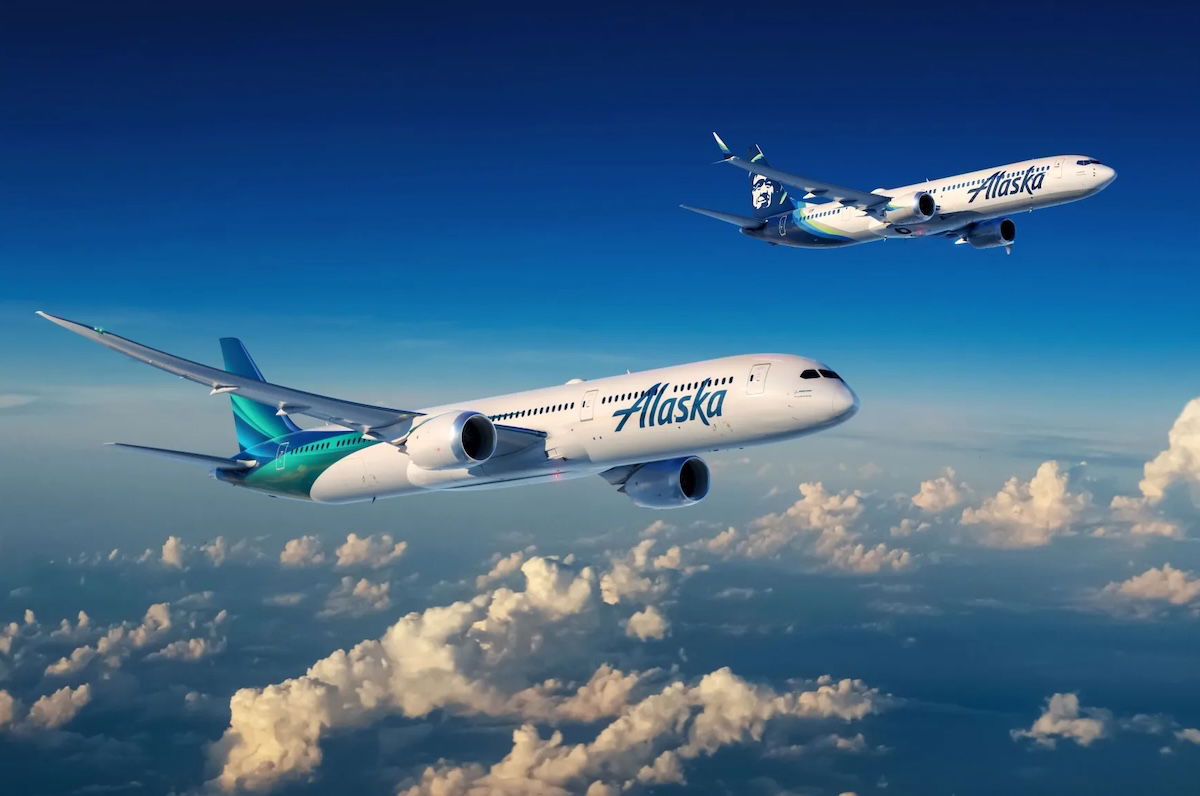
Alaska Airlines has just placed an order for up to 145 Boeing aircraft, including 110 firm orders and 35 options. Specifically:
- The airline has placed a firm order for 105 Boeing 737 MAX 10s, with options for an additional 35 planes; the airline has the option to convert these orders into the smaller variants at a later date, including the 737 MAX 8 and 737 MAX 9 (keep in mind that the 737 MAX 10 hasn’t yet been certified, so…)
- The airline has placed a firm order for five Boeing 787-10s, representing the exercising of previous options; there were reports of this in September 2025, but it’s only now being officially announced
This order extends Alaska’s aircraft delivery stream all the way through 2035, and it means the airline now has 245 Boeing aircraft on order. Alaska Air Group currently has a fleet of 413 aircraft, and the plan is to operate 475 aircraft by 2030, and more than 550 aircraft by 2035.
All of these planes will join the Alaska fleet, while Hawaiian’s fleet will continue to consist of Airbus A330s, Airbus A321neos, and Boeing 717s.
Here’s how Alaska CEO Ben Minicucci describes this Boeing aircraft order:
“This fleet investment builds on the strong foundation Alaska has created to support steady, scalable and sustained growth, and is another building block in executing our Alaska Accelerate strategic plan. These planes will fuel our expansion to more destinations across the globe and ensure our guests travel aboard the newest, most fuel-efficient and state-of-the-art aircraft. We are incredibly proud to be partnering with Boeing, a Pacific Northwest neighbor and a company that stands as a symbol of American innovation and manufacturing.”
My take on Alaska’s latest Boeing aircraft order
I don’t think there’s anything too surprising with this aircraft order. Alaska loves Boeing, its hometown aircraft manufacturer, so ordering more 737 MAXs and 787s isn’t too surprising. I think two things about this order are worth highlighting.
First of all, Alaska is still being conservative with its long haul growth, and “only” has 17 Dreamliners on order. I don’t think that’s too surprising, as it’s generally a conservative airline. That being said, in a parallel universe, I could see Alaska going all-in on becoming a global player, and greatly expanding its Dreamliner fleet.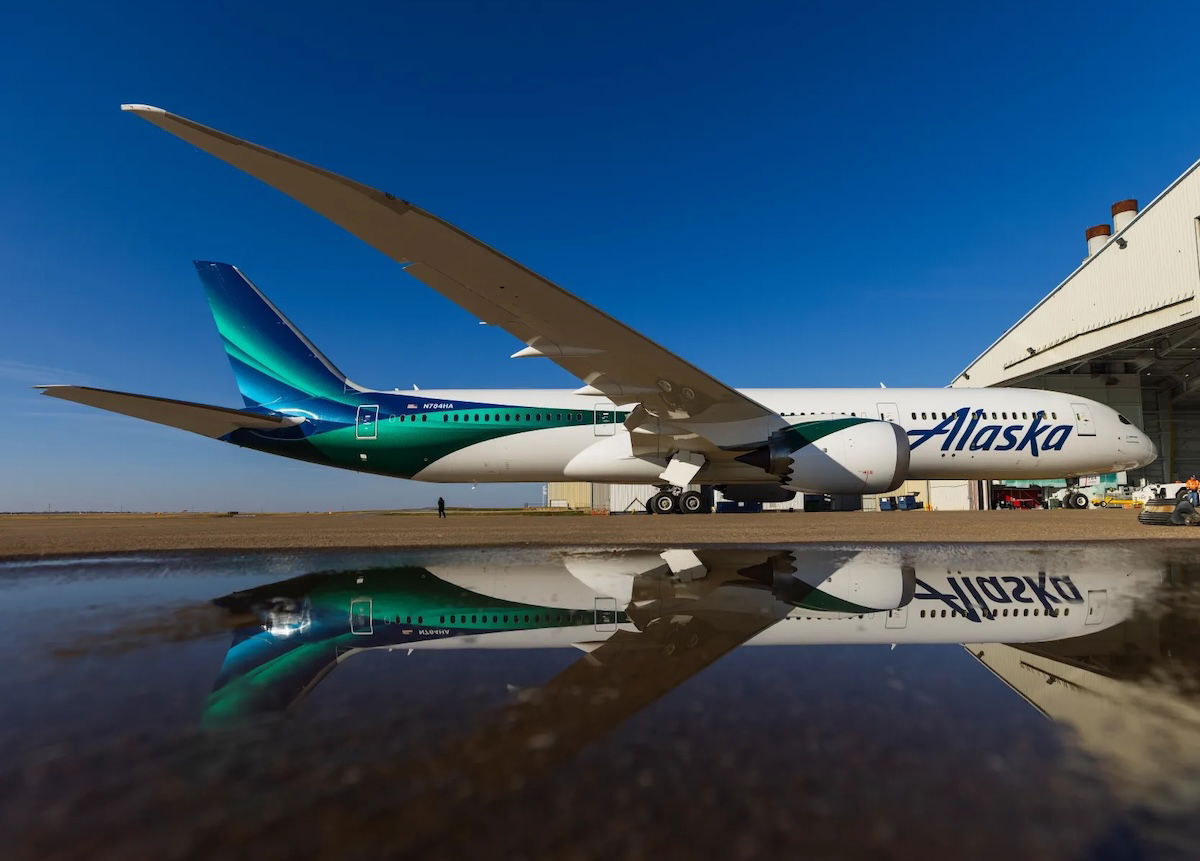
I think what’s most interesting is to see Alaska continuing to go for larger variants of the 737:
- Historically, Alaska has primarily operated the 737-800 and 737-900, with more of a focus on the 737-900
- As Alaska refreshes its fleet with 737 MAXs, the airline has been much more focused on the 737 MAX 9 than the 737 MAX 8, as obviously the airline sees value in operating bigger planes with lower unit costs
- The 737 MAX 10 (which hasn’t yet been certified) is larger than any existing 737 variant, and that will greatly help Alaska’s unit costs
With Alaska moving to larger 737 variants, one wonders if we could eventually see the airline use the extra space on the plane to install flat beds, to be more competitive in some markets. That would be awesome, but who knows…
Bottom line
Alaska Airlines has just placed its biggest aircraft order in history, with firm orders for 105 737 MAX 10s, plus five 787-10s. These planes will be delivered through 2035.
The 787-10 is the largest variant of the 787, and complements the existing 787-9s the company has (which are being transfered from Hawaiian to Alaska). Meanwhile the 737 MAX 10 is the largest variant of the 737, which hasn’t yet been certified.
It’s noteworthy that the airline plans to go from the present fleet of 413 aircraft, to a fleet of 550 aircraft by 2035. That says nothing of the fact that the average capacity per plane will be much higher in 2035 than it is now.
What do you make of Alaska’s big Boeing aircraft order?




You can order the Max 8 with an extra exit (Max 200), with that exit plugged, or without the extra holes in the fuselage. I think this will be true of the Max10. Which option did they select, I wonder?
Ahh, yes the Ryanair special...
Besides, what'r the chances the door-thing would happen again... just blame the pilot anyway *facepalm*
What's going to replace the 717s?
They won’t, but it should be the ATR72. The right airframe for short island hops.
Ugh. No, not ATR, please. A220 or 175/190 E2. Please.
the new generation engines are not well-suited for high frequency short flights. If anything, AS will probably end up having to put some 737NGs or other "previous generation" powered aircraft out in Hawaii and let them do the job until a new generation of engines comes out that can handle an intra-island type operation.
Tim, I was wondering the same thing. Alaska has 11 737-700s that have nearly identical # of seats as the 19 717s Hawaiian has. They've got ample 737NGs to cover the difference.
someone else noted elsewhere that AS' execs just said several weeks ago that they needed to increase the size of the A321NEO fleet in order for it to be economically viable.
Unless they order more A321NEOs, a good chunk of this order might end up as replacements for 321NEOs.
"Unless they order more A321NEOs, a good chunk of this order might end up as replacements for 321NEOs"
Ya think? See VA merger. Too funny.
And here goes Timbits, butthurt because they didn't order Airpuses when they have a perfectly good aircraft manufacturer right in town.
I don't have any problem w/ Boeings.
take your meds.
Airbus did deliver when Boeing could not and I don't recall any in-air door deployments on the 320 family.
I got problems with Boeing. I'd much prefer an Airpuss, or an Embraer.
Alaska, which acquired Hawaiian Airlines in 2024, said it has 413 aircraft in its fleet and plans to grow that to 475 in 2030 and 550 by 2035, with this and previous orders. SEA will be the focus for the 787 and new international flights including ICN, LHR, NRT, KEF. CEO Ben Minicucci said the bookings look great.
https://www.cnbc.com/2026/01/07/alaska-airlines-boeing-order-737-10-dreamliners.html
first, if you did a little math, AS' growth comes out to about 3% per year increase in number of aircraft. Increased gauge might amount to more than that in ASMs but this is not a huge growth plan.
second, as Ben accurately notes, they are not envisioning much international growth above what they have committed to already. they will be adding 5 additional 787s on top of the current 787 fleet and orders and...
first, if you did a little math, AS' growth comes out to about 3% per year increase in number of aircraft. Increased gauge might amount to more than that in ASMs but this is not a huge growth plan.
second, as Ben accurately notes, they are not envisioning much international growth above what they have committed to already. they will be adding 5 additional 787s on top of the current 787 fleet and orders and the 330 fleet - so not a whole lot of growth there.
and bookings can look great but butts in seats doesn't translate into revenue that pays the bills.
Since all of AS' longhaul international flights were operated by HA in 2025, it isn't hard to see that HA's international network through the first 3 quarters (as far as DOT has reported) lost almost $50 million which, while an improvement from a year ago, is still a sizable loss for an airline the size of AS.
oh, and AS loses money flying to Latin America, mostly during the winter so AS has still not demonstrated that it has fixed its seasonality problem - HA also loses money on its domestic system in the winter right along w/ AS.
AS is run by real business people that understand that you can't and don't keep growing if you lose money or don't make enough to meet basic profitability levels for the industry.
I know cut and paste is as good as you are capable of doing but a few quick calculations and data lookups are what add real insight into the discussion - and the industry
"Ben accurately notes, they are not envisioning much international growth above what they have committed to already."
Completely wrong. Apparently, you didn't listen to the interview.
He said, "Our biggest domestic strength is here in SEA. We are the largest domestic carrier here in SEA. That's where the global launch is going to be. Out of here we'll have five international flights out of SEA going up to 12 or more. This is where we've...
"Ben accurately notes, they are not envisioning much international growth above what they have committed to already."
Completely wrong. Apparently, you didn't listen to the interview.
He said, "Our biggest domestic strength is here in SEA. We are the largest domestic carrier here in SEA. That's where the global launch is going to be. Out of here we'll have five international flights out of SEA going up to 12 or more. This is where we've planned our global expansion."
I think Alaska is learning that domestic strength doesn't equal international strength.
AA is the biggest domestic carrier in the US, yet the weakest internationally. JetBlue also learned this very expensive lesson. Conversely United is even smaller domestically than WN (or was at some point), but by far the international leader.
Maybe it'll work out, maybe it won't. All we can do is wait and see how Alaska performs. The international performance has been weak...
I think Alaska is learning that domestic strength doesn't equal international strength.
AA is the biggest domestic carrier in the US, yet the weakest internationally. JetBlue also learned this very expensive lesson. Conversely United is even smaller domestically than WN (or was at some point), but by far the international leader.
Maybe it'll work out, maybe it won't. All we can do is wait and see how Alaska performs. The international performance has been weak to average so far.
AA has two problems with regards to international. They don't have enough wide body long-haul aircraft and the domestic hubs where they dominate aren't great international gateways. UA has SFO & EWR and lesser, but still good gateways in IAD and LAX.
AA has/had plenty of great international gateways, it's about how they failed to use then to build up a strong product/network.
On the balance AA's DFW/LAX/ORD/MIA/PHL/CLT + NYC are still plenty of great international gateways. For example, MIA is a gift for LATAM. AA was bigger at LAX at one point, etc.
Nothing you've said has shown why Alaska will uniquely succeed with its domestic hub strength. SEA isn't a better gateway than SFO or...
AA has/had plenty of great international gateways, it's about how they failed to use then to build up a strong product/network.
On the balance AA's DFW/LAX/ORD/MIA/PHL/CLT + NYC are still plenty of great international gateways. For example, MIA is a gift for LATAM. AA was bigger at LAX at one point, etc.
Nothing you've said has shown why Alaska will uniquely succeed with its domestic hub strength. SEA isn't a better gateway than SFO or EWR. Alaska is doing poor to average at best right now with the longhaul.
"On the balance AA's DFW/LAX/ORD/MIA/PHL/CLT + NYC are still plenty of great international gateways. For example, MIA is a gift for LATAM. AA was bigger at LAX at one point, etc."
Again, AA doesn't have the wide-body aircraft and it is a long lead time to get them.
MIA is AA's best int'l gateway and how they dominate LATL. DFW is geographically challenged for Europe and Asia. Nobody owns LAX, and AA is weak on...
"On the balance AA's DFW/LAX/ORD/MIA/PHL/CLT + NYC are still plenty of great international gateways. For example, MIA is a gift for LATAM. AA was bigger at LAX at one point, etc."
Again, AA doesn't have the wide-body aircraft and it is a long lead time to get them.
MIA is AA's best int'l gateway and how they dominate LATL. DFW is geographically challenged for Europe and Asia. Nobody owns LAX, and AA is weak on the west coast and has PHX to feed also. PHL & CLT are not NYC and not doing everything to take the lead in JFK was an AA mistake and a boon for DL.
Every airline has strengths and weaknesses and executives with varying abilities to take advantage of them.
yolo gets it. You, rebel, not so much.
OF course, AS execs aren't going to say "we don't really have any advantage" but they don't.
AS isn't stronger at SEA for what matters for int'l more than DL; they fly to more domestic cities from SEA but those extra cities contribute very little to longhaul int'l traffic.
and AS flies more frequencies to the same cities as DL -but only one domestic flight...
yolo gets it. You, rebel, not so much.
OF course, AS execs aren't going to say "we don't really have any advantage" but they don't.
AS isn't stronger at SEA for what matters for int'l more than DL; they fly to more domestic cities from SEA but those extra cities contribute very little to longhaul int'l traffic.
and AS flies more frequencies to the same cities as DL -but only one domestic flight is the best connection for each int'l flight.
And then SEA is on the wrong side of the continent for a gateway to Europe. Sure, there are flows off the west coast to Europe that make sense over SEA but those are all duplicated by the big 3 via their other hubs and the big 3 can price accordingly.
AA doesn't make money flying to Europe or Asia on a year round basis. They don't need more aircraft or gateways. but then UA doesn't make money flying to Latin America and could stand to park some jets to boost their margins across their network.
And DL plus Latam is as big as AA to S. America.
Notably, it is DL that doesn't try to be #1 in size ends up as #1 in revenue and profits.
"AS isn't stronger at SEA for what matters for int'l more than DL; they fly to more domestic cities from SEA but those extra cities contribute very little to longhaul int'l traffic."
AS flies over twice as many passengers than DL to 140 cities from SEA compared to 60 cities for DL, but TD claims "AS isn't stronger at SEA." What an analyst. You can't make this stuff up.
"United is even smaller domestically than WN (or was at some point)"
Both United and Delta are smaller domestically (seat count, not destinations nor departures) than Southwest even now, and American only just recently surpassed Southwest.
you might want to check your data.
Through the 3rd quarter, AA including regional carriers, boarded over 153 million domestic passengers, DL boarded over 140 million and WN boarded 124 million followed by UA at 120.
And in terms of domestic flights, the order is AA 1st, DL 2nd, UA 3rd and WN last because the DOT considers regional flights as belonging to the major carrier.
In terms of mainline only domestic flights, DL...
you might want to check your data.
Through the 3rd quarter, AA including regional carriers, boarded over 153 million domestic passengers, DL boarded over 140 million and WN boarded 124 million followed by UA at 120.
And in terms of domestic flights, the order is AA 1st, DL 2nd, UA 3rd and WN last because the DOT considers regional flights as belonging to the major carrier.
In terms of mainline only domestic flights, DL is #2 behind WN.
We will know the final domestic counts i about a month after all of the airline report - not all airlines break out domestic vs. international passengers - but it is not likely that WN will surpass DL.
rebel,
you still can't grasp - because it tarnishes your narrative - that there is only ONE domestic flight that best connects to any single international flight. All of the extra AS frequencies in the same markets that DL serves from SEA doesn't do anything to help international connections.
And feel free to show us the international connections that come from the 41-99th smallest cities that AS serves but DL does not from SEA. It amounts to less than a hill of beans.
And you still can't accept that DL, like AA and UA have multiple hubs east of the west coast that also serves every market that AS can serve in Europe. AS is actually at a disadvantage by serving Europe only from the west coast.
Sorry if these concepts go right over your head but they are as real as the day is long - someplace in the world but probably not in the northern hemisphere today.
And yet AS has gained SEA market share since 2019 without having those 787s Dreamliners until recently. Those 140 spokes and new up-guauged aircraft will feed the AS SEA hub and these new global flights nicely and the S-curve advantage will pull O&D customers to AS and many will come from DL. AS will also control when and by what terms SEA grows gate capacity. Seattle loves their hometown airline!
Interestingly, AS had a better...
And yet AS has gained SEA market share since 2019 without having those 787s Dreamliners until recently. Those 140 spokes and new up-guauged aircraft will feed the AS SEA hub and these new global flights nicely and the S-curve advantage will pull O&D customers to AS and many will come from DL. AS will also control when and by what terms SEA grows gate capacity. Seattle loves their hometown airline!
Interestingly, AS had a better pre-tax margin than DL before Covid and an equal one in 2023 before the merger with Hawaiian. We know SEA is a laggard for DL so your erroneous assertion of relative strength is just more wishful thinking on your part.
Maybe destinations 41-99 (and all the other frequencies) for Alaska don't fill a lot of 787s but they provide a lot of reason for a Seattle customer to be loyal to AS instead of DL. Loyalty, not coupon revenue, is the name of the game now as we all know. The only advantage Delta had over Alaska there was international, and that advantage will soon be gone. Whatever loyalty-related $ Delta's getting in SEA will...
Maybe destinations 41-99 (and all the other frequencies) for Alaska don't fill a lot of 787s but they provide a lot of reason for a Seattle customer to be loyal to AS instead of DL. Loyalty, not coupon revenue, is the name of the game now as we all know. The only advantage Delta had over Alaska there was international, and that advantage will soon be gone. Whatever loyalty-related $ Delta's getting in SEA will likely shrink further in addition to pressure on their RASM from increased competition.
I do want to take a moment through to congratulate Tim on the creative accounting. The guy should be a politician. Things like "Delta gets higher avg. fare to the east coast" - of course completely ignoring that Delta has a more premium configuration on their aircraft (driving higher fares), along with overwhelmingly lower load factors except to Delta hubs. And higher unit costs. And less loyalty revenue.
YR,
feel free to back up your statement w/ data.
Of course you don't want to admit that DL gets higher average fares in part of the SEA market - because it would show that AS really doesn't "own it all" and DL isn't the helpless sheep that you want to believe it is.
DL really does have advantages in the SEA market that are more significant than AA has in in the ORD...
YR,
feel free to back up your statement w/ data.
Of course you don't want to admit that DL gets higher average fares in part of the SEA market - because it would show that AS really doesn't "own it all" and DL isn't the helpless sheep that you want to believe it is.
DL really does have advantages in the SEA market that are more significant than AA has in in the ORD market.
And the chances are pretty high that DL gets MORE loyalty revenue per passenger from SEA than AS.
and you still can't deal w/ the reality - just as is true w/ AA and UA - that DL figured out how to generate industry leading profits in its core 4 hubs of ATL, DTW, MSP and SLC.
If AS is as smart as you want to believe they are, why did they not lock up SEA so no other carrier and esp. DL could enter and why have their margins not matched DL's.
All of rebel's qualifiers to try to make AS the hero in terms of profits ignore the reality that AS is in its 2nd merger in a decade and its profits fell dramatically w/ each merger - well below DL.
for now, AT A MINIMUM, DL is generating higher margins and AT A MINIMUM, DL can "subsidize" SEA with profits from elsewhere om its network.
and maybe, just maybe, as hard as it is for some to accept, DL just might generate comparable margins to AS in SEA precisely because of the markets where DL does better and because DL is not propping up a money-losing operation in the middle of the Pacific.
I don't mind admitting that, as you stated, Delta gets higher avg. fares from Seattle to certain parts of the country. That is a very limited factoid but you're correct, sure.
I don't know what AA in Chicago has to do with anything (or United, why you're bringing them up).
Loyalty $ isn't just about the direct accretion from your card agreement. Delta does a great job of monetizing their AMEX relationship, but they do...
I don't mind admitting that, as you stated, Delta gets higher avg. fares from Seattle to certain parts of the country. That is a very limited factoid but you're correct, sure.
I don't know what AA in Chicago has to do with anything (or United, why you're bringing them up).
Loyalty $ isn't just about the direct accretion from your card agreement. Delta does a great job of monetizing their AMEX relationship, but they do a poor job of having SkyMiles be a differentiator in customer behavior. MileagePlan (now Atmos) is much more generous, so it provides less observable $ on the balance sheet, but it's more likely to influence customer behavior, which is harder to measure but almost certainly there.
The crux of my argument is that Delta seems to be highly successful everywhere in the country and is kicking JetBlue's a** in Boston. They just have never figured out how to hack it in Seattle, and it's only going to get tougher. Yes, the profits from ATL can subsidize SEA in perpetuity, but at the end of the day Delta's board has to maximize shareholder value, and parking capital in Seattle might not be a very good avenue to do that when there's clear opportunities in AUS, BOS and LAX.
If every risk you take works out, then you're not taking enough risk. It's only logical that at least 1 of Delta's "growth hub" adventures wouldn't work out the way they hoped. Nothing wrong with that.
YR, you say many accurate things but, again, market share domination has clearly never been DL's goal at SEA - the airport had little extra space 10 years ago when DL launched its hub there.
and AS, like DL, is considered a well-run company. They do what helps their bottom line. The notion that some have that either AS or DL is going to go nuclear on each other is simply not born out in...
YR, you say many accurate things but, again, market share domination has clearly never been DL's goal at SEA - the airport had little extra space 10 years ago when DL launched its hub there.
and AS, like DL, is considered a well-run company. They do what helps their bottom line. The notion that some have that either AS or DL is going to go nuclear on each other is simply not born out in 10 years of having a shared hub.
and AS is still largely a one hub and multiple focus cities airline. If they want the terminal space to grow at SEA, they have to at least support SEA's desire to expand facilities and make it big enough that AS can have what DL leaves behind in the current terminal complex. nobody said AS has to pay for it.
and then the focus shifts to airspace and runway capacity so it might not work anyway.
Either way, AS and DL will coexist for years to come. The incessant rambling by a few that DL does poorly at SEA belies the fact that DL manages to be the most profitable US airline. If DL can have money-losing projects as some think SEA is for them, you have to ask what other airlines are doing wrong that they can't come close to DL levels of profitability despite having so many advantages
dumb rebell,
you still can't get that DL never opened a hub in SEA as a TPAC hub with the appropriate domestic flights to support it. It matters no iotas that AS has higher domestic market share in a market where DL gets what it wants.
I know the concept goes past your head but AA is not interested in trying to reach market share parity with UA at ORD any more than WN...
dumb rebell,
you still can't get that DL never opened a hub in SEA as a TPAC hub with the appropriate domestic flights to support it. It matters no iotas that AS has higher domestic market share in a market where DL gets what it wants.
I know the concept goes past your head but AA is not interested in trying to reach market share parity with UA at ORD any more than WN is with UA at DEN or vv.
Just as with AA in the domestic market or UA in the international market, DL generates higher profits by NOT trying to be the largest.
We are in 2026 and AS has not been more profitable than DL on a system basis than DL.
We simply do not know how profitable either is in SEA but DL clearly has the war chest to do what it needs in SEA and, despite what you want to believe, DL isn't going anywhere and really does have parts of the SEA operation where it is stronger.
If AS was a smarter company than DL, why didn't they lock up all of the gates so that DL couldn't even put in a 2nd place hub?
AS lives and dies with SEA, but for DL it is an obviously weak attempt at staying relevant in the Pacific where DL is weak and dependent on its int'l partners. There is a reason why LAX and ORD are the exceptions and the rule is fortress hubs. Eventually, airlines retreat to their strengths if the larger airline is strong and fully engaged. AS is strong. has a huge lead and now is acquiring the...
AS lives and dies with SEA, but for DL it is an obviously weak attempt at staying relevant in the Pacific where DL is weak and dependent on its int'l partners. There is a reason why LAX and ORD are the exceptions and the rule is fortress hubs. Eventually, airlines retreat to their strengths if the larger airline is strong and fully engaged. AS is strong. has a huge lead and now is acquiring the necessary assets to control SEA.
Sorry, DL has too much to defend. SEA is way down their pecking order. It is just a matter of time.
except DL really doesn't have alot to defend.
DL dominates - with more than 70% local market share - ATL, DTW, MSP and SLC - and is the largest carrier in NYC (domestic), LAX and BOS
SEA is DL's only truly competitive hub and you are fixated w/ the notion that DL is too weak to defend itself.
It is actually AA and UA that are knocking themselves silly in Chicago. UA is dumping capacity...
except DL really doesn't have alot to defend.
DL dominates - with more than 70% local market share - ATL, DTW, MSP and SLC - and is the largest carrier in NYC (domestic), LAX and BOS
SEA is DL's only truly competitive hub and you are fixated w/ the notion that DL is too weak to defend itself.
It is actually AA and UA that are knocking themselves silly in Chicago. UA is dumping capacity into multiple hubs and regions as evidence by 3rd quarter financials that show it was and is an economic disaster.
AS and DL are actually pretty rational competitors - and DL really does have advantages that AS knows it cannot match - but you fantasize that AS will push DL out of SEA.
You, as usual, are driven far more by emotion and your personal desires than by fact.
DL doesn't have the airplanes and won't for a long time. Delta's conservatism which was an advantage is not when it comes to SEA. Alaska holds all the cards in SEA.
"Through the 3rd quarter, AA including regional carriers, boarded over 153 million domestic passengers, DL boarded over 140 million and WN boarded 124 million followed by UA at 120."
Yeah... no. You know and hate that I have better data than you, Tim. You're just flat out wrong and, as usual, just hope that no one calls you out on it.
Domestically (the generally accepted definition is a flight that starts and ends in...
"Through the 3rd quarter, AA including regional carriers, boarded over 153 million domestic passengers, DL boarded over 140 million and WN boarded 124 million followed by UA at 120."
Yeah... no. You know and hate that I have better data than you, Tim. You're just flat out wrong and, as usual, just hope that no one calls you out on it.
Domestically (the generally accepted definition is a flight that starts and ends in the 50 states), Delta is still behind AA and WN, easily. Both in onboards domestically and in schedule and going forward as well. And yes, that includes regionals.
Dude- they will order more planes. Don’t act like this is their last announcement.
Dude- The lead times on airliners are like, really long, and DL aircraft deliveries were fewer than they retired this year.
and @Rebel
I admire your attempt to argue with a brick wall. I do it too, but someone who makes comments like "only one flight from JNU to SEA can possible help an international flight to LHR, multiple JNU>SEA frequencies don't make AS better than DL"...
I mean.. if that extremely basic understanding of airline network planning doesn't explain Tim Dunn's actual knowledge level, I don't know what else does. It's honestly laughable...
and @Rebel
I admire your attempt to argue with a brick wall. I do it too, but someone who makes comments like "only one flight from JNU to SEA can possible help an international flight to LHR, multiple JNU>SEA frequencies don't make AS better than DL"...
I mean.. if that extremely basic understanding of airline network planning doesn't explain Tim Dunn's actual knowledge level, I don't know what else does. It's honestly laughable that he even posits the argument, but we're also talking about a guy that Delta fired
max has never met a government statistic that he likes - clearly he can't manipulate government data.
The DOT knows what domestic includes and the stats I post most certainly show that DL is much higher than alot of people assume - precisely because WN has been shrinking over the past couple years to turn itself around. They are increasing ASMs largely by flying further.
and rebel,
feel free to post the actual retirements...
max has never met a government statistic that he likes - clearly he can't manipulate government data.
The DOT knows what domestic includes and the stats I post most certainly show that DL is much higher than alot of people assume - precisely because WN has been shrinking over the past couple years to turn itself around. They are increasing ASMs largely by flying further.
and rebel,
feel free to post the actual retirements vs. deliveries if you would like but you, as usual (it was so fun agreeing w/ you for 3 nanoseconds but your argumentative genes kicked right back in) miss the point that aircraft are not tools to acquire but are the means used to generate revenue.
DL added more absolute capacity in the US than any other airline except for UA; let's see what 2025 full year data shows but that was true for the first 3 quarters.
The difference is that DL grew only enough to grow its revenue metrics while UA was so consumed with growth that it absolutely trashed its own revenue metrics with the worst RASM performance of the US industry in the 3rd quarter - down in all 4 global regions.
As UA is forced to battle AA (see CF today), they have no choice but to not get into pi7890ng matches with as many other airlines in other markets in 2026. And UA will see labor costs rise.
Don't worry about AS and DL - they have proven they are both pretty rational competitors and have been engaging in fairly ongoing jabs without getting on either of themselves in the process.
AA and UA are not run by people that show the same restraint as AS and DL.
Despite your fantasies of AS inflicting pain on DL, it simply won't happen for a number of reasons but you are free to pretend it will while ignoring the real competitive dynamics that are playing out in the industry to carriers not named AS and DL.
lol. show a link to your data, tim. I have no issue with data. You just have no idea what data even is or how to use it. This comment of yours usually stems from your ignorance on revenue accounting because you truly have no idea what DOT data does and does not say. You also seem to have no idea what onboards are.
DL is smaller than WN and AA domestically both in onboards and seats. That you're even trying to argue this is stupid.
MP, "You just have no idea what data even is or how to use it."
Remember when TD predicted UA would never catch DL in NYC again. Wrong again Tim. And those cancellations. 2025 Seat Cancel Rate: UA 1.15%, DL 1.22%. What would Richard Anderson think?
https://www.panynj.gov/airports/en/statistics-general-info.html
@Rebel
it's not hard to admit when you read the wrong row like I did this morning about WN onboards (Wn is still bigger in seats domestically)
Can you imagine if Tim Dunn just stopped using made up data like he did about the relative size of DL and UA in NYC or, to your point, just said "yep. I was wrong. United is easily beating Delta in NYC again"
what a world. He might even gain a modicum of respect.
Did it ever occur to you that DL is choosing NOT to add back a bunch of NYC capacity because B6 is down as are most of the U/LCCs at LGA and JFK?
DL proved in the 3rd quarter that NOT leading in capacity leads to better revenue performance - in complete contrast to UA which tanked its revenue performance in DOMESTIC anD EVERY GLOBAL REGION.
I hate to break it to you guys but...
Did it ever occur to you that DL is choosing NOT to add back a bunch of NYC capacity because B6 is down as are most of the U/LCCs at LGA and JFK?
DL proved in the 3rd quarter that NOT leading in capacity leads to better revenue performance - in complete contrast to UA which tanked its revenue performance in DOMESTIC anD EVERY GLOBAL REGION.
I hate to break it to you guys but the number of seats offered is not what creates share; it is actually in filling those seats.
As much as you want to deny reality, DL is the 2nd largest carrier in number of DOMESTIC seats sold behind UA according to DOT data.
As usual, y'all are free to throw insults while you argue against the moon, sun and clouds.
I'll tell you what, Tim, you go ask your usual insider delta buddies and they'll set you straight about how ignorant you sound right now.
I’ll correct myself on something
Delta did pass southwest on onboards but still has fewer scheduled seats in 2025 and 2026
a rare backtrack from Max. apparently he managed to find the published DOT data.
I'll take it.
For someone that incessantly harps on ASMs, it is amazing how you change the dashboard to fit whatever narrative you want.
ps... do you think you could think your reply before entering so you don't have to do it 3 times within 12 minutes.
It really makes you look like a hypocrite when you talk about how much other people post.
You see how easy to admit when you quoted something incorrectly?
Aside from your smug replies which honestly make you sound dumb, it's quite easy. You should try it sometimes. You're usually quite wrong about a lot of things
So glad to make you smile, cupcake
I have no problem admitting I am wrong when I am.
Problem is that you are constantly convinced I am wrong and jump on your keyboard every chance you think you can score a point.
and all of this is a sideshow anyway - AS is so much smaller than any of AA, DL, UA and WN domestically and that size difference IS precisely why AS and DL have offsetting advantages that mean that not...
I have no problem admitting I am wrong when I am.
Problem is that you are constantly convinced I am wrong and jump on your keyboard every chance you think you can score a point.
and all of this is a sideshow anyway - AS is so much smaller than any of AA, DL, UA and WN domestically and that size difference IS precisely why AS and DL have offsetting advantages that mean that not much moves or can move.
again, thank you for acknowledging that DL is much higher in rankings in both the domestic and international market than you want to acknowledge
It is possible that Boeing offered AS compensation for the door blow out accident and AS is now cashing in some of that compensation.
This reminds me Tim, where is that Delta 787 order that you promised would be announced at that employee celebration for their 100 year anniversary? (even though its a lie that it is 100 years...)
the first quarter and certainly not January has passed.
DL reports its full year 2025 earnings next Tuesday, IIRC.
They announced the A350-1000 order in January as well and I believe on the same day they announced earnings.
I wonder when Europe will commence sanctions against the US. Hopefully soon.
Investors should be happy Alaska Air Group seems to be making progress with its overall fleet simplification intentions. By 2035 the 330s will be getting a bit long in the tooth for non-freighter type operations as long as the Bezos Airlift Contracts remain.
Lame. They probably got a deal because Boeing screwed up so badly with the MAX, and the whole door plug thing... (unless... they have the gall to blame the pilot for that.)
Leave that to Congress... Again.
Interesting that they didn't include any Max 7s, which one would expect would be Alaska's natural preference to replace the 717s on Hawaiian's inter-island routes.
Given that Hawaiian is otherwise all Airbus, I could see them going to the A220 family to replace the B717s, rather than going to the 737 Max 7.
One of the reasons why the 717 works well for Intra-Hawaii is it can handle a lot of flight cycles, which otherwise is hard on an aircraft. Theoretically the ideal directly replacement would be something akin to the Q400 or ATR72, but I suspect Hawaiian would follow in Southwest's footsteps using 737s (or Airbuses) and rotating through between intra-HI and mainland flying instead.
When you consider that this covers their fleet replacement needs plus growth for a decade, it isn't really that big.
Their growth plans are very much in limbo and won't much involve SEA unless it involves upgauging because there just isn't much space for anyone to grow by adding new flights.
If AS would like to get behind the new terminal at SEA and cede it to DL, then SEA will shift from being gate constrained to airspace constrained.
Too funny.
far more serious that the drivel you spewed below.
AS can't grow SEA without far more terminal space.
If AS wants more terminal space, they can built it for DL.
It's not too hard to figure it out.
PDX has some space to grow and AS can battle it out w/ WN for SAN and everywhere else on the west coast other than LAX where both have lost to the big 3 and SFO...
far more serious that the drivel you spewed below.
AS can't grow SEA without far more terminal space.
If AS wants more terminal space, they can built it for DL.
It's not too hard to figure it out.
PDX has some space to grow and AS can battle it out w/ WN for SAN and everywhere else on the west coast other than LAX where both have lost to the big 3 and SFO where AS has lost to UA; DL is as large if not larger at SFO than AS.
save the mud throwing and let us know where and how you think AS is going to grow
"AS can't grow SEA without far more terminal space."
See 'up gauging' and SAN. Too funny.
"If AS wants more terminal space, they can built it for DL."
Whatever you say. Yikes!
there will be plenty of gates in Seattle once DL decides to stop burning cash there and pack up and go home
The only yikes! is your incessant need to jump in before reading. I specifically addressed upgauging.
and your drivel below assumes that DL can't also upgrade. It has led the big 3 in the practice so it is pretty likely that they will do it at SEA if they need to.
Again, as hard as it is for you to comprehend, if AS wants more terminal space, they can push for it to be...
The only yikes! is your incessant need to jump in before reading. I specifically addressed upgauging.
and your drivel below assumes that DL can't also upgrade. It has led the big 3 in the practice so it is pretty likely that they will do it at SEA if they need to.
Again, as hard as it is for you to comprehend, if AS wants more terminal space, they can push for it to be built for DL. I'm sure DL would gladly accept a 25 gate terminal with FIS.
If you'd like to address how AS or any other airline is going to significantly grow SEA, we'll be all ears.
Honest question -- we can't Alaska build more gates from themselves. The gates with be North of the N concourse so in line with the rest of Alaska (if they connect new with N airside). The only problem I see with this is the lack of International Arrivals anywhere near their gates, but they call always move planes for departures like UA and AA do at ORD.
@Tim, sadly, I agree with you here. Hence my statement about growth somewhere else. They can really only grow SEA today by pushing up gauge with the -10s, and shifting the -8 and -9s to other West Coast focus cities. They are going to have to fill those 787s somehow, and the extra capacity of the -10s should allow that to happen without sacrificing the traditional O&D SEA demand. Unless there are other plans for growth further East.
believe it or not, but we do agree on things every now and then.
It is obvious that the SEA terminal configuration including a potential separate terminal as currently proposed make it difficult for one carrier to operate from both terminals.
and, yes, AS' current gates are far from the international arrivals right now. THAT is a result of DL seeing the value of international access while AS was still focused on domestic size....
believe it or not, but we do agree on things every now and then.
It is obvious that the SEA terminal configuration including a potential separate terminal as currently proposed make it difficult for one carrier to operate from both terminals.
and, yes, AS' current gates are far from the international arrivals right now. THAT is a result of DL seeing the value of international access while AS was still focused on domestic size.
People talk about AS' size at SEA as being such a huge advantage over DL but there are still top 20-25 cities that feed just about every international market. All of the extra flights below that do more to create more domestic connections than to meaningfully add any more international traffic.
AS' larger size is as much about flying to the same top 25 destinations as DL with more frequency.
and SEA still has geographic limitations esp. other than to E. Asia; no other global airline is as limited in trying to develop one half of the world as AS is. They could build a decent TPAC network but it will face heavy competition from multiple carriers but will face an uphill battle to every other region of the world except if they serve alliance partner hubs through JVs.
Check your premises. When an airline dominates an airport and enjoys a special relationship with the community the last thing they want to do is expand gate capacity beyond what they can continue to dominate. And when you are paying 55% of the bill you get to call/time the shots while you bleed the competition with your S-curve advantage especially when the competition obviously doesn't have enough planes coming for all the fronts on which...
Check your premises. When an airline dominates an airport and enjoys a special relationship with the community the last thing they want to do is expand gate capacity beyond what they can continue to dominate. And when you are paying 55% of the bill you get to call/time the shots while you bleed the competition with your S-curve advantage especially when the competition obviously doesn't have enough planes coming for all the fronts on which they are fighting. AS wins SEA over time unless they do something stupid.
Could you expound on "PDX has some space to grow and AS can battle it out w/ WN for SAN and everywhere else on the west coast other than LAX where both have lost to the big 3 and SFO where AS has lost to UA; DL is as large if not larger at SFO than AS."
I live in Portland and there is a substantial amount of east west traffic at PDX both destination and through as Alaska shifts flights, particularly connecting to Hawaii to PDX.
So I'm not clear what you are saying.
One easy way for AS to "grow" Seattle is to grow Portland and to grow nonstops from their primary spokes and other hubs. Traditionally SEA has carried a lot of connecting traffic, both for Delta and Alaska. If AS were to add more ANC-PDX capacity and suddenly pax flying from ANC to AUS, to use a random city pair, if those pax now connect over PDX instead of SEA, that's 2 more seats that Alaska...
One easy way for AS to "grow" Seattle is to grow Portland and to grow nonstops from their primary spokes and other hubs. Traditionally SEA has carried a lot of connecting traffic, both for Delta and Alaska. If AS were to add more ANC-PDX capacity and suddenly pax flying from ANC to AUS, to use a random city pair, if those pax now connect over PDX instead of SEA, that's 2 more seats that Alaska can offer to a local passenger. They can free up space on their own aircraft by pushing connections elsewhere.
One of the reasons why Delta has historically fared poorly in Seattle is that they don't perform well with local customers. They have to offer significant discounts (including for corporates) to win that traffic. So they backfill with a lot of domestic connections on cheap fares. EUG-SAN is an example of a market that previously was a major Delta flow over Seattle, even though it's a circuitous routing. That market now is flown nonstop by Southwest and Alaska, choking off even more avenues of demand for Delta.
At the end of the day, AS doesn't need more gates in Seattle to grow, they can move their domestic connections to other hubs, prioritize international connections, and compete more vigorously for Seattle local pax. The current stalemate with gates is a major advantage in Alaska's favor, more gates in the short-run hurts them more than it helps. And with international coming online, it could very easily be a situation where Delta has to scale back and AS can take those gates as well. We're already seeing DL start shifting its transpac focus down to LAX.
problem for you is that average fare data doesn't support your statement.
AS and DL get comparable average fares in the western US; DL is a higher cost airline but uses more efficient aircraft from SEA than for its system as a whole so their profits might not be that far off.
DL clearly has an average fare advantage to the eastern US and that is supported by DOT data.
a chunk of the...
problem for you is that average fare data doesn't support your statement.
AS and DL get comparable average fares in the western US; DL is a higher cost airline but uses more efficient aircraft from SEA than for its system as a whole so their profits might not be that far off.
DL clearly has an average fare advantage to the eastern US and that is supported by DOT data.
a chunk of the $7 billion in Amex revenue does come from SEA and I would strongly bet that DL gets more per passenger from credit card revenue in SEA than AS does from its program.
and DL has a proven international network from SEA which does get industry average or better fares. Early data on AS' international ops from SEA says AS has a very long ways to go to be on parity with DL.
actual data and not internet hearsay doesn't support your statement.
Steve,
compared to SEA, AS flows a pretty small amount of connections over PDX.
They highlighted that it is their plan to grow PDX in order to move domestic connections over PDX and that makes sense - but PDX and SEA are still basically in the same geographic location for connections.
Compare that to the DL western US hub triangle of SLC-SEA-LAX and DEN-SFO-LAX for UA and AS is and always will be at...
Steve,
compared to SEA, AS flows a pretty small amount of connections over PDX.
They highlighted that it is their plan to grow PDX in order to move domestic connections over PDX and that makes sense - but PDX and SEA are still basically in the same geographic location for connections.
Compare that to the DL western US hub triangle of SLC-SEA-LAX and DEN-SFO-LAX for UA and AS is and always will be at a disadvantage in connecting the whole US to the world via the PNW
and rebel,
actual data FOR SEA shows that AS and DL have specific parts of the market they both are strong in.
It is unlike Chicago or Dallas or even New York City or Denver or Washington DC all of which have two or more major airlines in the same metro area even if not at the same airport.
AS waited far too long to decide it wanted to be more than a PNW airline. Its Virgin America merger - which you noted was pretty much a flop - did nothing to grow in LAX or SFO. They are trying for SAN now but AS still have a very limited geographic footprint for a carrier that is trying to now be global.
And DL IS SEA's largest international airline and people who know know that AS is not doing any harm to DL's international operation at SEA.
and no airline wants to pay for their competitor to grow but AS doesn't get veto power over everything at SEA any more than any other airlines does at other airports.
There simply is no more gate space at SEA without building a new terminal. AS can accept that they are not likely to succeed in growing SEA because they can't add enough flights to gain an advantage and grow elsewhere or battle it out w/ DL in the international market which DL has already sewn up far better than AS will likely ever be able to do.
Yapyapyapyapyapyapyapyapyap
"AS and DL get comparable average fares in the western US; DL is a higher cost airline but uses more efficient aircraft from SEA than for its system as a whole so their profits might not be that far off."
"Western US"? I just love the way you torture logic and statistics in your endless effort to support your religious beliefs. Sorry, that dog don't hunt. ;)
it has nothing to do with religion.
It has to do with facts - which are pretty foreign to you.
AS is a predominantly western US airline - ie west of the Rockies.
and there are clear divisions of markets that can be used to compare AS vs DL performance from SEA.
whether you know or understand it, AS and DL get comparable average fares to most cities they both serve from SEA west...
it has nothing to do with religion.
It has to do with facts - which are pretty foreign to you.
AS is a predominantly western US airline - ie west of the Rockies.
and there are clear divisions of markets that can be used to compare AS vs DL performance from SEA.
whether you know or understand it, AS and DL get comparable average fares to most cities they both serve from SEA west of the Rockies.
AS has an advantage to Alaska; DL gets higher average fares to the eastern US - ie east of the Rockies
again, it doesn't really matter if it destroys your narrative but AS and DL compete pretty similarly from SEA with each having geographic strengths.
and the part you still can't grasp is that the vast majority of AS' domestic connections flow over SEA while DL flows relatively few domestic connections over SEA because SEA is the least attractive place on DL's network for most domestic O&Ds.
AS simply carries its connecting passengers via SEA on average further than DL does.
Tim Dunn, "It has to do with facts"
You claim the AS CEO had no plans to grow SEA 787 int'l destinations beyond the five announced. Wrong. He said they plan on "12 or more."
AS/QX has built a 48/6% to 19/7% (DL/OO) passenger advantage over the last six years. AS serves 140 to DL's 60 destinations from SEA.
AS pre-tax profit margin exceeded DL's by 3% pre-Covid and matched it before the HA merger.
...Tim Dunn, "It has to do with facts"
You claim the AS CEO had no plans to grow SEA 787 int'l destinations beyond the five announced. Wrong. He said they plan on "12 or more."
AS/QX has built a 48/6% to 19/7% (DL/OO) passenger advantage over the last six years. AS serves 140 to DL's 60 destinations from SEA.
AS pre-tax profit margin exceeded DL's by 3% pre-Covid and matched it before the HA merger.
AS already has the right business model unlike the LCCs & ULCCs.
The 100 737-10's are larger gauge than any current narrow body aircraft and will allow AS to grow their feed without additional SEA gates.
AS has 413 aircraft in its fleet and plans to grow that to 475 in 2030 and 550 by 2035. Those will dwarf whatever DL will be willing or able to commit to SEA when they have JFK, LGA, ATL, DTW, MSP, SLC, LAX, BOS and maybe AUS to operate/defend.
And it looks like DL's IT issues have just begun.
https://www.reddit.com/r/delta/comments/1q5ooid/new_cio_message_to_employees/
Tim, I fly regularly between SEA and SJC.
Four weeks in advance, I can buy RT SEA-SJC in F from AS for about $450, in a 739 or 7M9. DL wants $700 for the same itinerary and class, in an E175.
I like a lot of what DL does, but DL's offering here isn't competitive at all. You'd think they'd want more business from us who routinely fly the "nerd bird."
Still Proudly All Boeing?
Only if you pretend Horizon/SkyWest operates those 90ish Embraer 175s, but the paint says Alaska and you buy your tickets from Alaska, so I'd say, it's still Alaska, to me.
"Only if you pretend Horizon/SkyWest operates those 90ish Embraer 175s"
They do and can you point me to an American manufacturer of a 76 seat RJ?
rebel, to laypersons those are Alaska's planes. The technicality is silly.
As to 'made in America,' that's not my primary concern. I think the most efficient, effective aircraft is best for each airline, which, in this case, is likely E2s (yes, Brazil).
Nitpicking marketing that is actually true is silly.
Proudly mostly somewhat Boeing, sorta. I love Alaska, but every time I fly if I see that tag on the aircraft I take a photo of it and send it to my buddy that works there in a text that simply says “LIES!”
That's a largish order for a single hub carrier. I wonder if we might see some capacity shifting outside SEA. I can't see HNL growing very much from it's current operation. Also still undetermined, what is the going to replace the inter-island 717 fleet? I don't think the 737s can do the quick turns.
Finally, while AS has more recently loved Boeing, they did have a sizable MD-80 fleet prior to the NGs coming on...
That's a largish order for a single hub carrier. I wonder if we might see some capacity shifting outside SEA. I can't see HNL growing very much from it's current operation. Also still undetermined, what is the going to replace the inter-island 717 fleet? I don't think the 737s can do the quick turns.
Finally, while AS has more recently loved Boeing, they did have a sizable MD-80 fleet prior to the NGs coming on property so they weren't always married to their sister company.
AS has multiple hubs - 5 on the west coast, 1 in Alaska, and one at HNL.
Which 5 on the West Coast? SEA/PDX/SFO/LAX/SAN? I'm not sure I would call them hubs except SEA and maybe PDX. They are pretty much a one trick pony, hence their acquisition of HA.
Really only three: PDX, SAN, SEA. Based on what I've from several other sources (CrankyFlyer for one), AS has relinquished its hub aspirations for LAX and SFO.
Do we know if Alaska/Hawaiian needs a direct replacement to do the island hopper or if they'll just rotate them like Southwest to west coast cities.
Bad news for DL in SEA. AS/QX will likely expand its 48/6% to 19/7% (DL/OO) passenger advantage.