China Eastern A350 Repeatedly Rams Jet Bridge With Engine & Wing: HUH?!?

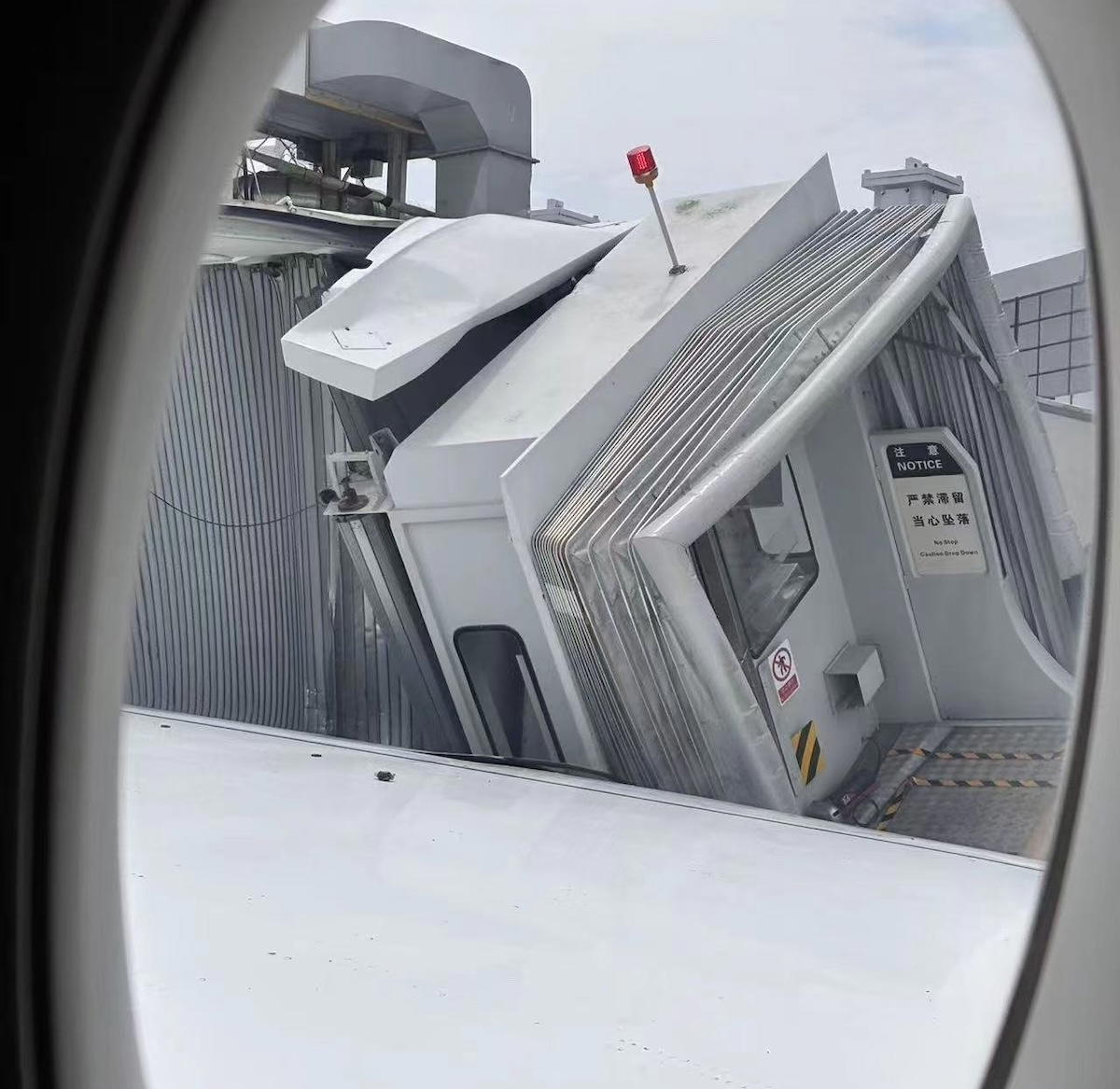
This has to be one of the most unusual airport accidents we’ve seen in a long time. You’d assume this is an AI video, or something, because of how strange it is, but it’s confirmed to be real.
Continue reading: China Eastern A350 Repeatedly Rams Jet Bridge With Engine & Wing: HUH?!?
Share your questions, experiences, and thoughts below.


A bit like drivers relying on sat nav’s and not watching the road pilots have become reliant on Visual Docking Guidance System (VDGS) for gate arrival, all it needs is someone on the ground to have put in say A320 by mistake and then this happens the pilot continues to the stopping point for the smaller airframe and the bridge gates are way out of pre alignment.
Reverse thrust is SOP for airbus in this situation. However, once it’s engaged, it’s very difficult to control. It requires a soft touch and in tight corners, it’s a challenge. But it’s a bit much to call things bizarre when they are simply above and beyond the knowledge level of the person covering it as an amateur.
This is clearly a practice on a potential attack on US soil by China and it's been leaked.
The best course of action is to ban all Chinese airlines from entering US airspace going forward to protect us.
@ Lxf -- "But it’s a bit much to call things bizarre when they are simply above and beyond the knowledge level of the person covering it as an amateur."
Bizarre is defined as "strange, unusual, or unexpected." Regardless of whether or not there's a perfectly good explanation for this, I think it's fair to describe this is bizarre, as we almost never see something like this.
Only one country continously invades others and it's not China. Seppo scum.
It was indeed a complete brake system failure.
As another poster said, Abnormal Procedure is to use Rev Thrust but I can imagine not very well trained for and tricky to control.
Unfortunately cancelling Rev Thrust is just redirecting the flow again, so until you can shut off power it's going to keep moving.
"I think it’s safe to assume that something malfunctioned here, because suffice it to say, this isn’t how your typical gate arrival looks."
aww duh! You think?
This X post says brake system failure: https://x.com/fahadnaimb/status/2050637854968254501?s=61&t=MkiJogwA5mHwe4SOzIr-hg
In view of limited information: ‘My Best Guess’ would be …. that as the aircraft was unable to slow, then come to a stop normally during the approach to the jet bridge, the pilots experienced brake and or steering failure. The cause could be hydraulic, electronic or possibly even computer failure.
The multiple impacts with the bridge could be attributed to reverse thrust use by the pilots or malfunctioning reverse thrust control systems. To slow or stop the forward movement, applying reverse thrust is likely to have been used. However, balancing the forward thrust against the reverse thrust action can be difficult for some pilots. The application of sufficient reverse thrust and the aircraft move backwards, too little reverse thrust application and the aircraft moves forward again.
Multiple impacts could obviously be attributed to faulty brakes and with the engines running, the indelicate application of reverse thrust by the pilots. Panic Mr Wilkes, shear panic!
Color me naive. I had no idea modern/currently manufactured planes still had reverse thrusters!

Uhhh they do it a few times a day in Tibet and every month or so in Vietnam and the Philippines
It's pretty ubiquitous during landing.
What's gone is that commercial airplanes pretty much don't ever push back under their own power anymore.
While I can’t speak from experience, I gotta imagine there are many safeguards to keep that from happening. Otherwise, it would happen (somewhat regularly).
As much as it would be nice, humans are incapable of performing tasks with an error rate of 1 per however-many-tens-of-millions.
Simply put: even at idle, a jet engine produces thrust, albeit very little. After going from reverse to idle, there is a short period when the engine will produce slightly more thrust before "idling" as the air flow direction changes and the engine spools down, and is likely what we're seeing here.
I do believe that there might be some slight variations in the type of Visual Docking Guidance System in different airports.
But my understanding is that, for most VDGS, the pilots can also see the aircraft type displayed to be able to confirm if it's correct.
As they approach, the VDGS will clearly display A359 or similar.